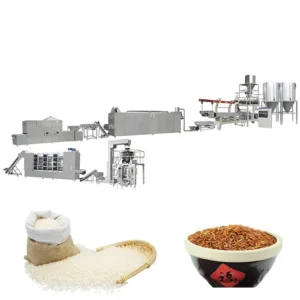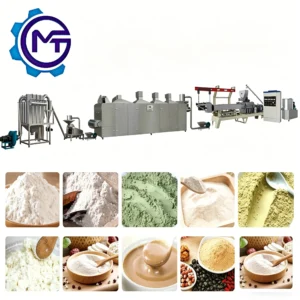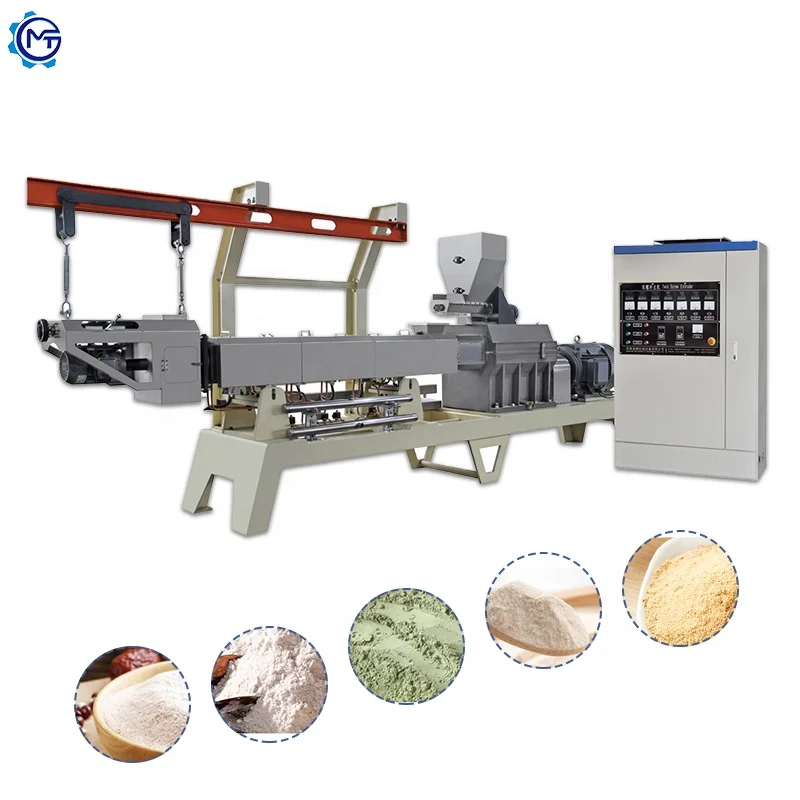

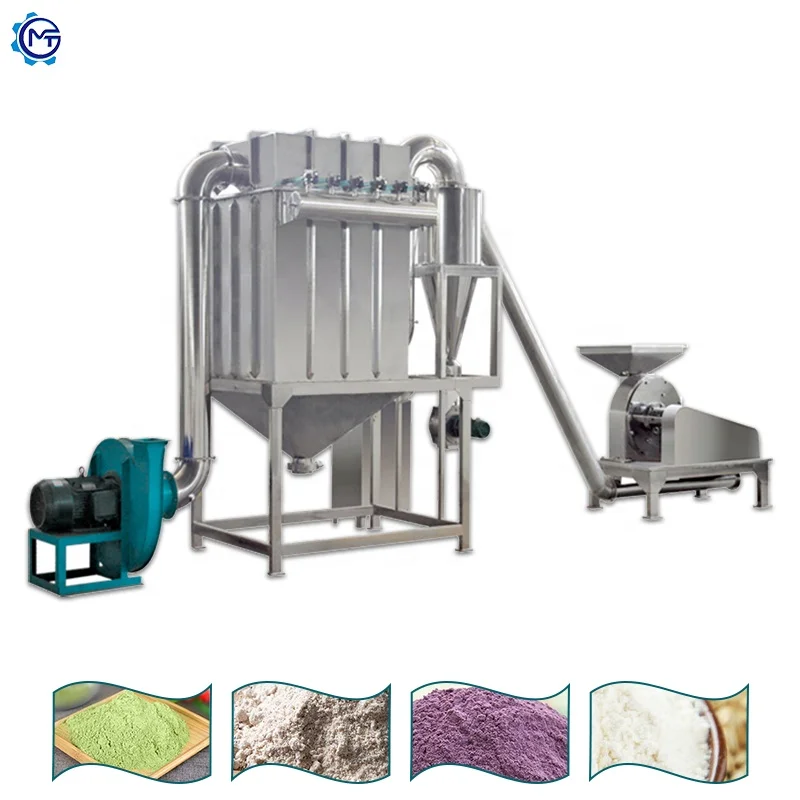
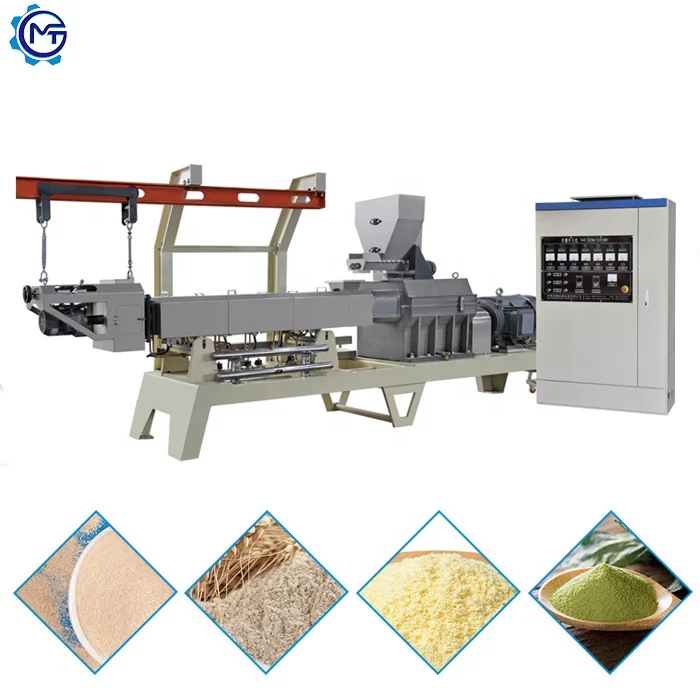

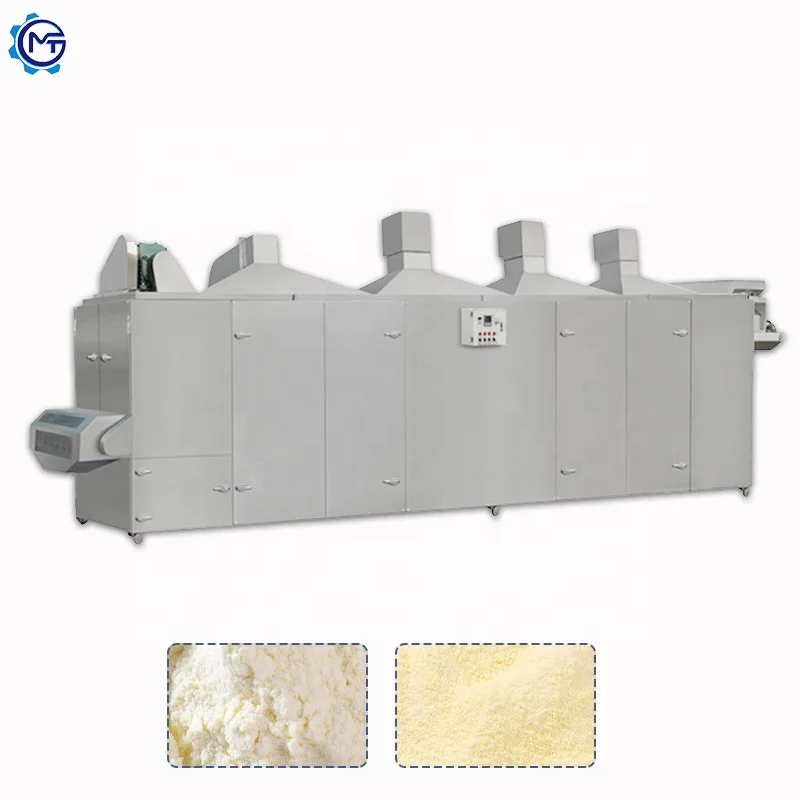
Automatic Cerelac Instant Baby Food Porridge Production Line, Twin-Screw Extrusion, PLC/MCC Control — configured as a complete turnkey project from raw material batching through extrusion, drying, secondary crushing and packaging.
- Throughput at every station is engineered to match, eliminating bottlenecks between extruder, dryer and mixing units
- Screw configuration and die design specified to your raw material formulation and target product density
- Multiple line scales available (MT-65 / MT-70 / MT-85) to align with project phase and output target
Delivered with line layout, capacity calculation and trial run report on your actual formulation before shipment, ensuring the line performs as specified from day one.
Description
Turnkey integration across every station — throughput from batching through extrusion, drying and secondary mixing is balanced so no single machine bottlenecks the nutritional powder processing line.
Technical Specifications
| Parameter | Value |
|---|---|
| Product Type | Nutritional Powder & Instant Baby Food Porridge Processing Line |
| Model Options | MT-65 / MT-70 / MT-85 |
| Screw Type | Twin-screw |
| Installed Power (MT-65) | 81.5 kW |
| Actual Consumed Power (MT-65) | 53 kW |
| Installed Power (MT-70) | 115 kW |
| Actual Consumed Power (MT-70) | 76 kW |
| Installed Power (MT-85) | 181 kW |
| Actual Consumed Power (MT-85) | 117 kW |
| Output Capacity (MT-65) | 100–150 kg/h (basis to be confirmed with raw material formulation and moisture) |
| Output Capacity (MT-70) | 200–240 kg/h (basis to be confirmed with raw material formulation and moisture) |
| Output Capacity (MT-85) | 400–500 kg/h (basis to be confirmed with raw material formulation and moisture) |
| Overall Dimensions (MT-65) | 21000 × 1200 × 2200 mm |
| Overall Dimensions (MT-70) | 23000 × 1500 × 2200 mm |
| Overall Dimensions (MT-85) | 28000 × 3500 × 4300 mm |
| Process Flow | Raw material mixing → crushing → extrusion expansion → drying → cooling → secondary crushing → secondary mixing → packaging |
| Control System | PLC / MCC |
| Certification | CE |
Application Suitability
| Application | Material or Output |
|---|---|
| Infant nutrition powder (cerelac, baby food porridge) | Corn, rice, millet, wheat, oats, supplemented with milk powder and vitamin C |
| Health care and fortified nutritional powder | Highland barley, yam, konjac, red beans, black beans with micronutrient premix |
| Cereal expanded powder for food and beverage thickeners | Rice, corn, oats processed to a controlled density and gelatinisation level |
| Solid beverage powder | Hericium erinaceus, black sesame, red jujube blended with maltodextrin |
Why the Dryer Capacity Dictates the Real Output of Your Nutritional Powder Production Line Turnkey
A mismatched dryer is the most common reason an extrusion line fails to hold its rated output.
I have stood in workshops where the extruder was pushing material at a steady rate, but the dryer could not reduce moisture to specification within the required residence time. The result was a backlog of semi-dried powder, inconsistent expansion and eventually a full line stop. When sourcing a nutritional powder production line turnkey, the dryer and secondary mixing stations must be sized against the extruder’s actual output on the buyer’s specific formulation, not a generic grain baseline [NEED_CITE: extrusion line throughput balancing across dryer and extruder stations].
From Raw Material Batching to Finished Powder Packing
This nutritional powder production line turnkey covers the full sequence: mixing, primary crushing, twin-screw extrusion expansion, drying, cooling, secondary crushing, secondary mixing and packaging. Each station is specified together so that material flow from the extruder into the dryer, and from the dryer into the secondary mixer, remains continuous without intermediate buffering that degrades product quality. The PLC and MCC control system coordinates start-up and shutdown across the sequence, reducing the risk of material scorching or blockage during transitions.
Balancing Expansion, Moisture Reduction and Particle Size
The twin-screw extrusion stage gelatinises starch from grains such as rice, corn and millet, while incorporating high-fat or high-protein additives like milk powder or peanut. After extrusion, the expanded material must be dried to a moisture level that allows clean secondary crushing into a uniform powder. If the dryer residence time falls short, the secondary crusher encounters soft, sticky material that coats the screens and forces a shutdown [NEED_CITE: moisture content requirements for nutritional powder secondary crushing]. Getting this balance right during line design is what separates a line that runs continuously from one that requires constant operator intervention.
What the Installed and Consumed Power Figures Mean for Utility Planning
The MT-65 model draws an installed power of 81.5 kW with actual consumption around 53 kW, while the MT-85 sits at 181 kW installed and 117 kW consumed. These figures directly shape the transformer capacity, cable sizing and dedicated circuit requirements at the installation site. The barrel heating zones on the extruder account for a significant share of the peak draw, and the dryer adds its own thermal load. Confirming voltage, frequency and phase configuration with the local electrical standard before production begins avoids costly rewiring after the equipment arrives on site.
Screw Configuration and Die Design for Varying Formulations
A baby food porridge recipe high in milk powder behaves very differently inside the barrel from a cereal thickener blend based on pure corn grits. The fat content changes the lubrication between material and screw, while the protein level affects expansion at the die face. Screw elements and die geometry are therefore selected against the buyer’s confirmed formulation rather than copied from a standard build. This is the reason we insist on receiving the full recipe with moisture and fat percentages before finalising the extruder configuration [NEED_CITE: twin-screw extrusion screw configuration for high-fat nutritional formulations].
The Hidden Cost of Skipping the Trial Run
I once supervised a commissioning in South Asia where the line had been quoted on a standard rice flour recipe, but the buyer’s actual feed included a high-fat milk powder base. The preconditioner clogged within hours, the extruder torque spiked and the entire line stopped. Two days were spent reconfiguring screw speed and steam injection before the material flowed consistently. An in-house trial run on the customer’s actual raw material before shipment would have surfaced that problem in the factory rather than on the installation floor.
Why Source the Full Line From One Supplier
The layout and capacity calculation document shows every station matched to the same throughput figure, so the extruder output, dryer capacity and secondary mixer volume are aligned from the start. Screw and die configuration is recorded against the buyer’s specific raw material, and a trial run on that formulation is completed before the equipment leaves the testing workshop. Electrical schematics confirm voltage, frequency and control language for the target market. The CE-certified line is delivered with a wear parts list covering screws, dies and crusher screens, so the first replacement cycle does not force an emergency order. On-site installation covers phased commissioning from the mixer through to the packaging station, with operator training on the PLC interface.
Documentation & Verification
- Line layout and capacity calculation showing matched throughput across mixing, extrusion, drying and packaging stations
- Screw and die configuration record tied to the buyer’s nutritional powder formulation
- Electrical schematic with voltage, frequency and PLC language confirmed for the destination country
- Trial run report on the customer’s actual raw material blend before dispatch
- CE declaration of conformity for the complete processing line
- Operation and maintenance manual covering each station from batching to packing
Installation, Commissioning & Support
- Floor space planning based on the selected model’s overall dimensions, with clearance for dryer maintenance access
- Dedicated electrical circuit sized to the installed power figure of the chosen MT-65, MT-70 or MT-85 configuration
- Phased commissioning starting with the mixer and progressing through extrusion, drying and secondary mixing
- PLC parameter setting for barrel temperature zones, screw speed and dryer residence time on the buyer’s formulation
- Operator training on the MCC and PLC interface covering normal operation and fault response
- Wear parts list provided at handover, covering screws, dies and secondary crusher screens for the first replacement cycle
What We Need to Configure Your Line
Provide the full raw material formulation including grain types, milk powder or fat content, and any vitamin premix additions, along with the target moisture level for the finished powder. Specify the local voltage, frequency and phase, plus the preferred PLC operating language. Share the workshop floor area and ceiling height so the line layout can account for the dryer’s thermal exhaust and the packaging station’s clearance requirements.
Frequently Asked Questions
Q: How is throughput matched between the extruder, dryer and secondary mixing stations?
A: Each station is sized against the same confirmed output figure derived from the buyer’s formulation and moisture target. The dryer residence time and the secondary mixer volume are calculated so that material flows continuously from extrusion through to packaging without bottleneck or intermediate storage.
Q: What raw material formulations can the line handle for baby food porridge versus health powder?
A: The line processes grain bases such as corn, rice and millet, with additions including milk powder, peanut, black sesame and vitamin premix. Screw configuration and barrel temperature profile are adjusted to the fat and protein content of the specific recipe before the trial run.
Q: How are voltage, frequency and control language confirmed before production starts?
A: The buyer provides the local electrical standard and preferred PLC language during the specification phase. An electrical schematic is issued for approval, and the control panel is built and tested to those parameters before the line is cleared for shipment.
Q: What does on-site installation and operator training cover?
A: Installation covers mechanical assembly, utility connection and phased commissioning of each station from the mixer to the packaging unit. Operators are trained on the PLC interface, normal start-up and shutdown procedures, and routine maintenance intervals for screws, dies and crusher screens.
Q: Can the line be reconfigured for additional powder formats after installation?
A: Screw elements and die plates can be exchanged to accommodate different formulations, and the PLC recipes can store multiple parameter sets. The dryer and secondary crusher settings are adjusted to match the new target particle size and moisture specification.
Related products
-
Automatic Nutritional Powder Making Machine Safe Rice Cereal for Babies
¥30.00 Select options This product has multiple variants. The options may be chosen on the product page -
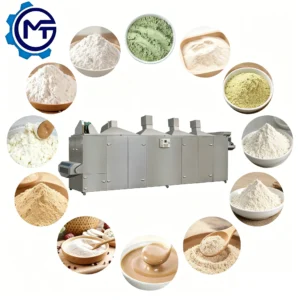
Hygienic Stainless Steel Infant Rice Powder Processing Line Automatic 500kg/h Capacity PLC Controlled
¥9,500.00 Add to cart -
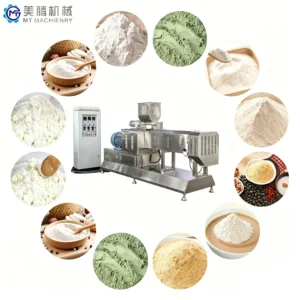
150-500kg/h Twin Screw Extruder Baby Rice Flour Making Machine
¥9,500.00 Select options This product has multiple variants. The options may be chosen on the product page -
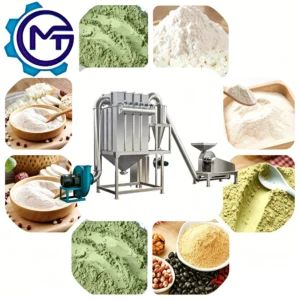
Automatic Iron Fortified Baby Rice Cereal Nutrition Powder Making Machine 500kg/h PLC Controlled
¥8,238.27 Add to cart