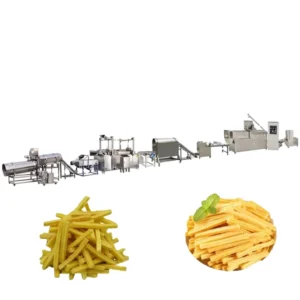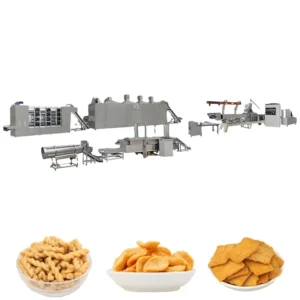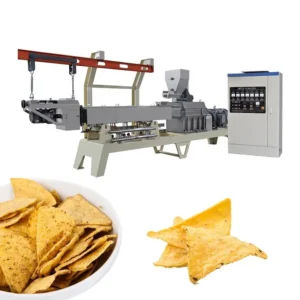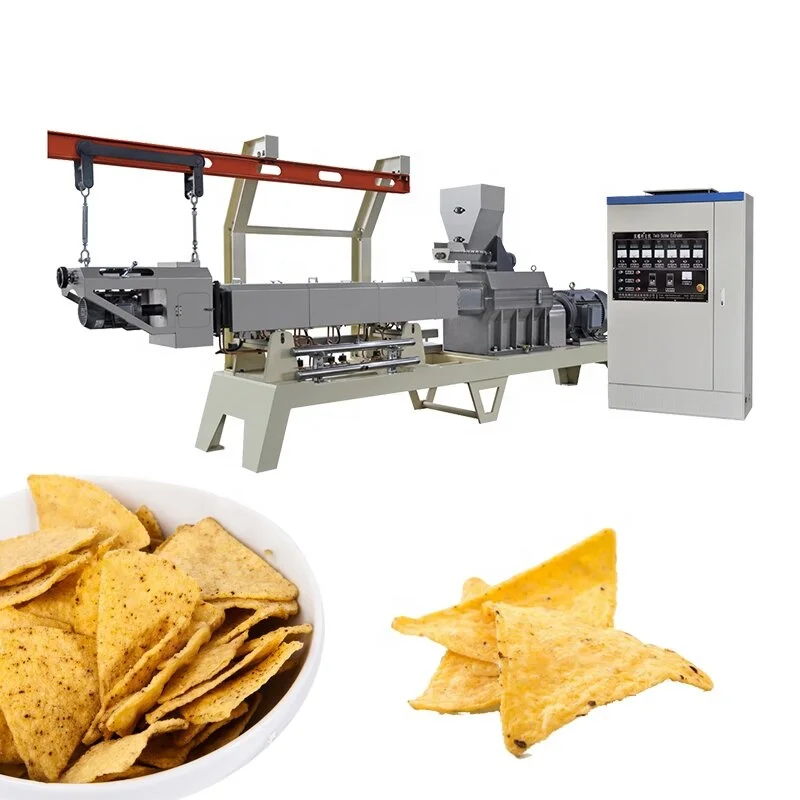


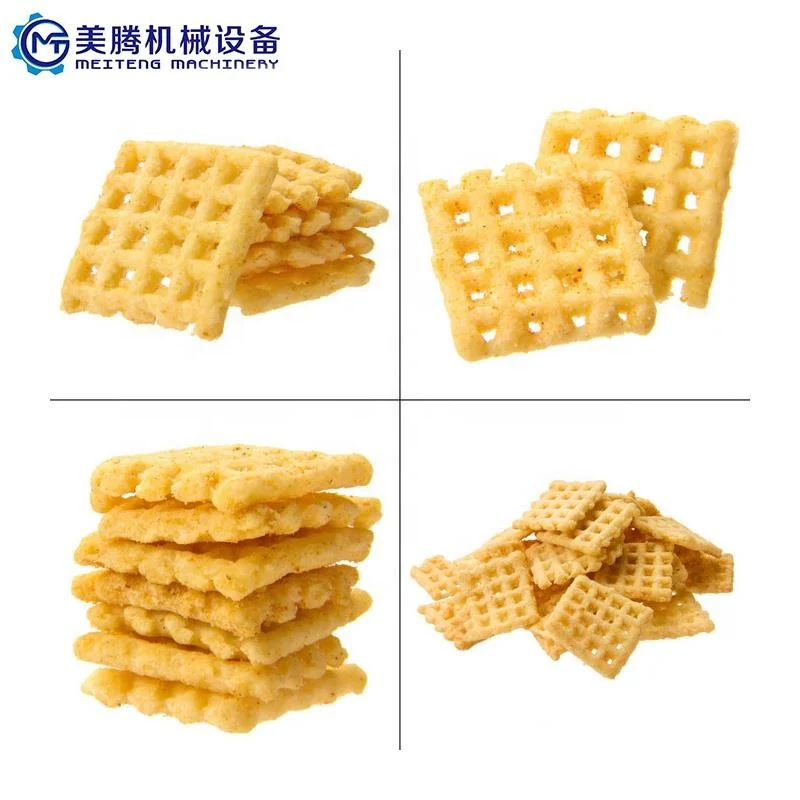
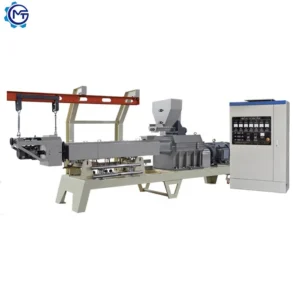
MT100/MT120 Fried Potato Chips Production Line, Single Screw Extruder, 380V/50Hz — throughput-matched from mixing through extrusion, frying, flavoring and cooling. Screw configuration and die design specified to your starch formulation, with single-screw high/low pressure expansion ensuring consistent density across screw shell, ring and tube shapes. Turnkey layout, commissioning and operator training delivered under one supplier for full-line accountability.
Description
Complete Line Integration — Every station from mixer to cooling is throughput-matched and supplied under one responsibility, so fryer output never chokes because the extruder was quoted separately.
Technical Specifications
| Parameter | Value |
|---|---|
| Model | MT100/MT120 |
| Product Type | Fried Potato Chips / Snack Food Extrusion Line |
| Extruder Type | Single Screw Extruder |
| Output Capacity | 120 kg/h (basis to be confirmed — dependent on raw material formulation, moisture content, and target product shape) |
| Rated Power | 50–70 kW |
| Voltage & Frequency | 380V/50Hz (3-phase); 220V/50Hz (1-phase); configurable to local grid |
| Overall Dimensions (L×W×H) | 12000–26000 × 1200 × 2200 mm |
| Line Stations | Mixer → Screw Conveyor → Single Screw Extruder → Pulling and Cutting Machine → Automatic Fryer → Automatic Flavoring Line → Cooling |
| Energy Options | Electricity, gas, diesel, steam (station-dependent) |
| Raw Materials | Wheat flour, corn starch, potato starch |
| Contact Material | Food-grade stainless steel 201 (304 available) |
| Motor & Inverter | Siemens (China-made) or top Chinese brand; Delixi or Delta inverter |
| Standards | CE, ISO 9001 |
Application Suitability
| Application | Material or Output |
|---|---|
| Secondary puffing fried snacks | Wheat flour, corn starch, and potato starch blends for screw shell, round tube, square tube, and ring shapes |
| Cartoon-shaped extruded chips | Starch-based formulations requiring single-screw expansion before frying |
| Pasta-style snack formats | High-starch doughs cut to length and fried to target crispness |
| Fried snack line turnkey projects | Greenfield or expansion facilities needing matched throughput from batching to cooling |
What "120 kg/h" Really Means for Your Starch Formulation
Capacity holds only when screw geometry, die design, and moisture are specified to your actual raw material.
I once configured a fried snack line where the nominal throughput looked solid on paper. The buyer’s potato starch ran hotter through the barrel than expected, the die pressure dropped, and the fryer couldn’t keep up with the volume of half-expanded pieces. Three months later, oil absorption spiked and product edges were scorching. We flew out, reconfigured the screw profile, adjusted barrel zones, and finally matched fryer temperature to the new expansion ratio. That fried potato chips production line turnkey project didn’t fail because of bad machines — it failed because the capacity number was treated as a constant rather than a variable tied to formulation. [NEED_CITE: relationship between starch gelatinisation temperature and extrusion throughput stability]
Screw and Die Matching to Starch Behaviour
Single-screw extrusion for fried snack doughs requires the screw pitch and compression ratio to match the gelatinisation window of the specific starch blend. Potato starch gelatinises at a lower temperature than wheat flour, so barrel zone profiling must account for this difference to prevent premature expansion or barrel blockage. The die opening diameter and land length then control the density of the extrudate before it enters the fryer. This fried potato chips production line turnkey configuration specifies screw and die geometry to the buyer’s raw material rather than shipping a generic build.
Frying Station and Throughput Synchronisation
The fryer must process the extrudate at the same rate the extruder delivers it, accounting for moisture loss and oil uptake during frying. If the fryer belt speed or oil volume is undersized relative to extruder output, product accumulates and over-fries at the entry end. Dual energy options across frying stations — gas or electric heating — allow the line to match the buyer’s utility infrastructure and maintain consistent oil temperature under continuous load. [NEED_CITE: industrial fryer thermal recovery rates under continuous extrudate feed]
Reading the Specs That Actually Matter
The 50–70 kW rated power range reflects different line configurations rather than a single fixed draw; the extruder motor, fryer heating elements, and conveyor drives all contribute. Voltage configurable from 220V single-phase to 380V three-phase means the electrical schematic must be confirmed to the destination country before production begins, not after. The 12000–26000 mm overall length range indicates how station spacing changes with fryer size and cooling conveyor length. Stainless steel 201 contact surfaces meet food-grade requirements, while 304 is available for buyers operating in high-humidity or washdown environments where corrosion resistance matters more.
The Cost of Underspecifying Before the Order
Buyers who confirm capacity without confirming raw material behaviour often discover the mismatch after installation. The extruder runs, but output density falls outside the texture the market expects, and the fryer oil degrades faster because the product absorbs more fat than designed. Wear parts — screws, dies, cutter blades — then experience accelerated wear because the machine is compensating rather than running at its specified load. [NEED_CITE: wear part replacement intervals under off-specification operating conditions]
Why Procure This Line Here
Screw configuration and die design are specified to your raw material formulation, not copied from a catalogue default. The in-house testing workshop runs trial production on your actual starch blend before the line ships, so expansion ratio and fryer behaviour are verified before you see the equipment. Line layout and capacity calculation are documented per station, meaning the mixer batch size, screw conveyor rate, extruder output, fryer belt speed, and flavoring drum dwell time are all shown in relation to each other. Electrical schematics with voltage and frequency are confirmed to your destination country before production starts. Pre-sales consultation carries through to on-site installation, commissioning, and operator training so the team running the line daily understands screw adjustment and die changeover.
Documentation & Verification
- Line layout drawing with station-by-station throughput calculation for your product shape
- Screw and die configuration record matched to your starch formulation
- Electrical schematic with voltage, frequency, and control language confirmed to destination
- Factory trial run report on your raw material before dispatch
- CE declaration of conformity and ISO 9001 certificate
- Operation and maintenance manual with wear parts list
Installation, Commissioning & Support
- Floor plan requirements based on the 12000–26000 mm line length and station spacing
- Dedicated 380V/50Hz three-phase circuit with breaker sizing matched to the 50–70 kW total load
- Pre-assembled stations arrive with documented disassembly sequence for site reconnection
- First-run parameter setting including barrel zone temperatures and fryer oil profile
- Operator training on screw changeover, die replacement, and cutter blade adjustment
- Wear parts list covering screws, dies, and cutter blades with reorder reference numbers
What We Need to Configure Your Line
To size each station correctly, share your target product shape (ring, tube, shell, or custom die), the starch formulation you plan to run, and your daily output target. Your workshop dimensions and ceiling height determine the cooling conveyor layout, and your local voltage and frequency must be confirmed so the electrical cabinet is built to match. If you need a trial run on your raw material before shipment, send a sample batch to the testing workshop.
Frequently Asked Questions
Q: How is the 120 kg/h capacity verified against my specific starch blend and product shape?
A: The testing workshop runs your actual raw material through the single-screw extruder with the proposed screw and die configuration. Expansion ratio, extrudate density, and fryer behaviour are measured, and the trial run report documents the achievable throughput for your formulation before the line ships.
Q: What voltage, frequency, and control language will the fried potato chips production line turnkey system arrive with?
A: The electrical schematic is confirmed to your destination country’s grid standard before production begins. Voltage options include 380V/50Hz three-phase and 220V/50Hz single-phase, configurable to local requirements. Control panel labels and documentation language are agreed during the specification stage.
Q: How are extruder, fryer, and flavoring drum capacities matched to prevent line bottlenecks?
A: Each station is sized during the line layout phase so the mixer batch cycle, extruder output rate, fryer belt speed, and flavoring drum dwell time are calculated together. The throughput-matching calculation is included in the documentation so you can verify station balance.
Q: What spare wear parts ship with the line, and what is the reorder process?
A: The initial shipment includes a wear parts set covering screws, dies, and cutter blades specified to your product shape. A wear parts list with part numbers is provided in the documentation, and reorder lead times are confirmed at the time of the original purchase.
Related products
-
Puffed Octopus Snack Processing Line – Full-Automatic Fried Octopus Production Machinery
¥65.00 Select options This product has multiple variants. The options may be chosen on the product page -
Hot Selling Full Automatic Fried Dough Wheat Flour Bugles Snacks Frying Machine Fried Puffed Food Bugles Snack Production Line
¥7,349.41 Select options This product has multiple variants. The options may be chosen on the product page -
Orion TURTLE CHIPS Snack Puffing Machinery Internet Celebrity Puffed Four-layer Crispy Production Line
¥65.00 Select options This product has multiple variants. The options may be chosen on the product page -
Industrial Fully Automatic Stainless Steel Deep Fried Line – Snack Factory Miscellaneous Grains Special Processing Equipment
¥65.00 Select options This product has multiple variants. The options may be chosen on the product page