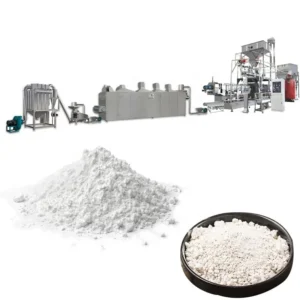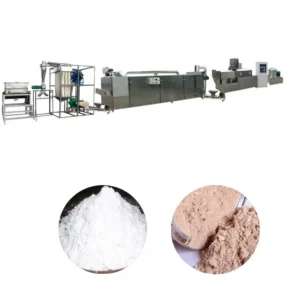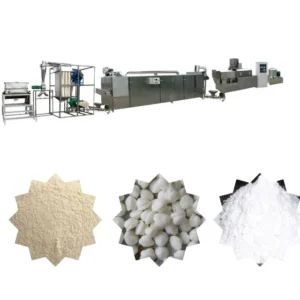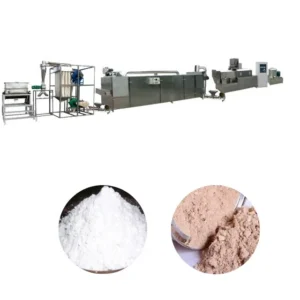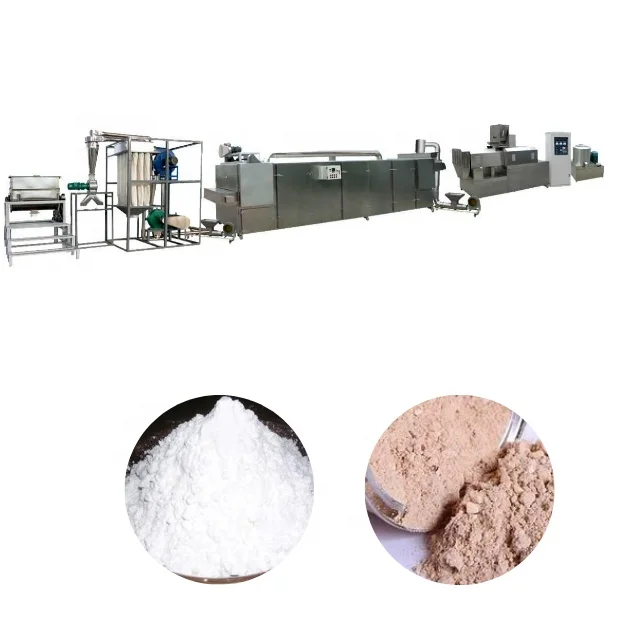
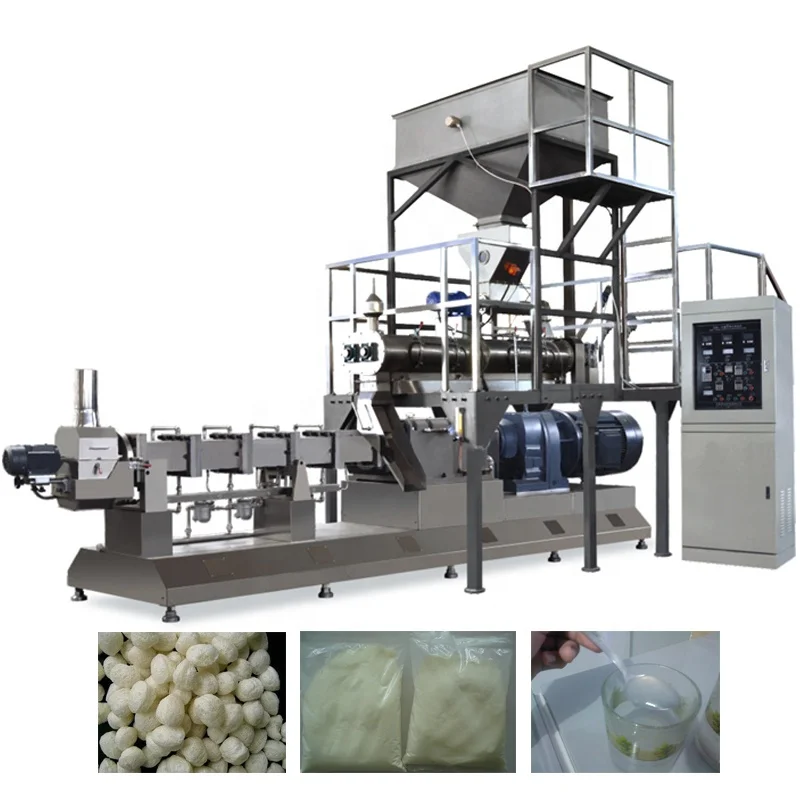


Modified Starch Processing Line, Twin-Screw Extruder, PLC Control, Multi-Fuel Dryer — engineered as an integrated turnkey project from batching through extrusion, cooling, and pulse grinding.
- Screw configuration and die design specified to your raw starch type and target modification level, controlling gelatinisation and shear for consistent product density.
- Throughput matched across every station — extruder, cooling conveyor, grinder with cyclone discharge — to eliminate bottlenecks at full output.
Capacity calculation, trial run on your raw material, and on-site commissioning with operator training included.
Description
Turnkey Integration — A modified starch line is only as reliable as its slowest station; we engineer extruder throughput, cooling conveyor speed, and grinder capacity as one balanced system so your output holds steady on your actual raw material.
Technical Specifications
| Parameter | Value |
|---|---|
| Product Type | Modified Starch Processing Line |
| Screw Configuration | Twin-screw extruder, configurable barrel sections |
| Rated Power | 45–200 kW depending on line configuration |
| Voltage & Frequency | 220–440V tri-phase (Hz to be confirmed per site) |
| Control System | PLC with HMI, available with MCC integration |
| Output Capacity | 100–1500 kg/h (basis not stated in source — depends on raw material, moisture and target modification level) |
| Net Weight | 1000–5000 kg (varies by line configuration) |
| Fuel Options | Gas, diesel, electricity, or steam |
| Line Stations | Twin-screw extruder, cooling conveyor, pulse grinder with cyclone |
| Raw Materials | Corn starch, wheat flour, rice flour, soybean flour, potato starch |
| Standards | CE, ISO |
Application Suitability
| Application | Material or Output |
|---|---|
| Oil drilling fluid loss control additives | Pre-gelatinised corn or potato starch modified for high-temperature stability |
| Paper making sizing and coating binders | Cationic or oxidised starch from wheat or corn base |
| Food-grade thickener for sauces and bakery | Cross-linked or acetylated starch retaining cold-water viscosity |
| Instant and nutrition food blending | Pre-gelatinised rice or soy flour for rapid rehydration |
| Industrial adhesive and binder production | Dextrinised wheat flour with controlled solubility |
Why Nominal Capacity Fails on Modified Starch — and What to Check Before You Order
A line rated at 1,500 kg/h on standard corn starch will not deliver that same tonnage when you push pre-gelatinisation degree or switch to a high-amylose feedstock.
Most suppliers quote modified starch output based on a generic, low-modification recipe. The moment you need oil drilling starch with a controlled fluid loss rate, or food-grade cross-linked starch that must hit a precise viscosity window, the screw configuration and barrel temperature profile shift dramatically — and so does the achievable throughput. I have watched buyers commit to a line size, then spend days on-site trying to coax pre-gelatinisation levels high enough while output drops to a fraction of what the contract promised. [NEED_CITE: relationship between starch modification degree and extruder residence time]
A properly engineered modified starch processing line turnkey project matches every station to your actual recipe before the machines leave the factory.
Throughput Balancing Across Extruder, Conveyor and Grinder
The extruder is only one node in the chain. If the cooling conveyor cannot shed heat fast enough, starch re-agglomerates before it reaches the grinder. If the pulse grinder and cyclone are undersized, fine powder backs up and the entire modified starch processing line turnkey installation stalls. We calculate each station’s capacity against the others using your specific raw material and target modification parameters, so the bottleneck is designed out — not discovered during commissioning.
Screw Configuration as a Process Variable, Not a Catalogue Choice
Barrel section count, screw element sequence and die geometry determine shear intensity, residence time and gelatinisation degree. For oil drilling starch, longer barrels with high-shear kneading blocks drive the pre-gelatinisation needed for fluid loss control. For food-grade thickening starch, gentler mixing sections preserve granule integrity while still achieving the required cold-water swelling. [NEED_CITE: twin-screw element profiles for starch gelatinisation control] A generic screw build copied across applications will miss one target or the other — which is why the screw and die configuration is specified after reviewing your raw material data sheet, not pulled from a standard template.
What the Specifications Actually Mean for Your Output
Twin-screw design allows continuous self-wiping action, which is critical when processing starches that gelatinise and become sticky inside the barrel — a single-screw design would accumulate residue and require frequent stops. The 45–200 kW power range reflects the span from a low-capacity food-grade line to a high-throughput industrial drilling starch installation; selecting the right motor prevents both under-performance and wasted energy on an oversized drive. Multi-fuel dryer capability (gas, diesel, electricity, steam) matters because modified starch must be dried to a precise residual moisture before grinding — choosing the wrong fuel type for your local utility costs can shift operating expenses significantly. PLC control with HMI allows operators to store recipe profiles for different starch types, ensuring batch-to-batch consistency that manual adjustment cannot maintain.
The Hidden Cost of an Unmatched Line Configuration
When the cooling conveyor is too short or lacks sufficient airflow, starch arrives at the pulse grinder above its glass transition temperature. The grinder then produces irregular particle sizes, cyclone separation efficiency drops, and you lose product to the dust collection system instead of the packing station. Similarly, if voltage and frequency are not confirmed for the destination market before production, the PLC and motor drives may fail to start on-site, delaying commissioning by weeks while replacement components are shipped. [NEED_CITE: electrical compatibility issues in exported food processing machinery] These are not theoretical risks — they are recurring issues on lines assembled from mismatched vendor quotes rather than engineered as a single project.
Why Sourcing the Entire Line From One Engineering Team Matters
Throughput matching across extruder, cooling conveyor and pulse grinder is calculated on your raw material before a purchase order is signed — not guessed from a catalogue table. Screw configuration and die design are specified to your starch type and target modification level, recorded in documentation you receive before shipment. An in-house testing workshop runs your actual raw material through the configured line so pre-gelatinisation degree, particle size and throughput are verified before the machines are crated. Pre-sales consultation covers line layout, utility planning and phased installation scheduling, and the same engineering team handles on-site commissioning and operator training. Ongoing support includes wear parts supply and maintenance guidance tied to the specific screw elements, barrel liners and grinder screens installed on your line.
Documentation & Verification
- Line layout drawing with throughput calculations matched to your starch type and target output
- Screw and die configuration record specific to your raw material and modification parameters
- Trial run report on your actual raw material produced in our testing workshop before shipment
- Electrical schematic with voltage, frequency and control language confirmed for your facility
- Factory test record documenting extruder, conveyor and grinder performance as one integrated system
- CE declaration of conformity and ISO certificate included with customs documentation
Installation, Commissioning & Support
- Foundation plan provided showing floor load points for extruder, cooling conveyor and pulse grinder weight distribution
- Dedicated electrical circuit sized to the confirmed 45–200 kW total line draw with correct voltage and phase
- Extruder barrel sections and screw elements shipped disassembled for site reassembly per the configuration record
- First-run commissioning includes screw speed, barrel temperature profile and dryer settings tuned to your starch recipe
- Operator training covers PLC recipe storage, screw changeover procedure and daily screen and barrel inspection
- Wear parts list identifies screw elements, barrel liners, grinder screens and seals with reorder part numbers
What to Include in Your Technical Enquiry
Provide the base starch type you will process (corn, wheat, potato, rice or a blend), the target modification — whether pre-gelatinised, cross-linked, oxidised or dextrinised — and your required daily or hourly throughput. Confirm your site voltage, frequency and available fuel source for the dryer, along with any existing upstream batching or downstream packing equipment the line must integrate with. If you have a product specification sheet from your end customer, include it so the screw configuration and temperature profile can be designed against a known target.
Frequently Asked Questions
Q: How is throughput matched between the extruder, cooling conveyor and pulse grinder?
A: Each station’s capacity is calculated against the others using your raw material and target modification level. The cooling conveyor length and airflow are sized so starch reaches the grinder below its glass transition temperature, and the pulse grinder with cyclone is specified to handle the full extruder output without backlog or product loss to dust collection.
Q: Can one line handle both food-grade and oil drilling modified starch?
A: The twin-screw extruder can run both, provided the screw configuration and barrel temperature profile are adjusted for each product. We supply separate screw element sets and store distinct PLC recipes so operators can switch between food-grade thickening starch and industrial pre-gelatinised drilling starch within a single shift.
Q: What does the installation and commissioning schedule look like?
A: A typical phased installation begins with floor preparation and utility routing based on the layout drawing, followed by mechanical assembly of the extruder, conveyor and grinder. Commissioning covers electrical verification, dry runs, and then production trials on your raw material with operator training running concurrently over several days on site.
Q: How do you verify capacity on our specific starch before shipment?
A: We run your actual raw material through the configured line in our testing workshop. The trial run report documents achievable throughput, pre-gelatinisation degree, particle size distribution after grinding, and any screw or temperature adjustments made — so you know the line meets your specification before it leaves the factory.
Q: What ongoing maintenance and spare parts support is available?
A: Every line ships with a wear parts list identifying screw elements, barrel liners, grinder screens and seals with specific part numbers. Our engineering team provides maintenance schedules tied to your production hours, and replacement components are manufactured to the same configuration record used in your original build.
Related products
-
Twin-Screw Extrusion Line for Modified Starch. Producing Pregelatinized Adhesive & Food Grade Powder
¥65.00 Select options This product has multiple variants. The options may be chosen on the product page -
Modified Starch for Construction Adhesives Production – Custom Built Double Screw Extruder Line
¥65.00 Select options This product has multiple variants. The options may be chosen on the product page -
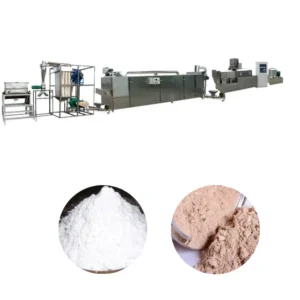
Modified Starch Production Line Modified Starch Processing Line Modified Starch Extruder
¥8,580.00 Select options This product has multiple variants. The options may be chosen on the product page -
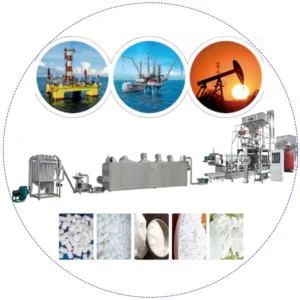
Cassava & Pregelatinized Corn Starch Extrusion Equipment – CE Certified Industrial Twin-Screw Modified Starch Line
¥65.00 Select options This product has multiple variants. The options may be chosen on the product page