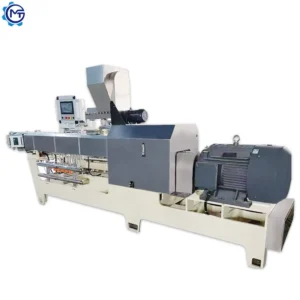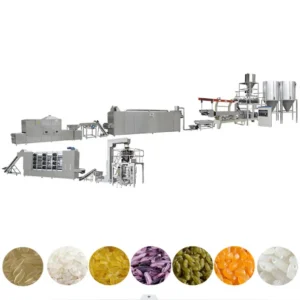
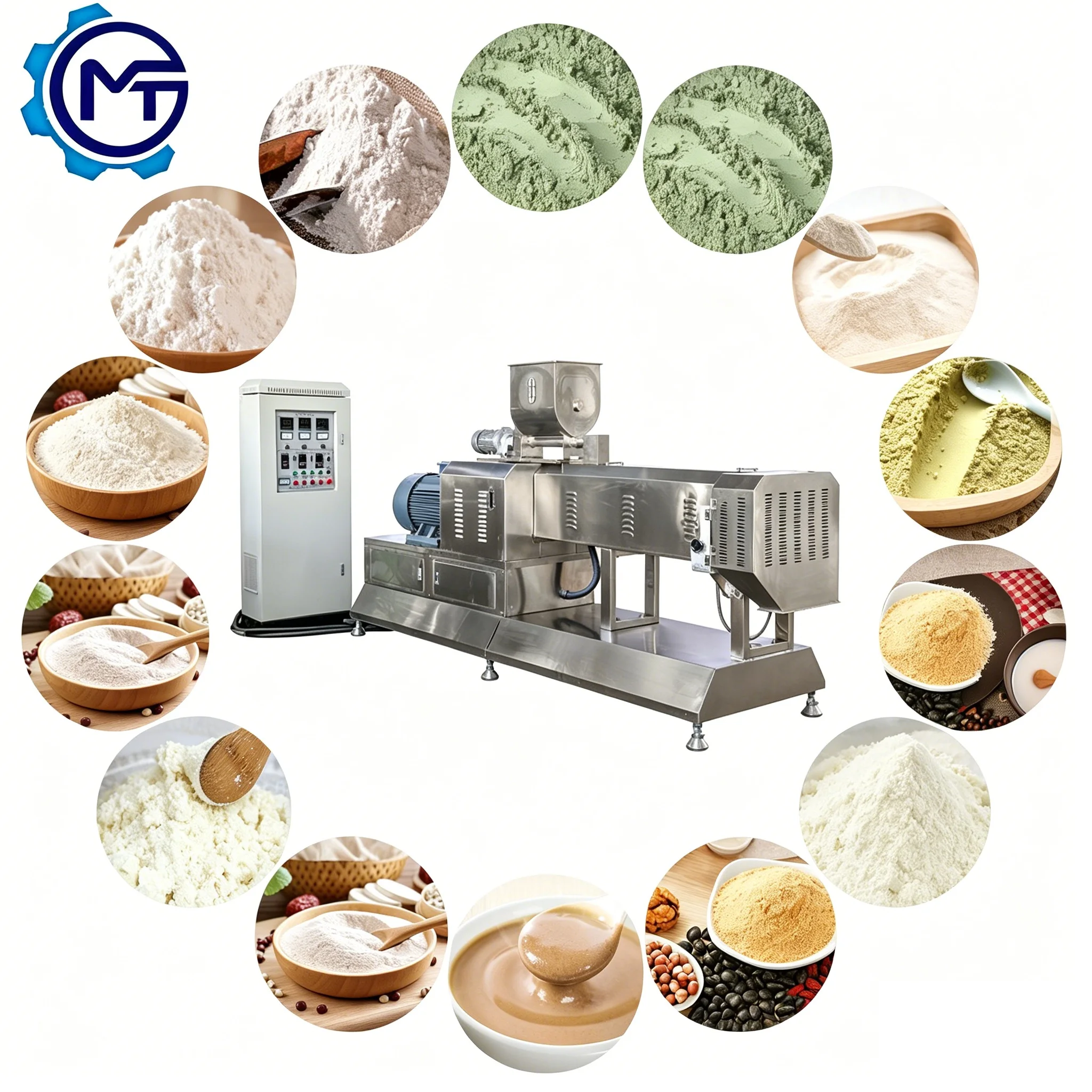
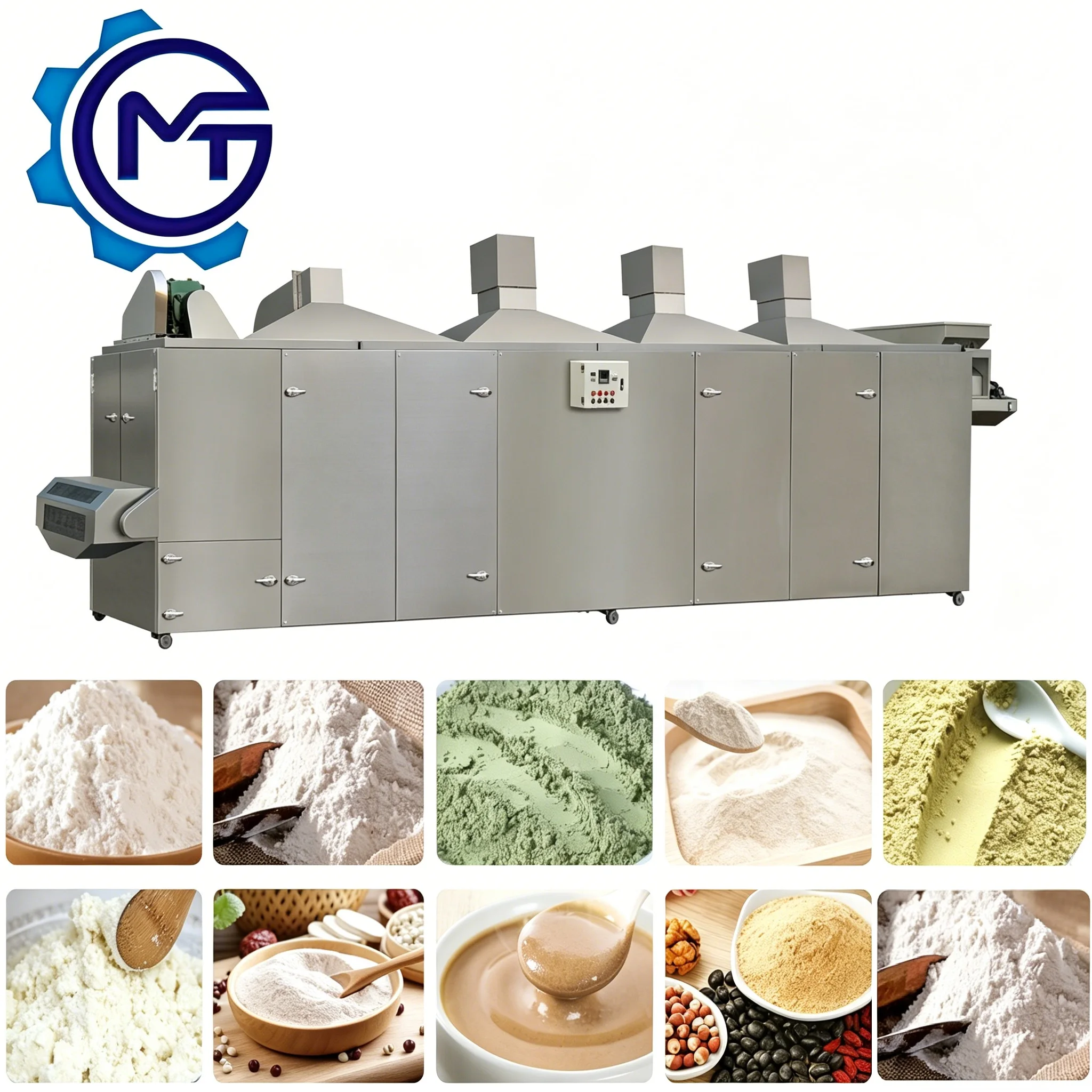
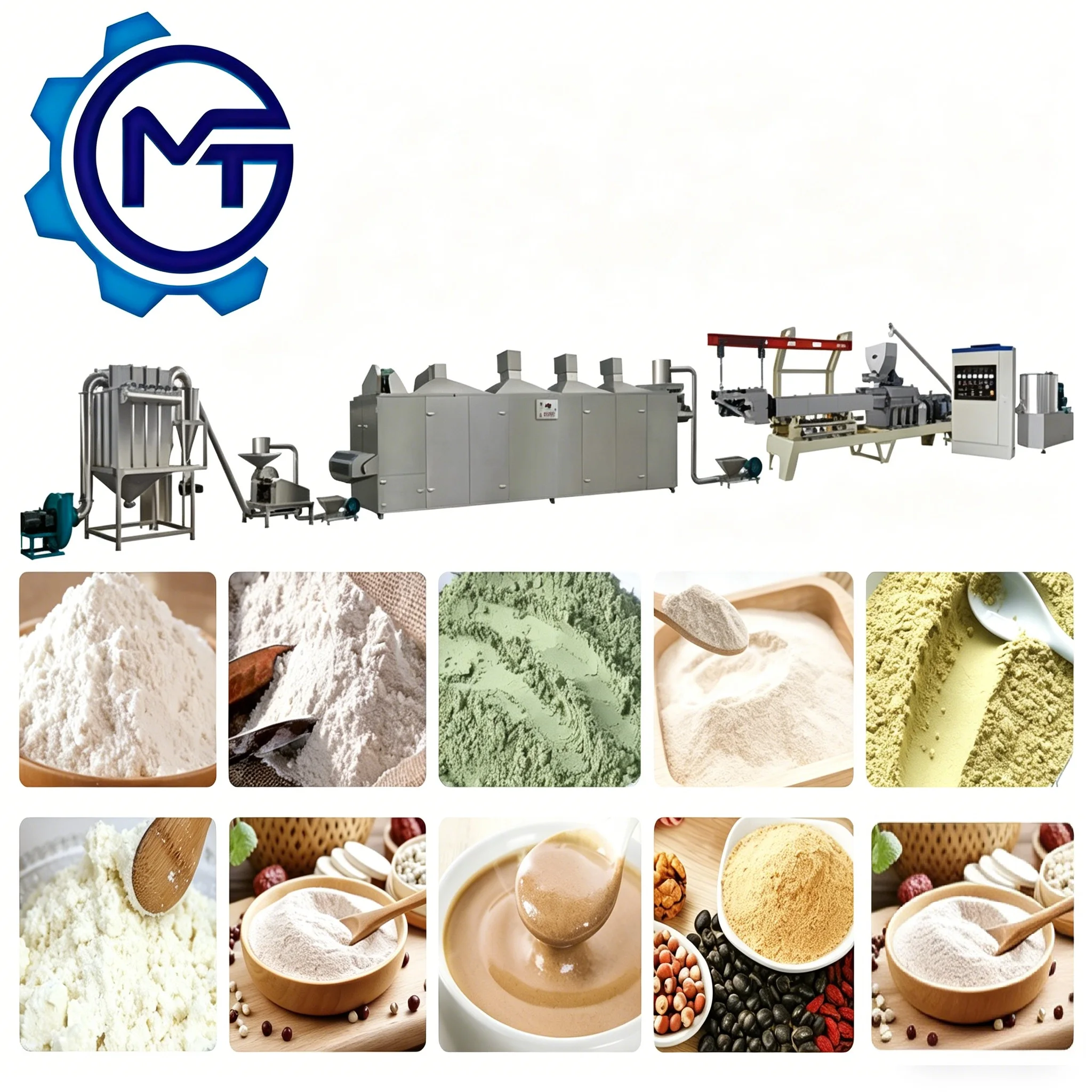
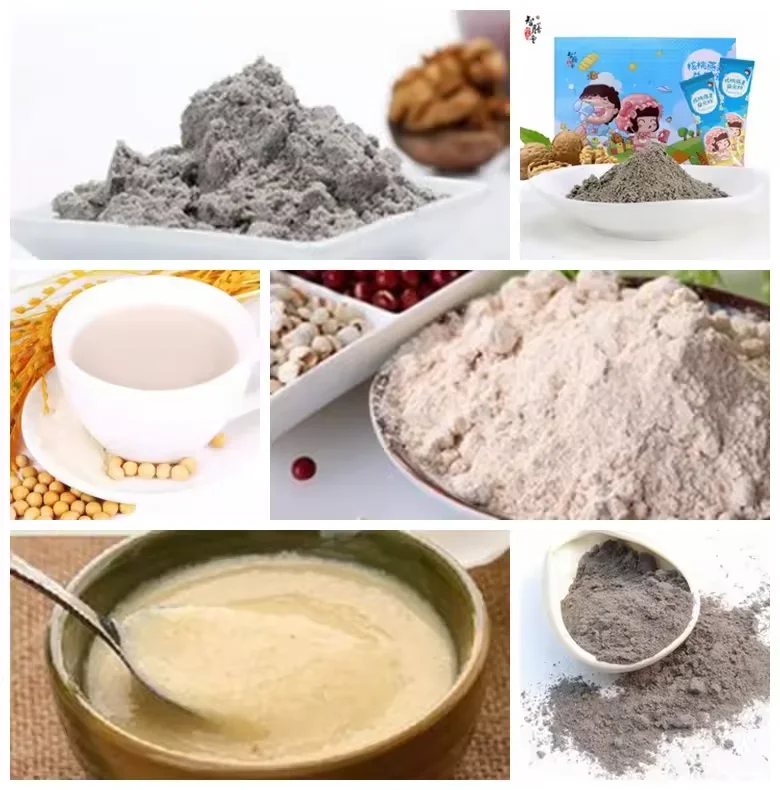
Nutrition Powder Processing Line, PLC Controlled, Food-Grade 304 Stainless Steel — engineered as one integrated turnkey project from raw material batching through extrusion, drying, and packing. Throughput is matched across every station to eliminate bottlenecks, with screw configuration and die design specified to your grain formulation and target powder texture. Flexible heat source options (electric/gas/steam) adapt to factory utilities.
- Trial runs conducted on your actual raw material in our in-house testing workshop before shipment
- Line layout and capacity calculation document provided to confirm station-to-station throughput matching
- Electrical schematics with voltage and frequency confirmed to your market’s grid standard
Description
Integrated Line Throughput Matching — every station from batching to packing is engineered as a single project, eliminating the bottleneck between extruder output and downstream drying or cooling capacity.
Technical Specifications
| Parameter | Value |
|---|---|
| Product Type | Nutrition Powder Processing Line |
| Output Capacity | 200-500 kg/h (basis not stated in source — confirm raw material, moisture, and formulation) |
| Construction Material | Food-Grade 304 Stainless Steel |
| Control System | PLC Controlled with Touch Control Panel |
| Heat Source Options | Electric / Gas / Steam |
| Core Line Stations | Baking Ovens, Mixers (full station list to be confirmed based on layout) |
| Warranty | 1 Year |
| After-Sales Service | Overseas Engineer Service Available |
| Energy Profile | Optimized for low energy consumption (quantified value not stated in source) |
Application Suitability
| Application | Material or Output |
|---|---|
| Infant nutrition powder production | Rice, corn, and oat bases with vitamin premix |
| Fortified baby rice cereal | Milled white and brown rice with iron and zinc additives |
| Multi-grain instant porridge | Blended soybean, millet, and wheat flours |
| Nutritional supplement powder | Protein isolates and dietary fiber blends |
Why Nominal Capacity Numbers Fail in Nutrition Powder Projects
A 500 kg/h rating on plain corn starch often collapses when your actual formulation includes iron salts and fat-soluble vitamin carriers. The most common disappointment in a nutrition powder processing line turnkey project arrives during commissioning: the extruder simply cannot hold the quoted output on the buyer’s specific grain blend [NEED_CITE: actual throughput variance on fortified grain blends]. When iron fortifiers are introduced into a rice base, the melt viscosity inside the barrel changes dramatically. The material resists the screw flight differently, often requiring a complete reconfiguration of the screw elements to maintain both the target capacity and the correct gelatinization degree. If the line was quoted based on a standard starch test, the downstream baking ovens and cooling conveyors might also be undersized for the denser, slower-drying fortified material, creating a hard bottleneck that no amount of motor speed adjustment can fix.
Layout Planning and Station Synchronization
Designing a nutrition powder processing line turnkey project requires mapping the residence time of the material through every station, not just the extruder. In infant cereal production, the baking oven must hold the extrudate long enough to reduce moisture to a level that allows fine milling without gumming the screens. If the mixer batch cycle is forty minutes but the extruder hopper only holds fifteen minutes of material, the line will spend more than half its time idling. The PLC system manages these interlocks, stopping the extruder feed if the downstream dryer reaches its thermal capacity limit, protecting the product from scorching.
Material Behavior and Screw Configuration
Processing iron-fortified rice cereal introduces abrasive wear and altered shear profiles inside the barrel. The screw configuration must be specified to the buyer’s exact premix ratio, as a standard setup for plain corn will produce a gritty texture when run with mineral-heavy formulations [NEED_CITE: twin-screw wear rates on mineral-fortified grain bases]. The die design dictates the expansion ratio of the kibble before it enters the dryer; a lower expansion is often required for nutrition powders to ensure a dense, uniform particle that mills into a smooth, lump-free porridge when reconstituted by the consumer.
Interpreting the Core Processing Parameters
The choice of heat source—electric, gas, or steam—determines the thermal response profile of the baking ovens. Steam offers rapid heat transfer and high humidity control, which is often necessary to prevent case-hardening on the surface of the cereal kibble during the initial drying phase. The PLC touch panel allows operators to lock in specific barrel temperature zones, ensuring that the gelatinization window is hit consistently across every batch, regardless of minor ambient temperature shifts in the factory. Food-grade 304 stainless steel at all contact points prevents metallic contamination, which is a critical safety parameter when producing infant food [NEED_CITE: food contact material compliance for infant food machinery]. The 200-500 kg/h capacity range serves mid-volume producers, but the final sustainable output depends entirely on the specific gravity and fat content of the multi-grain formula being run.
The Hidden Cost of Unmatched Downstream Equipment
Buying an extruder that can produce five hundred kilograms an hour while the packing station is rated for three hundred creates a cascade of operational waste. The extruded kibble must be held in intermediate bins where it absorbs ambient humidity, leading to clumping and microbial risks that are unacceptable in baby food production. A nutrition powder processing line turnkey project that neglects the cooling conveyor length will deliver powder that is too warm for the packaging film, causing condensation inside the sealed bags and drastically reducing shelf life [NEED_CITE: moisture migration in packaged cereal powders].
Project Execution and Factory Verification
Every line is treated as a single integrated project rather than a collection of standalone machines. The throughput calculation document maps the mass flow from the batching system through to the final packing head, ensuring no station is under-specified. Before the equipment leaves the factory, a trial run is conducted on the buyer’s actual raw material in the testing workshop, verifying that the screw configuration and oven temperature profile produce the target powder texture. The electrical schematics are confirmed against the destination market’s grid, and the control panel language is set before the crate is sealed.
Documentation & Verification
- Line layout and capacity calculation document mapping throughput across all stations
- Trial run report on buyer’s specific fortified grain formulation before dispatch
- Screw configuration and die design record matched to target expansion ratio
- Electrical schematic with voltage and frequency confirmation for target market
- Factory test record showing PLC parameter settings for batch consistency
Installation, Commissioning & Support
- Foundation plan and utility routing for the PLC cabinet and baking oven heat source
- Assembly sequence for the stainless steel mixing and conveying stations
- First-run calibration of barrel zones and oven airflow on local raw material
- Operator training on the touch control panel for recipe storage and fault diagnostics
- Wear parts list specifying screw element and die plate replacement intervals
Preparing Your Line Specification Inquiry
To configure a layout that matches your facility, we need to know the specific grain varieties and vitamin premix ratios you intend to process, along with the target moisture content of the final milled powder. Provide the available floor space and ceiling height, as the baking oven and cooling conveyor footprint will dictate the overall line geometry. Finally, confirm your local voltage and frequency standards so the motor control center can be wired correctly before shipment.
Frequently Asked Questions
Q: How is line capacity verified on my specific grain formulation before shipment?
A: We require a sample of your actual raw material, including any iron or vitamin premixes. This material is run through the extruder and downstream stations in our testing workshop. We document the sustainable throughput, the barrel pressure profile, and the final powder texture, adjusting the screw elements until the output meets your specification before the machine is packed.
Q: How do you ensure throughput matching between extruder, dryer, and packing stations?
A: The project layout is engineered around mass flow, not just extruder motor speed. We calculate the drying time required for your specific kibble density and size the oven length and packing head speed accordingly. The PLC system monitors these stations, automatically regulating the feed rate to prevent material backlog or thermal overload in the dryer.
Q: What does the phased installation and commissioning schedule look like for a complete line?
A: Installation begins with the heavy stationary equipment like the baking ovens and mixers, followed by the extruder and conveying systems. Utility connections are verified, and the PLC cabinet is powered up for dry-cycle testing. Commissioning starts with plain grain runs before introducing the costly vitamin premixes, ensuring all thermal and mechanical parameters are stable.
Q: What operator training and documentation are included with the project delivery?
A: Our engineers conduct on-site training covering the PLC touch panel interface, recipe management for different grain blends, and safety interlocks. You receive an operation manual, maintenance schedule, and the specific screw configuration record. We also provide a wear parts list with part numbers for easy reordering when screws or dies reach their service limit.
Related products
-
Commercial Stainless Steel Baby Rice Powder Grinding Mixing Machine
¥8,238.27 Select options This product has multiple variants. The options may be chosen on the product page -
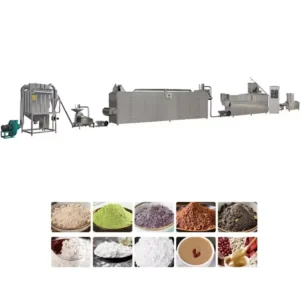
Healthy Baby Food Production Line Nutritional Powder Equipment for Baby Food Supplements for Flour Processing Machinery
¥8,500.00 Select options This product has multiple variants. The options may be chosen on the product page -

High Quality Automatic PLC Controlled 500kg/h Twin Screw Extruder Machine for Baby Rice Nutrition Powder
¥8,238.27 Add to cart -
500kg/h Automatic PLC Controlled Nutrition Baby Food Extruder Machine for Rice Cereal Processing
¥9,500.00 Add to cart