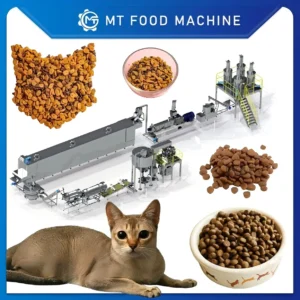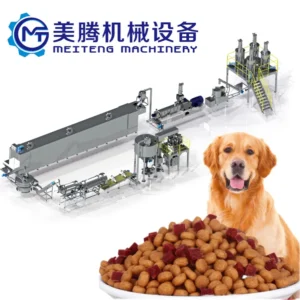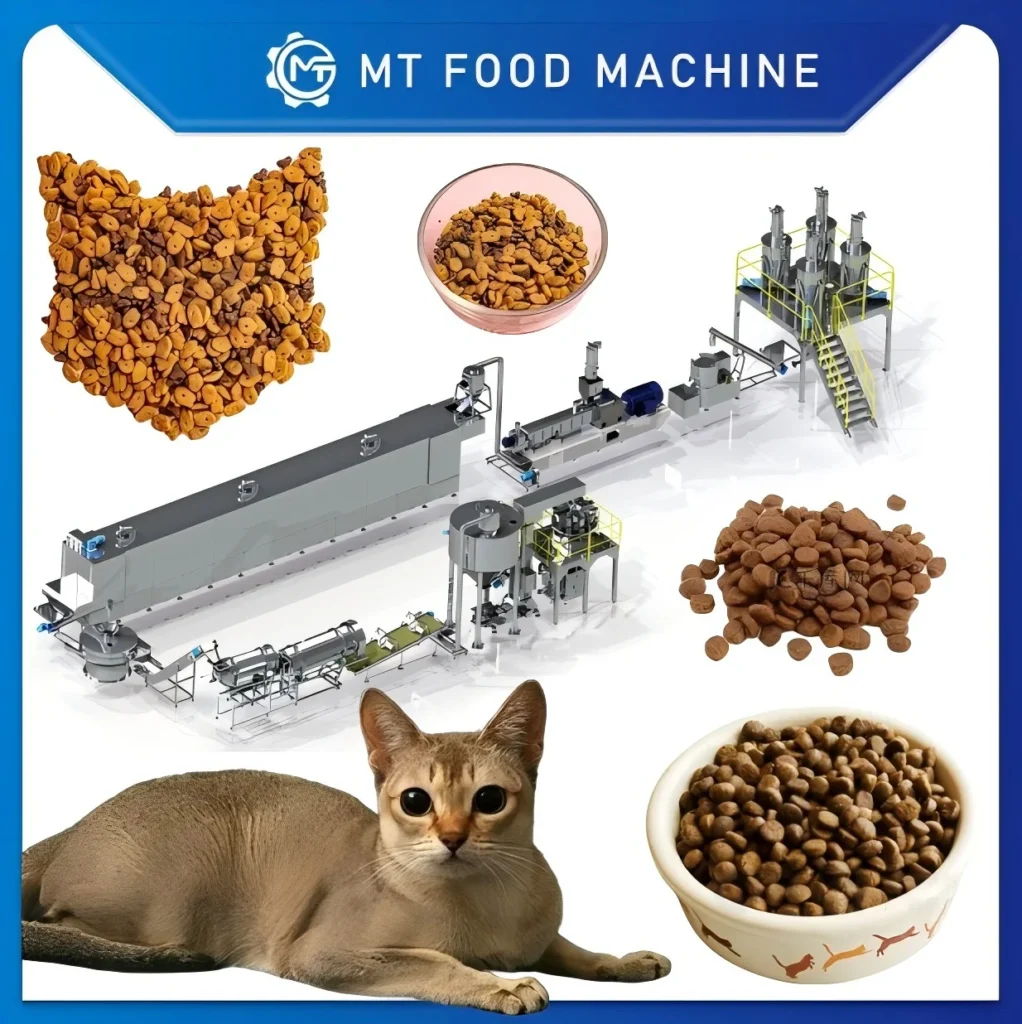
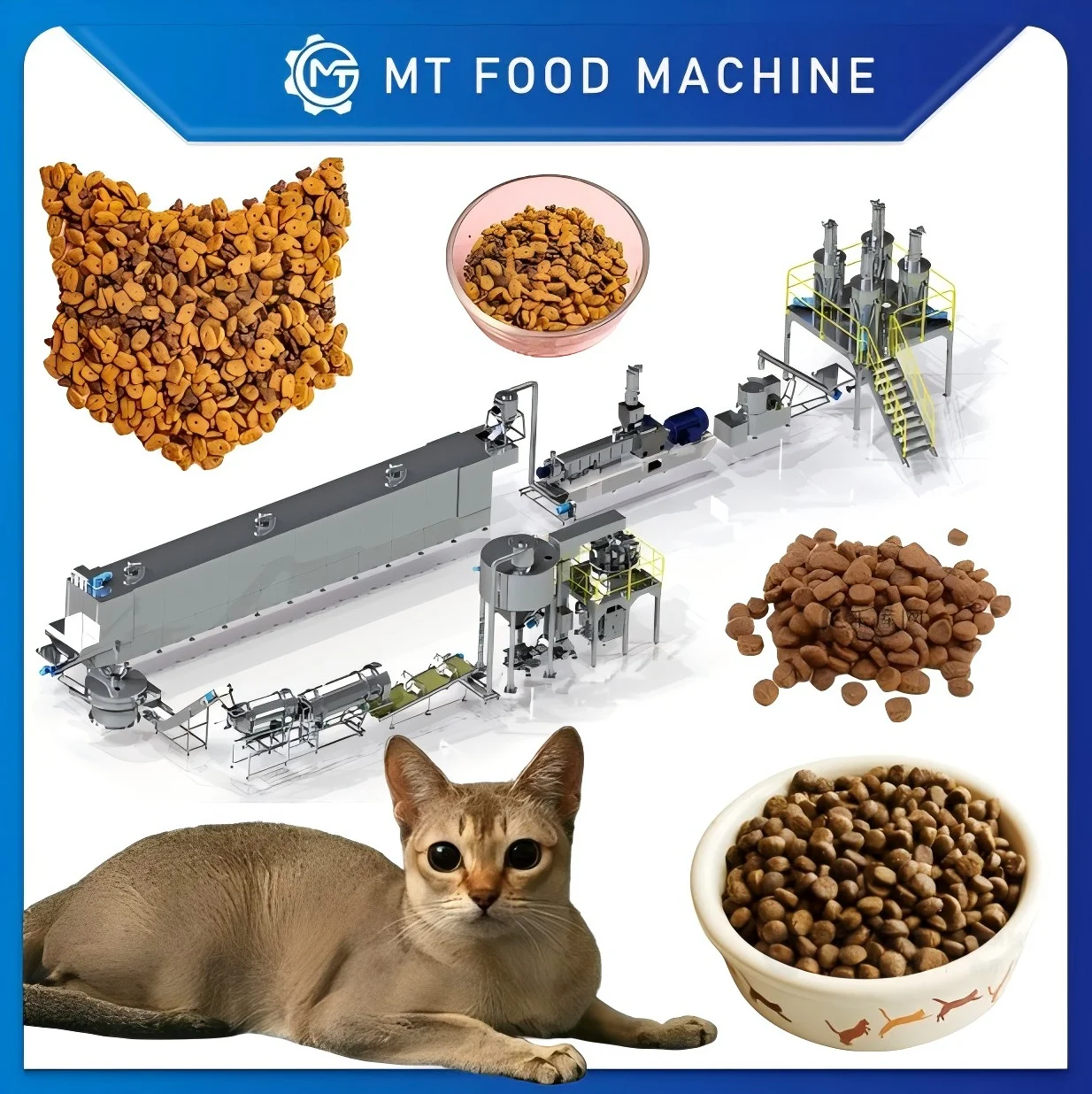
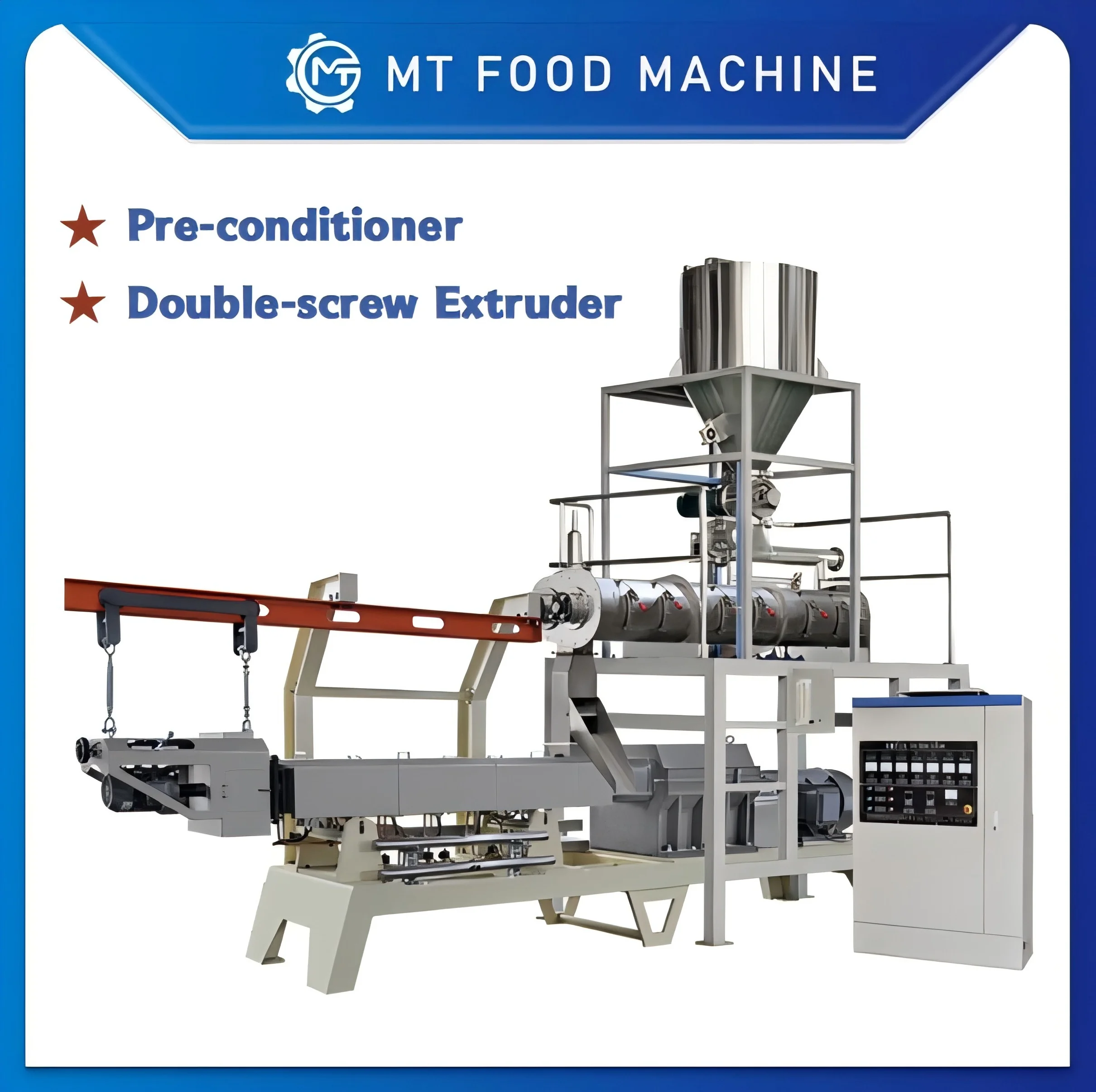
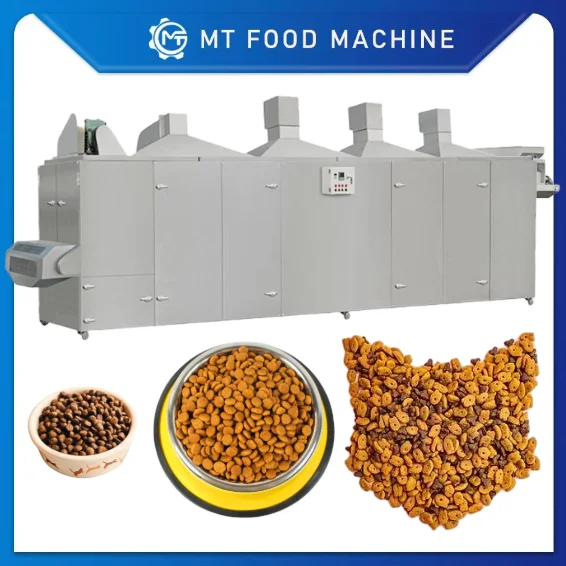
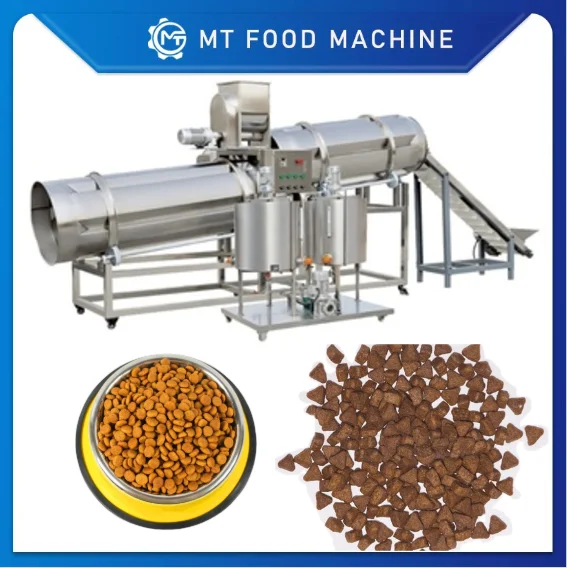
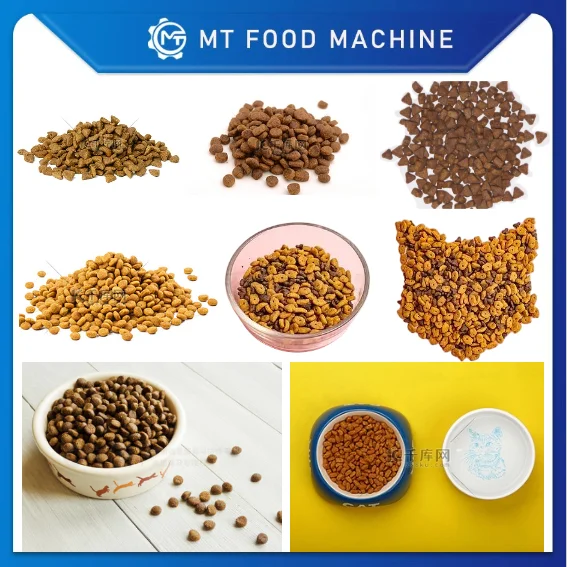
Cat Food Processing Line, PLC Controlled, Full Automation — engineered as one integrated turnkey project from batching through extrusion, drying, coating, cooling, and packing.
- Throughput matched across every station to eliminate downstream bottlenecks, with screw and die configuration specified to your raw material formulation and target kibble density.
- Recipe adaptability covers dry kibble, semi-moist, and treat formats on a unified platform with user-friendly interface.
Line layout, capacity calculation, and trial run on your actual raw material are completed in our testing workshop before shipment, ensuring verified performance from day one.
Description
Integrated Throughput Engineering — Every station from batching to packing is sized against the same formulation target rather than quoted as isolated nominal capacities.
Technical Specifications
| Parameter | Value |
|---|---|
| Product Type | Cat Food Processing Line |
| Output Capacity | 100–200 kg/h (basis not stated in source — confirm raw material formulation, moisture content, and kibble size) |
| Control System | PLC Controlled |
| Automation Level | Full Automation |
| Line Stations | Batching, extrusion, drying, coating, cooling, packing |
| Recipe Adaptability | Dry kibble, semi-moist formats, and treats |
| Interface | User-Friendly Interface |
| Screw Type | Not stated in source |
| Screw Diameter | Not stated in source |
| L:D Ratio | Not stated in source |
| Barrel Zones | Not stated in source |
| Die Configuration | Not stated in source |
| Rated Power | Not stated in source |
| Voltage & Frequency | Not stated in source |
| Overall Dimensions | Not stated in source |
| Net Weight | Not stated in source |
Application Suitability
| Application | Material or Output |
|---|---|
| Dry cat kibble production | Poultry meal, fish meal, corn, rice, and vitamin premix blends |
| Semi-moist cat food | High-moisture protein bases with humectant additions |
| Cat treat extrusion | Palatability-enhanced formulations with fat and flavour coatings |
| Multi-species pet food | Variable protein-to-starch ratios across recipe changes |
| Functional nutrition kibble | Fortified blends with heat-sensitive additive staging |
Why "Rated Capacity" Means Nothing Without Your Recipe
A cat food processing line turnkey project quoted at a fixed hourly output tells you what the extruder can do on a reference material — not what it will produce on your salmon-heavy, high-fat formulation. Capacity verification starts with the buyer’s actual recipe, not a generic benchmark.
I once signed off on a line that ran flawlessly during a factory trial on a standard chicken meal recipe. When the buyer’s real formula — loaded with salmon by-product and nearly double the expected fat content — hit the barrel on installation day, the extruder choked and the kibble came out dense and lifeless. Three days of swapping screw elements and rebuilding the barrel temperature profile followed before we reached specification [NEED_CITE: effects of fat content on extrusion barrel slip and residence time]. Lines assembled from standalone vendor quotes compound this risk because each station is rated independently, and downstream drying or coating capacity often falls short of what the extruder actually delivers on the buyer’s material.
Phased Layout Planning Across All Stations
Designing a cat food processing line turnkey project as a single integrated layout means every conveyor width, dryer belt length, and coating drum volume is calculated against the same throughput target. When extrusion, drying, coating, cooling, and packing are sourced from separate vendors, each unit arrives with its own rated capacity — but the gaps between those ratings become production bottlenecks that only appear after commissioning.
Matching throughput at each station prevents the common scenario where the extruder pushes product faster than the dryer can reduce moisture to shelf-stable levels, forcing unplanned line stoppages or accepting kibble that fails moisture specification. The layout must also account for the footprint of buffer conveyors and accumulation tables that allow one station to continue running during brief changeovers at the next [NEED_CITE: throughput balancing in continuous food extrusion lines].
Recipe-Driven Screw and Die Specification
The screw configuration and die plate are not universal fittings — they must be specified against the buyer’s raw material behaviour and target kibble density. A formulation rich in fresh meat slurry demands different shear profiles and compression ratios than a starch-dominant recipe, and the die orifice geometry directly controls expansion rate and final piece weight.
Running a trial on the buyer’s actual raw material in the testing workshop before shipment confirms whether the selected screw elements and die produce the intended kibble texture, density, and bowl buoyancy. Without this step, product development begins only after installation, turning the buyer’s production floor into an expensive laboratory [NEED_CITE: twin-screw element configuration for high-protein pet food extrusion].
Decoding the Specs That Matter for Kibble Quality
The PLC-controlled automation system governs barrel temperature zones, screw speed, and feed rate in coordinated sequences, which is essential for batch-to-batch consistency when switching between dry kibble and semi-moist recipes. Each barrel zone operates at an independently set temperature, and the number of zones determines how precisely the thermal profile can be shaped — fewer zones mean broader heat input and less control over starch gelatinisation versus protein denaturation. The L:D ratio of the barrel sets total residence time: a longer ratio allows more gradual cooking for sensitive ingredients, while a shorter ratio suits high-throughput, starch-heavy formulations. Die configuration governs kibble shape and expansion — multi-hole dies increase output per cut but require precise moisture control to maintain uniform piece weight across the die face. Full automation across batching, extrusion, drying, coating, cooling, and packing reduces manual intervention points where recipe drift typically enters the process.
The Hidden Cost of Mismatched Downstream Equipment
When a dryer is sized to a nominal extruder output rather than the actual moisture load of the buyer’s recipe, kibble exits the dryer above safe water activity levels, shortening shelf life and inviting mould growth in sealed bags. An undersized coating drum cannot apply the fat and palatant layer evenly across the full throughput, leaving some kibble under-flavoured and triggering palatability complaints from the end market [NEED_CITE: water activity thresholds for dry pet food shelf stability].
Cooling conveyors that are too short fail to bring kibble temperature down before packing, causing condensation inside the bag and accelerating lipid oxidation. These mismatches rarely appear in vendor quotations because each supplier sizes their own equipment to a generic duty point.
Why Procure This Line as One Project
Throughput matching across every station — batching, extrusion, drying, coating, cooling, packing — is engineered under a single supplier, so no downstream bottleneck hides between separate vendor scopes. Screw configuration and die design are specified to the buyer’s raw material and target kibble density rather than copied from a generic build sheet.
An in-house testing workshop runs the buyer’s actual formulation before shipment, producing a trial run report that confirms kibble density, expansion, and texture against specification. Pre-sales consultation covers line layout and utility planning, and on-site installation includes commissioning with operator training so the first production run meets target output from day one. Twin-screw extrusion expertise spans pet food, aquatic feed, snacks, cereals, and protein applications, ensuring the engineering team understands formulation behaviour beyond a single product category.
Documentation & Verification
- Line layout drawing with capacity calculation based on your formulation and kibble size
- Screw and die configuration record matched to your recipe’s protein and fat profile
- Electrical schematic confirming voltage, frequency, and control language for your facility
- Trial run report on your raw material from the in-house testing workshop
- Factory test record documenting full-line run before crating and dispatch
- Operation and maintenance manual covering every station in the integrated line
Installation, Commissioning & Support
- Foundation and floor space planning based on the full line footprint and utility routing
- Dedicated electrical circuit sizing matched to the PLC-controlled automation panel load
- Modular station delivery allowing phased assembly aligned with your construction schedule
- First-run parameter setting on your actual formulation during on-site commissioning
- Operator training covering recipe changeover, screw element inspection, and die maintenance
- Wear parts list with recommended spare screw elements and die plates for initial stock
What to Share When Requesting a Quotation
Provide your target formulation — including primary protein sources, starch base, fat percentage, and any functional additives — along with the kibble size, shape, and density specification your market expects. Specify your daily or hourly production target, available workshop floor area and ceiling height, and the local voltage and frequency standard. Indicate whether you need the line to handle recipe changeovers between dry kibble and semi-moist formats on the same platform, and confirm the preferred control interface language for your operators.
Frequently Asked Questions
Q: How is line capacity verified against my specific raw material formulation and target kibble density?
A: The in-house testing workshop runs a trial on your actual raw material before shipment. Screw elements, barrel temperature profile, and die plate are adjusted during the trial until kibble density, expansion, and texture match your specification. A trial run report is issued documenting the results and the final configuration settings.
Q: What does the phased installation and commissioning schedule look like for a complete line?
A: Equipment arrives in modular station groups, allowing assembly to follow your facility’s construction readiness. Commissioning begins with individual station checks, progresses to linked dry runs, and concludes with full-line production on your formulation. Operator training runs in parallel during the commissioning phase.
Q: How is throughput matched between extrusion, drying, coating, and packing stations to prevent bottlenecks?
A: Each station is sized during layout engineering against the same formulation-based throughput target rather than quoted as independent nominal capacities. Conveyor speeds, dryer belt length, coating drum volume, and packing rate are all calculated to handle the actual output the extruder produces on your specific recipe.
Q: What voltage, frequency, and control language options are confirmed before production begins?
A: The electrical schematic is prepared after confirming your facility’s voltage and frequency standard. The PLC interface language is set to your operators’ preference before the control panel is built, ensuring the line is ready for immediate use upon commissioning without software reconfiguration delays.
Q: What operator training and ongoing maintenance support is included after on-site commissioning?
A: Training covers recipe changeover procedures, screw element and die inspection routines, dryer temperature management, and coating drum adjustment. A wear parts list with replacement intervals is provided, and ongoing maintenance support is available for the full integrated line under a single supplier scope.
Related products
-
MT Brand 450-550kg/h PLC Controlled Multi-Species Pet Food Processing Line
¥40,000.00 Select options This product has multiple variants. The options may be chosen on the product page -
MT70 200-250kg/h Dog Cat Pet Food Processing Line 380V 50HZ Three Phase 45KW
¥35,000.00 Select options This product has multiple variants. The options may be chosen on the product page -
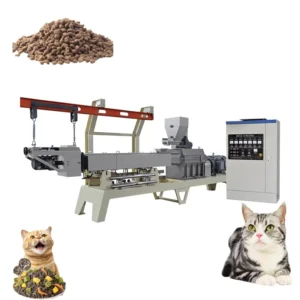
Premium Pet Food Processing Equipment Dog Cat Feed Making Machine
¥9,500.00 Select options This product has multiple variants. The options may be chosen on the product page -
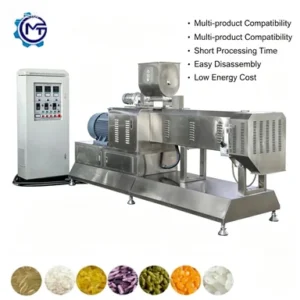
Durable Stainless Steel Twin Screw Extruder Floating Sinking Aquatic Fish Feed Processing Production Equipment
¥65.00 Select options This product has multiple variants. The options may be chosen on the product page