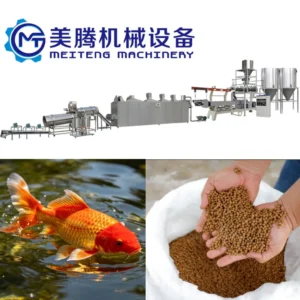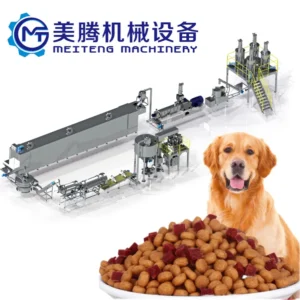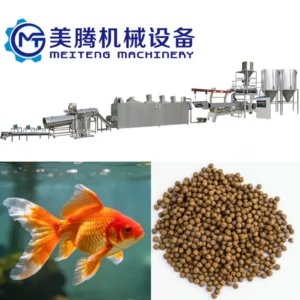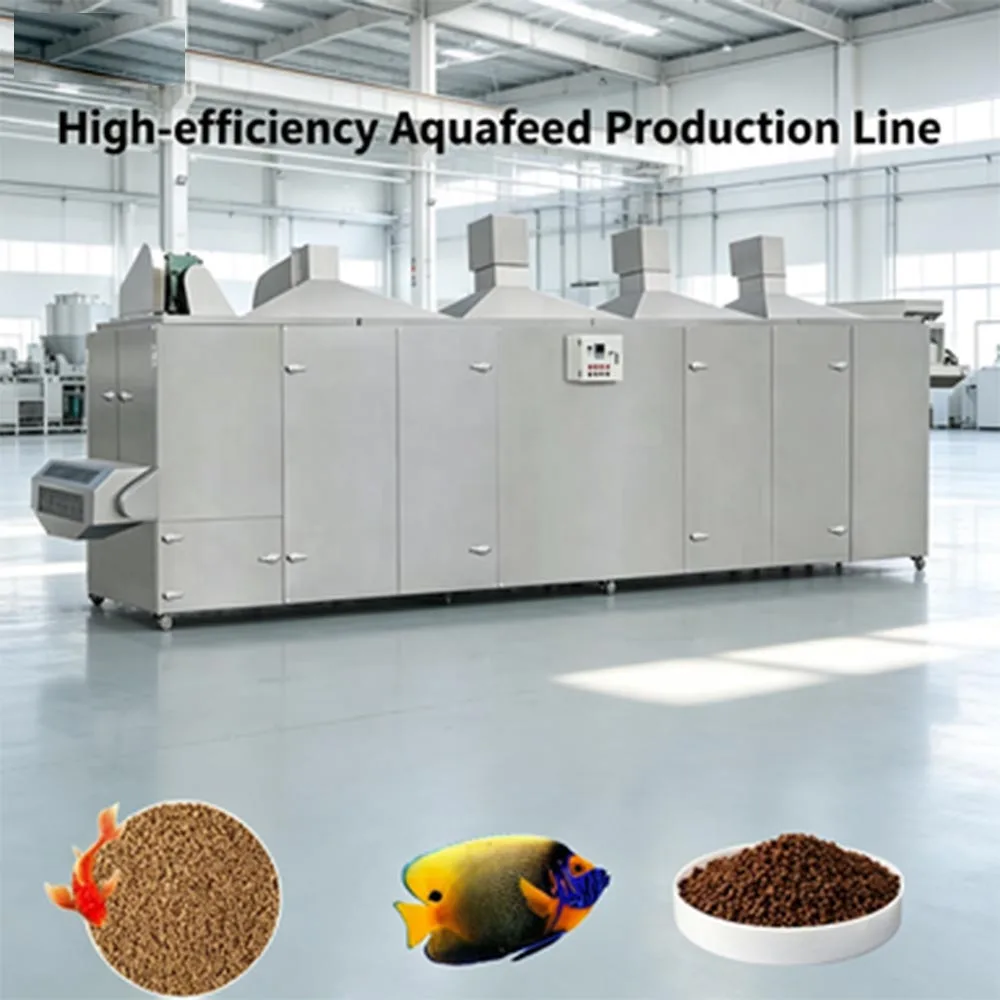


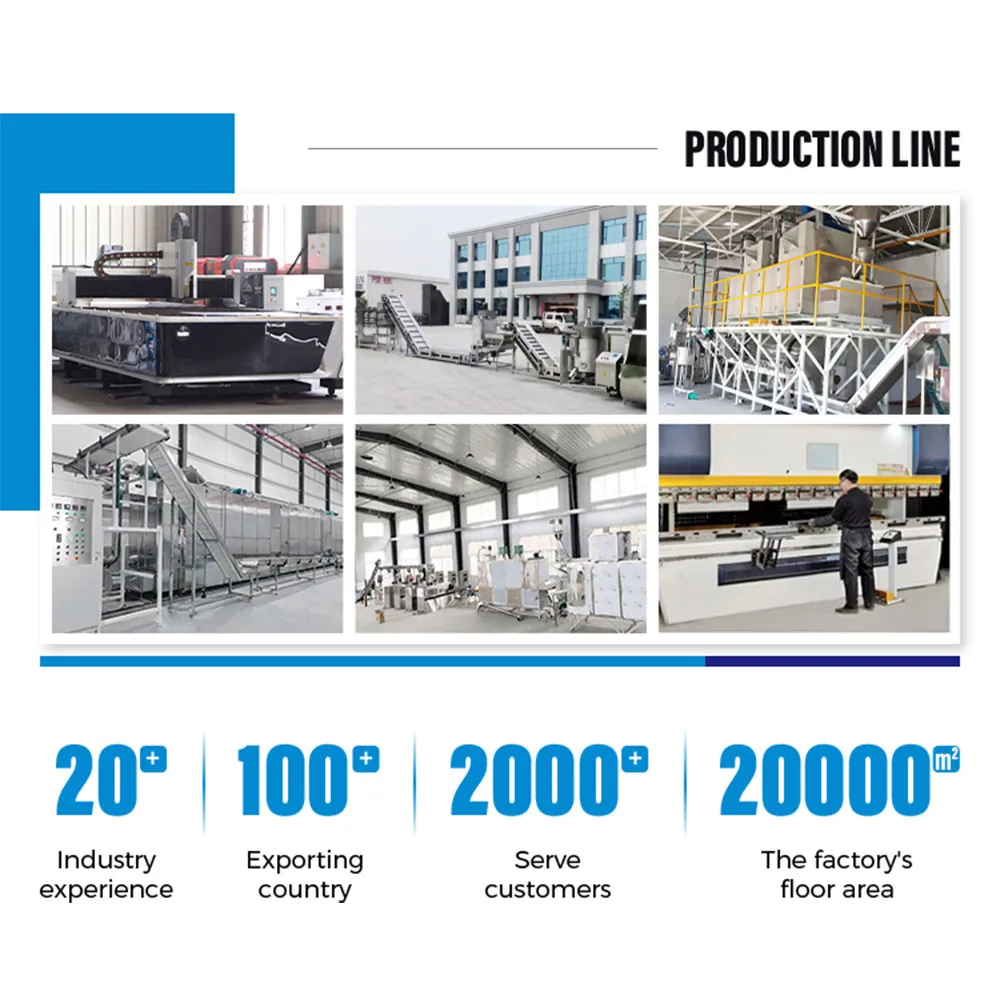
Continuous Tunnel Type Fish Feed Pellet Drying Machine, food grade 304 stainless steel, intelligent PLC automatic control, full continuous production from mixing through extrusion, drying, seasoning and screening. Designed as a turnkey aquatic feed line where dryer capacity, conveying speed and coating throughput are calculated together to eliminate bottlenecks across every station.
- Energy saving transmission and heating system for lower per-unit production cost
- In-house testing workshop trial runs on your raw material before shipment, with full documentation and matched screw/die configuration
Description
Integrated Throughput Matching — Every station from the raw material mixer through the continuous tunnel dryer and downstream seasoning is calculated against the same throughput target, so the line runs at its designed output without downstream bottlenecks.
Technical Specifications
| Parameter | Value |
|---|---|
| Product Type | Fish Feed Pellet Drying Machine |
| Dryer Construction | Continuous Tunnel Type |
| Contact Material | Food Grade 304 Stainless Steel (machine body and material contact parts) |
| Control System | Intelligent PLC automatic control |
| Line Configuration | Raw material mixer, extruder, dryer, seasoning coating machine, vibrating sieve, conveyor equipment |
| Automation Level | Full continuous automatic production (mixing to discharging) |
| Energy Design | Optimized energy saving transmission structure and heating system |
| Operation Interface | Humanized operation interface |
| Maintenance Design | Reasonable internal structure for daily cleaning and quick part replacement |
| Processing Capacity | Large stable processing capacity for medium-large scale production (basis not stated in source — confirm throughput kg/h and moisture reduction range) |
| Certifications | Meets international food hygiene standards (specific CE / ISO certification not stated in source — verify against manufacturer documentation) |
Application Suitability
| Application | Material or Output |
|---|---|
| Floating fish feed pellet production | Fish meal, soybean meal, corn powder, compound additives |
| Sinking aquatic feed pellet production | Soybean meal, fish meal, starch, vitamin premix |
| Koi and goldfish feed manufacturing | Mixed grain and protein formulations with oil coating |
| Tropical and freshwater fish feed | Compound aquaculture feed with varying fat ratios |
| Medium to large scale commercial production | Continuous uninterrupted mass production of dry pellets |
Why the Dryer Is Where Most Aquatic Feed Lines Lose Their Rated Output
A fish feed pellet dryer turnkey production line only holds its nameplate capacity when the dryer, extruder, and coating stations are calculated as one system, not specified in isolation.
I spent years on the assembly floor watching lines get built station by station, each sized to its own catalog number. When a Southeast Asian aquaculture client ordered a tunnel dryer matched to the extruder’s nominal output, their high-oil formula left pellet surfaces tacky. The pellets stuck to the conveyor chain plates, and nearly half the output broke apart before reaching the seasoning drum. The dryer had enough thermal capacity, but the belt speed and air temperature profile were set for a generic formula, not theirs. That line only reached its intended throughput after we reworked the drying curve and adjusted the mesh belt parameters on site. [NEED_CITE: moisture and surface oil behavior in extruded aquatic feed during drying]
Throughput Matching Across Every Station
A fish feed pellet dryer turnkey production line fails when the extruder pushes more wet pellet than the tunnel dryer can carry at a stable moisture gradient. The continuous tunnel dryer in this configuration is sized against the upstream extruder output and the downstream seasoning drum cycle so that no station queues or starves. PLC control coordinates belt speed, zone temperatures, and fan volume across the drying section in real time.
Utility Planning and Phased Installation
Before any steel is cut, the utility plan covers steam or thermal oil supply, exhaust routing, electrical load per heating zone, and compressed air for cleaning. Installation follows a phased sequence: foundation and leveling, dryer section assembly, upstream extruder and mixer positioning, downstream cooler and packing connection. Each phase has a defined checkpoint before the next begins, keeping the commissioning schedule predictable. [NEED_CITE: industrial dryer installation sequence for food processing plants]
What the Stainless Steel Contact Surfaces Actually Change
Food grade 304 stainless steel on the machine body and all material contact parts prevents iron contamination that can oxidize fats in fish meal formulas, causing rancidity before the product reaches the warehouse. The material choice also matters for wash-down routines: aquaculture feed formulations leave protein and oil residue that mild steel absorbs over repeated cycles. A stainless tunnel interior handles caustic cleaning agents without pitting. The energy saving transmission structure reduces the drive load on the mesh belt motor, which matters during long uninterrupted production runs where even marginal friction savings accumulate across thousands of operating hours. The intelligent PLC automatic control system stores recipe parameters so that when a plant switches between floating and sinking pellet formulas, the drying temperature profile and belt speed change without manual recalibration at each zone.
What Happens When Dryer and Extruder Are Specified Separately
When the dryer is sourced from a different vendor than the extruder, the thermal profile is often guessed from a catalog chart rather than calculated against the actual pellet size, moisture content, and fat ratio leaving the die. The result shows up weeks after startup: pellets that test dry on the surface but retain core moisture, leading to mold growth in sealed bags. Or the reverse — overdried pellets that fracture during the coating drum stage, producing excess fines that the vibrating sieve cannot recover. [NEED_CITE: core moisture migration in extruded pellets during tunnel drying]
Why Buyers Source This Line as a Single Project
The line layout and capacity calculation document shows exactly how many kilograms per hour move through each station, so there is no ambiguity about where a slowdown originates. Screw and die configuration is recorded against the buyer’s raw material formula before the extruder ships, and the tunnel dryer zones are set to match the moisture curve that formula produces. An in-house testing workshop runs the buyer’s actual ingredients through the full sequence before dispatch, generating a trial run report that covers pellet density, moisture reduction, and surface condition. Electrical schematics arrive with voltage and frequency confirmed to the target facility, and the control language is specified before the PLC is programmed. Pre-sales consultation continues through on-site installation, operator training, and ongoing maintenance, keeping one supplier accountable for every station.
Documentation & Verification
- Line layout and capacity calculation showing throughput matching between extruder, dryer, and coating stations
- Trial run report on customer’s actual raw material covering pellet buoyancy, moisture, and surface condition
- Electrical schematic with voltage, frequency, and control language confirmed to target market
- Screw and die configuration record matched to buyer’s formula and target pellet specification
- Operation and maintenance manual with cleaning intervals for stainless steel tunnel interior
- Factory test record documenting continuous run performance before dispatch
Installation, Commissioning & Support
- Foundation plan accounts for tunnel dryer length, thermal expansion clearance, and exhaust duct routing
- Electrical load schedule specifies dedicated circuits per heating zone on the PLC-controlled dryer
- Modular dryer sections arrive for on-site assembly with belt tensioning and alignment checks
- First-run commissioning sets drying curve parameters against actual pellet moisture from the extruder
- Operator training covers PLC recipe storage for switching between floating and sinking feed formulas
- Wear parts list identifies mesh belt segments, drive chains, and heating elements for first replacement cycle
What to Include With Your Inquiry
To configure the fish feed pellet dryer turnkey production line correctly, share your raw material formula including fat percentage and target pellet size. Confirm your local voltage and frequency, the available workshop floor area, and ceiling height for exhaust routing. Let us know whether you need a trial run on your ingredients before shipment.
Frequently Asked Questions
Q: How is dryer capacity matched to extruder output so the line holds its nominal throughput?
A: The tunnel dryer belt speed, heating zone count, and airflow are calculated against the extruder’s actual output on your formula, not its catalog rating. We document the throughput at each station in the line layout so every section carries the same load without queuing or starvation.
Q: What voltage, frequency, and control language are confirmed before production begins?
A: We confirm your facility’s supply voltage and frequency before ordering electrical components. The PLC interface language is set during programming so operators see instructions in their working language from the first day of commissioning.
Q: Can a trial run on our raw material be done before shipment, and what does the report cover?
A: Yes. We run your ingredients through the extruder and dryer in our testing workshop. The report documents pellet density, moisture reduction across the tunnel, surface condition after drying, and any belt speed or temperature adjustments made.
Q: What is the phased installation and commissioning schedule for a complete line?
A: Installation proceeds through foundation work, dryer assembly, upstream and downstream station positioning, electrical and utility connection, and then sequential commissioning from mixer to packing. Each phase has a defined checkpoint before the next begins.
Q: How are wear parts and spare screws and dies supplied for the first replacement cycle?
A: A wear parts list ships with the line, identifying mesh belt segments, drive chains, screws, and dies. We recommend ordering the first replacement set with the initial shipment so spares are on hand before the first scheduled changeover.
Related products
-
MT Brand 450-550kg/h PLC Controlled Multi-Species Pet Food Processing Line
¥40,000.00 Select options This product has multiple variants. The options may be chosen on the product page -
Full Automatic Pet Feed Production Line Large Twin Screw Grain Extrusion Machine
¥9,500.00 Select options This product has multiple variants. The options may be chosen on the product page -
4-5t/h High Capacity Multi-Species Fish Feed Processing Line to Produce Fish Food
¥65,000.00 Select options This product has multiple variants. The options may be chosen on the product page -
In Stock Pet Feed Production Line / Dog Cat Food Extrusion Machine
¥9,500.00 Select options This product has multiple variants. The options may be chosen on the product page