

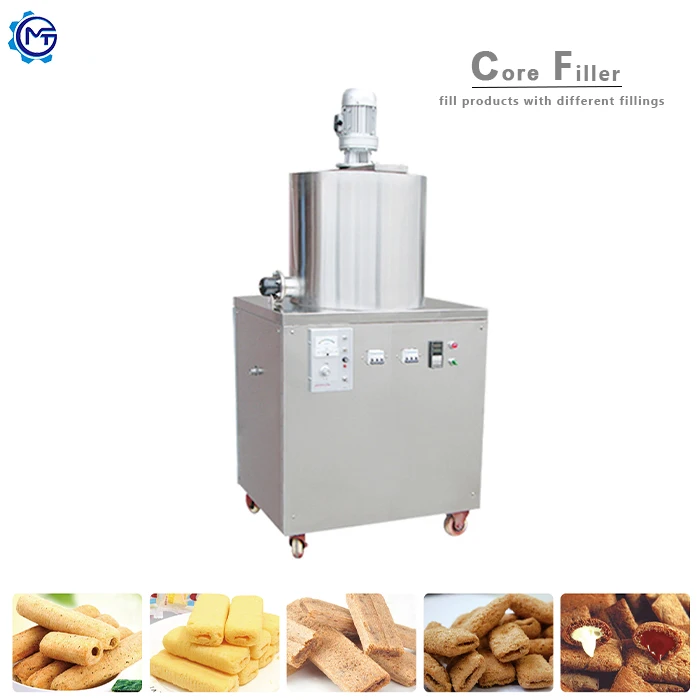
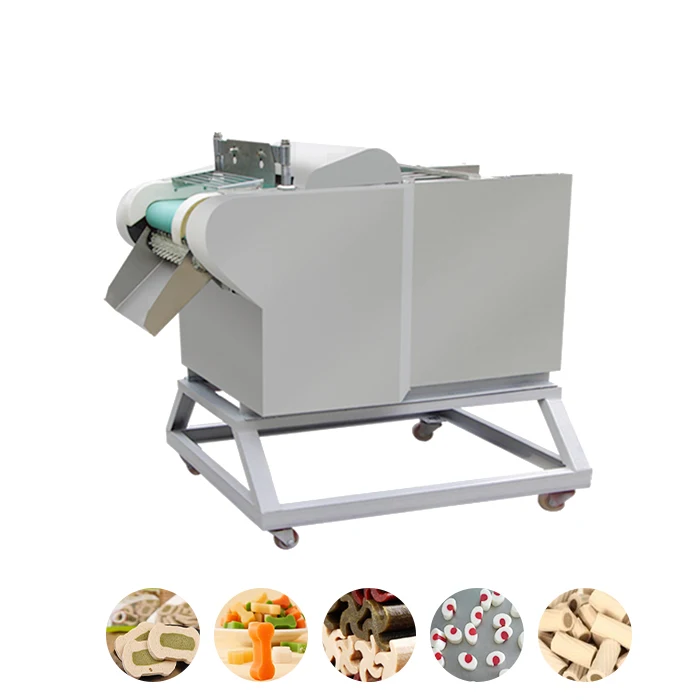
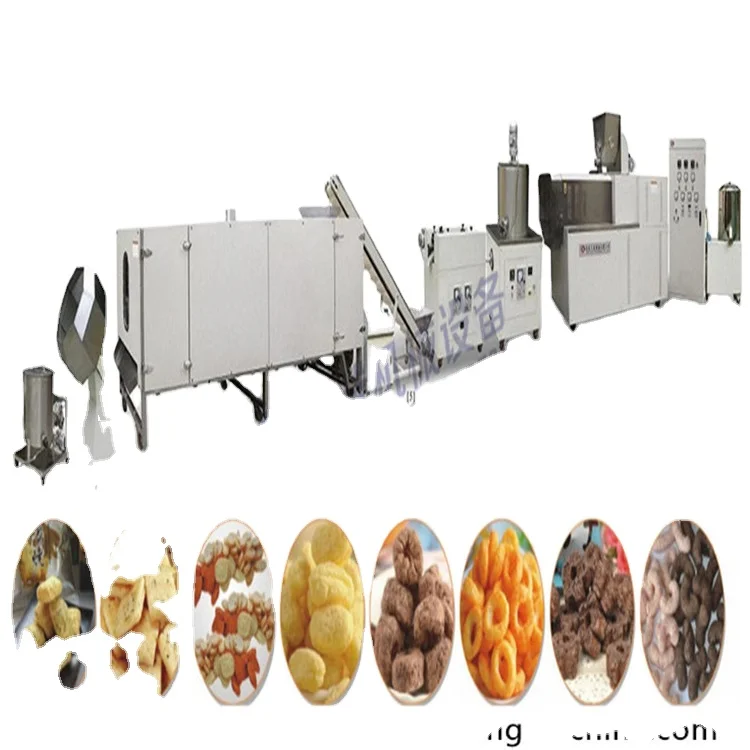
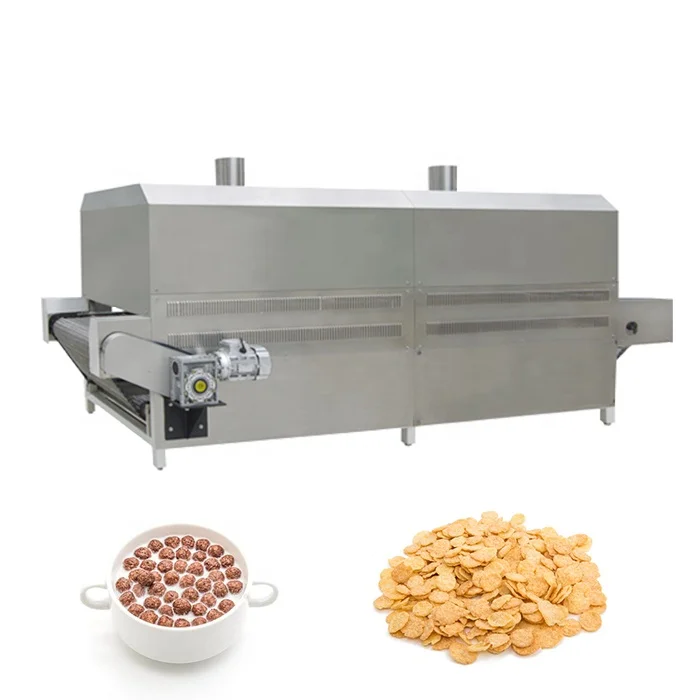

MT65 / MT70 / MT85 Core Filling Snack Extrusion Line — twin-screw extruder, full line from mixing to flavoring, CE certified.
- Throughput balanced across extruder, multi-layer dryer, and coating stations to prevent bottlenecking
- Screw configuration and die design matched to core-filled or puffed snack format and target density
Layout design, in-house trial runs on customer raw material, and on-site commissioning included for turnkey project delivery.
Description
Integrated Throughput Engineering — line layout, capacity calculation, and station matching ensure your extruder, dryer, and flavoring drum run in sync rather than fighting each other for floor space and belt speed.
Technical Specifications
| Parameter | Value |
|---|---|
| Model | MT65 / MT70 / MT85 |
| Product Type | Core Filling Puff Snack Food Extrusion Line |
| Extruder Type | Twin-screw |
| Installed Power | 70 kW (MT65) / 100 kW (MT70) / 200 kW (MT85) |
| Real Power Consumption | 40 kW (MT65) / 70 kW (MT70) / 150 kW (MT85) |
| Output Capacity | 100–150 kg/h (MT65) (basis not stated in source — confirm raw material / moisture) |
| Output Capacity | 200–240 kg/h (MT70) (basis not stated in source — confirm raw material / moisture) |
| Output Capacity | 300–400 kg/h (MT85) (basis not stated in source — confirm raw material / moisture) |
| Overall Dimensions | 20000×1200×2200 mm (MT65) / 25000×1500×2200 mm (MT70) / 30000×3500×4300 mm (MT85) |
| Line Stations | Mixing, Extruding, Shaping, Cutting, Drying, Flavoring |
| Dryer Type | Multi-layer belt dryer |
| Flavoring System | Semi-automatic or automatic options; sugar, oil, and powder seasoning |
| Control System | Available with PLC or MCC control (confirm specification) |
| Voltage & Frequency | Configurable to target market standard (confirm before production) |
| Warranty | 24 months, lifetime service |
| Certification | CE, ISO |
Application Suitability
| Application | Material or Output |
|---|---|
| Core-filled puff snack production | Corn, rice, wheat flour blends with cream or chocolate filling |
| Extruded corn puff snacks | Corn grits, maize flour at controlled moisture |
| Fried snack formats | Extruded pellets from potato starch, corn, or wheat blends |
| Artificial rice production | Rice flour, broken rice, fortified grain blends |
| Specialty extruded snack categories | Multi-grain, high-protein, or fortified flour mixes |
What "Rated Capacity" Leaves Out About Your Core Filling Snack Extrusion Line
A number on a quote sheet means nothing if the dryer cannot keep up or the flavoring drum chokes at full throughput.
I spent years on the assembly floor bolting extruders together, and the most frustrating call I ever got was from a snack producer in Guangdong who bought a single-screw machine standalone, paired it with an undersized cooler, and watched product pile up at the discharge end until the whole line jammed. Two days of downtime before we reworked the layout. When you are evaluating a Core Filling Snack Extrusion Line turnkey production line, the real question is not what the extruder barrel can push out in isolation — it is whether every downstream station can absorb that volume on your specific recipe, at your target moisture, through your actual shift pattern. [NEED_CITE: industrial line throughput matching standards for food extrusion]
How Station Matching Prevents the Bottleneck That Kills Output
A Core Filling Snack Extrusion Line turnkey production line is only as fast as its slowest station. If the twin-screw extruder pushes product faster than the multi-layer belt dryer can reduce moisture to specification, you either slow the extruder down — losing the capacity you paid for — or you send under-dried product into the flavoring drum where seasoning clumps and sticks to the surface unevenly. The layout proposal for each model accounts for belt length, layer count, and air circulation volume so the dryer residence time matches the extruder output rate at your specific product density and moisture target.
Why Screw Configuration Matters More Than Barrel Diameter
The difference between a core-filled pillow snack that holds its shape and one that collapses after cutting comes down to how the twin-screw elements are arranged inside the barrel. Shear intensity, compression ratio, and residence time all shift when you change screw element spacing or reverse-element placement. For a core filling snack extrusion line turnkey production line targeting cream-filled formats, the die design and screw profile must produce a shell with enough structural integrity to wrap around the filling without splitting at the seam. Generic screw builds copied from a standard puff recipe will not get you there — the configuration has to be matched to your flour blend, your target expansion ratio, and the filling viscosity your injector delivers. [NEED_CITE: twin-screw element configuration principles for filled snack extrusion]
Reading the Spec Sheet Like a Process Engineer
The installed power versus real power gap across the MT65, MT70, and MT85 models tells you something practical: the drive motors are sized with headroom, meaning the extruder will not run at thermal limit during continuous production. The overall dimensions reveal the physical footprint you need to plan for — the MT85 line stretches to 30 meters in length and requires a ceiling clearance of at least 4.3 meters, which rules out low-bay workshops without structural modification. Multi-layer belt dryer selection directly affects your final product moisture; if you are producing a shelf-stable core-filled snack targeting below 3% moisture, the dryer section must be configured with sufficient belt length and airflow zones. The flavoring system options — semi-automatic or automatic — determine whether you need an operator stationed at the drum or whether oil and powder dosing runs from the control panel.
The Hidden Cost of Specifying Stations Separately
When a buyer sources an extruder from one vendor, a dryer from another, and a flavoring line from a third, nobody owns the throughput balance. The extruder supplier will quote output based on their barrel alone. The dryer vendor will size their belt based on a generic moisture curve. And when the line runs at half capacity because the flavoring drum cannot keep up, each supplier points at the others. I have seen this play out on factory floors more than once — the fix always costs more in retrofit downtime than it would have to specify the entire line as a single project from the start. [NEED_CITE: turnkey versus component-sourced food processing line commissioning outcomes]
Why Procurement Teams Specify This Line as One Project
Complete line configuration from mixing through packing means throughput is calculated across every station rather than quoted per machine in isolation. Screw configuration and die design are specified against your raw material sample and target product texture, not pulled from a generic catalog. The in-house testing workshop runs your actual flour blend before the line ships, so you see a trial run report — not just a promise — before the crates leave the factory. Voltage, frequency, and control panel language are confirmed against your site electrical standard before production starts, preventing the commissioning delays that happen when a control screen arrives in a language your operators cannot read. The MT65, MT70, and MT85 models each ship with a documented layout showing station spacing, utility connection points, and material flow direction so your installation contractor knows exactly what the floor needs to support.
Documentation & Verification
- Line layout and capacity calculation showing station-by-station throughput match for your target output
- Trial run report on your raw material conducted in the testing workshop before shipment
- Screw and die configuration record specific to your flour blend and filling type
- Electrical schematic with voltage and frequency confirmed to your local grid standard
- CE declaration of conformity and ISO certificate for customs and regulatory clearance
- Operation and maintenance manual with wear parts list and replacement intervals
Installation, Commissioning & Support
- MT85 line requires a minimum 30-meter clear floor length with 4.3-meter ceiling height for the dryer section
- Confirm three-phase voltage and frequency at your site before production to avoid motor rewinding on arrival
- Line ships in modular sections for container loading; reassembly on-site follows the provided layout drawing
- First-run commissioning includes screw speed, barrel temperature, and dryer zone calibration on your raw material
- Operator training covers PLC or MCC panel navigation, die changeover, and flavoring drum dosing adjustment
- Wear parts inventory — screws, die plates, cutter blades — listed with part numbers for reorder scheduling
What We Need to Quote Your Line Accurately
Send your raw material specification — flour type, protein content, and target moisture at the extruder inlet. Include your target product format, filling type, and daily volume requirement so we can match the model to your throughput. Confirm your workshop dimensions, ceiling height, and local voltage and frequency standard. If you have existing upstream mixing or downstream packing equipment, let us know the interface points so the line layout connects cleanly.
Frequently Asked Questions
Q: How is line capacity verified before the equipment ships?
A: We run your actual raw material in the in-house testing workshop and produce a trial run report showing output rate, product density, and moisture at each station. This confirms the stated capacity is achievable on your recipe, not just on a standard test flour. The report ships with the line documentation package.
Q: How do you balance throughput between the extruder, dryer, and flavoring drum?
A: Each station is sized during the layout phase based on your product moisture curve and seasoning load. The multi-layer belt dryer length and the flavoring drum volume are calculated to absorb the extruder output at full rated speed without product queuing or under-processing at any point in the line.
Q: What screw configuration is used for core-filled versus standard puff snacks?
A: Core-filled formats require a screw profile that produces a thicker, more structurally rigid shell to contain the filling without splitting. We specify element spacing, compression ratio, and die geometry based on your flour blend and filling viscosity. Standard puff snacks use a higher-expansion configuration for lighter texture.
Q: What does the installation and commissioning schedule look like?
A: After the line arrives at your facility, mechanical assembly follows the provided layout drawing. Electrical connection and control panel setup come next, followed by wet-run testing with your raw material. The full process typically spans several weeks depending on site readiness and utility availability at your plant.
Q: Are voltage and control language confirmed before production begins?
A: Yes. Before the MT65, MT70, or MT85 enters production, we confirm your site voltage, frequency, and preferred control panel language. This prevents the common delay where a machine arrives with incompatible motor wiring or an interface your operators cannot navigate during commissioning.
Related products
-

Automatic Puff Corn Snack Stick Production Line Equipment New Condition Machines
¥100.00 Select options This product has multiple variants. The options may be chosen on the product page -

Automatic Puffed Food Snack Machine Electric Corn Puffs Snacks Making Machinery New Condition Flavorful Puff Snack Production
¥7,550.00 Select options This product has multiple variants. The options may be chosen on the product page -

Stainless Steel Corn Puff Cake Making Machine Corn Snack Food Machines Top Selling Snacks Machine
¥8,560.00 Select options This product has multiple variants. The options may be chosen on the product page -

Sweet Puffed Rice Making Machine Stainless Steel Extruded Puff Snacks Ball Food Produce Machinery
¥7,580.00 Select options This product has multiple variants. The options may be chosen on the product page


