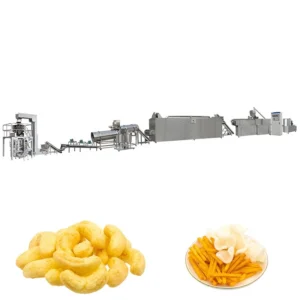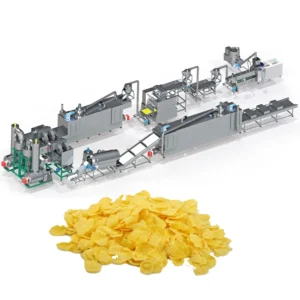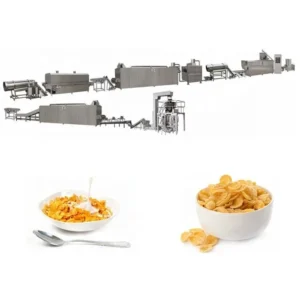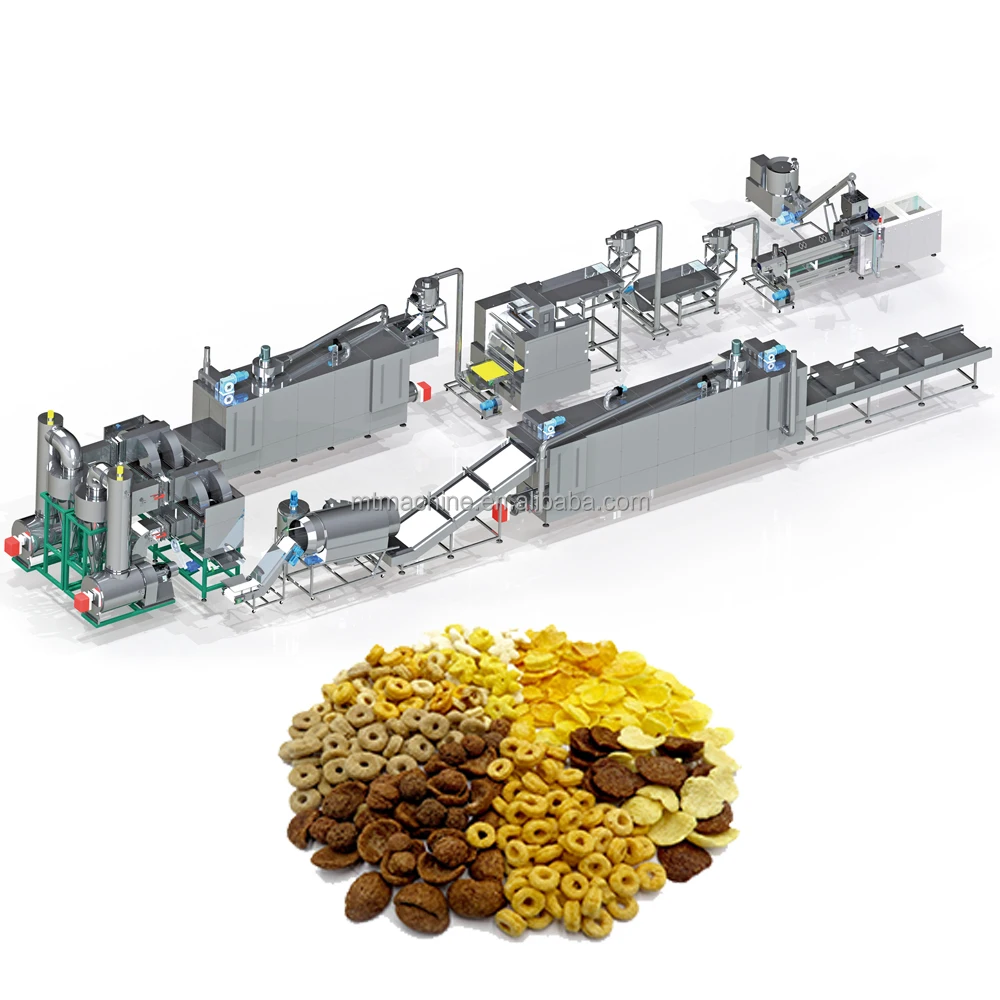
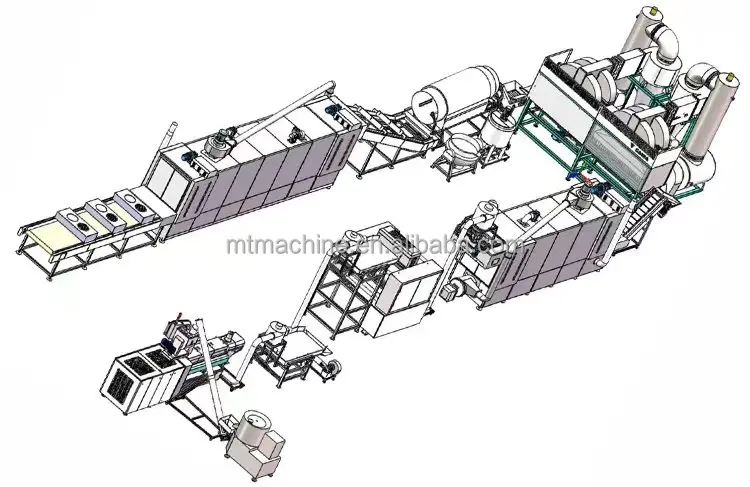
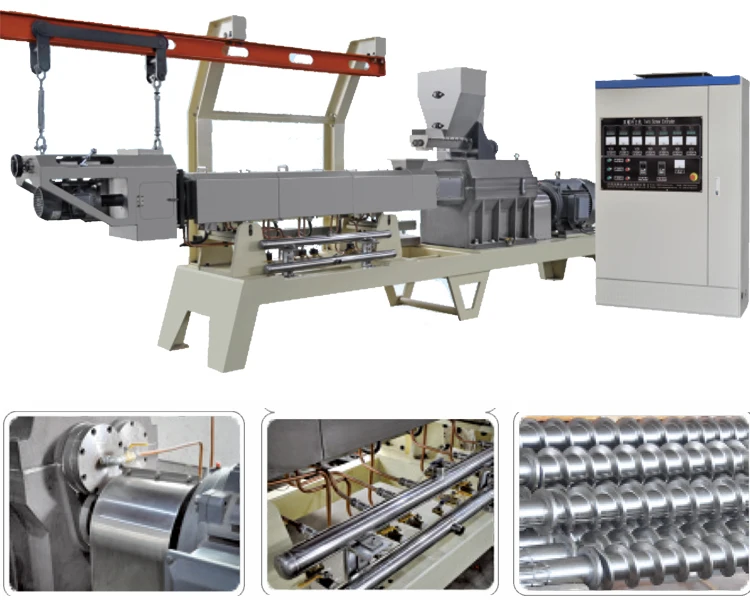
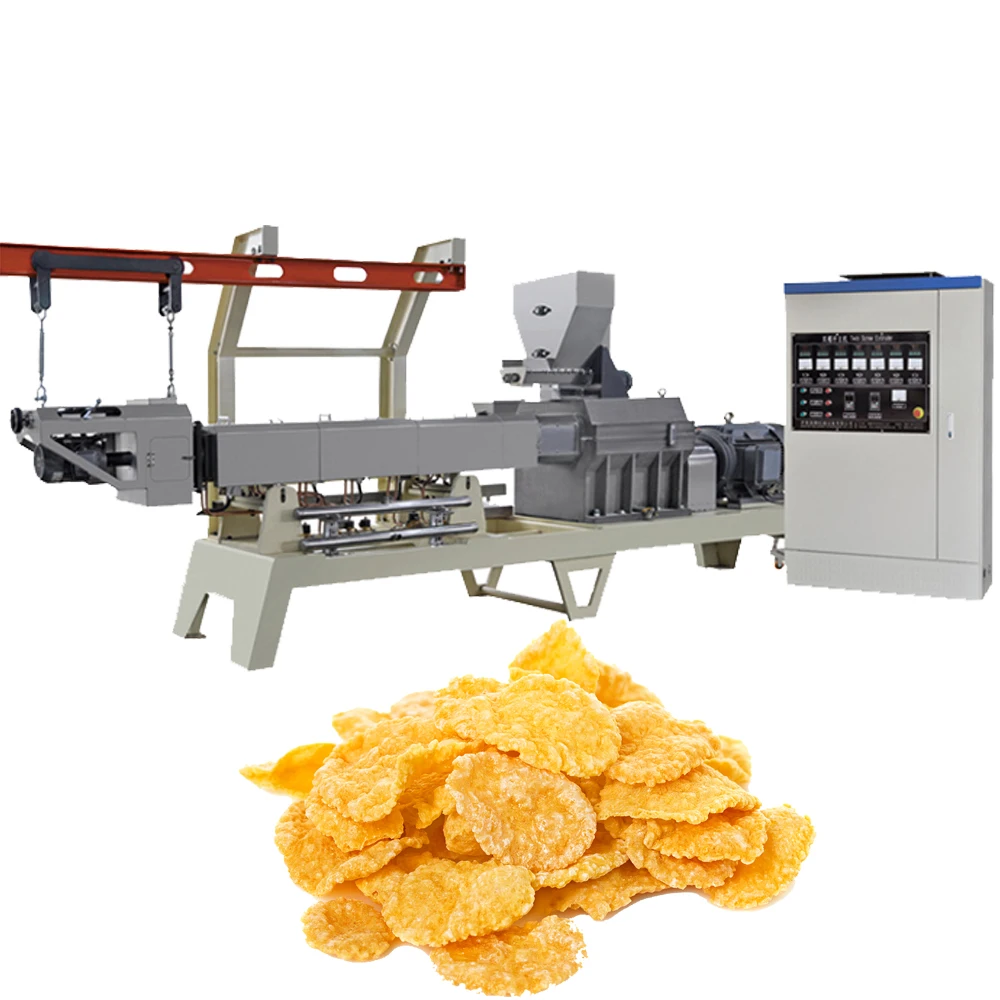
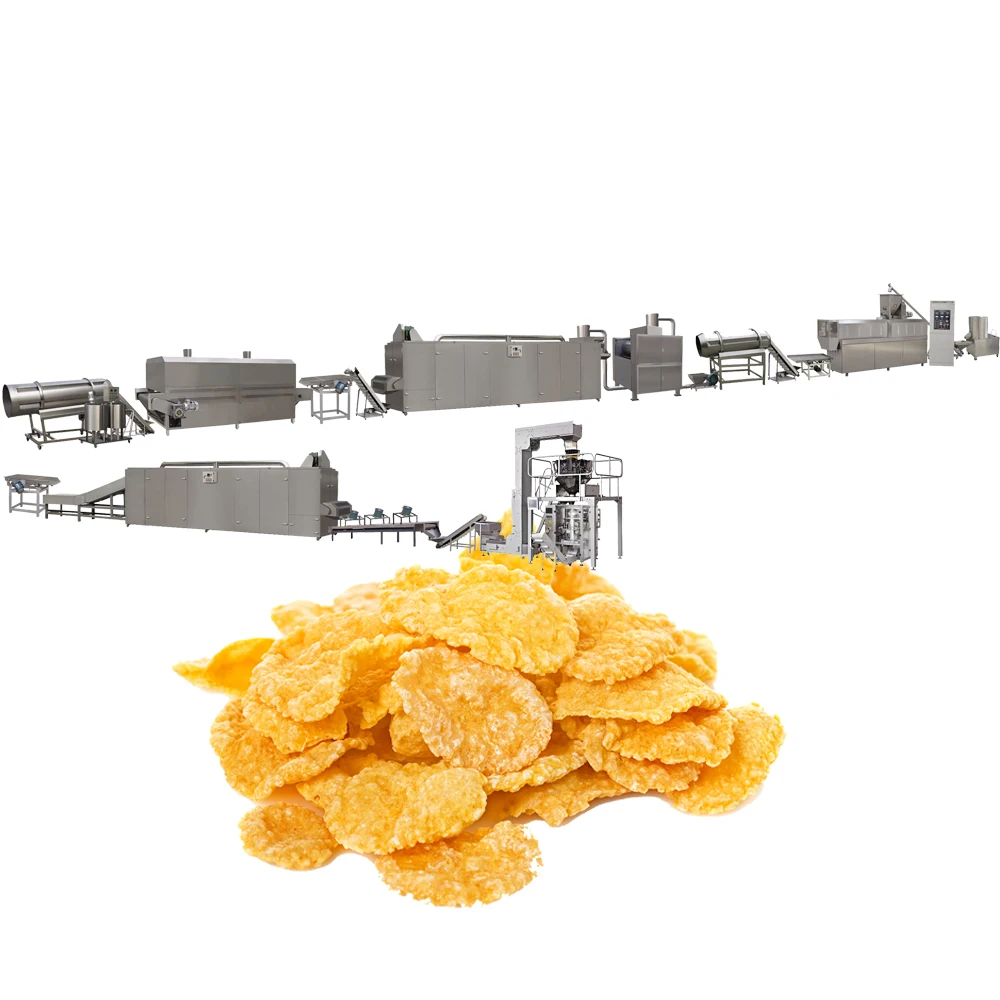

MT-75 Corn Flakes Breakfast Cereal Production Line, Twin-Screw Extruder, PLC-Controlled Flaking — engineered as a unified turnkey project from mixing through hot air roasting to sugar coating and packing.
- Screw configuration and die design are matched to your specific corn, rice, wheat or oat formulation for consistent flake density and texture
- Hydraulic double-roller flaking system with infrared temperature sensing ensures uniform thickness across every batch
Delivered as a single-supplier turnkey line with throughput matched at every station and in-house trial runs on your raw material before shipment.
Description
Throughput-Matched Turnkey Engineering — Every station from batching through roasting is sized to your actual corn, rice, or oat formulation so the corn flakes production line turnkey project runs at its documented rate without bottlenecks.
Technical Specifications
| Parameter | Value |
|---|---|
| Product Type | Corn Flakes Breakfast Cereal Production Line |
| Extruder Model | MT-75 Twin Screw Extruder |
| Screw Configuration | Twin-screw with automatic lubricating and cooling |
| Extruder Capacity | 200–300 kg/hr (basis not stated in source — confirm raw material and moisture content) |
| Flaking Machinery Capacity | 200–300 kg/hr (basis not stated in source — confirm raw material and moisture content) |
| Flaking Drive System | Hydraulic double-roller with separate motor drives |
| Flaking Temperature Control | Infrared sensor |
| Flaking Control | PLC control system |
| Dryer Heating Source | Gas or Electric (configurable) |
| Roasting Oven Type | Hot air roasting with conciliation burner and dual circulating fans |
| Roasting Dust Removal | Cyclone dust removal device |
| Coating System | Double tumble sugar melting, elevator, coating drum, spraying nozzle |
| Voltage | 220V / 380V (configurable to site requirement) |
| Process Flow | Mixing → Extruding → Flaking → Drying → Hot Air Roasting → Cooling → Packing |
| Core Components Warranty | 1 Year (gearbox) |
| Certification | CE, ISO |
Application Suitability
| Application | Material or Output |
|---|---|
| Corn flakes from maize grits | Degerminated corn, flaked and roasted to crispy texture |
| Multi-grain breakfast cereal | Wheat, rice, oat, and barley blends |
| Fortified breakfast cereal | Pre-mixed grain and micronutrient formulations |
| Sugar-coated corn flakes | Natural flakes with sugar glaze applied in coating drum |
| Puffed snack base production | Extruded corn or rice pellets for downstream processing |
What Nominal Capacity Figures Leave Out About Your Corn Flakes Line
A line rated at 300 kg/hr on standard corn grits may produce considerably less when your actual raw material is a high-fiber or fortified whole-grain premix.
I spent weeks on a site in Southeast Asia where the extruder kept up fine, but the flaking rolls could not compress the tougher fiber-rich pellets, and the roasting oven ran out of residence time before the flakes reached the target crispness. The line had been quoted on a nominal capacity that assumed plain degerminated corn. When the buyer switched to an oat-and-barley blend, throughput dropped and the flakes cracked during cooling. [NEED_CITE: starch gelatinization behavior across grain types in twin-screw extrusion] A corn flakes production line turnkey project only delivers its rated output when every station is configured for the specific grain, moisture level, and formulation you will actually run.
Matching the Extruder Screw Profile to Your Grain Formulation
The MT-75 twin-screw extruder ships with screw segments selected for the buyer’s declared raw material. Corn, rice, wheat, and oat each have different starch gelatinization temperatures and fiber contents, which means the screw configuration must deliver the right combination of shear, residence time, and barrel heating to produce a consistent pellet. A corn flakes production line turnkey project built around a generic screw profile will produce pellets that are either under-cooked and crumbly or over-worked and too dense to flake properly.
How the Flaking and Roasting Stages Define Final Flake Quality
The hydraulic double-roller flaking machinery uses separate motor drives and infrared temperature sensing to maintain consistent roller gap and surface temperature across the full belt width. After flaking, the hot air roasting oven uses a conciliation burner with two separate circulating fans to create the characteristic surface bubbles that give corn flakes their crispness. The cyclone dust removal device captures fine particulate before it can settle back onto the product or accumulate in the oven chamber. [NEED_CITE: hot air roasting parameters for breakfast cereal surface blistering]
Reading the Specs That Actually Matter
The twin-screw design of the MT-75 allows the processor to adjust screw element arrangement and barrel temperature zones independently, which is essential when switching between maize, wheat, and multi-grain premixes. The PLC-controlled flaking stage holds roller pressure and gap within tight tolerances so that flake thickness stays uniform batch after batch. Voltage is configurable between 220V and 380V, and the frequency must be confirmed before production begins to avoid motor speed mismatches on site. The dryer supports both gas and electric heating, which matters when local energy costs or facility infrastructure favor one source over the other. Choosing the wrong dryer heating source after installation means a costly retrofit and extended downtime.
The Hidden Cost of Mismatched Line Stations
When the extruder outputs pellets faster than the flaking rolls can compress them, pellets pile up, cool unevenly, and produce flakes with inconsistent thickness. When the roasting oven cannot keep pace with the dryer output, flakes spend too little time in the hot air zone and emerge soft rather than crisp. These mismatches do not show up in a brochure specification table. They surface during commissioning, when the buyer discovers that one station is bottlenecking the rest and the line cannot reach the quoted capacity on the intended formulation. [NEED_CITE: throughput balancing across multi-station food processing lines]
Why Buyers Source This Line as a Single Project
Every station from the batching system through the sugar coating drum is supplied and commissioned under one engineering responsibility, which eliminates the finger-pointing that happens when separate vendors blame each other for throughput gaps. The screw and die configuration is specified against the buyer’s actual raw material sample, not copied from a generic build. An in-house testing workshop runs trial production on the buyer’s grain formulation before shipment, catching gelatinization and density issues early. The PLC control language and electrical schematics are confirmed for the destination site before the control panels are wired. Documentation — including the trial run report, screw configuration record, and CE declaration — ships with the line so that customs clearance and local regulatory filing proceed without delays.
Documentation & Verification
- Line layout and capacity calculation matched to your grain formulation and target flake density
- Trial run report produced on your raw material sample before the line ships
- Screw and die configuration record documenting segment arrangement for your product
- Electrical schematic with voltage, frequency, and PLC language confirmed for your site
- CE declaration of conformity and ISO certificate for import compliance
- Operation and maintenance manual with wear parts list for the extruder gearbox and flaking rollers
Installation, Commissioning & Support
- Foundation plan accounting for the hydraulic flaking unit’s load and vibration isolation requirements
- Dedicated circuit sizing for the 220V/380V extruder motor and dryer heating elements
- Extruder barrel and screw assembly verification on site before first material feed
- PLC program loading and HMI language setting matched to the operator team’s language
- Flaking roller gap calibration and infrared sensor zeroing during initial trial production
- Spare gearbox seals and flaking roller bearings included in the first-year wear parts kit
What We Need to Configure Your Line
Share the grain types you plan to run — whether plain maize grits, whole-grain oat blends, or fortified multi-cereal premixes — along with your target daily output and the moisture content of your incoming raw material. Confirm the voltage and frequency at your facility and the preferred control language for the PLC interface. If you have existing upstream mixing or downstream packing equipment, provide the model and throughput so the line can be matched to your current installation.
Frequently Asked Questions
Q: How is line capacity verified on my specific grain formulation before shipment?
A: Your raw material sample is run through the MT-75 extruder and downstream flaking and roasting stations in the in-house testing workshop. The trial run produces actual flakes that are measured for thickness, density, and crispness. A written report documents the achievable throughput on your specific corn, rice, or oat blend before the line is cleared for shipment.
Q: How do you ensure throughput matching between the extruder, flaking rolls, and roasting oven?
A: Each station is sized based on the capacity calculation for your declared formulation and target output. The extruder screw speed, flaking roller feed rate, and roasting oven belt speed are coordinated during the factory test so that no single station creates a bottleneck or forces material to accumulate between stages.
Q: What screw and die configuration is recommended for my raw material and target flake density?
A: The screw segment arrangement is selected based on your grain’s starch gelatinization temperature and fiber content. A trial run in the testing workshop confirms whether the initial configuration produces pellets that flake to the correct thickness and roast to the expected crispness, and adjustments are made before the final screw record is documented.
Q: How is on-site installation and operator training handled for the complete line?
A: Engineers travel to your facility to oversee mechanical assembly, electrical connection, and first-run commissioning. Training covers extruder screw changes, flaking roller gap adjustment, roasting oven temperature profiles, and PLC fault diagnosis. A wear parts list and maintenance schedule specific to your line configuration are provided at handover.
Related products
-
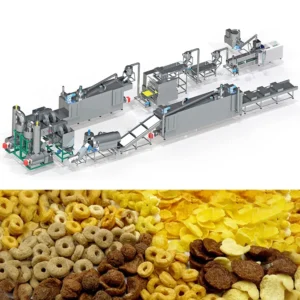
Automatic Instant Breakfast Cereals Snack Food Making Machine
¥10,000.00 Select options This product has multiple variants. The options may be chosen on the product page -

Hot Selling Automatic Corn Flakes Breakfast Cereal Production Line Making Machine
¥20,000.00 Select options This product has multiple variants. The options may be chosen on the product page -

MT Cocoa Flour Puffed Breakfast Cereal Production Line-High Large Capacity Multi-Fuel (Steam/Gas/Electric) New Shandong Origin
¥8,000.00 Select options This product has multiple variants. The options may be chosen on the product page -
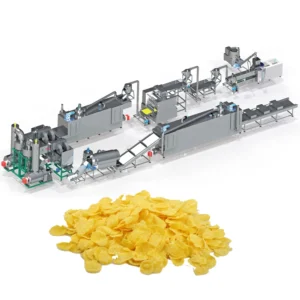
Intelligent Corn Flakes Production Line Twin Screw Extruder to Make Corn Flakes amd Morning Cereals
¥30.00 Select options This product has multiple variants. The options may be chosen on the product page