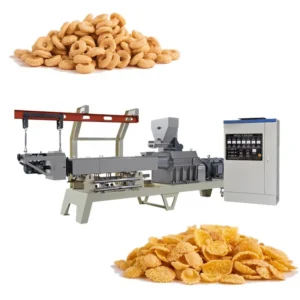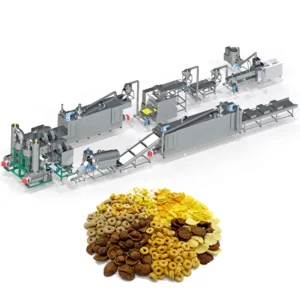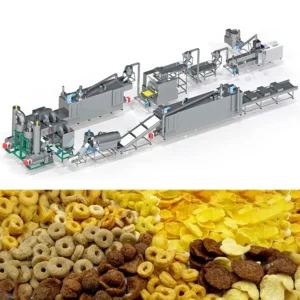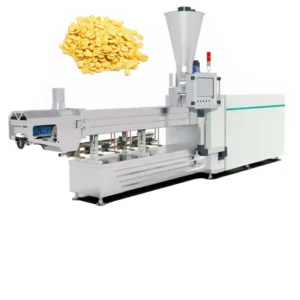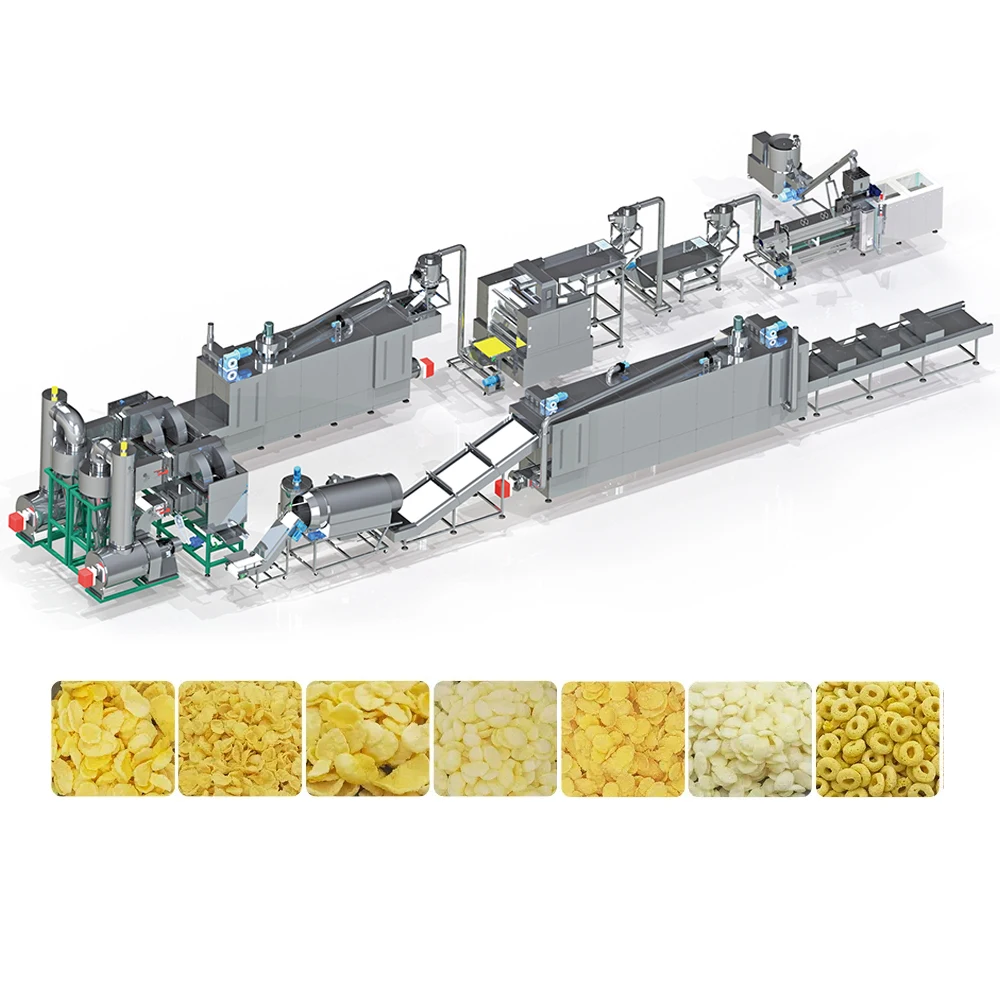
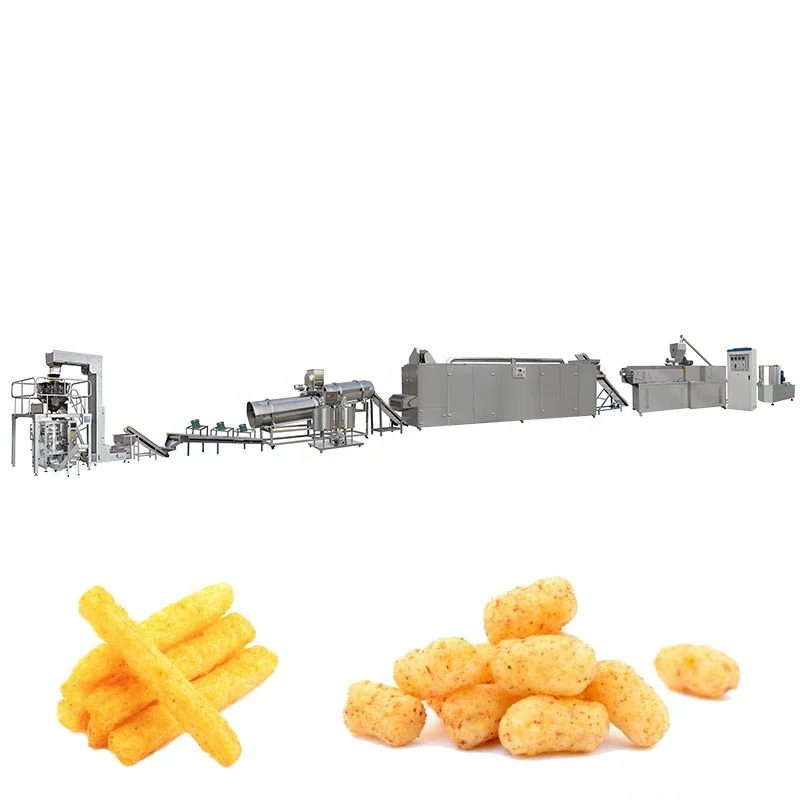

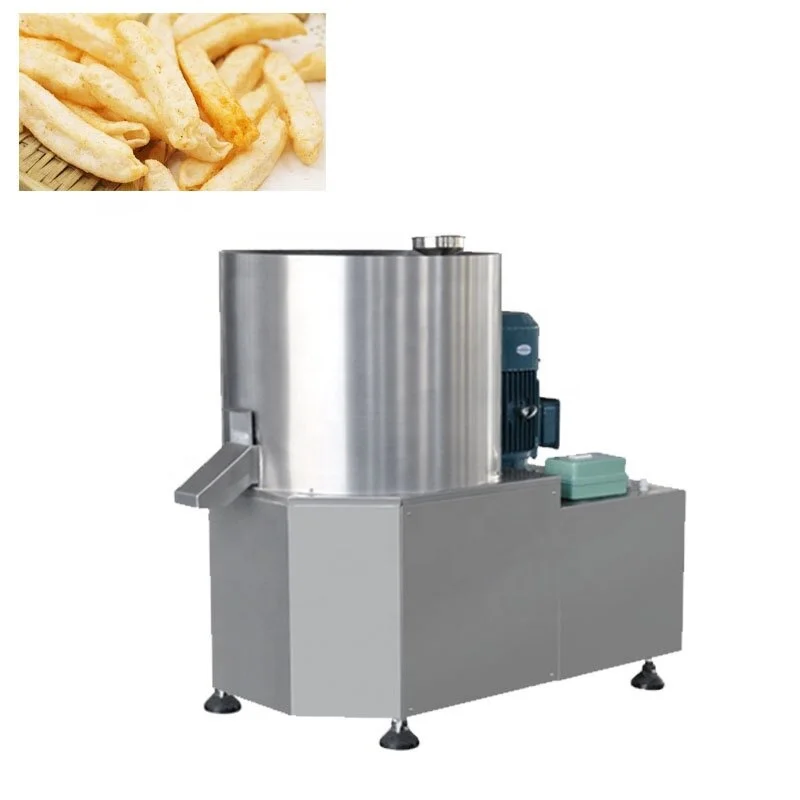


MT70 / MT85 / MT75 Corn Flakes Production Line, Twin Screw, PLC Control — configured for natural and sugar-coated breakfast cereal formats from corn, rice, wheat and oat powder.
- Hydraulic flaking rolls with infrared temperature control deliver uniform flake thickness, while the hot air roasting oven uses dual circulating fans for consistent blistering and crispness across the batch.
- Throughput at every station — extruder, flaking, dryer, roaster, coater — is calculated and matched in a single line layout to eliminate bottlenecks.
Trial runs on your actual raw material are completed in our in-house testing workshop before shipment, with a full report covering screw configuration, flake density and output verification.
Description
Throughput-Matched Engineering — Every station from the mixer to the packing scale is calculated against the extruder’s actual output on your specific grain blend, preventing the half-finished pile-ups that stall unbalanced lines.
Technical Specifications
| Parameter | Value |
|---|---|
| Product Type | Corn Flakes Production Line |
| Models Available | MT70, MT85, MT75 |
| Screw Type | Twin Screw |
| MT70 Installed Power | 160 kW |
| MT70 Power Consumption | 120 kW |
| MT70 Capacity | 150–200 kg/hr (basis not stated in source — confirm raw material / moisture) |
| MT70 Overall Dimensions | 41 × 1.5 × 2.2 m |
| MT85 Installed Power | 190 kW |
| MT85 Power Consumption | 140 kW |
| MT85 Capacity | 300–400 kg/hr (basis not stated in source — confirm raw material / moisture) |
| MT85 Overall Dimensions | 43 × 1.5 × 3.2 m |
| MT75 Installed Power | 210 kW |
| MT75 Power Consumption | 150 kW |
| MT75 Capacity | 300–500 kg/hr (basis not stated in source — confirm raw material / moisture) |
| MT75 Overall Dimensions | 45 × 1.5 × 3.5 m |
| Control System | PLC (flaking machinery); MCC/PLC (extruder line) |
| Flaking Machinery | Hydraulic double rollers, separate dual-motor drive, infrared temperature control |
| Dryer Heating Source | Gas or Electric |
| Hot Air Roasting Oven | Vibrating pan, conciliation burner, dual circulating fans, cyclone dust removal |
| Coating System | Double tumble sugar melting, elevator, coating drum, spraying nozzle |
| Extruder Features | Automatic lubrication, cooling function, wear-resistant screws |
| Standards | CE, ISO |
Application Suitability
| Application | Material or Output |
|---|---|
| Natural corn flakes for retail breakfast cereal | Corn, rice, wheat, oat, barley powder |
| Sugar-coated corn flakes for retail or food service | Corn or multi-grain blends with sugar glaze |
| Shaped extruded cereal (rings, balls, fruit loops, stars) | Corn, rice, wheat, oat, barley powder via adjustable extruder die |
| Fortified breakfast cereal for nutrition programmes | Grain powder blends with added micronutrients |
| Puffed snack formats on the same extrusion platform | Corn, rice, wheat, oat, barley powder |
Why "Nominal Capacity" Is the Wrong Starting Point for a Corn Flakes Production Line Turnkey Project
Capacity only matters when it is tied to your exact raw material, moisture level, and target flake density.
I have walked into cereal plants where the extruder was rated at a certain output on paper, but the corn variety the buyer actually sourced required longer conditioning and higher moisture — pulling real throughput well below the nameplate figure. The downstream dryer and roasting oven were then oversized, wasting energy, or the flaking rolls were undersized, creating a bottleneck that left cooked grits sitting in totes for hours. A corn flakes production line turnkey only delivers its promise when every station is sized against a trial run, not a catalogue number [NEED_CITE: importance of raw-material-specific capacity verification in food extrusion].
From Batching to Packing — One Supplier, One Throughput Calculation
The line begins with a batching and mixing station where corn flour, rice flour, oat, barley, or wheat powder is blended to a recipe you define. From there, the twin screw extruder cooks the blend under controlled moisture, heat, and shear. Because the same supplier provides the mixer, extruder, flaking rolls, dryer, hot air roasting oven, and coating drum, the throughput calculation runs through every station as a single chain rather than as isolated machine quotes pasted together. This is the central discipline of a properly planned corn flakes production line turnkey project.
How the Flaking and Roasting Stages Define the Final Flake
After extrusion, the cooked mass passes through the hydraulic double-roller flaking machinery. Each roller is driven by a separate motor, and an infrared sensor monitors surface temperature continuously — holding flake thickness and density within tight limits. The flakes then enter the hot air roasting oven, where a conciliation burner and dual circulating fans create an even blistering pattern across the surface [NEED_CITE: role of uniform roasting in corn flake crispness and shelf stability]. A cyclone dust removal device captures fines before they can scorch or contaminate subsequent batches. For sugar-coated variants, the line adds a double tumble sugar melting unit, elevator, coating drum, and spraying nozzle before a secondary drying pass and cooling.
Reading the Extruder Specs Through a Process Lens
The twin screw design matters because corn and multi-grain blends vary in fat, fibre, and starch content — a single screw simply cannot generate the shear profile needed to gelatinise a high-oat or high-barley recipe uniformly. The MT75, at 210 kW installed power and dimensions of 45 × 1.5 × 3.5 m, suits larger facilities targeting the upper output band, while the MT70 at 160 kW and 41 × 1.5 × 2.2 m fits smaller footprints. Automatic lubrication and cooling inside the extruder gearbox extend run time between maintenance stops. Screw configuration and die geometry are matched to the buyer’s raw material — this determines whether the extrudate arrives at the flaking rolls as a dense pellet for traditional flakes or as an expanded shape for rings and fruit loops. PLC control on the flaking machinery and MCC/PLC on the extruder line give operators a single language and interface across every station [NEED_CITE: PLC standardisation benefits in multi-station food processing lines].
The Cost of Skipping the Line-Level Audit
When the extruder is sourced from one vendor and the dryer from another, nobody owns the gap between them. I have seen plants where the flaking rolls could not keep pace with the extruder output, forcing operators to shut down the cooker every twenty minutes while the rollers caught up. Half-cooked dough sat in bins, losing moisture and becoming unrollable. In other cases, the roasting oven was too small for the flake volume, so the line speed had to be permanently throttled. These mismatches rarely show up until commissioning week — by which time the equipment is bolted to the floor [NEED_CITE: consequences of vendor-mismatched throughput in food production lines].
Why Buyers Run Their Corn Flakes Line Projects Here
Every corn flakes production line turnkey from this supplier ships with a line layout and capacity calculation that traces throughput from the mixer through extrusion, flaking, drying, roasting, coating, and packing — so each station is matched rather than assembled from separate vendor quotes. An in-house machine testing workshop allows trial runs on your specific corn or cereal blend before the line leaves the factory, meaning product development begins before installation, not after. Screw configuration and die design are specified to your raw material and target flake density, not copied from a generic template. Voltage, frequency, and PLC language are confirmed before production starts, avoiding the commissioning delays that come from discovering a 50 Hz motor on a 60 Hz site. Pre-sales engineering, on-site installation, operator training, and ongoing wear-part supply all come from the same team that built the line.
Documentation & Verification
- Line layout and capacity calculation tracing throughput from mixer to packing for your chosen model
- Trial run report on your corn or cereal blend conducted in the in-house testing workshop
- Screw and die configuration record matched to your raw material and target flake density
- Electrical schematic with voltage, frequency, and PLC control language confirmed before production
- CE declaration of conformity and ISO certificate for the complete line
- Factory test record and packing photographs before dispatch
Installation, Commissioning & Support
- Customised layout designed to your factory footprint, with MT75 occupying up to 45 m in line length
- Power supply planning for up to 210 kW installed capacity on the MT75, with dedicated circuits confirmed
- PLC and MCC control panels configured to your local voltage, frequency, and operator language before shipment
- On-site commissioning including extruder screw alignment, flaking roller gap setting, and roaster burner tuning
- Operator training covering twin screw extruder start-up, hydraulic flaking roll adjustment, and coating drum operation
- Wear parts list provided for screws, dies, and flaking roller surfaces with recommended replacement intervals
What We Need to Build Your Line
To configure a corn flakes production line turnkey that actually holds its quoted output, share your primary grain type and any blend ratios, the target flake thickness or shape, and the daily production volume you need to hit. Include your factory floor dimensions and ceiling height so the layout can be drafted to scale, along with your local voltage, frequency, and preferred PLC language. If you have existing upstream milling or downstream packing equipment, let us know the make and throughput so the new line can integrate cleanly.
Frequently Asked Questions
Q: How is line capacity verified before shipment?
A: Capacity figures such as 150–200 kg/hr on the MT70 or 300–500 kg/hr on the MT75 are listed without a fixed raw-material basis in the source documentation. That is why a trial run on your actual corn or cereal blend is conducted in the in-house testing workshop before the line ships. The resulting report documents the real throughput, moisture, and flake density achieved on your material.
Q: Can the screw and die be matched to my specific corn variety or blend?
A: Yes. Screw configuration and die geometry are specified after reviewing your raw material data and target product — whether that is a dense traditional flake, a sugar-coated format, or an extruded shape like rings or fruit loops. The configuration record is documented and ships with the line so replacements can be ordered with exact repeatability.
Q: How is throughput balanced across the extruder, flaking rolls, and roaster?
A: Each station is selected and sized against the extruder’s verified output on your blend. The hydraulic flaking machinery with dual-motor drive is rated to handle the extruder’s peak mass flow, and the roasting oven’s dual circulating fans and vibrating pan are matched to the flake volume passing through. The capacity calculation document shows this station-by-station alignment.
Q: What electrical details are confirmed before the line enters production?
A: Voltage, frequency, and PLC control language are agreed with you and recorded on the electrical schematic before manufacturing starts. This covers both the MCC/PLC panel on the extruder and the PLC on the flaking machinery, ensuring that the control interface matches your operators’ language and your site’s power supply.
Q: What does the pre-shipment trial run include?
A: Your raw material is run through the extruder, flaking rolls, dryer, and roaster in the testing workshop. The trial report records the actual throughput, moisture content, flake thickness, and roasting uniformity observed. Any adjustments to screw configuration, die selection, or roller gap are made and documented before the line is packed for dispatch.
Related products
-
Hot Selling Automatic Corn Flakes Breakfast Cereal Production Line Making Machine
¥20,000.00 Select options This product has multiple variants. The options may be chosen on the product page -
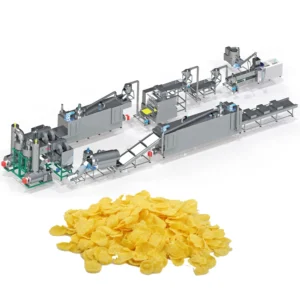
New Automatic Cornflakes Making Machine Oats Snack Food Chips Extruder Processing Line
¥30.00 Select options This product has multiple variants. The options may be chosen on the product page -
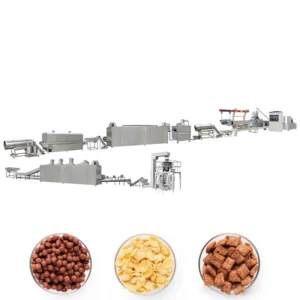
Kelloggs Corn Flakes Breakfast Cereal Normal Making Machine Breakfast Cereal Extruder Production Line
¥30,000.00 Select options This product has multiple variants. The options may be chosen on the product page -
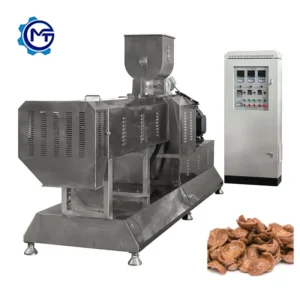
MT Cocoa Flour Puffed Breakfast Cereal Production Line-High Large Capacity Multi-Fuel (Steam/Gas/Electric) New Shandong Origin
¥8,000.00 Select options This product has multiple variants. The options may be chosen on the product page