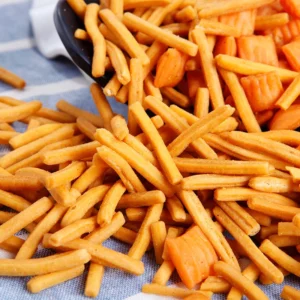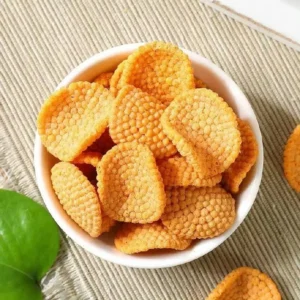

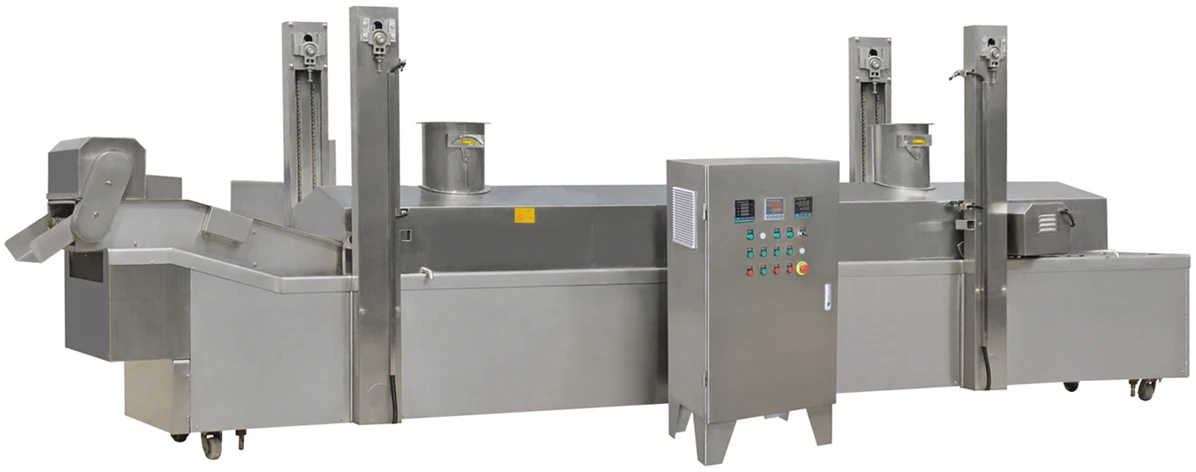


Extruded Fried Snack Production Line, Single Screw Extruder, 380V/50Hz, Food Grade SS304 — configured for starch and wheat flour formulations producing golgappa, pani puri and secondary puffing fried snacks across screw shell, tube, ring and cartoon shapes. Screw configuration and die design matched to the buyer’s raw material for precise density and expansion control, with full station throughput balancing from mixing through frying to flavoring. Delivered as a complete turnkey project with in-house trial runs on customer raw material before shipment.
Description
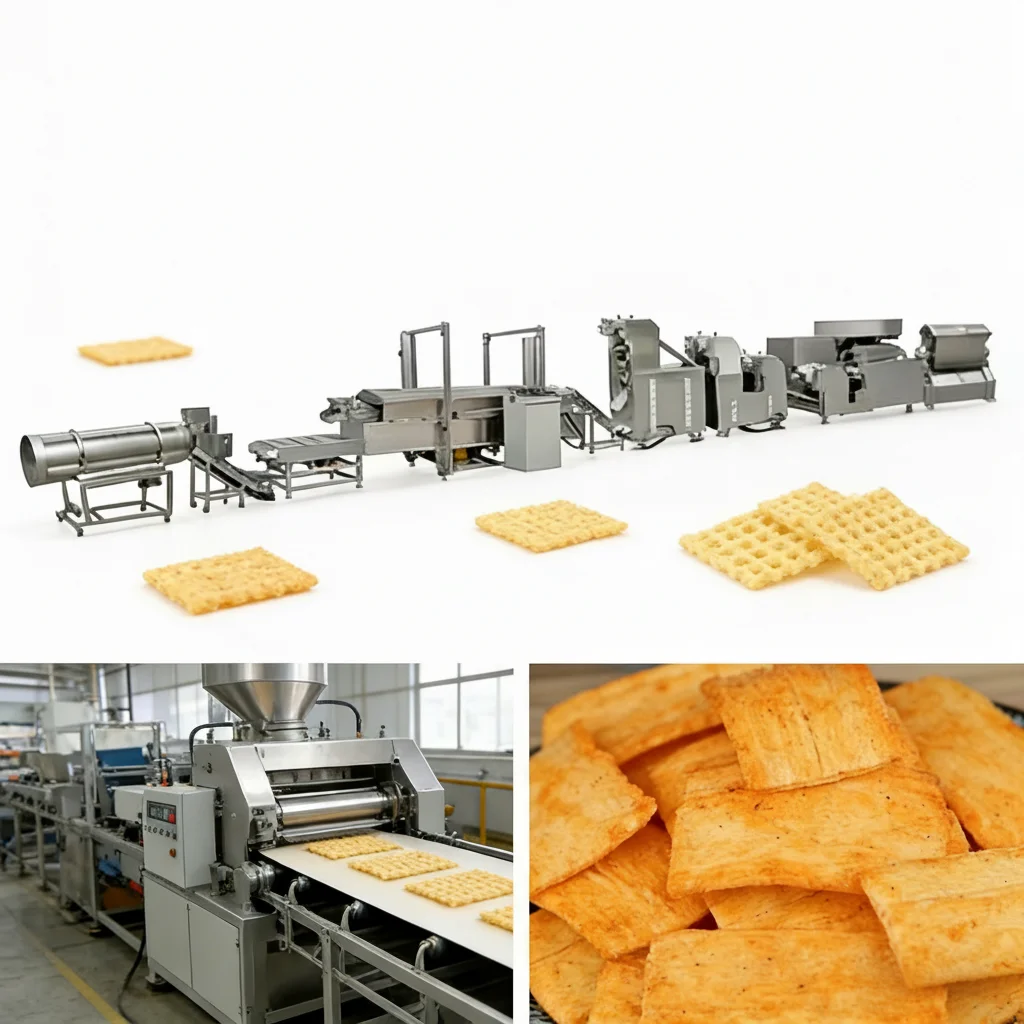
Whole-Line Throughput Matching — extruder, fryer, and flavoring drum capacities balanced against each other so a single bottleneck cannot stall an entire extruded snack production line turnkey.
Technical Specifications
| Parameter | Value |
|---|---|
| Product Type | Extruded Fried Snack Production Line |
| Raw Materials | Potato starch, corn starch, wheat flour |
| Output Capacity | 120 kg/h (basis not stated in source — confirm raw material formulation and moisture content) |
| Extruder Type | Single Screw Extruder |
| Screw Configuration | High and low pressure screw design |
| Product Shapes | Screw shell, round tube, square tube, ring, cartoon shapes |
| Power Consumption | 50–70 kW (electric heating) / 50–60 kW (gas/diesel heating) |
| Voltage & Frequency | 380V/50Hz (three phase) / 220V/50Hz (single phase) — configurable |
| Energy Options | Electricity, gas, diesel, steam |
| Overall Dimensions (L×W×H) | 12,000–26,000 × 1,200 × 2,200 mm (source value — verify against final layout) |
| Contact Material | Food grade stainless steel 201 / 304 |
| Control System | Siemens or China top-brand motor; Delixi or Delta inverter |
| Process Flow | Mixer → Screw Conveyor → Single Screw Extruder → Pulling & Cutting Machine → Automatic Fryer → Automatic Flavoring Line → Cooling |
| Certification | CE, ISO 9001 |
Application Suitability
| Application | Material or Output |
|---|---|
| Golgappa / pani puri production | Wheat flour or potato starch-based dough, secondary puffing via frying |
| Extruded fried snack pellets | Corn starch blends formed into tubes, rings, or shells before frying |
| Puffed snack shapes for regional markets | Cartoon shapes, screw shells, round and square tubes via die changes |
| Starch-based fried crisp formats | Potato or corn starch formulations requiring controlled gelatinisation before frying |
What "120 kg/h" Actually Means for Your Raw Material
The capacity figure on a nameplate is only as useful as the formulation and moisture content behind it.
In my years walking through snack factories across South Asia and Africa, I have seen lines rated at a certain throughput sit idle for hours because the buyer’s actual starch blend behaved differently under the screw. The extruder ran fine on the factory trial, but when the local wheat flour arrived with a different protein level, the dough viscosity shifted and the pulling machine could not keep pace. That mismatch cascaded down to the fryer, where half-cooked pieces piled up on the belt. Every extruded snack production line turnkey project needs validation against the buyer’s own raw material before the first crate is nailed shut [NEED_CITE: starch gelatinisation behaviour under varying moisture and protein content].
How the Screw and Die Shape the Final Snack
The single screw extruder in this line uses a high-and-low pressure screw configuration, which controls how the starch-based dough is compressed and heated as it moves through the barrel. This pressure staging directly affects gelatinisation uniformity — a critical factor when you are producing thin-walled shapes like golgappa shells that must puff evenly the moment they hit hot oil. Swapping dies lets you move from round tubes to cartoon shapes without changing the barrel assembly, giving producers the flexibility to test different formats on the same extruded snack production line turnkey setup.
Matching Every Station So Nothing Piles Up
A common failure in assembled snack lines is the gap between extruder output and downstream capacity. If the fryer basket cycle takes longer than the cutting machine feeds, product accumulates on the conveyor, cools unevenly, and enters the oil at inconsistent moisture levels. The flavoring drum then receives batches at irregular intervals, producing uneven seasoning coverage. In this line, each station — from the screw conveyor through the automatic fryer to the flavoring drum — is sized against the extruder’s actual throughput on your formulation, so material flows continuously without manual intervention [NEED_CITE: throughput balancing methodology for continuous food processing lines].
Reading the Specs That Matter for Fried Snack Quality
The 50–70 kW electrical power range covers the barrel heating zones needed to bring starch dough to gelatinisation temperature before it reaches the die. For markets where grid stability is a concern, the gas or diesel heating option (50–60 kW) shifts thermal load off the electrical supply while maintaining barrel temperature control. The choice between stainless steel 201 and 304 contact materials affects long-term corrosion resistance, particularly in the fryer section where oil vapour and salt contact metal surfaces continuously. Die interchangeability across screw shell, tube, ring, and cartoon formats means a single extruder barrel serves multiple product launches without capital reinvestment. The Delixi or Delta inverter on the main motor provides speed control that directly governs residence time inside the barrel — slower screw speed extends dough exposure to heat, which is useful when working with higher-amylose starch blends that need longer gelatinisation windows.
What Happens When Downstream Stations Are Undersized
I once configured a fried snack line where the extruder and fryer were correctly matched, but the flavoring drum had a smaller batch volume. The result was that finished product sat exposed on the cooling conveyor for too long, absorbing ambient moisture and losing the crisp texture the local market expected. The buyer blamed the extruder, but the real issue was a station mismatch that no single-vendor responsibility could have prevented. When stations are sourced from separate vendors, each one guarantees only their own machine — and the gaps between them become the buyer’s problem [NEED_CITE: equipment integration risks in multi-vendor food processing lines].
Why Buyers Source This Line Here
Complete lines from mixing through cooling are configured under one supplier, so throughput calculations account for every station rather than relying on individual machine nameplates. The screw configuration and die selection are specified against the buyer’s raw material and target product shape before production begins. An in-house testing workshop runs the buyer’s actual formulation through the extruder and fryer before shipment, generating a trial run report that confirms product density, expansion, and frying behaviour. Pre-sales engineering covers line layout and utility planning, and on-site commissioning includes operator training specific to the installed control system. Spare wear parts — screws, dies, cutting blades — are documented and available from the point of first replacement.
Documentation & Verification
- Line layout drawing with station-by-station throughput calculation for your target output
- Screw and die configuration record matched to your product shape and raw material
- Trial run report on your actual starch or flour formulation conducted before dispatch
- Electrical schematic with voltage, frequency, and control language confirmed for destination country
- CE declaration of conformity and ISO certificate for customs and regulatory clearance
- Operation and maintenance manual covering extruder barrel cleaning and fryer oil management
Installation, Commissioning & Support
- Foundation plan based on the 12,000–26,000 mm line footprint with leveling points for extruder and fryer
- Dedicated electrical circuit sized for the 50–70 kW extruder load plus fryer and cooling stations
- Assembled modules arrive with utility connection markings for faster on-site hookup
- First-run commissioning includes barrel temperature profiling and fryer cycle timing on your formulation
- Operator training covers die changeover, inverter speed adjustment, and cutting machine calibration
- Wear parts list specifies screw, die, and cutting blade part numbers for reorder
Before You Request a Quote
To size an extruded snack production line turnkey project accurately, I need to know the specific starch or flour blend you plan to run, including any additives or moisture targets. Share your local voltage and frequency so the control panel and motor can be wound correctly before the line enters production. If you have existing upstream or downstream equipment — such as a packing system already in place — let me know the interface requirements so the line layout accounts for those connection points from the start.
Frequently Asked Questions
Q: How is the 120 kg/h capacity verified against my raw material?
A: The stated capacity is based on a specific formulation and moisture content that must be confirmed for your blend. We run your actual raw material through the extruder and fryer in our testing workshop before shipment. The trial run report documents the achievable throughput, product density, and frying behaviour on your exact starch or flour mix.
Q: What voltage and control language will the line be configured for?
A: The electrical system is configurable to your country’s voltage and frequency before production starts. We confirm the three-phase or single-phase supply, motor winding specification, and control panel language during the engineering review. The electrical schematic is included in the documentation package so your local electrician can verify everything before commissioning.
Q: Can I send my raw material for a trial run before shipment?
A: Yes. Our in-house testing workshop is equipped to run buyer-supplied raw material through the extruder, cutting machine, and fryer. The trial validates screw configuration, die selection, and frying parameters against your target product shape and texture. Results are documented in a trial run report shared before the line ships.
Q: How are the extruder, fryer, and flavoring stations balanced?
A: Each station’s processing capacity is calculated against the extruder’s verified output on your formulation. The fryer cycle time, basket volume, and oil recovery rate are matched to the cutting machine feed rate. The flavoring drum batch size and rotation speed are set so that product flows continuously from frying through seasoning without accumulation on conveyors.
Q: What spare wear parts are included and how do I reorder?
A: The initial shipment includes a documented wear parts list covering screws, dies, and cutting blades specific to your configuration. Replacement parts are manufactured to the same specifications and can be ordered using the part numbers in your documentation. We recommend ordering the first replacement set before your initial production run to avoid downtime.
Related products
-
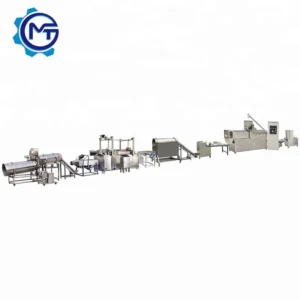
Fried Puffs Snack Food Making Machine Whole Line Solution Design by Factory Price Crispy Snack Machine
¥20.00 Select options This product has multiple variants. The options may be chosen on the product page -

Electric Heating Fried Puffed Food Production Line – Salad Sticks Making Equipment
¥65.00 Select options This product has multiple variants. The options may be chosen on the product page -
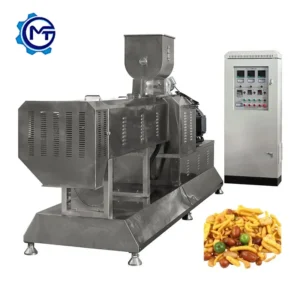
New 100-200kgh Automatic Fried Nimko Extruder Machine Food Grade Stainless Steel for High Productivity Fried Snacks Processing
¥8,575.00 Select options This product has multiple variants. The options may be chosen on the product page -
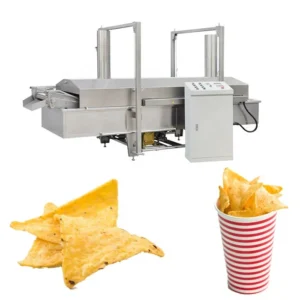
New Fully Automatic Large Capacity 304 Stainless Steel Savory Frying Snack Production Line Crisp Bugles Chips Processing Machine
¥30.00 Select options This product has multiple variants. The options may be chosen on the product page