

Record 9591 | identifier length 45 % 3 = 0 → direction: complete lines under one supplier + throughput matching + trial run before shipment
Description
Throughput-Matched Stations — every section from batching through extrusion to packing is specified against your formulation so the rated capacity holds on your actual raw material, not just on paper.
Technical Specifications
| Parameter | Value |
|---|---|
| Product Type | Fish Feed Extrusion Production Line |
| Extruder Type | Twin-screw extruder |
| Output Capacity | up to 3 t/h (basis not stated in source — confirm raw material formulation, moisture content, pellet size and sinking/floating type) |
| Construction Material (food-contact) | 304 stainless steel |
| Pellet Capability | floating and sinking aquaculture pellets |
| Control System | PLC and MCC (language options to confirm) |
| Voltage & Frequency | configurable to buyer site supply (to confirm) |
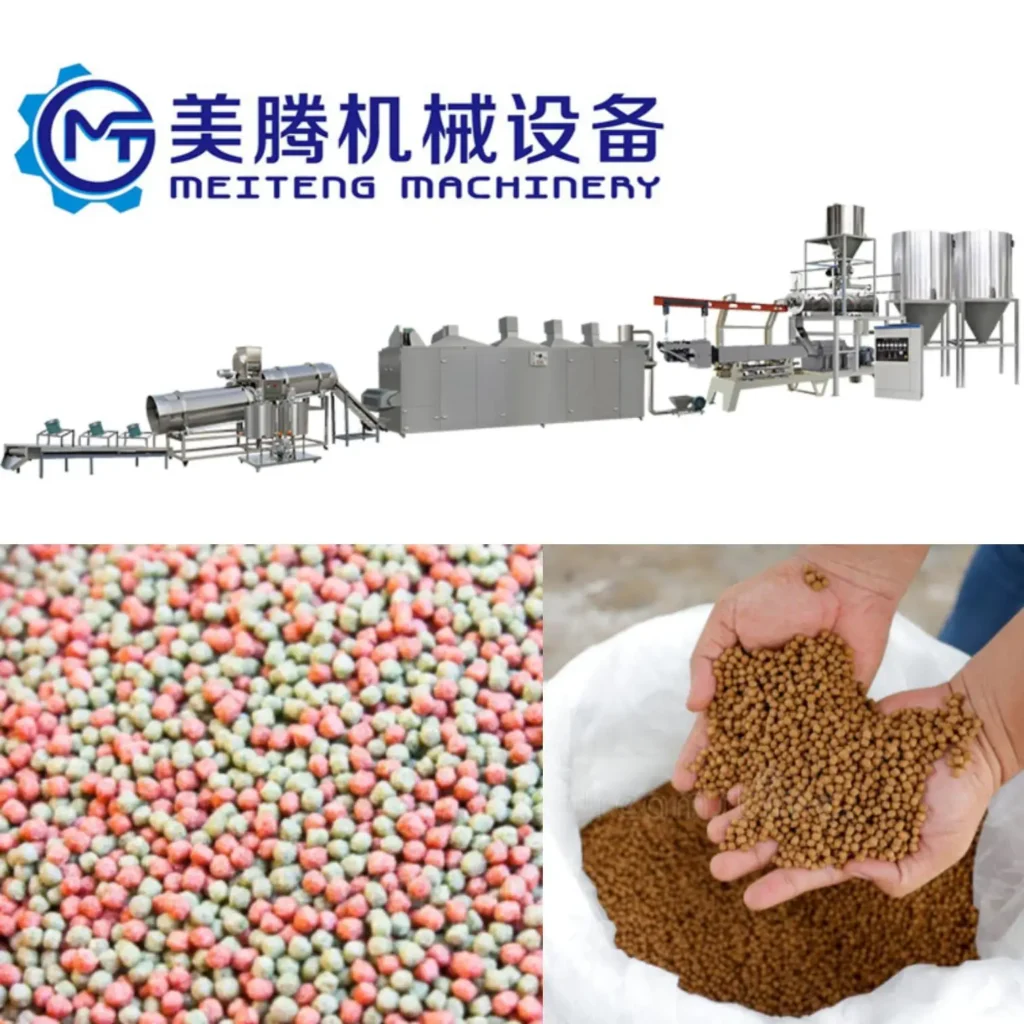
| Line Stations | mixing, extrusion, drying, coating, cooling, packing (scope to confirm) |
| Certifications | CE (since 2014), ISO |
Application Suitability
| Application | Material or Output |
|---|---|
| Trout and salmon floating pellet production | high-protein fish meal, starch binder, marine oil coating |
| Catfish and tilapia sinking pellet production | soybean meal, corn flour, vitamin premix |
| Shrimp feed pellet extrusion | fine-grind plant protein, squid meal, mineral additives |
| Medium-to-high volume feed mill capacity expansion | grain-based and protein-rich formulations across species lines |
Why Nominal Tonnage Numbers Fail Once Your Formula Hits the Barrel
A line is only as fast as its slowest matched station, and throughput must be proven on your exact recipe before the contract is signed.
I worked on a project a couple of years back where a buyer committed to a 2–3 t/h aquatic feed line based on the supplier’s catalog rating. The formula was heavy in protein, and when the material entered the barrel it did not expand the way the generic screw profile expected. Pellets that were supposed to float started sinking, output dropped to roughly half the quoted figure, and the dryer downstream could not keep pace because the moisture profile was all wrong [NEED_CITE: twin-screw extrusion behavior on high-protein aquaculture formulations]. That is the scenario a fish feed processing line turnkey project must prevent by testing your raw material before the extruder ships.
How Screw and Die Geometry Dictate Pellet Density
On a twin-screw platform, the screw profile and L/D ratio determine how much shear energy transfers into your formulation before the material reaches the die. For floating pellets aimed at trout or salmon, a longer residence zone with moderate shear promotes thorough starch gelatinisation, trapping enough gas to keep buoyancy stable in the water column. Sinking pellets for catfish require a different compression sequence — shorter high-shear segments that limit expansion and push density above water. The die plate hole diameter and land length then finalize pellet size and surface finish. Getting this geometry right on a fish feed processing line turnkey build is the difference between consistent specification compliance and a line that drifts out of tolerance every time the formula changes.
Barrel Temperature Profiling Across a Multi-Zone Setup
Each barrel zone can be heated or cooled independently, creating a gradient that manages viscosity from the feed inlet to the die face. When protein content rises, the melt tends to stiffen earlier in the barrel, and without precise zone control the extruder surges or the torque limit trips. Automated PLC regulation holds each zone within tight bands so that batch-to-batch density variation stays within the range your pelleting specification demands [NEED_CITE: barrel temperature influence on extrudate expansion in aquaculture feed]. This level of thermal management matters more on a twin-screw fish feed processing line turnkey installation because the throughput is higher and any temperature drift compounds across tons of hourly output.
Reading the Specs That Actually Matter for Pellet Quality
The twin-screw configuration gives operators the ability to adjust screw element sequencing without replacing the entire shaft — a practical advantage when you need to switch between floating and sinking pellet runs on the same line. The 304 stainless steel food-contact surfaces resist corrosion from marine-based ingredients and frequent washdowns, extending service intervals on barrels and screws. PLC and MCC integration means the entire sequence from mixer discharge through coating drum speed can run from a single panel, reducing the manual adjustments that introduce density drift. Voltage and frequency must match the buyer’s facility supply exactly; a mismatch discovered after installation can delay commissioning by weeks while transformers or drives are sourced locally.
What Happens When the Dryer Cannot Match the Extruder
If the drying station is sized only to the extruder’s nominal catalog output and your actual formulation exits with higher moisture, the dryer becomes the bottleneck and pellets back up on the conveyor. Over time this causes uneven drying — some pellets leave the dryer too wet and spoil in the bag, while others over-dry and fracture during coating. On an aquatic feed line, that fracture rate directly affects water stability, and your end users will report pellets breaking apart before fish can consume them [NEED_CITE: moisture and drying rate impact on aquaculture pellet water stability]. The consequence is warranty claims and lost contracts, not just a production headache.
Why Buyers Specify This Line Through a Single Supplier
The line is configured under one supply scope, meaning throughput at the mixer, extruder, dryer, coating drum, cooler and packing station is calculated together rather than quoted as independent pieces of equipment. Screw and die geometry is specified against the buyer’s raw material sample and target pellet density before production starts, not copied from a generic template. An in-house testing workshop runs trial batches on your actual formulation before the line ships, generating a trial report that documents output, pellet density and floating rate under real conditions. Electrical schematics are prepared with your site voltage, frequency and preferred control language confirmed in advance, so commissioning begins with power-on rather than rewiring.
Documentation & Verification
- Line layout and capacity calculation showing throughput balance across every station
- Screw and die configuration record tied to your target pellet diameter and density
- Trial run report on your raw material documenting expansion, floating rate and moisture
- Electrical schematic with site voltage, frequency and control language confirmed before production
- CE declaration of conformity and ISO certificate included with shipping documentation
Installation, Commissioning & Support
- Foundation plan accounts for extruder weight and vibration isolation at rated motor power
- Dedicated electrical circuit sized to total installed load with voltage confirmed before wiring
- Extruder barrel and screw assembly verified on-site after transport in modular sections
- First-run parameter logging covers barrel zones, screw speed and moisture injection settings
- Operator training includes screw element swap procedure for floating-to-sinking changeover
- Wear parts list specifies screws, dies and barrel liners with reorder intervals
What to Include in Your Initial Inquiry
Share the species you are targeting, whether the pellets need to float or sink, and the main protein sources in your formulation. Provide your site voltage, frequency and preferred HMI language so the control package is specified correctly from the start. If you can send a sample of your raw material blend, a trial run in the testing workshop will confirm throughput and pellet quality before the line enters production.
Frequently Asked Questions
Q: How is the line’s output capacity verified before shipment?
A: Output is measured during a trial run using your actual raw material in the in-house testing workshop. The trial report records throughput, pellet density, floating or sinking rate and moisture content at the dryer exit, giving you verified numbers based on your specific formulation rather than a generic catalog rating.
Q: How are screw and die configurations chosen for different fish species?
A: The screw element sequence and die geometry are selected based on your target pellet diameter, required density and whether the pellet must float or sink. High-protein formulas for salmon need different shear profiles than starch-heavy catfish recipes, and each configuration is documented before production.
Q: Does the turnkey scope include equipment beyond the extruder?
A: Yes. The line covers batching and mixing, twin-screw extrusion, drying, coating or fat application, cooling and packing. Each station is throughput-matched to the extruder’s verified output on your material, so no single section bottlenecks the others during sustained production.
Q: Can the trial run use my own raw material blend?
A: The testing workshop accepts your raw material samples before production begins. The trial covers extrusion behavior, expansion rate, pellet durability and moisture profile, and results are shared in a full report so you can confirm product quality before the line ships.
Q: How are electrical specifications confirmed before manufacturing?
A: Your site voltage, frequency and control language preferences are collected during the quotation stage and locked into the electrical schematic. The PLC and MCC panels are built and tested against those specifications before dispatch, avoiding rewiring delays during on-site commissioning.
Related products
-
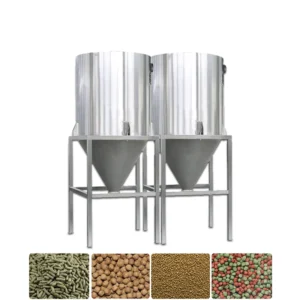
In Stock Pet Feed Production Line / Dog Cat Food Extrusion Machine
¥9,500.00 Select options This product has multiple variants. The options may be chosen on the product page -
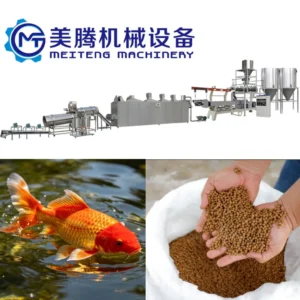
1.0-1.5t/h High Capacity Multi-Species Fish Feed Processing Line to Produce Fish Food
¥45,000.00 Select options This product has multiple variants. The options may be chosen on the product page -
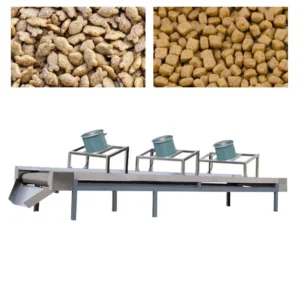
Full Automatic Pet Feed Production Line Large Twin Screw Grain Extrusion Machine
¥9,500.00 Select options This product has multiple variants. The options may be chosen on the product page -
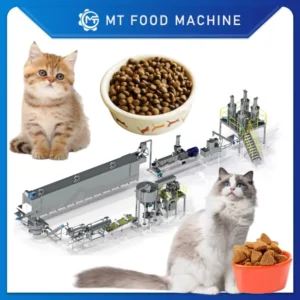
MT Brand 450-550kg/h PLC Controlled Multi-Species Pet Food Processing Line
¥40,000.00 Select options This product has multiple variants. The options may be chosen on the product page