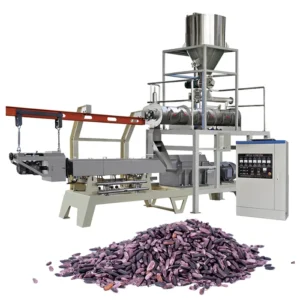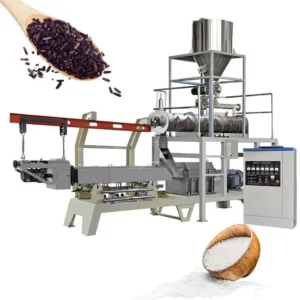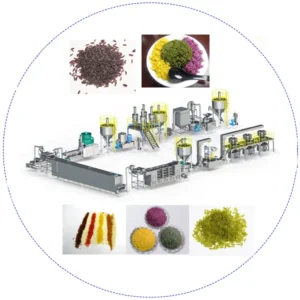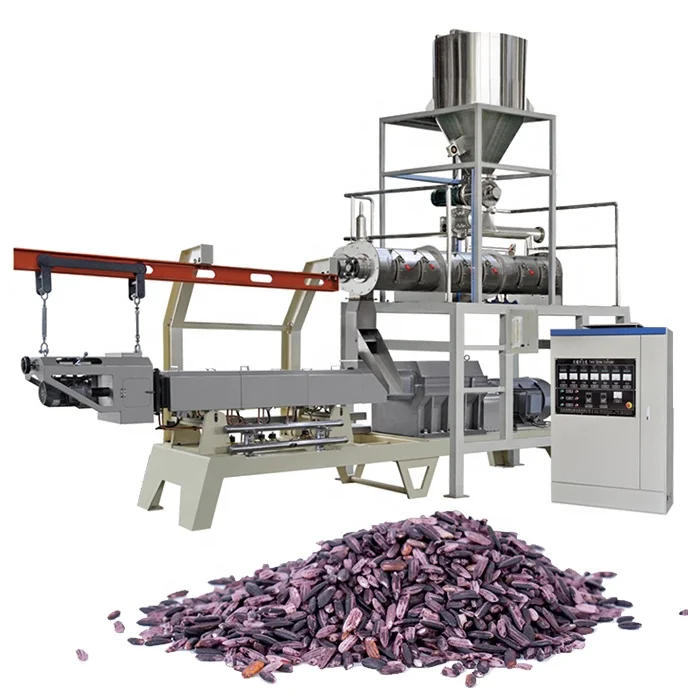
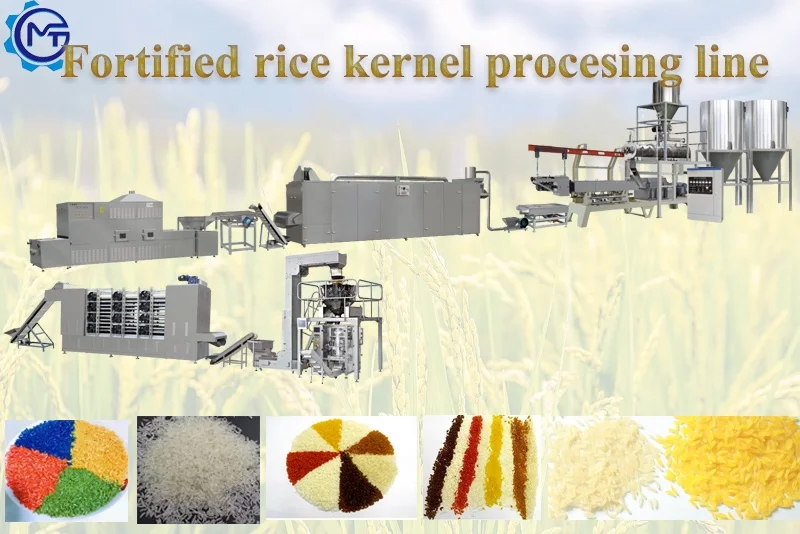
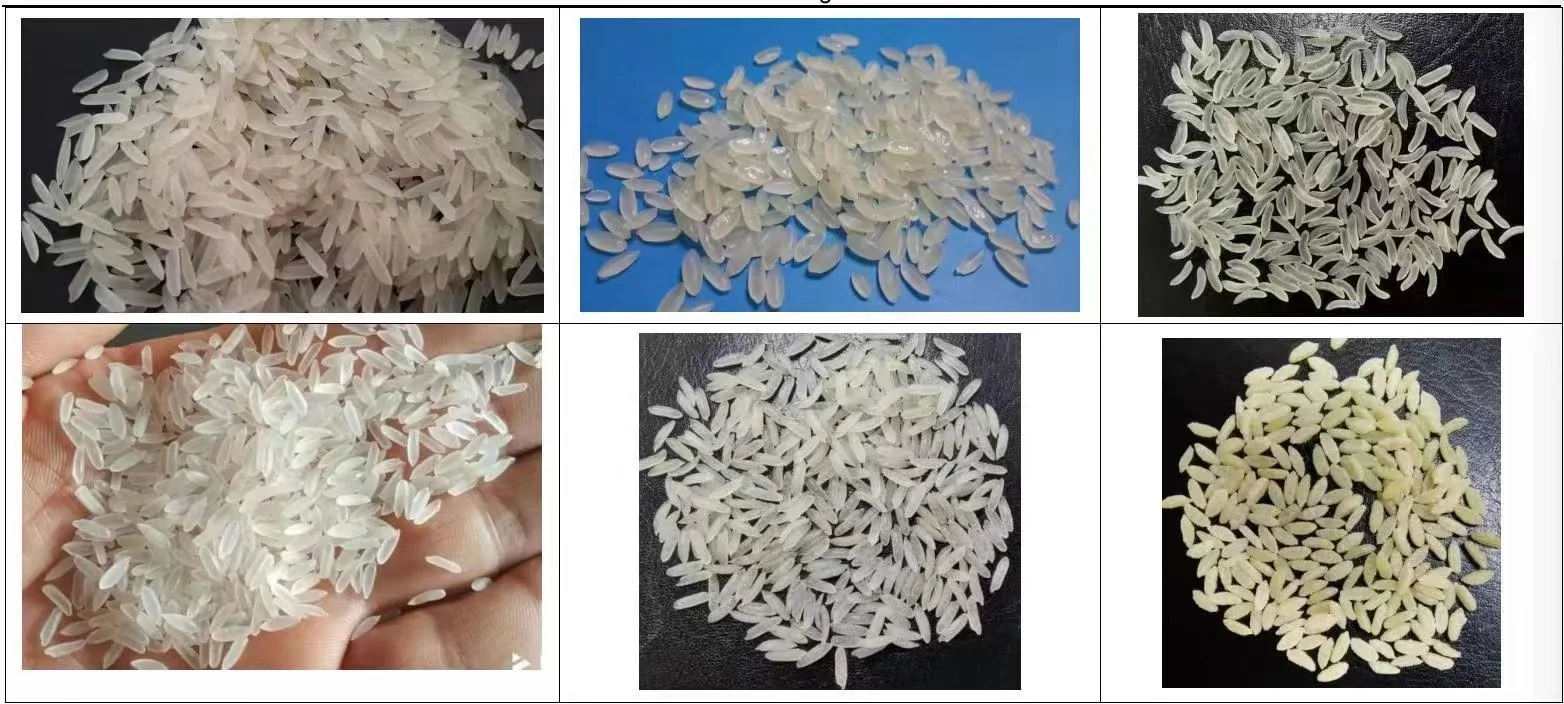
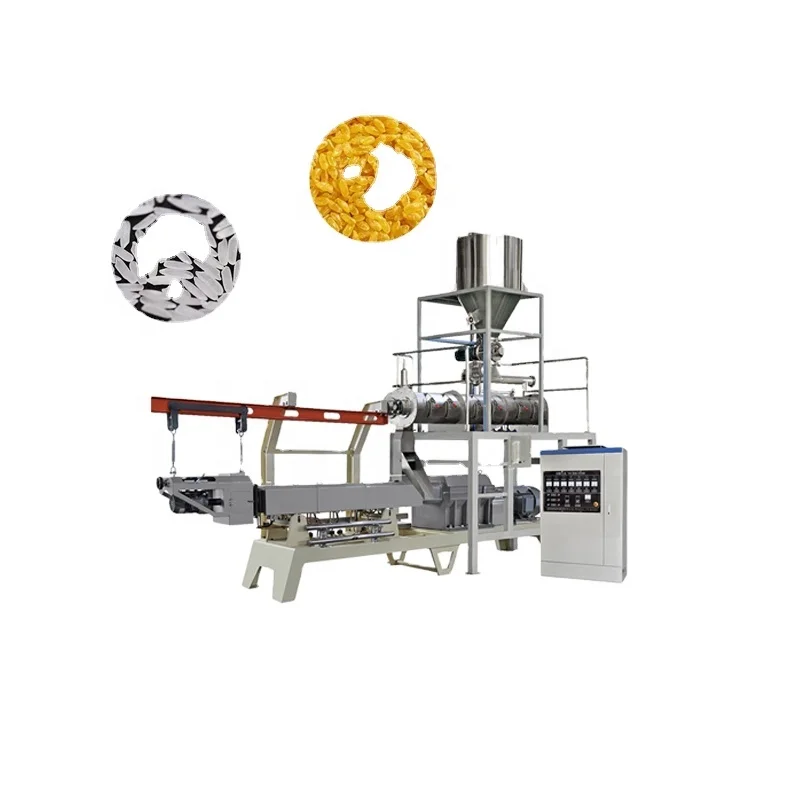
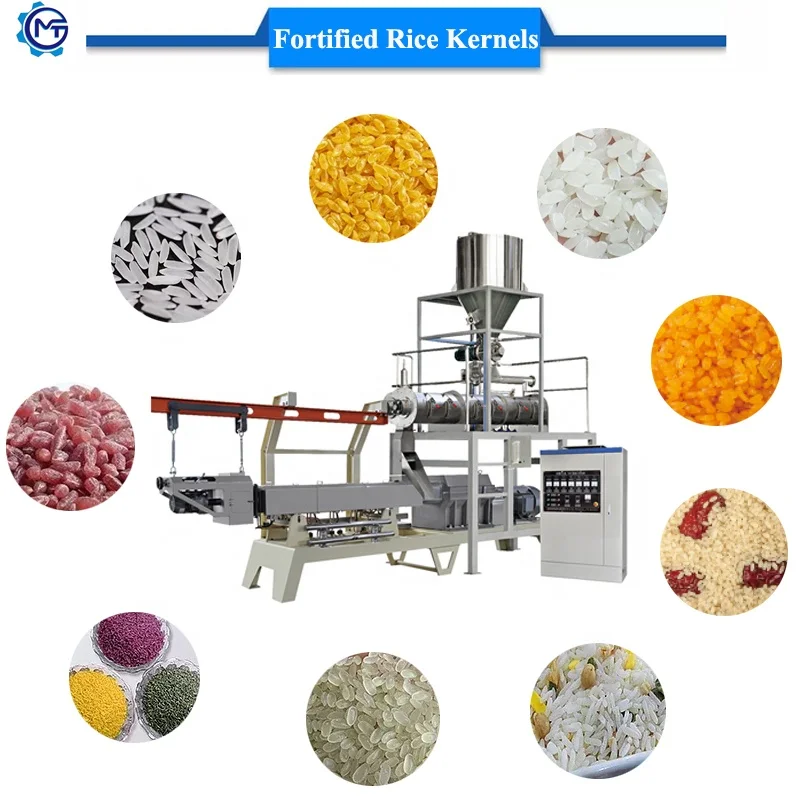
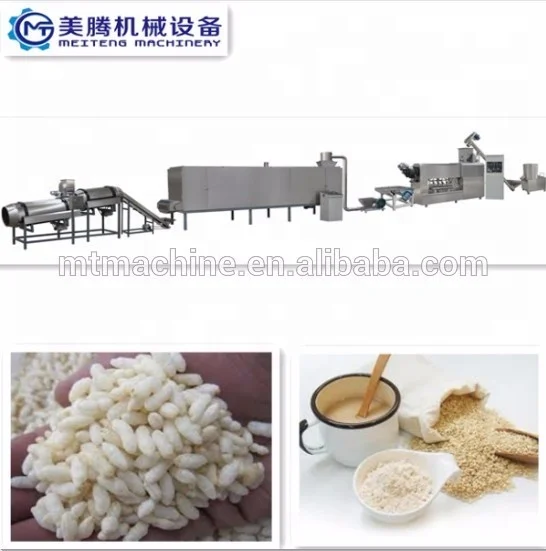
MT65 / MT70 / MT85 / MT75 / MT95 Fortified Rice Kernel Extrusion Line, Twin-Screw, Frequency Speed Control — configured as a complete turnkey project from batching through extrusion, low-temperature drying, high-temperature roasting and packing. Each station throughput is matched to eliminate bottlenecks, with screw configuration and die design specified to your grain blend and target kernel density. Trial runs on your actual raw material are completed in our testing workshop before shipment, with full layout documentation and voltage confirmation provided.
- Models: MT65 / MT70 / MT85 / MT75 / MT95
- Installed Power: 85 kW – 260 kW
- Control: Automated frequency speed control
- Process: Mixing → Extruding → Vibrating → Drying → Cooling → Roasting → Cooling → Packing
- Materials: Broken rice, corn, millet, wheat, oats, starch with vitamin and mineral enrichment
- Certifications: CE, ISO
Description
Throughput-Matched Extrusion Lines — Every station from batching to packing is sized against your actual fortified rice formulation to prevent downstream bottlenecks.
Technical Specifications
| Parameter | Value |
|---|---|
| Product Type | Fortified Rice Kernel Extrusion Line |
| Model Range | MT65 / MT70 / MT85 / MT75 / MT95 |
| Screw Type | Twin-screw |
| Installed Power | 85 kW (MT65) / 120 kW (MT70) / 235 kW (MT85) / 180 kW (MT75) / 260 kW (MT95) |
| Power Consumption | 60 kW (MT65) / 85 kW (MT70) / 165 kW (MT85) / 135 kW (MT75) / 195 kW (MT95) |
| Output Capacity | 80–100 kg/h (MT65) / 100–120 kg/h (MT70) / 200–300 kg/h (MT85) / 300–500 kg/h (MT75) / 800–1000 kg/h (MT95) (basis to be confirmed — depends on raw material formulation and moisture content) |
| Overall Dimensions | 28×1.2×2.2 m (MT65) / 30×1.5×2.2 m (MT70) / 34×3.5×4.3 m (MT85) / 32×3.5×4.3 m (MT75) / 36×3.5×4.3 m (MT95) |
| Control System | Frequency speed control with high automation |
| Feeding System | Single or double screw feeding system, selectable by material |
| Screw Material | Special wear-resistant alloy |
| Lubrication | Automatic lubricating and cooling system |
| Dryer Heating Source | Electric or gas |
| Dryer Control | Frequency motor controls mesh belt speed |
| Production Procedure | Mixing → Extruding → Vibrating → Low temperature drying → Cooling → High temperature roasting → Cooling → Packing |
| Basic Materials | Broken rice, rice, corn, millet, wheat, oats, buckwheat, bean, starch with vitamin and mineral supplements |
| Standards | CE, ISO |
Application Suitability
| Application | Material or Output |
|---|---|
| Nutritional fortification programmes | Artificial rice kernels enriched with micro-nutrients, vitamins and minerals from broken rice or grain blends |
| Rice milling by-product valorisation | High-value fortified kernels processed from broken rice and rice bran |
| Multi-grain breakfast and nutritional rice | Extruded kernels from corn, millet, wheat, oats, buckwheat and bean formulations |
| Government and NGO food security projects | Shelf-stable fortified rice meeting programme specification for density, shape and nutrient retention |
What "Rated Capacity" Leaves Out About Fortified Rice Kernel Extrusion Lines
Nameplate output means nothing until the machine runs your exact grain blend and nutrient premix.
I learned this the hard way on a breakfast cereal project years ago. The line was rated for a clean throughput on white rice flour, but the buyer switched to brown rice with higher fibre content at their facility. Expansion dropped sharply and actual output fell well below expectations. Two weeks of on-site barrel temperature re-profiling and screw reconfiguration followed. A Fortified Rice Kernel Extrusion Line turnkey production line behaves the same way — the vitamin and mineral premix alters dough rheology, starch gelatinisation temperature, and expansion behaviour inside the barrel [NEED_CITE: starch gelatinisation behaviour under varying micronutrient loads]. Without a trial run on the buyer’s actual recipe, any capacity figure is a guess.
Screw Configuration Matched to Grain Blends and Nutrient Premix
The twin-screw extruder at the heart of this Fortified Rice Kernel Extrusion Line turnkey production line is configured around the specific starch profile and fibre content of the buyer’s raw material. Broken rice behaves differently from corn or millet under shear and heat, and adding a vitamin-mineral premix changes how the dough flows through the barrel. Screw element arrangement, pitch, and kneading block positioning are selected to achieve the right degree of gelatinisation without destroying heat-sensitive micro-nutrients. Die design then determines the kernel shape and density that the target market expects.
Multi-Stage Thermal Processing for Nutrient Integrity
After extrusion, kernels pass through low temperature drying followed by high temperature roasting. This two-stage approach matters for fortified products. The initial low temperature drying phase removes surface moisture gently, preventing case hardening that would trap water inside the kernel. The subsequent roasting stage develops the final texture and colour while the reduced moisture content protects the embedded vitamins from thermal degradation [NEED_CITE: thermal degradation thresholds for common micro-nutrients in food extrusion]. Frequency-controlled mesh belt speed in the dryer allows operators to fine-tune residence time for each formulation.
Reading the Specification Sheet for Production Reality
Installed power ranges from 85 kW on the MT65 to 260 kW on the MT95, but actual power consumption sits noticeably lower — between 60 kW and 195 kW respectively — reflecting real-world motor loading during steady-state extrusion. The automatic lubricating and cooling system on the extruder gearbox extends screw service life under continuous operation, which matters when running abrasive grain blends containing mineral premix. The feeding system is available as single or double screw, selectable based on whether the raw material is free-flowing rice grits or a stickier starch-heavy blend. Overall line length stretches from 28 metres for the MT65 setup to 36 metres for the MT95, so floor planning must account for the full production procedure including vibrating cooler, dryer, roaster, and packing station. Voltage and frequency remain configurable and must be confirmed before production begins to match the installation site’s electrical infrastructure.
The Hidden Cost of Mismatched Station Throughput
When an extruder is quoted without matching dryer or roaster capacity, the line bottlenecks at the thermal stage. Kernels pile up waiting for dryer space, moisture levels drift, and product density falls outside specification. I have seen lines where the extruder ran at full capacity but the dryer could only handle a fraction of that volume, forcing operators to slow the entire line down [NEED_CITE: throughput bottleneck consequences in multi-stage food processing lines]. The result is a facility that never reaches its intended output and a buyer who paid for capacity they cannot use.
Why Procurement Through a Turnkey Project Matters
Every station on this line — mixing, extruding, vibrating, drying, cooling, roasting, and packing — is sized as a single project rather than assembled from separate vendors. Screw configuration and die design are specified to the buyer’s raw material blend, not copied from a generic build. An in-house testing workshop allows trial runs on the customer’s actual formulation before the equipment leaves the factory. The production procedure from batching through packing stays under one supplier’s responsibility, so throughput is matched at every transfer point. Pre-sales consultation covers layout engineering, utility planning, and phased installation scheduling before any metal is cut.
Documentation & Verification
- Line layout drawing showing throughput calculation between extruder, dryer, roaster, and packing stations
- Trial run report produced on the buyer’s actual grain blend and nutrient premix before dispatch
- Screw and die configuration record matched to target kernel shape and density specification
- Electrical schematic with confirmed voltage, frequency, and control language for the installation site
- Factory test record documenting steady-state run parameters on the formulated raw material
- CE declaration of conformity and ISO certificate included with shipping documentation
Installation, Commissioning & Support
- Floor space planning based on line dimensions from 28 to 36 metres depending on selected model
- Electrical supply confirmation for installed power up to 260 kW with dedicated circuit requirements
- Complete turnkey assembly on-site with all stations connected and throughput balanced
- First-run commissioning with barrel temperature profiling and screw speed adjustment to the buyer’s recipe
- Operator training covering frequency speed control settings, feeding system changeover, and dryer belt speed tuning
- Wear parts list supplied including screws, dies, and mesh belts with recommended replacement intervals
Preparing Your Line Inquiry
To move from a general enquiry to a workable layout proposal, share your target raw material formulation including the specific grain base and nutrient premix composition. Specify the daily or hourly production target so that model selection and station sizing can begin. Confirm your facility’s voltage, frequency, and preferred control language to avoid commissioning delays. If you have existing upstream milling or downstream packing equipment, provide those details so the line interfaces correctly at both ends.
Frequently Asked Questions
Q: How is line capacity verified on the buyer’s actual raw material blend before shipment?
A: The buyer sends a representative sample of their grain formulation and nutrient premix to the in-house testing workshop. A trial run is conducted using the specified screw and die configuration, and a report documenting throughput, kernel density, moisture content, and product appearance is shared before the line enters production.
Q: How do you ensure throughput is matched across extrusion, drying, roasting, and packing?
A: Each station is sized during the layout engineering phase based on the confirmed output target and the buyer’s formulation. Dryer belt width, roaster chamber volume, and packing speed are all calculated against the extruder’s verified throughput so no single station constrains the line.
Q: What screw and die configurations are available for different grain formulations?
A: Screw element arrangement, kneading block positioning, and die geometry are selected based on the starch content, fibre level, and nutrient premix in the buyer’s recipe. Different die inserts produce varying kernel shapes and sizes to match market expectations for the target region.
Q: How is voltage, frequency, and control language confirmed before production?
A: During the specification confirmation stage, the buyer provides the installation site’s electrical standards and preferred operator language. The electrical schematic, motor ratings, and control panel labels are then produced to match, preventing delays during on-site commissioning.
Q: What spare wear parts are supplied with the line and what is the replacement schedule?
A: The initial shipment includes a wear parts list covering screws, dies, and dryer mesh belts. Replacement intervals depend on the abrasiveness of the grain blend and mineral premix, and are documented in the operation and maintenance manual provided with each line.
Related products
-

Industrial Automatic 500kg/h Baby Cereal Nutrition Powder Extruder Manufacturing Process Line
¥8,238.27 Add to cart -
150-500kg/h Twin Screw Extruder Baby Rice Flour Making Machine
¥9,500.00 Select options This product has multiple variants. The options may be chosen on the product page -
Fully Automatic Fortified Nutrition Powder Baby Food Production Line
¥8,238.27 Select options This product has multiple variants. The options may be chosen on the product page -

High Precision Automatic 500kg/h Baby Food Nutrition Powder Rice Extrusion Processing Line
¥9,500.00 Add to cart