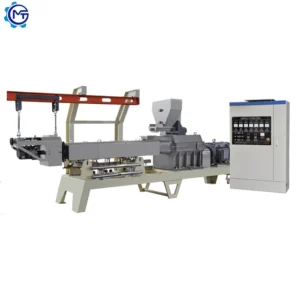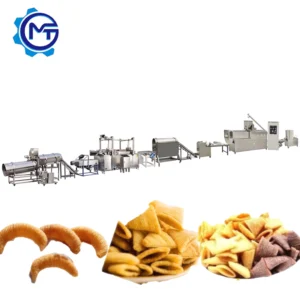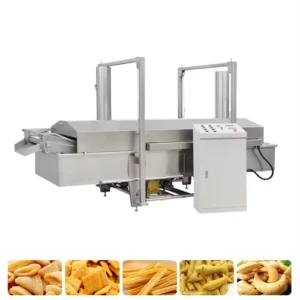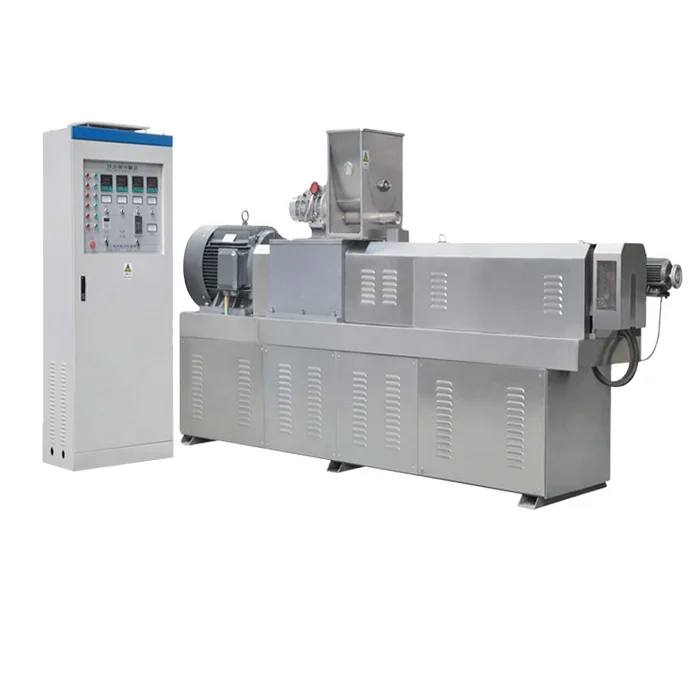


MT65 Fried Snack Processing Line, Twin-Screw Extruder, 142 kW Installed Power — complete turnkey system from batching and extrusion through frying, flavoring and packing. Screw configuration and die design are matched to your flour formulation and target snack shape, ensuring correct expansion, texture and density for bugles, corn chips and shaped crisps. Throughput across every station is balanced to eliminate bottlenecks at rated output. Trial runs on your raw material are conducted in our testing workshop before shipment, with full line layout and capacity calculation provided.
- Twin-screw extrusion with food-grade stainless steel contact parts
- PLC and MCC control with voltage and language confirmed pre-production
- CE certified, one-year complete warranty with wear parts support
Description
Screw Configuration Matched to Your Recipe — Every MT65 twin-screw segment and die plate is specified against the buyer’s flour blend and target bugle geometry before the extruder is assembled, eliminating the trial-and-error that typically delays snack line startup.
Technical Specifications
| Parameter | Value |
|---|---|
| Product Type | Fried Snack Processing Line (Bugles / Crisp Corn Snack Extrusion Line) |
| Model | MT65 |
| Extruder Type | Twin-Screw Extruder |
| Installed Power | 142 kW |
| Real Power Consumption | 100 kW |
| Output Capacity | 120–150 kg/h (basis not stated in source — confirm raw material, moisture and product shape) |
| Overall Line Dimensions | 22000 × 1200 × 2200 mm |
| Extruder Main Motor Power | 30 kW |
| Powder Mixer Tank Volume | 150 kg |
| Powder Mixer Rotary Speed | 385 rpm |
| Powder Mixer Mixing Time | 10 min per batch |
| Fryer Temperature Range | 0–260 °C |
| Material of Construction | Stainless Steel (food-contact surfaces) |
| Control System | PLC / MCC options available (confirm before production) |
| Voltage & Frequency | Configurable to site supply (confirm before commissioning) |
| Product Shapes | Bugles, crisp corners, small fish crisps, triangles, gourds, ducks, Christmas trees |
| Standards | CE, ISO certified manufacturer |
Application Suitability
| Application | Material or Output |
|---|---|
| Bugle and corn chip production | Corn flour, rice flour and blended cereal doughs |
| Tortilla chip and crispy corn snack lines | Corn masa and wheat-based formulations |
| Shaped fried crisps (fish, triangle, gourd) | Flour-based pellets cut before frying |
| Rice crust and popped snack formats | Rice grits and composite starch blends |
| Small to mid-scale snack manufacturers | Phased capacity expansion from 120 kg/h upward |
Why "Nominal Capacity" Misses the Real Bottleneck on a Fried Snack Line
Line throughput only matters when every station is sized to the same actual output on your specific flour formulation.
A fried snack processing line turnkey project often gets quoted on the extruder’s nominal capacity, yet the fryer, flavoring drum and dryer were never recalculated for the oil absorption rate and dwell time your recipe demands. I have walked into plants where the extruder was pushing dough at the rated rate, but the fryer could not maintain temperature recovery fast enough, leaving product undercooked or forcing the operator to slow the entire line. The mismatch surfaces only after installation, when raw material costs are already burning through the budget [NEED_CITE: common throughput mismatches in extruded snack lines]. Sizing each station as one integrated system, rather than bolting together standalone machines, is what separates a functioning line from an expensive bottleneck.
Throughput Matching Across Mixing, Extrusion and Frying Stations
When a fried snack processing line is engineered as a single project, the powder mixer batch cycle is timed to feed the extruder continuously without starvation or surge. The twin-screw extruder’s screw speed and die opening are then set so that the cut pieces enter the fryer at a rate the heating system can sustain at the target oil temperature. This station-to-station balance is what prevents the familiar scene of operators manually throttling the extruder down because the fryer cannot keep up.
Die Geometry and Oil Absorption in Shaped Crisps
The die plate and cutting mechanism determine wall thickness, surface area and internal void structure of each piece before it reaches the fryer. A bugle shape with thin walls and open channels will absorb oil differently from a dense triangle crisp, affecting both fryer dwell time and final product weight. Matching die design to the buyer’s target shape is therefore not a cosmetic choice but a process parameter that directly influences flavoring adhesion and packing density downstream [NEED_CITE: die geometry impact on oil uptake in extruded snacks].
Reading the Power and Dimension Specs Against Your Workshop
The MT65 line draws approximately 100 kW under real operating conditions, which determines the transformer rating and dedicated circuit requirements at your facility. The 22-meter line footprint with a 1.2-meter width means the extrusion and frying sections need a straight run of floor space with adequate clearance for maintenance access on both sides. The fryer’s 0–260 °C range covers the typical 170–190 °C operating window for corn-based crisps, with headroom for higher-temperature flash frying if a specific recipe calls for it. The twin-screw extruder’s 30 kW main motor provides the shear energy needed for starch gelatinisation across a range of flour moisture levels, while the 385 rpm mixer speed and 10-minute batch cycle keep dough supply aligned with extruder consumption.
What Happens When Screw Configuration Is Copied, Not Specified
A generic screw build that was never adjusted for your corn flour blend will produce dough with inconsistent gelatinisation, leading to uneven expansion in the fryer. Some pieces puff correctly while others stay dense, and the flavoring drum cannot coat a mixed batch uniformly. Operators end up sorting product by hand or discarding the under-expanded fraction, eroding the margin that justified the line investment in the first place [NEED_CITE: screw configuration and gelatinisation consistency in twin-screw extrusion].
Why This Line Is Built as One Project, Not Assembled from Vendors
The extruder, fryer and flavoring stations are designed under a single supplier so that throughput calculations account for oil absorption rate, moisture loss in the fryer and seasoning adhesion on the actual product surface. Screw segments and die plates are configured against the buyer’s flour formulation before assembly, not swapped from a generic library build. An in-house testing workshop runs the buyer’s raw material on the assembled line before shipment, generating a trial run report that confirms expansion, texture and fryer behavior. Stainless-steel food-contact surfaces run through every station, meeting hygiene expectations in regulated snack markets. Pre-sales engineering covers line layout, utility planning and phased installation scheduling so that commissioning follows a defined sequence rather than improvisation on the factory floor.
Documentation & Verification
- Line layout drawing with station-by-station throughput calculation for your target snack shape
- Screw and die configuration record tied to your flour formulation and moisture content
- Trial run report produced on your raw material in the testing workshop before dispatch
- Electrical schematic confirming voltage, frequency and control language for your site
- CE declaration of conformity and ISO certificate from the manufacturing facility
Installation, Commissioning & Support
- Foundation and floor space planning based on the 22-meter line footprint and utility connection points
- Dedicated electrical circuit sized for the 142 kW installed load with local voltage confirmation
- Extruder barrel and screw assembly verified on site against the configuration record
- Fryer temperature profiling and oil circulation tested across the 0–260 °C range during commissioning
- Operator training covering screw speed, die changes, fryer dwell time and daily cleaning protocols
- Wear parts list for screws, dies and fryer belts provided with recommended replacement intervals
What to Prepare Before Requesting a Quotation
Share your flour formulation, including the primary grain type and any additives, along with the target snack shape and desired final product weight per piece. Specify your facility’s voltage, frequency and preferred control language so the electrical package is confirmed before production begins. Provide workshop dimensions and ceiling height to verify that the line layout fits your available space.
Frequently Asked Questions
Q: How is line capacity verified on my actual flour formulation and target snack shape?
A: Your raw material is run through the assembled line in our in-house testing workshop before shipment. The trial produces samples at different screw speeds and fryer temperatures, and the resulting expansion, texture and oil absorption data are recorded in a trial run report. This confirms whether the line holds its rated throughput on your specific recipe rather than on a generic test flour.
Q: How are the extruder, fryer and flavoring stations matched to avoid bottlenecks?
A: Each station is sized based on your target output, accounting for moisture loss in the fryer and the seasoning adhesion rate on your product shape. The fryer’s heating capacity is calculated to maintain oil temperature at the required throughput, and the flavoring drum’s rotation speed is set to coat the actual surface area of your crisps uniformly.
Q: What voltage, frequency and control language options are confirmed before production?
A: The electrical package is configured to your site’s supply specifications, and the PLC or MCC interface language is agreed before the control panels are built. This is documented in the electrical schematic and confirmed during the specification review stage, preventing commissioning delays caused by mismatched voltage or unreadable HMI screens.
Q: Is a trial run performed on my raw material before shipment?
A: Yes. The complete line runs your flour formulation in the testing workshop, and the trial run report includes expansion measurements, fryer temperature logs and product samples. You can review the results before the line is disassembled for packing, so any recipe or screw adjustments happen at the factory rather than on your floor.
Q: What does on-site installation and operator training cover?
A: Our technicians oversee mechanical assembly, utility connections and the first production runs at your facility. Training covers screw speed adjustment, die changeover for different snack shapes, fryer temperature management and daily cleaning procedures. A wear parts list with recommended replacement schedules is handed over at the end of commissioning.
Related products
-
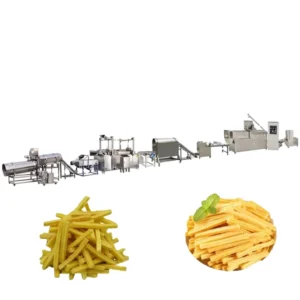
High-Yield Automated Fried Snack Production Line – Double Screw Salad Strips & Millet Crust Making Equipment
¥65.00 Select options This product has multiple variants. The options may be chosen on the product page -
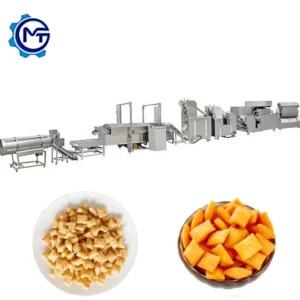
Hot Selling Full Automatic Fried Dough Wheat Flour Bugles Snacks Frying Machine Fried Puffed Food Bugles Snack Production Line
¥7,349.41 Select options This product has multiple variants. The options may be chosen on the product page -
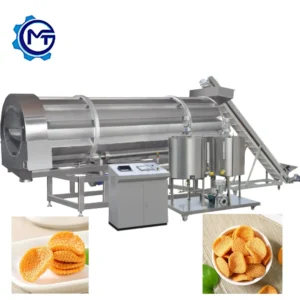
Automatic Rice Crust Chips Making Machine Bugles Pizza Rolls Fried Snack Food Processing Line Machine
¥8,570.00 Select options This product has multiple variants. The options may be chosen on the product page -
Fried Puffs Snack Food Making Machine Whole Line Solution Design by Factory Price Crispy Snack Machine
¥20.00 Select options This product has multiple variants. The options may be chosen on the product page