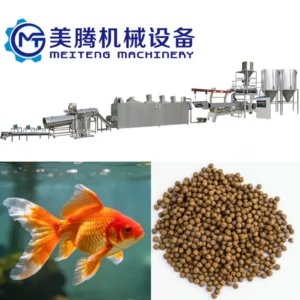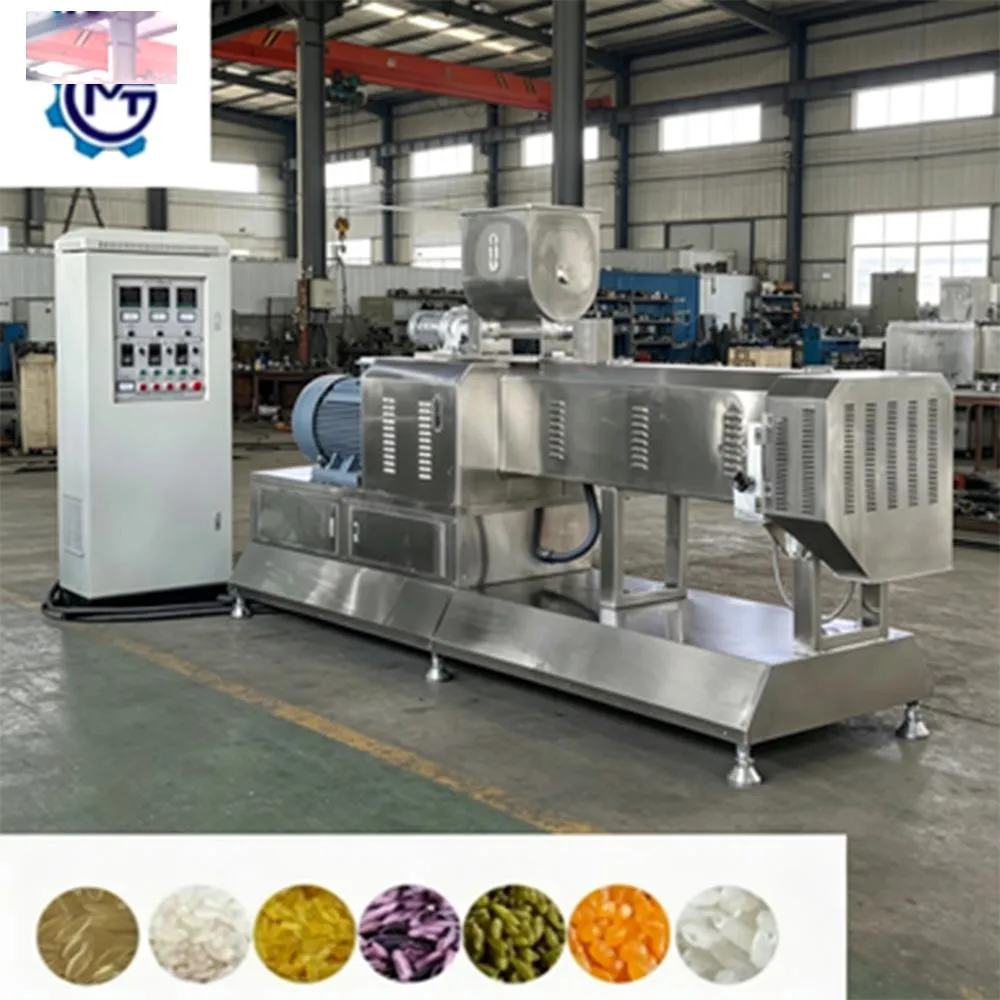
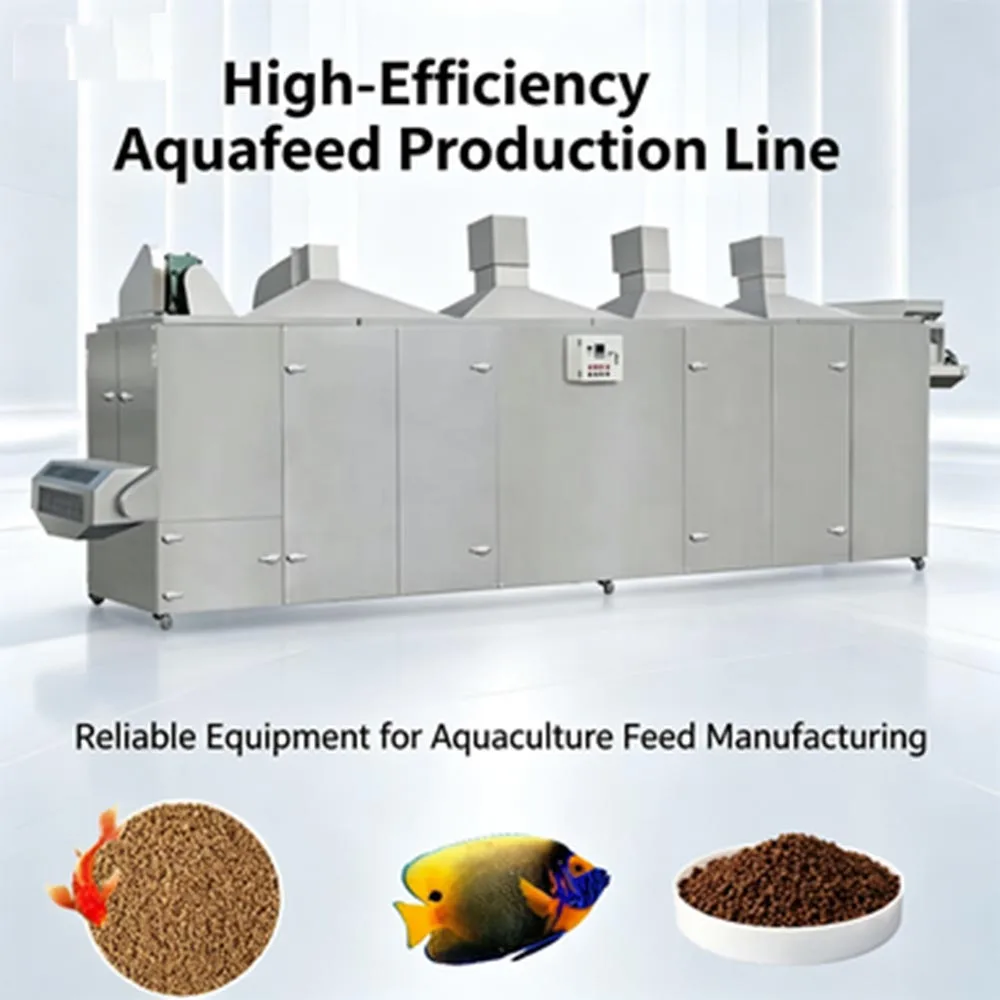


Twin Screw Aquatic Feed Extrusion Production Line, PLC Control, 304 Stainless Steel — engineered for floating and sinking fish pellet production with adjustable buoyancy, hardness, and size across species like koi, goldfish, and freshwater fish.
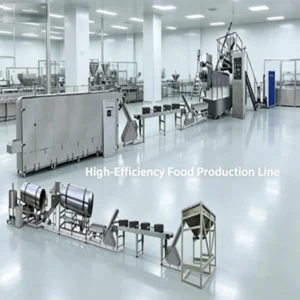
Screw configuration and die design are matched to your raw material formulation and target pellet density, ensuring correct expansion and water stability from the first run. Every station — mixer, extruder, dryer, coating drum, vibrating sieve — is throughput-balanced to eliminate bottlenecks in continuous operation.
- Full turnkey line with PLC automation and food-grade 304 stainless steel contact parts
- Trial runs on your raw material in our testing workshop before shipment
- Layout, capacity calculation, and electrical schematics confirmed to your site voltage and control language
Description
Turnkey line integration — every station from raw material batching through extrusion, drying, coating, and packing is throughput-matched under one supplier to prevent bottlenecks that arise when stations are assembled from separate vendors.
Technical Specifications
| Parameter | Value |
|---|---|
| Product Type | Twin Screw Aquatic Feed Extrusion Production Line |
| Screw Type | Twin-screw |
| Control System | PLC automatic control system |
| Material Contact Parts | Food-grade 304 stainless steel |
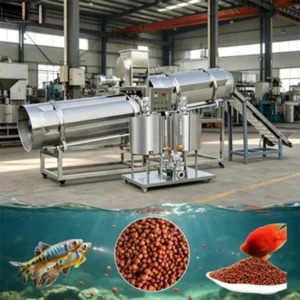
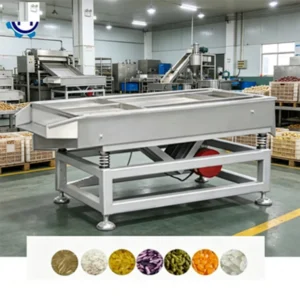
| Line Stations | Raw material mixer, extruder, dryer, seasoning coating machine, vibrating sieve, conveyor equipment |
| Pellet Adjustability | Pellet size, hardness, buoyancy adjustable |
| Buoyancy Capability | Floating and sinking pellets |
| Operating Interface | Humanized operation interface |
| Transmission Structure | Optimized energy-saving design |
| Assembly State | Complete matched production configuration |
| Output Capacity | Medium to large scale industrial production (basis to be confirmed with buyer’s raw material formulation and pellet size) |
| Standards | Meets international food hygiene standards |
Application Suitability
| Application | Material or Output |
|---|---|
| Koi and goldfish feed production | Fish meal, soybean meal, corn powder, compound additives |
| Tropical fish pellet extrusion | Blended aquatic feed raw materials |
| Freshwater aquaculture feed | Soybean meal and cereal-based formulations |
| Sinking pellet production for bottom-feeding species | High-density formulations with adjusted starch-to-protein ratio |
| Floating pellet production for surface-feeding species | Expanded formulations with controlled gelatinisation |
Why Buoyancy Fails When Raw Material Specs Are Ignored
Screw configuration and die design must be locked to the buyer’s actual formulation and target density before the extruder leaves the factory.
I once watched a sinking fish feed line produce nothing but floating pellets because the trial used a standard fish meal ratio while the buyer’s real formulation relied heavily on soybean meal. The starch gelatinisation behaviour changed completely, expansion went up, and every pellet floated to the surface [NEED_CITE: effect of soybean meal proportion on extrudate density]. The entire line stopped while we reconfigured the screw elements and swapped the die plate. A Twin Screw Aquatic Feed Extrusion Production Line turnkey setup eliminates this risk only when the screw profile is specified against the buyer’s confirmed raw material — not a generic template. Buying on nominal output without a trial run on your actual formula is the most common reason aquatic feed lines fail at commissioning.
Screw Configuration Dictates Pellet Density
The twin-screw extrusion process gives operators direct control over shear, residence time, and melt temperature through modular screw element selection. For floating pellets, high-shear mixing elements and a longer barrel promote maximum starch gelatinisation and expansion. For sinking pellets, the configuration shifts toward conveying elements with lower shear to limit expansion and increase bulk density. On this Twin Screw Aquatic Feed Extrusion Production Line turnkey system, screw and die combinations are specified after reviewing the buyer’s formulation, so the machine arrives with a configuration already matched to the target buoyancy rather than a generic build that requires on-site guesswork.
Throughput Matching Across Every Station
A common failure in multi-vendor lines is the dryer or coating drum operating below the extruder’s output, creating a bottleneck that forces the entire line to run below its rated capacity. This production line integrates the raw material mixer, extruder, dryer, seasoning coating machine, vibrating sieve, and conveyor equipment as a single matched system [NEED_CITE: importance of throughput matching in continuous extrusion lines]. Each station is sized relative to the extruder’s throughput so that material flows continuously without buffer overflows or idle time. This matters especially in aquatic feed, where pellet moisture after extrusion must be reduced within a specific window to lock in buoyancy characteristics.
What the Specification Sheet Tells You About Final Pellet Quality
The food-grade 304 stainless steel contact parts resist corrosion from the salts, oils, and amino acids common in fish meal formulations, maintaining surface hygiene across long production runs. The PLC automatic control system holds barrel temperature zones and screw speed within tight tolerances, which directly affects starch gelatinisation consistency from batch to batch. Pellet size and hardness are adjustable through die selection and screw speed modulation, allowing a single line to produce different specifications for koi, goldfish, and freshwater species. The humanized operation interface reduces the training burden for operators transitioning from manual or semi-automatic systems, while the optimized energy-saving transmission lowers sustained power draw during continuous operation.
The Hidden Cost of Underspecified Auxiliary Equipment
When the dryer capacity does not match extruder output, pellets exit with excess moisture, leading to mould growth in storage and buoyancy drift that only shows up after bagging. Undersized coating drums leave uneven flavour or fat distribution, causing rejection at the quality checkpoint [NEED_CITE: moisture content and shelf stability in extruded aquatic feed]. A vibrating sieve that is too small for the line’s throughput allows broken fines to reach the packing station, increasing customer complaints about pellet integrity. These are not design flaws in individual machines — they are integration failures that occur when stations are sourced separately without a unified capacity calculation.
Why Buyers Source This Line Through One Supplier
Every station on this Twin Screw Aquatic Feed Extrusion Production Line turnkey system is throughput-matched under a single line layout and capacity calculation, so the buyer receives one accountability point for performance. Screw and die configurations are recorded against the buyer’s raw material before production begins, eliminating on-site trial-and-error. An in-house testing workshop runs the buyer’s actual formulation before shipment, producing a trial run report that documents pellet buoyancy, size, and moisture. Pre-sales consultation covers electrical schematics, voltage confirmation, and control language options matched to the target market. Ongoing support includes a documented wear parts list covering screws, dies, and cutter assemblies from the first replacement cycle.
Documentation & Verification
- Line layout showing throughput matching between mixer, extruder, dryer, and coating stations
- Screw and die configuration record tied to buyer’s raw material and target buoyancy
- Trial run report on customer raw material conducted in the testing workshop before shipment
- Electrical schematic with confirmed voltage, frequency, and PLC language options
- Factory test record documenting pellet size, hardness, and density measurements
- CE declaration of conformity and ISO certificate included with shipping documentation
Installation, Commissioning & Support
- Foundation must support the full line footprint including extruder, dryer, and conveyor equipment
- Dedicated power circuit sized to the PLC-controlled extruder motor and dryer heating load
- Stations arrive pre-assembled; on-site work covers alignment, utility hookup, and belt tensioning
- First-run commissioning includes barrel temperature profiling and screw speed calibration for target buoyancy
- Operator training covers PLC interface navigation, die changeover, and emergency stop procedures
- Wear parts kit with replacement screw elements, die plates, and cutter blades for initial maintenance cycles
What We Need to Configure Your Line
To size the extruder and match every downstream station, we need your raw material formulation with proportions of fish meal, soybean meal, corn powder, and any compound additives. Specify whether the target product is floating, sinking, or a mix of both, along with the pellet diameter range for each species you supply. Your local voltage, frequency, and preferred PLC interface language must be confirmed before electrical design begins.
Frequently Asked Questions
Q: How is the line’s output capacity verified, and what raw material formulation and pellet size is it based on?
A: Capacity is confirmed through a trial run on your specific raw material in our in-house testing workshop before shipment. We document the formulation, pellet size, moisture content, and measured throughput in a trial run report. The capacity calculation is then locked to your actual product specification rather than a generic benchmark material.
Q: How do you ensure floating pellets actually float and sinking pellets sink to market specifications?
A: Buoyancy is controlled through screw element selection, barrel temperature profile, and die design — all specified to your formulation before production. The trial run verifies pellet density against your target, and adjustments are made in the workshop. You receive a configuration record so the exact screw and die setup is reproducible on your site.
Q: Can a trial run be done on my specific raw material before shipment, and what does the report cover?
A: Yes. We run your actual formulation through the complete extruder and document pellet size distribution, buoyancy, moisture content after drying, and coating uniformity. The trial run report accompanies the shipment so your team has a verified baseline for commissioning and ongoing quality control.
Q: What are the voltage, frequency, and PLC control language options for my country’s electrical standard?
A: The electrical schematic is confirmed with you during the specification stage. Voltage and frequency are matched to your facility’s supply, and the PLC interface language is set to your operator preference before dispatch. We provide the confirmed electrical documentation with the shipping package.
Q: How are screw and die configurations selected, and what spare wear parts are included with the first shipment?
A: Screw elements and die plates are chosen based on your raw material behaviour and target pellet buoyancy during the proposal stage. A complete wear parts list is provided, and the first shipment includes replacement screw elements, dies, and cutter assemblies sized to cover the initial production period before reorder.
Related products
-
MT85 500kg/h Multi-Purpose Pet Food Processing Line for Dogs Cats Birds Fish & More-380V 50Hz Three Phase 45KW
¥65,000.00 Select options This product has multiple variants. The options may be chosen on the product page -
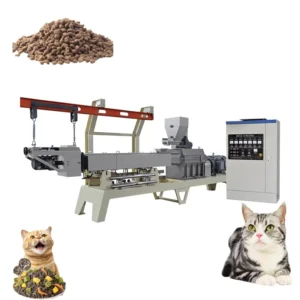
Premium Pet Food Processing Equipment Dog Cat Feed Making Machine
¥9,500.00 Select options This product has multiple variants. The options may be chosen on the product page -
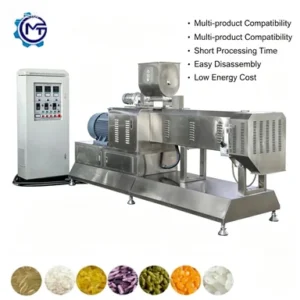
Durable Stainless Steel Twin Screw Extruder Floating Sinking Aquatic Fish Feed Processing Production Equipment
¥65.00 Select options This product has multiple variants. The options may be chosen on the product page -
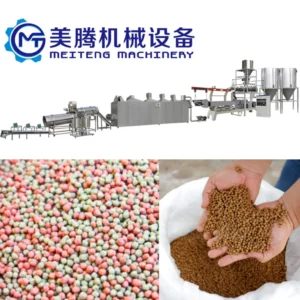
2-3t/h High Capacity Multi-Species Fish Feed Processing Line to Produce Fish Food
¥55,000.00 Select options This product has multiple variants. The options may be chosen on the product page