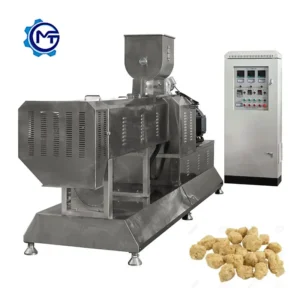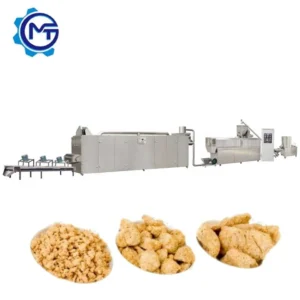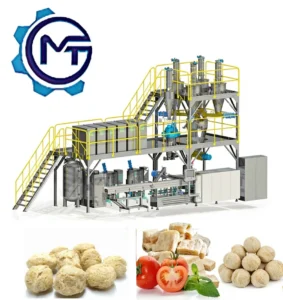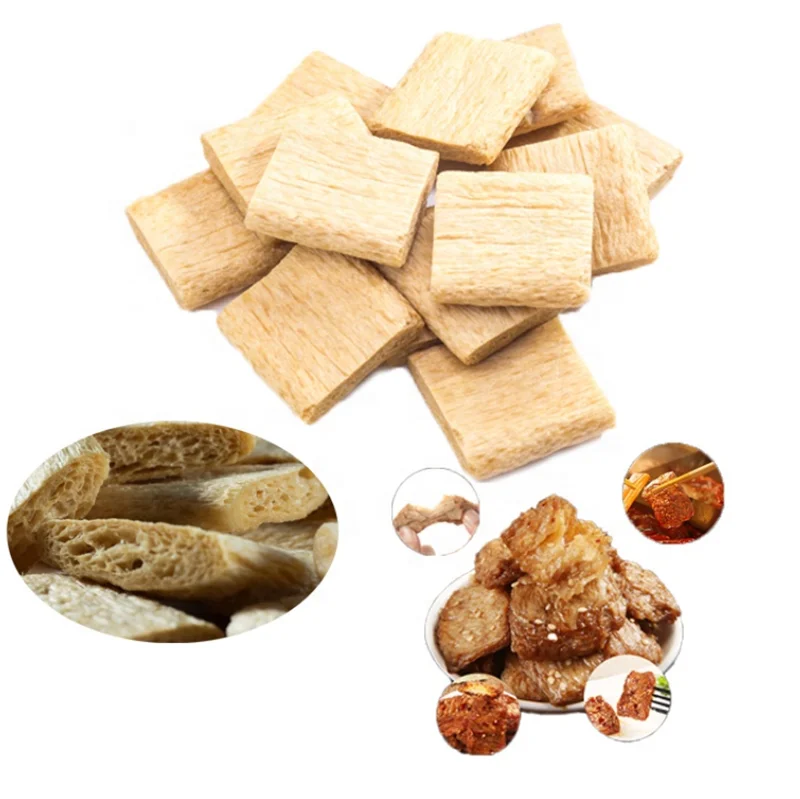
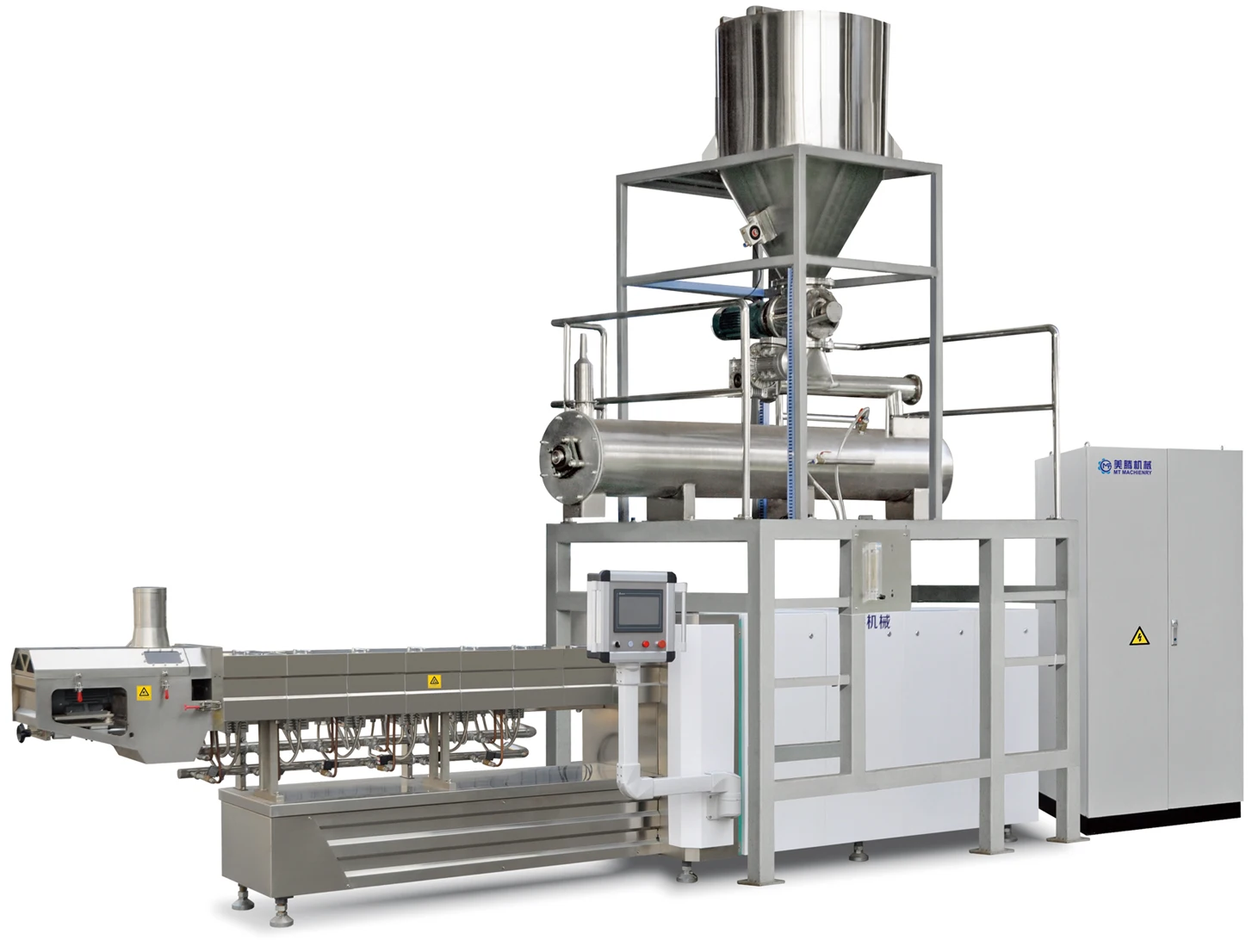
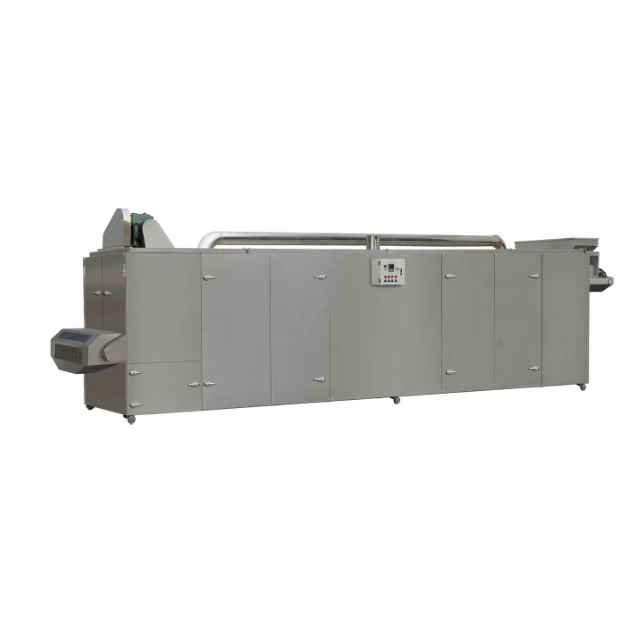
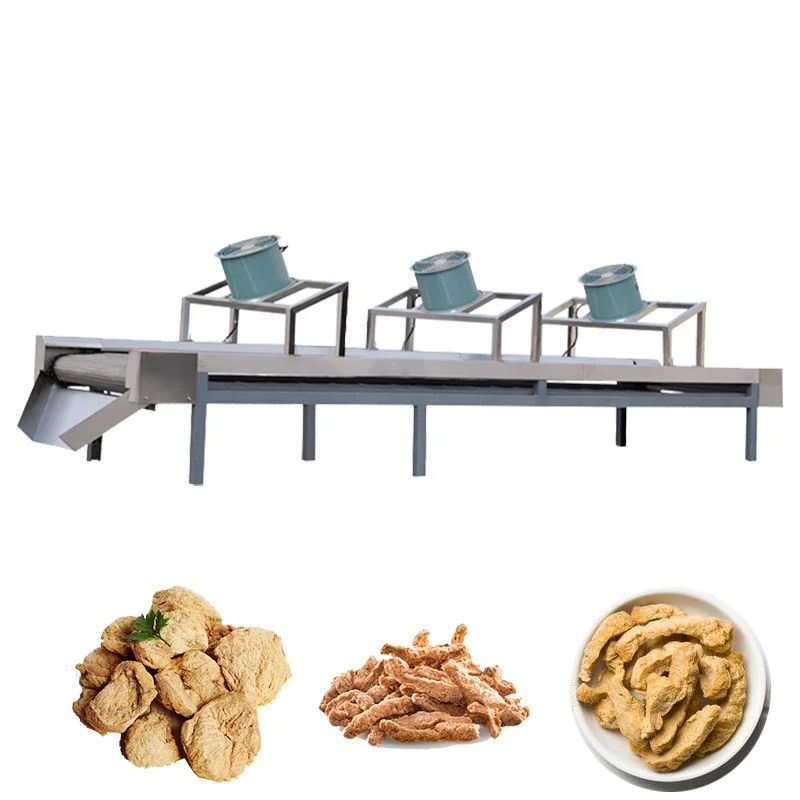
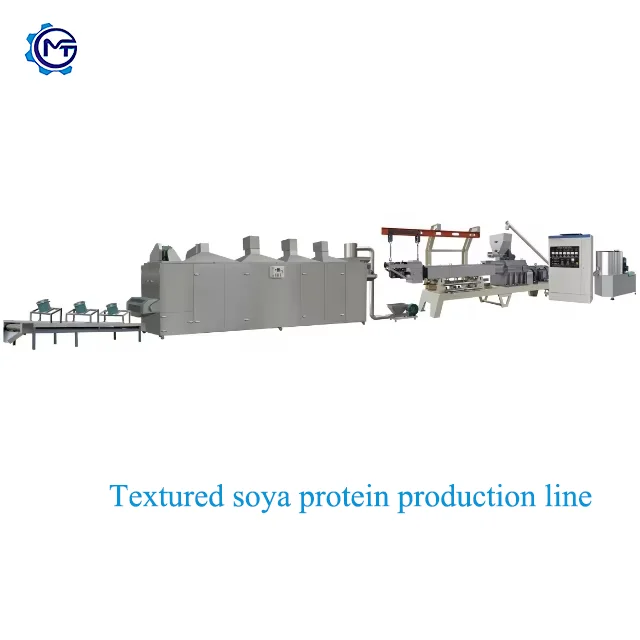
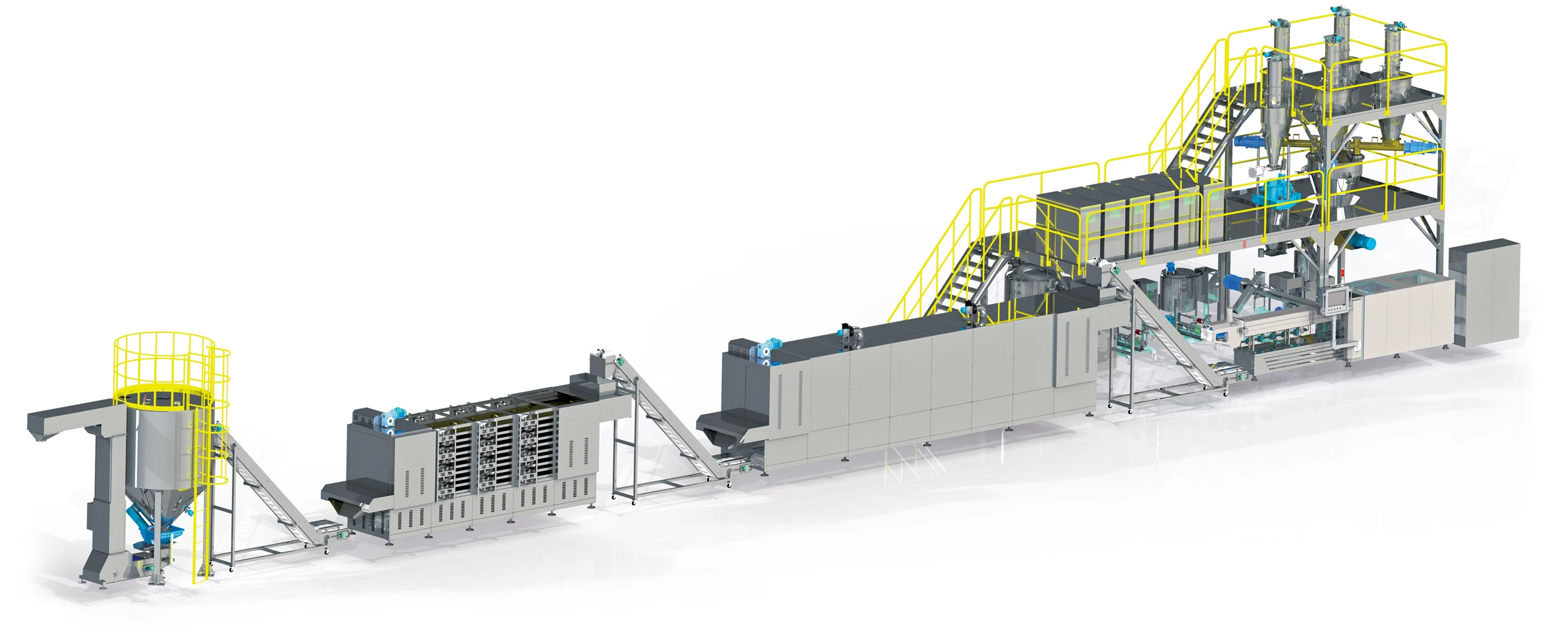
MT65 Textured Vegetable Protein Extrusion Production Line, Twin-screw, 150–200 kg/h — engineered as a complete turnkey project from batching through extrusion, drying, cooling to packing, with throughput balanced across every station to prevent bottlenecks.
- Screw configuration and die design specified to your raw material and target TVP fibre structure
- Three capacity tiers (MT65 / MT70 / MT85) available for pilot to full commercial scale
- CE & ISO certified with food-grade stainless steel contact parts
Line layout, utility planning and in-house trial runs on your actual raw material are completed before shipment, with on-site installation, commissioning and operator training included in the project scope.
Description
Integrated Turnkey Delivery — Every station from batching to packing is engineered and tested together so throughput holds steady across the entire TVP extrusion production line turnkey, not just at the extruder barrel.
Technical Specifications
| Parameter | Value |
|---|---|
| Model | MT65 / MT70 / MT85 |
| Product Type | Textured Vegetable Protein (TVP) Extrusion Production Line |
| Extruder Type | Twin-screw |
| Installed Power | 85 kW (MT65) / 120 kW (MT70) / 195 kW (MT85) |
| Actual Power Consumption | 65 kW (MT65) / 90 kW (MT70) / 165 kW (MT85) |
| Output Capacity | 150–200 kg/h (MT65) / 200–300 kg/h (MT70) / 600–800 kg/h (MT85) (basis not stated in source) |
| Overall Dimensions (Line) | 18000×1300×2300 mm (MT65) / 20000×1500×2400 mm (MT70) / 24000×3500×4300 mm (MT85) |
| Powder Mixer Tank Volume | 150 kg |
| Powder Mixer Rotary Speed | 385 rpm |
| Powder Mixer Power | 4 kW |
| High-temperature Roaster Effective Belt Length | 3.5 m |
| Roaster Far Infrared Heater Power | 3.9 kW × 24 |
| Cooling Machine Temperature Range | 0–260°C (basis to be confirmed) |
| Material | Food-grade stainless steel (contact parts) |
| Control System | Available with PLC or MCC control |
| Assembly State | Complete turnkey line |
| Standards | CE / ISO certified |
| Warranty | 1 year |
Application Suitability
| Application | Material or Output |
|---|---|
| Plant-based meat analogues for sausage and ham | Textured soy protein from low-temperature soybean meal |
| Vegetarian canned food and fast-food ingredients | Fibrous TVP granules and chunks from defatted soy flour |
| Quick-frozen vegetarian products | High-moisture textured protein from peanut meal blends |
| Meat extender for ready meals | Soy-based TVP with oil and water absorption characteristics |
Why a "Rated Capacity" Can Mask the Real Bottleneck on a TVP Line
Matching throughput across every station is the only way to guarantee stable output on a TVP extrusion production line turnkey.
I have walked into workshops where the extruder was pushing material faster than the dryer could handle, and half the product was sitting on the belt turning into a solid mat. On another job, the cooling section was undersized and the TVP was bagged warm — condensation inside the packaging ruined an entire batch within days. These are not edge cases. When a line is assembled from separate vendors, each one quotes their station in isolation, and nobody owns the throughput balance [NEED_CITE: throughput balancing methodology for multi-station extrusion lines].
Station-to-Station Throughput as a Single Engineering Problem
On a TVP extrusion production line turnkey, the mixer, extruder, dryer, cooler, and packing station must each handle the same mass flow. A twin-screw extruder running at capacity will flood a dryer that was spec’d for a lower volume. The line is therefore designed as one system: powder mixer output is matched to the extruder feed rate, the roaster belt length and heater power are sized for the extrusion output, and the cooling capacity is aligned to bring product down to a safe packing temperature before it reaches the bagging station.
Layout and Utility Planning Before Metal Hits the Floor
A complete production line occupies significant floor space — the MT85 configuration stretches to 24 metres in length and requires 4.3 metres of headroom. Utility connections must be confirmed early: the roaster alone draws substantial far-infrared heating power, and the gas supply must meet the consumption rate at the installation site. Electrical voltage, frequency, compressed air, and water supply are mapped to local conditions before the layout drawing is finalised [NEED_CITE: industrial utility standards by export market]. This prevents the kind of delays I have seen when a panel arrives and the local supply is three-phase at a frequency the motor was not wound for.
Reading the Specs That Actually Matter for TVP
The twin-screw extruder is the heart of the line, and its screw configuration determines the shear profile applied to the soy protein. Low-temperature soybean meal behaves differently from peanut meal — different protein solubility, different fibre-forming potential. The die design controls expansion ratio and therefore the density of the final TVP chunk or granule. Installed power across the three models ranges from 85 kW to 195 kW, but actual consumption is lower, which matters for your transformer sizing and running cost. The roaster’s 3.5-metre effective belt length gives the residence time needed for thorough drying without case-hardening the surface. And food-grade stainless steel on all contact parts is non-negotiable when you are producing an ingredient that goes into human food.
The Hidden Cost of Skipping a Pre-Shipment Trial Run
I once spent a week on-site recalibrating a TVP line because the customer’s actual soy flour had a lower protein content than the standard material used during factory testing. The fibre structure would not form at the parameters we had dialled in. Running the buyer’s real raw material through the extruder before shipment eliminates this class of problem. When that step is skipped, commissioning stretches from days into weeks, raw material is wasted, and the relationship with the buyer starts on the wrong foot [NEED_CITE: extrusion trial run protocols for protein-based raw materials].
What Sets This Project Approach Apart
The line is supplied as a single integrated project — one supplier owns the throughput from batching to packing, so there is no finger-pointing between extruder and dryer vendors. Screw and die configurations are specified against your raw material formulation, not copied from a generic build. An in-house testing workshop allows trial runs on your actual soy or peanut meal before any crate leaves the factory. Three capacity tiers — MT65, MT70, MT85 — cover pilot-scale through full commercial production without forcing you into an oversized line. On-site installation, commissioning, and operator training are included in the project scope, not quoted as optional extras.
Documentation & Verification
- Line layout drawing showing station-by-station throughput calculation for your chosen model
- Screw and die configuration record matched to your soy or peanut meal formulation
- Trial run report on your actual raw material performed before shipment
- Electrical schematic with voltage and frequency confirmed to your site supply
- CE declaration of conformity and ISO certificate for export compliance
- Operation and maintenance manual with wear parts list specific to your extruder model
Installation, Commissioning & Support
- Floor space and headroom assessment against the MT85 footprint of 24000×3500×4300 mm
- Dedicated electrical circuits sized for actual consumption up to 165 kW at the extruder
- Phased installation schedule coordinating delivery, rigging, and utility hook-up
- First-run parameter tuning on your raw material during on-site commissioning
- Operator training covering screw changes, die swaps, and roaster temperature profiles
- Wear parts list and recommended spare inventory for screws, dies, and roaster belt components
Preparing Your Inquiry
To move forward efficiently, share your raw material specification — protein content, moisture level, and particle size of the soy or peanut meal you plan to use. Confirm your local voltage, frequency, and available gas supply for the roaster. Provide your factory floor dimensions so the layout can be adapted to your space. If you have existing upstream or downstream equipment that needs to interface with the line, include those details as well.
Frequently Asked Questions
Q: How is line capacity verified on my specific raw material formulation?
A: Your actual raw material — with its specific protein content and moisture level — is run through the extruder in the testing workshop before shipment. The resulting trial run report documents achievable throughput, fibre structure quality, and the screw and die configuration that produced the best result, so capacity is confirmed on your material rather than a generic standard.
Q: What utility connections does the full line require?
A: The complete line requires three-phase electricity at confirmed voltage and frequency, gas supply for the roaster, compressed air for pneumatic controls, and water for cooling circuits. A utility planning sheet is provided during project design, matching each station’s demand to your site infrastructure before installation begins.
Q: How is throughput balanced between the extruder, dryer and cooler?
A: Each station is sized relative to the extruder’s output. The roaster belt length and heater capacity are calculated to dry the full extrusion volume, and the cooler capacity is matched to bring that same mass flow to a safe packing temperature. This prevents any single station from becoming a choke point that limits overall line output.
Q: What does the installation and commissioning timeline look like?
A: Installation follows a phased schedule covering equipment placement, utility connections, and mechanical alignment. Commissioning includes parameter tuning on your raw material and operator training. The exact timeline depends on line model, site readiness, and local permit requirements, and is documented in the project plan before shipment.
Q: Can the line layout be adapted to my factory floor plan?
A: Yes. The layout is configured to your available floor space and headroom during project design. Station spacing, conveyor routing, and utility connection points are adjusted to fit your building dimensions while maintaining the throughput balance between stations.
Related products
-
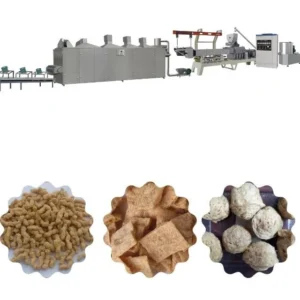
High Productivity Single Screw Extruder Machine New Condition Textured Soya Meat & Soy Protein Like Meat Making Machine
Price range: ¥20.00 through ¥30.00 Select options This product has multiple variants. The options may be chosen on the product page -
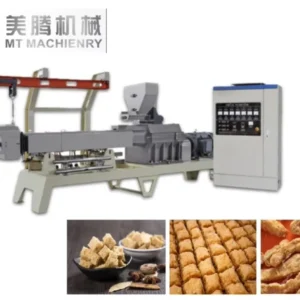
Twin Screw Extruder for High Moisture Vegetarian Meat
¥9,500.00 Select options This product has multiple variants. The options may be chosen on the product page -
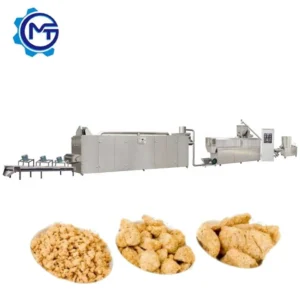
New Pea and Soybean Protein Production Line Equipment with Mechanical Extruder Food Grade Stainless Steel High Productivity
¥65.00 Select options This product has multiple variants. The options may be chosen on the product page -
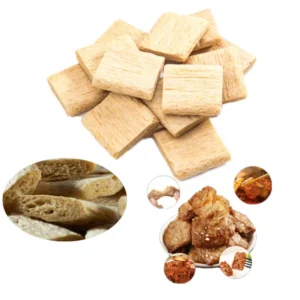
High-yield Soybean Protein Automated Production Line Single Screw Extruder for TVP
Price range: ¥20.00 through ¥30.00 Select options This product has multiple variants. The options may be chosen on the product page