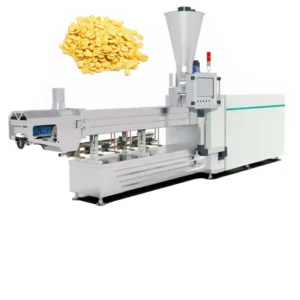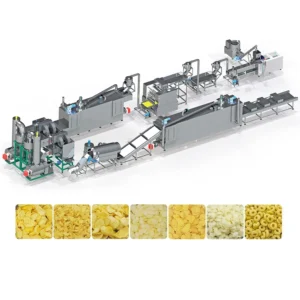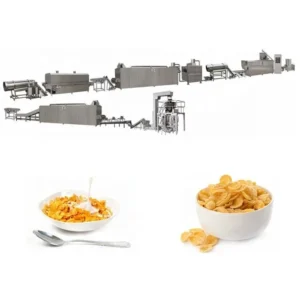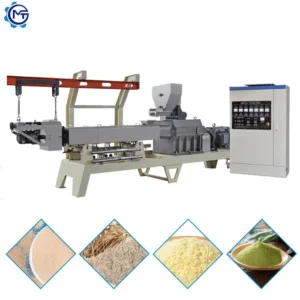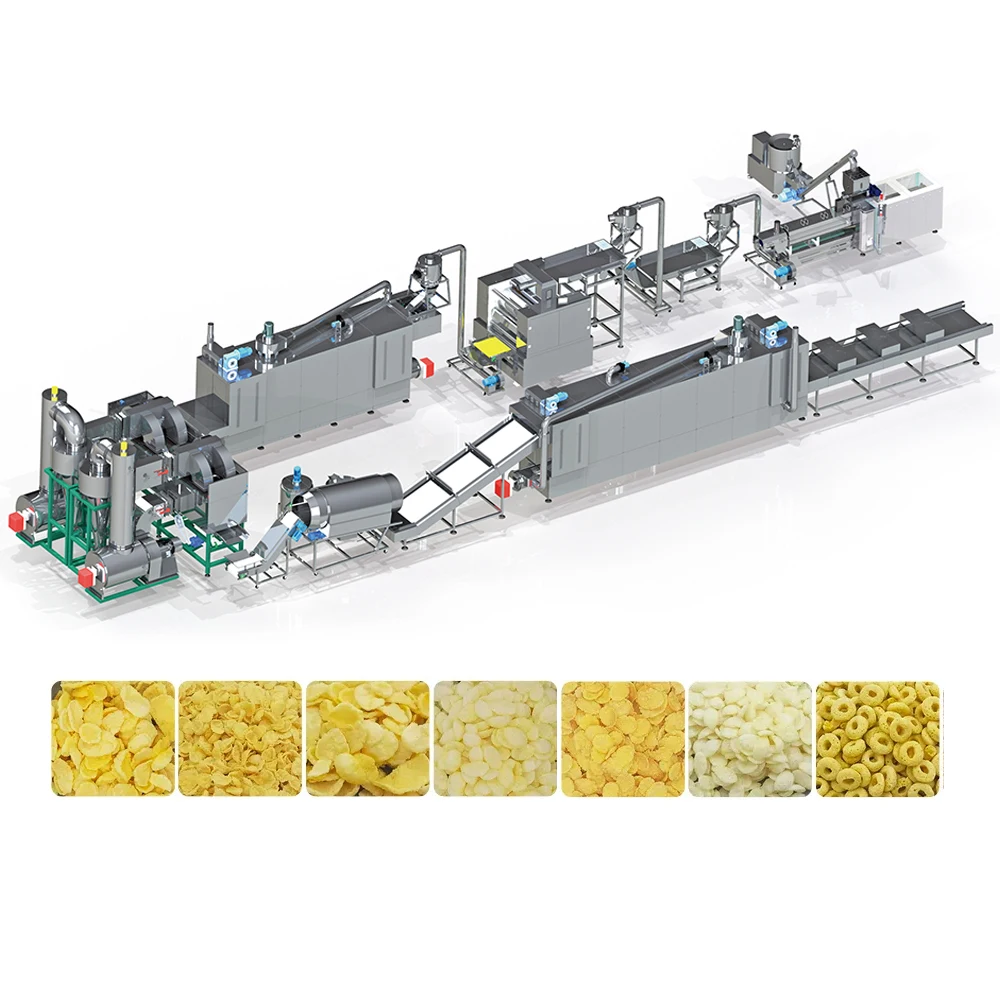


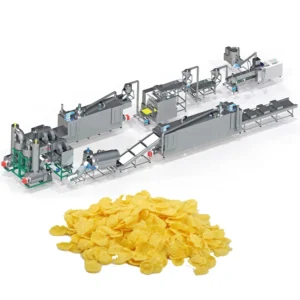
MT70 / MT85 / MT75 Corn Flakes Production Line, twin-screw extrusion, PLC control, hydraulic flaking system — engineered as a complete turnkey project from batching through roasting and packing.
- Throughput matched across every station so no dryer or flaker bottlenecks output
- Screw configuration and die design specified to your grain blend and target flake density
- Hot air roasting with dual circulating fans for uniform crispness
Trial runs on your raw material in our testing workshop before shipment ensure the line performs as quoted from day one.
Description
Matched Throughput Stations — Every segment of this corn flakes processing line is balanced from mixing to packing, ensuring the extruder output is never starved by an undersized dryer or flaker.
Technical Specifications
| Parameter | Value |
|---|---|
| Model | MT70 / MT85 / MT75 |
| Product Type | Corn Flakes Production Line |
| Screw Type | Twin Screw |
| Control System | PLC (Programmable Logic Controller) |
| Flaking Roller Drive | Double motors for separate roller driving |
| Flaking Roller Pressure | Hydraulic system for double rollers |
| Roller Temperature Control | Infrared sensor monitoring |
| Dryer Heating Source | Gas or Electric (configurable) |
| Roasting Oven | Hot air roasting with conciliation burner, dual circulating fans, cyclone dust removal |
| Coating System | Double tumble for sugar melting, elevator, coating drum, spraying nozzle |
| Extruder Screw Feature | Automatic lubricating and cooling function |
| Certified Standards | CE, ISO |
Application Suitability
| Application | Material or Output |
|---|---|
| Natural Corn Flakes | Corn grits, maize powder |
| Sugar-Coated Flakes | Corn, rice, and wheat blends with sugar or honey coating |
| Multigrain Breakfast Cereals | Oats, barley, and rice bran mixtures |
| Fortified Cereal Bases | Vitamin-enriched corn and soy flour blends |
| Shaped Cereal Snacks | Ball, tube, ring, and star formats for retail packaging |
Why Nominal Throughput Rarely Survives Contact With Your Raw Material
Actual line capacity depends entirely on your specific grain blend and moisture content.
When a supplier quotes a corn flakes production line turnkey based on standard corn grits, that number often collapses when the buyer introduces local variations like oat or rice bran. The extruder might be pushed to its limit, while the downstream flaking rollers and dryer suddenly become the bottleneck, causing massive backups. Without verifying throughput on your actual recipe, the installation phase becomes a costly troubleshooting exercise [NEED_CITE: industrial extrusion capacity verification standards].
Station-to-Station Throughput Balance
A complete breakfast cereal project requires more than just a powerful extruder; it requires a synchronized chain of equipment. If the extruder produces more mass than the hydraulic flaker can press, or if the hot air roasting oven cannot remove moisture fast enough, the entire corn flakes production line turnkey solution stalls. This layout ensures that every motor, pump, and conveyor is rated to handle the peak output of the preceding station.
Raw Material Behavior and Process Adjustment
Different grains react to heat and shear in distinct ways. Corn gelatinizes at different temperatures than wheat or oats, requiring specific barrel temperature profiles and screw configurations. By matching the die design and moisture conditioning to the buyer’s target flake density, the line avoids common defects like uneven expansion or internal clumping [NEED_CITE: cereal grain gelatinization profiles in extrusion].
The Engineering Behind Flake Consistency
The use of double motors for the flaking rollers allows for independent speed adjustment, which is critical when processing varying grain textures. Meanwhile, the hydraulic system maintains constant pressure across the roller gap. Coupled with infrared sensors that monitor roller temperature, the system prevents the dough from sticking or tearing, ensuring every flake meets the thickness required for a consistent crunch.
The Cost of Unbalanced Line Configurations
When a buyer assembles a line from different vendors, the dryer is often the first component to fail the throughput test. An undersized dryer will leave the flakes too wet for the roasting stage, leading to a finished product that is tough rather than crispy. This imbalance forces the operator to slow down the extruder, effectively cutting the return on investment in half [NEED_CITE: manufacturing bottleneck analysis in food processing].
Why This Turnkey Approach Works
This corn flakes production line turnkey system is built on the principle of single-source responsibility. From the batching system to the final packing station, the throughput is calculated as a unified whole. The screw configuration and die design are specified to your raw material, and an in-house testing workshop performs trial runs before shipment to ensure the product meets your market’s expectations.
Documentation & Verification
- Line layout and capacity calculation matched to specific grain blends
- Screw and die configuration record for your raw material profile
- Trial run report on customer raw material before dispatch
- Electrical schematic and voltage confirmation for local grid standards
- Operation and maintenance manual with wear parts list
- CE declaration of conformity and ISO certificate
Installation, Commissioning & Support
- Site preparation for 41–45m footprint and utility connections
- Voltage and frequency confirmation for PLC and motor compatibility
- On-site assembly of hydraulic flaking and hot air roasting units
- Parameter setting for barrel temperature and roller pressure
- Operator training on twin-screw cleaning and automatic lubrication
- Scheduled maintenance plan for screws, dies, and roaster fans
Project Scoping and Data Requirements
To provide an accurate proposal, we need to know the specific grain composition you intend to use, the target flake thickness, and your local voltage and frequency requirements. Providing a raw material sample for our testing workshop is the most reliable way to confirm the line’s final capacity and layout.
Frequently Asked Questions
Q: How is line capacity verified on my actual raw material?
A: We conduct trial runs in our testing workshop using the buyer’s actual raw material. This allows us to adjust the screw configuration and die design before the corn flakes production line turnkey system is shipped, ensuring the quoted output matches your specific grain blend and moisture content.
Q: How do you ensure no single station bottlenecks the output?
A: Every station, from the mixer to the packing machine, is selected based on the mass flow rate of the extruder. We calculate the thermal and mechanical capacity of the dryer and roasting oven to ensure they can handle the peak moisture removal required by the extruder’s output.
Q: Can the screw and die be customized for my grain blend?
A: Yes. The twin-screw extruder allows for modular screw element arrangements. We specify the shear and residence time based on the starch gelatinization requirements of your specific mix of corn, rice, or oats to achieve the target flake texture.
Q: What is included in the on-site commissioning schedule?
A: Our engineers handle the mechanical assembly, electrical wiring verification, and PLC programming checks. We also perform temperature profiling of the roasting oven and hydraulic pressure calibration on the flaking rollers to ensure industrial safety and product quality.
Related products
-
Corn Flakes Production Line Breakfast Cereal Production Machine Line Corn Flake Making Machinery
¥59,800.00 Select options This product has multiple variants. The options may be chosen on the product page -
New Automatic Cornflakes Making Machine Oats Snack Food Chips Extruder Processing Line
¥30.00 Select options This product has multiple variants. The options may be chosen on the product page -
Corn Flake Making Machine Corn Puffs Making Machine Snack Food Production Line
Price range: ¥500.00 through ¥1,200.00 Select options This product has multiple variants. The options may be chosen on the product page -
Complete Corn Flakes Production Line Breakfast Cereal Processing Machine Core Motor Component Cornflakes Processing Equipment
¥19,000.00 Select options This product has multiple variants. The options may be chosen on the product page