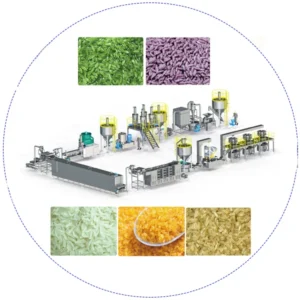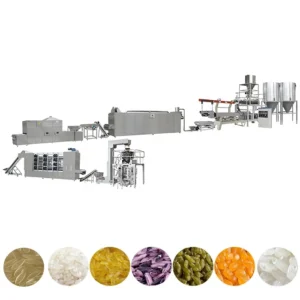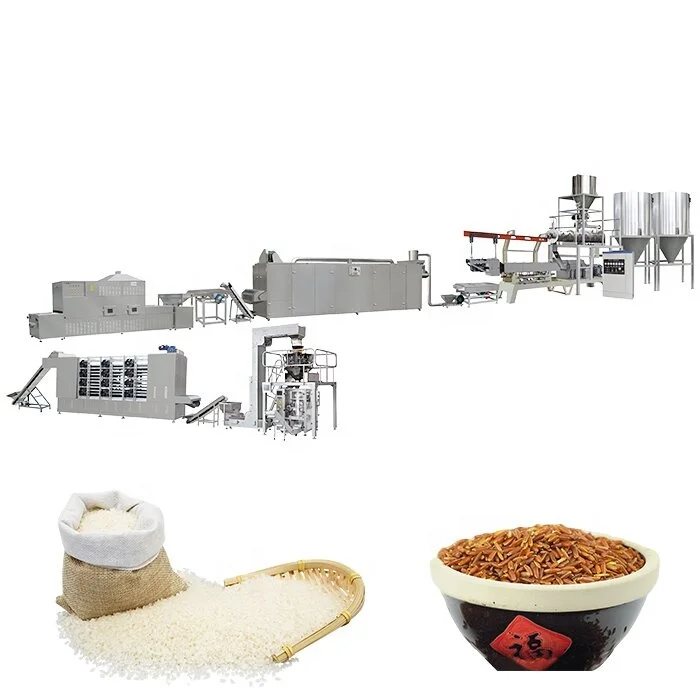
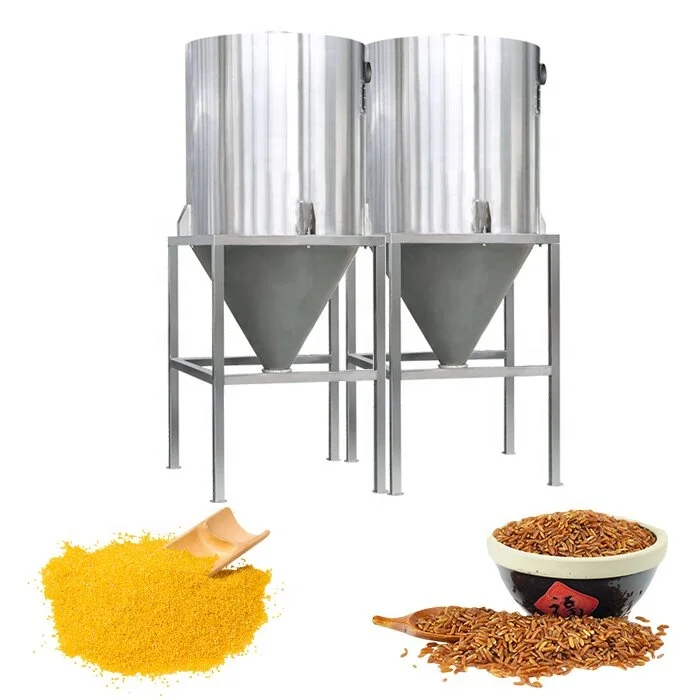
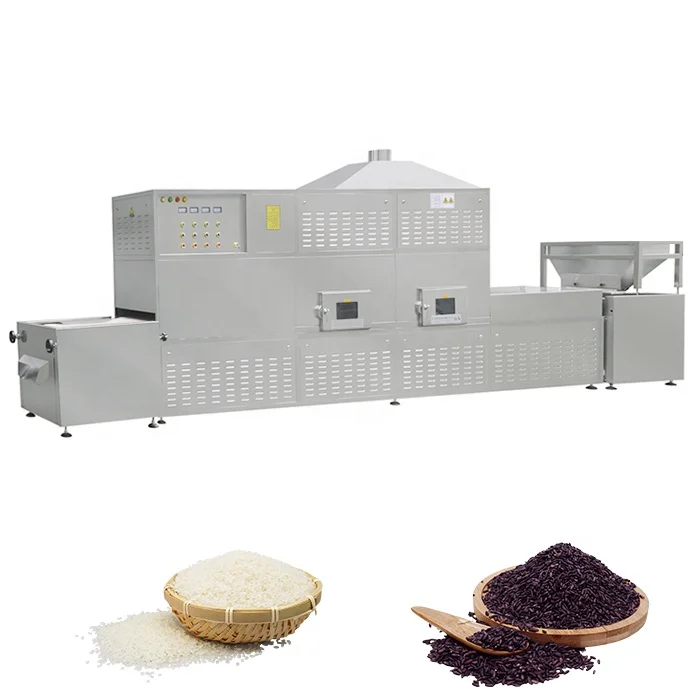
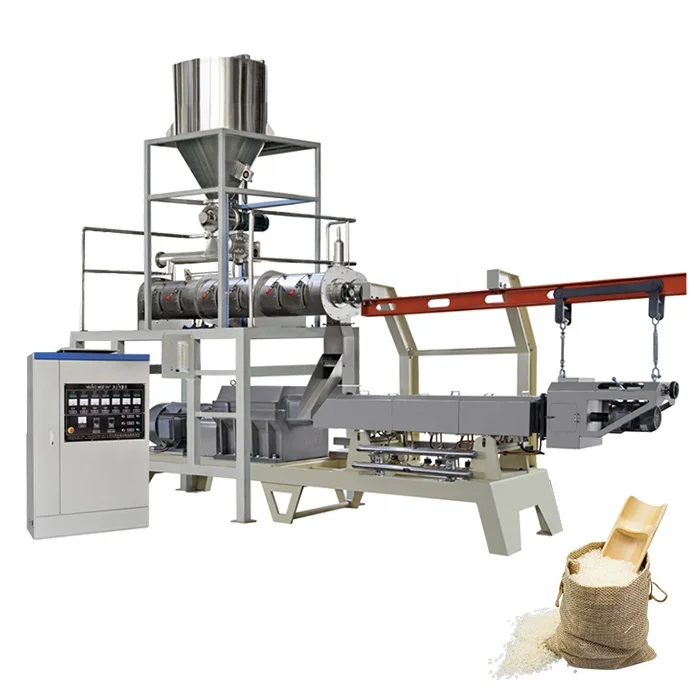
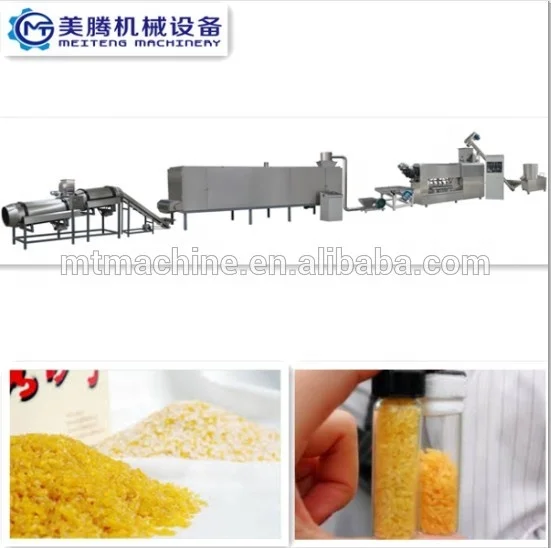
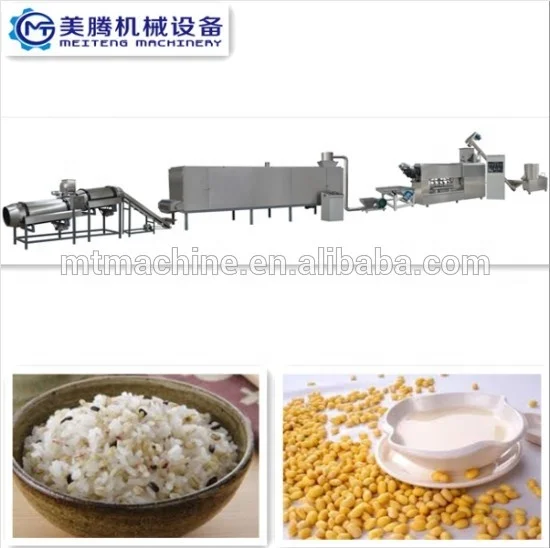
MT65 Fortified Rice Production Line, Twin-Screw, CE Certified — configured for complete artificial rice processing from batching to packing.
Twin-screw extrusion with screw and die design matched to your starch, vitamin, and mineral formulation, ensuring precise kernel density and shape. Circulation drying with frequency-controlled mesh belt delivers consistent moisture removal across all production runs.
- Complete line integration under one supplier with throughput matched at every station
- In-house trial runs on your actual raw materials before shipment verify output and product quality
- Full documentation package including line layout, screw configuration record, and trial run report
Description
Turnkey Line Integration — Complete fortified rice kernel extrusion line configured from batching through packing under one supplier, matching throughput at every station to your formulation and capacity target.
Technical Specifications
| Parameter | Value |
|---|---|
| Model | MT65 / MT70 / MT85 / MT75 / MT95 |
| Product Type | Fortified Rice Production Line |
| Screw Type | Twin-screw |
| Installed Power | 85 kW (MT65) / 120 kW (MT70) / 235 kW (MT85) / 180 kW (MT75) / 260 kW (MT95) |
| Power Consumption | 60 kW (MT65) / 85 kW (MT70) / 165 kW (MT85) / 135 kW (MT75) / 195 kW (MT95) |
| Output Capacity | 80–100 kg/h (MT65) / 100–120 kg/h (MT70) / 200–300 kg/h (MT85) / 300–500 kg/h (MT75) / 800–1000 kg/h (MT95) (basis not stated in source — confirm raw material blend and moisture content) |
| Overall Dimensions | 28 × 1.2 × 2.2 m (MT65) / 30 × 1.5 × 2.2 m (MT70) / 34 × 3.5 × 4.3 m (MT85) / 32 × 3.5 × 4.3 m (MT75) / 36 × 3.5 × 4.3 m (MT95) |
| Control System | Frequency speed controlling with high automation (source value — verify against manufacturer catalog) |
| Feeding System | Single or double screw feeding system depending on material |
| Screw Material | Special tech grinding-resistant material |
| Drying Oven Heating Source | Electric or gas |
| Drying Method | Circulation drying process with frequency motor controlled mesh belt speed |
| Line Stations | Mixing, Extruding, Vibrating, Low Temperature Drying, Cooling, High Temperature Roasting, Cooling, Packing |
| Basic Material Compatibility | Broken rice, rice, corn, millet, wheat, oats, buckwheat, bean, starch, vitamin and mineral additives |
| Standards | CE |
Application Suitability
| Application | Material or Output |
|---|---|
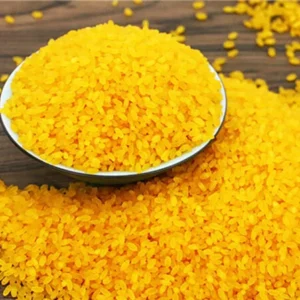
| Fortified rice kernel production | Rice flour, broken rice blended with vitamin and mineral premix |
| Artificial rice manufacturing | Corn starch, wheat flour, and micronutrient blends |
| Instant rice processing | Milled rice fractions reformed with binding starches |
| Nutritional rice enrichment | Cereal base with iron, folic acid, zinc, and vitamin A additives |
What "Nominal Capacity" Hides When Your Premix Contains Fat
Throughput figures only hold when the line is matched to your actual raw material behaviour, not a generic starch test.
Buyers evaluating a Fortified Rice Production Line turnkey often compare machines on the output number in the spec sheet. But micronutrient premixes carry fat, protein, and fibre fractions that change how the dough behaves inside the barrel. A blend with high lipid content softens earlier, sticks to the die face, and forces operators to slow the screw speed — dropping real throughput below the quoted figure. I once watched a nutrition programme line stall for days because the die plate was sized for plain rice flour while the customer’s recipe included an oil-rich vitamin carrier [NEED_CITE: raw material fat content and die clogging in twin-screw extrusion].
Barrel Temperature Profiling for Vitamin Stability
Heat-sensitive micronutrients degrade when barrel zones run too hot for too long. This Fortified Rice Production Line turnkey allows zone-by-zone temperature adjustment so the gelatinisation front sits where starch needs it while downstream barrels stay cooler to protect added vitamins. Screw elements can be rearranged to shorten residence time in the high-shear section, balancing expansion with nutrient retention.
Die Geometry and Kernel Shape Control
The die plate determines whether the extruded kernel resembles natural rice or comes out as a short pellet. Aperture diameter, land length, and face pattern are specified against the buyer’s target shape and post-drying shrinkage rate. Changing from a long-grain profile to a round-grain profile means swapping the die insert and adjusting cutter timing, which the frequency-controlled system handles without stopping the extruder [NEED_CITE: die land length and extrudate swell in cereal extrusion].
Reading the Power Curve Against Your Recipe
Installed power and actual consumption figures reveal how much mechanical work goes into your specific blend. A high-fibre premix with oat and buckwheat demands more torque than a pure rice starch feed, pushing power consumption toward the upper range. Comparing installed power across models — 85 kW on the MT65 up to 260 kW on the MT95 — against your recipe’s viscosity tells you which model runs without overloading.
When Stations Are Sourced Separately
An extruder running at full capacity into an undersized dryer creates a pile-up of wet kernels that mat together on the mesh belt. The circulation drying process on this line is matched to the extruder’s maximum output, with frequency-controlled belt speed adjusting residence time so final moisture hits the packing specification. Sourcing the dryer from a separate vendor often leaves this balance to guesswork, and wet kernels reaching the packing station cause caking inside sealed bags [NEED_CITE: moisture content and shelf stability of fortified rice kernels].
Why Procurement Happens Here
Layout and throughput matching start from your recipe and daily target, not from a catalogue page. The screw configuration and die design are specified to your fortified rice formulation before production begins. An in-house testing workshop runs your actual raw material — including your exact premix — so die clogging and density issues surface before shipment, not after commissioning. Electrical schematics confirm voltage, frequency, and control language for your facility. Wear parts lists arrive with the first shipment so screw segments and die inserts are on hand when the first replacement falls due.
Documentation & Verification
- Line layout and capacity calculation matched to your fortified rice recipe and daily target
- Screw and die configuration record specifying element arrangement for your premix viscosity
- Trial run report produced on your actual raw material blend before dispatch
- Electrical schematic confirming voltage, frequency, and HMI language for your market
- Factory test record with running parameters logged against your target kernel shape and moisture
Installation, Commissioning & Support
- Floor plan sized to the longest configuration at 36 m for the MT95 with utility drops mapped
- Power supply confirmed against the 260 kW installed load on the MT95 before cable procurement
- Equipment shipped in sectioned modules and reassembled on-site with alignment verification
- First-run parameter setting conducted on your premix to dial in barrel temperatures and screw speed
- Operator training covering die change procedure and frequency drive adjustment on the dryer belt
- Wear parts kit with spare screw segments and die inserts supplied against the documented replacement schedule
What We Need to Quote the Right Configuration
Share your fortified rice formulation — base cereal, premix ratio, fat and fibre fractions — along with the daily output target and available floor length. Confirm the local voltage and frequency, the preferred control language on the HMI, and whether you want electric or gas heating on the dryer. If you can send a sample of your raw material, we run it in the testing workshop and include the trial report with the quotation.
Frequently Asked Questions
Q: How do I confirm the output capacity on my specific fortified rice recipe?
A: Capacity figures in the table assume a baseline blend. When your premix contains fat, fibre, or protein fractions above that baseline, the actual throughput shifts. We run your exact raw material in the testing workshop before shipment, log the screw speed and die pressure, and report the achieved output so you know what the line delivers on your formulation.
Q: Which screw configuration works for different starch and vitamin blends?
A: High-starch recipes need longer gelatinisation zones with moderate shear, while fat-rich premixes require low-shear elements to prevent smearing at the die. We specify the screw element arrangement — mixing blocks, kneading discs, and conveying segments — after reviewing your material data sheet and confirming the result during the trial run.
Q: How is dryer capacity matched to the extruder output?
A: The circulation drying oven is sized so the mesh belt carries the full extruder output at a layer thickness that allows uniform moisture removal. Frequency-controlled belt speed adjusts residence time so the final kernel moisture meets the packing specification without bottling up wet product ahead of the cooling station.
Q: What does the trial run process look like before shipment?
A: We load your raw material into the batching system, run it through the complete line sequence, and collect samples at the die exit, dryer discharge, and packing station. Kernel shape, density, and moisture are measured against your target. The trial report ships with the machine so your team has baseline parameters from day one.
Related products
-
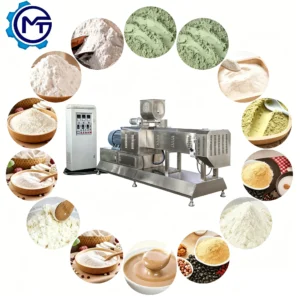
Fully Automatic Fortified Nutrition Powder Baby Food Production Line
¥8,238.27 Select options This product has multiple variants. The options may be chosen on the product page -

Compact Automatic Baby Cereal Nutrition Powder Production Line with 500kg/h Capacity and PLC Control
¥9,500.00 Add to cart -
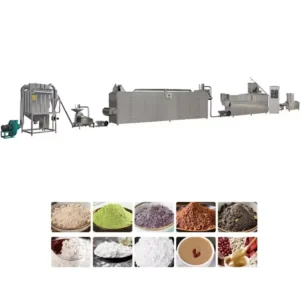
Healthy Baby Food Production Line Nutritional Powder Equipment for Baby Food Supplements for Flour Processing Machinery
¥8,500.00 Select options This product has multiple variants. The options may be chosen on the product page -
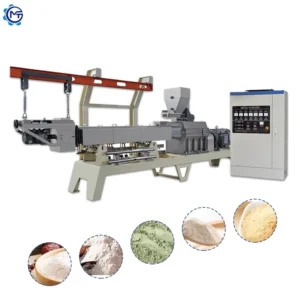
CE cerelac Instant Baby Food Porridge Making Machine Production Line
¥35,000.00 Select options This product has multiple variants. The options may be chosen on the product page