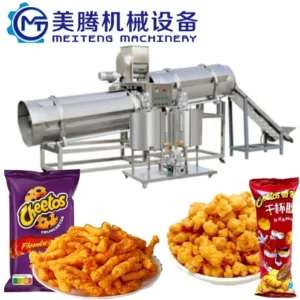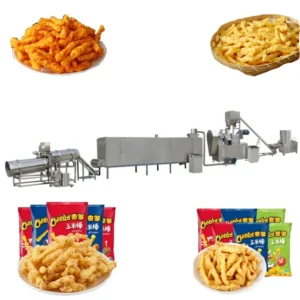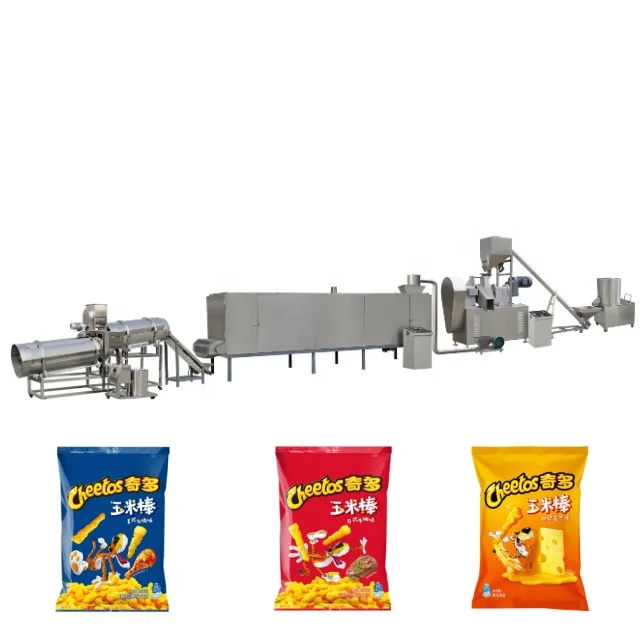


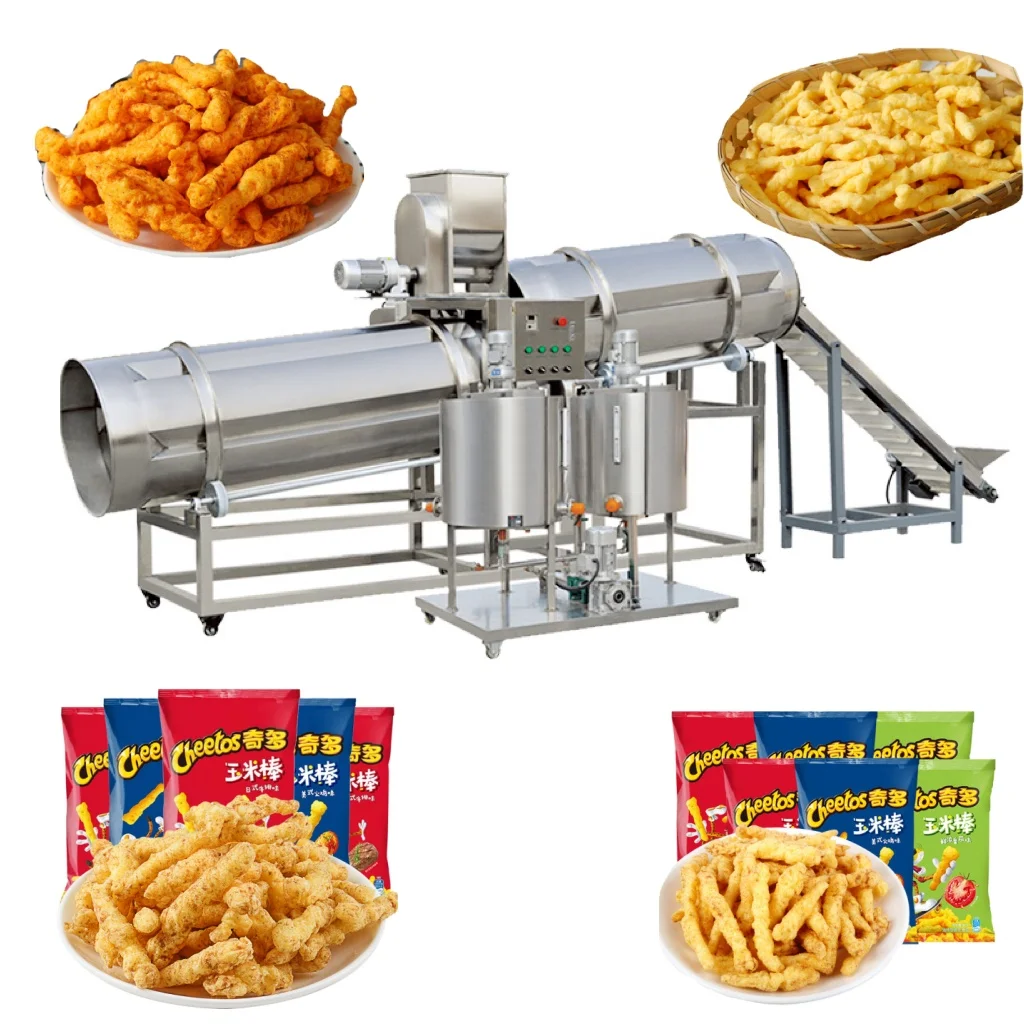


Kurkure Cheetos Making Machine, 120-350 kg/h, Electric Heating, 304 Stainless Steel — configured for extruded snack production with screw and die design matched to your raw material formulation and target texture.
- Twin-screw extrusion with L:D ratio and barrel temperature profile optimized for starch gelatinisation, moisture control and expansion density
- Fully automatic operation across matched stations from extruder through drying, flavouring and packing to prevent throughput bottlenecks
In-house trial runs on your actual flour blend validate product texture before shipment, with complete line layout and capacity calculation provided under one supplier.
Description
Throughput Matched Across Every Station — the extruder, dryer and flavouring drum are sized together so no single point constrains the line when running your actual corn formulation.
Technical Specifications
| Parameter | Value |
|---|---|
| Product Type | Kurkure Cheetos Snack Extrusion Production Line |
| Output Capacity | 120–350 kg/h (basis not stated in source — confirm raw material and moisture content) |
| Heat Source | Electric heating |
| Contact Material | 304 Stainless Steel |
| Automation Level | Fully Automatic |
| Functionality | Multi-functional extruded snack formats |
| Net Weight | 80 kg (source value — verify against full line weight) |
| Standards | CE, ISO |
| Voltage & Frequency | Configurable (to be confirmed for target market) |
| Control System | PLC / MCC availability to be confirmed |
Application Suitability
| Application | Material or Output |
|---|---|
| Kurkure and Nik Naks production | Corn grits, corn flour and high-fat regional blends |
| Cheetos-style puffed snacks | Maize meal with varying moisture profiles |
| Co-extruded cheese snacks | Composite flour bases requiring die-specific shaping |
| Small-batch product trials | New formulations validated before full-scale commitment |
What "350 kg/h" Leaves Out About Extruded Snack Capacity
Rated capacity means nothing until it is measured against your specific flour blend and moisture level.
I have watched lines in the Gulf region stall within the first week because the supplier quoted a figure based on standard corn grits while the factory was running a locally sourced high-fat formulation. The screw could not pull the material evenly, the extruder surged, and the finished Kurkure came out with inconsistent expansion. That kurkure cheetos making machine turnkey production line sat idle while new screw elements were flown in. Capacity only becomes real when it is tested on the buyer’s actual raw material under controlled conditions [NEED_CITE: raw material variability in snack extrusion throughput].
Matching the Extruder to Your Corn Formulation
Corn grits behave differently depending on origin, grind size and fat content. A kurkure cheetos making machine turnkey production line configured for Midwest corn will not necessarily handle the higher oil content found in some South Asian or Middle Eastern supply chains without adjustment to screw pitch and barrel temperature zones. The MT 120 line allows screw configuration and die selection to be specified before production begins, so the extrusion profile matches what your facility will actually feed into the hopper.
Why Dryer and Flavouring Capacity Must Track the Extruder
An extruder that pushes 350 kg/h into a dryer rated for 200 kg/h creates a backlog that forces the entire line to slow down. I have seen this mismatch on assembled lines where each station was sourced from a different vendor. The MT 120 line is configured as a single-supplier package, meaning the dryer bed length, the flavouring drum diameter and the cooling conveyor speed are all calculated against the extruder’s verified output on your material. This throughput matching is documented in the line layout before fabrication begins [NEED_CITE: throughput balancing in multi-station food processing lines].
Reading the Specs That Actually Matter
Electric heating with 304 stainless steel contact parts means the line meets food-grade requirements across jurisdictions that follow EU-style machinery directives. The fully automatic control arrangement reduces operator dependency during long production runs, though the exact PLC or MCC configuration should be confirmed against your facility’s existing automation standards. The 120–350 kg/h range spans small commercial output to mid-scale snack production, but the achievable point within that range depends entirely on your corn formulation, target moisture at the die face and the specific Kurkure or Cheetos geometry you are producing.
The Hidden Cost of Skipping a Pre-Shipment Trial
When a line ships without a trial run on the buyer’s own raw material, the first week of installation becomes an expensive experiment. Screw elements get swapped, barrel zones are re-tuned, and the drying curve is guessed rather than measured. I have been on site in the Emirates when a line produced acceptable product on day four only to drift out of spec on day five because the corn batch had changed slightly and no baseline had been recorded. A factory test on your actual flour eliminates most of that commissioning uncertainty [NEED_CITE: importance of factory acceptance testing for extrusion lines].
What Single-Supplier Sourcing Changes
Every station on this line — batching, extrusion, drying, flavouring, cooling and packing — comes from one manufacturer, so accountability for throughput does not get passed between vendors when something underperforms. The screw configuration and die design are specified to your raw material before the quotation is finalised rather than copied from a generic build. An in-house testing workshop runs your corn formulation before the equipment leaves the factory, producing a trial run report that travels with the shipment. Pre-sales consultation continues through installation, commissioning and operator training at your site. The line carries CE and ISO certification, which matters for import clearance in markets that require documented conformity assessment.
Documentation & Verification
- Line layout showing matched throughput across extruder, dryer and flavouring stations
- Screw and die configuration record specific to your corn formulation
- Trial run report on your raw material produced in the testing workshop before dispatch
- Electrical schematic with voltage and frequency confirmed for your local grid
- Wear parts list covering screws, dies and heating elements for the first replacement cycle
- CE declaration of conformity and ISO certificate for customs and regulatory filing
Installation, Commissioning & Support
- Foundation plan provided showing floor load requirements for the extruder and dryer stations
- Dedicated electrical circuit specified based on confirmed voltage and total connected load
- Equipment shipped in modular sections for container loading and on-site reassembly
- First-run parameter setting performed on your corn formulation during commissioning
- Operator training covers screw changes, die swaps and temperature zone adjustments
- Spare screw elements and dies supplied for the initial production period
Preparing Your Inquiry
To get a line configuration that reflects your actual production conditions, share your corn or maize flour specification including fat and moisture content, your target daily output and the Kurkure or Cheetos format you intend to produce. Include your facility’s available floor space and ceiling height so the layout can be drafted to scale. Confirm your local voltage, frequency and preferred control language so the electrical package is built correctly from the start.
Frequently Asked Questions
Q: How is the 120–350 kg/h capacity verified against my specific raw material?
A: The capacity range is confirmed through a trial run in the testing workshop using your actual corn formulation. The extruder is fed your material at production scale, and the sustained output is recorded along with product density and expansion data. This trial run report becomes part of your shipment documentation, so the quoted figure reflects your flour rather than a generic benchmark.
Q: What stations are included and how is throughput matched between them?
A: The line covers batching, extrusion, drying, flavouring, cooling and packing as a single-supplier package. Each station is sized against the extruder’s verified output on your material, so the dryer bed length and flavouring drum volume are calculated to handle the actual throughput rather than a nominal figure. The line layout document shows this calculation for every station.
Q: Can a trial run be performed on my raw material before shipment?
A: Yes. Your corn flour or grits are shipped to the testing workshop where the extruder, dryer and flavouring drum run your material under production conditions. The resulting report covers sustained output, product texture, moisture at each stage and the screw and die configuration used. This eliminates guesswork during on-site commissioning.
Q: How are voltage and control language confirmed for my market?
A: Before production begins, the electrical package is specified to your local voltage and frequency. The control system language and interface are agreed in writing so the PLC or MCC screens match your operators’ requirements. This confirmation is documented in the electrical schematic that ships with the line.
Q: What does the commissioning schedule look like once equipment arrives?
A: After mechanical installation and utility connections, the commissioning engineer runs your corn formulation through every station, adjusting screw speed, barrel temperatures and dryer settings until product meets your specification. Operator training follows, covering daily operation, screw and die changes, cleaning procedures and the recommended maintenance intervals for wear parts.
Related products
-
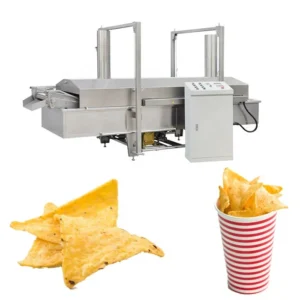
Frying Chips Making Machine with Stainless Steel – Turnkey Solution
Read more -
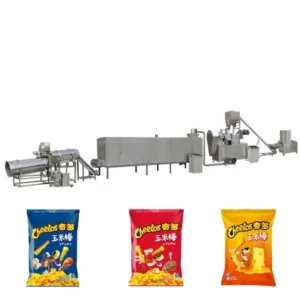
Turnkey Solution Cheetos Kurkure Production Line – 304 Stainless Steel
Read more -
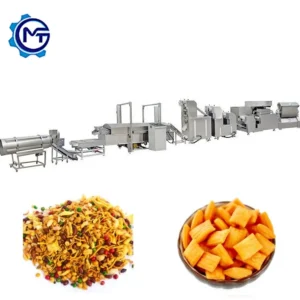
Fryer for Corn Curls Spix Soba Fried Stick Snacks – Production Line
Read more -
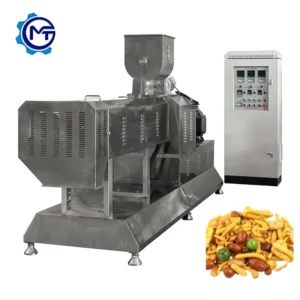
Complete Line Fried Nimko Making Machine – Automatic Stainless Steel
Read more