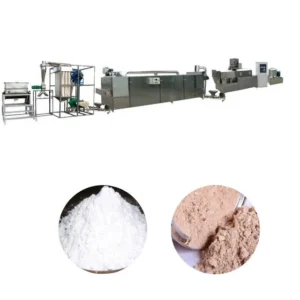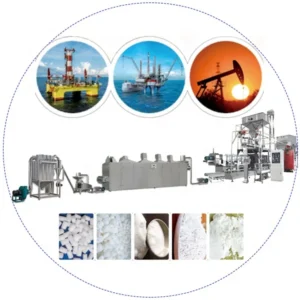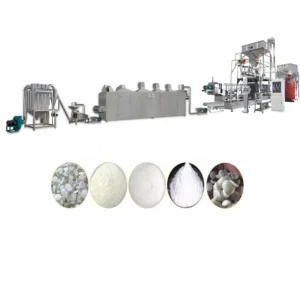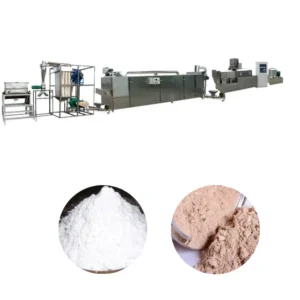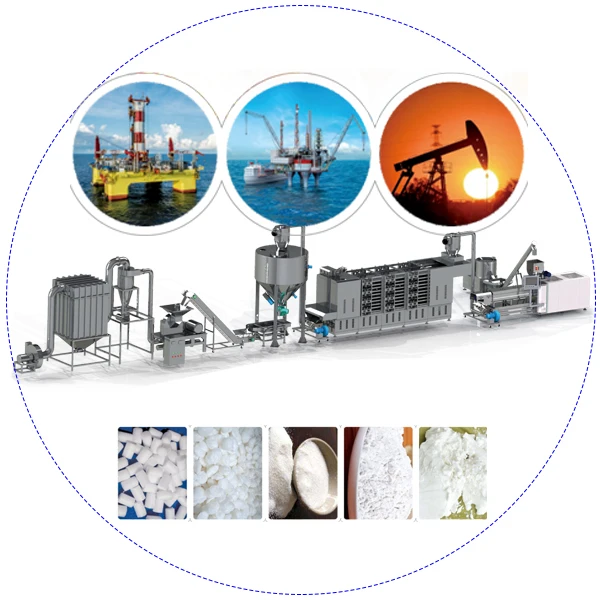


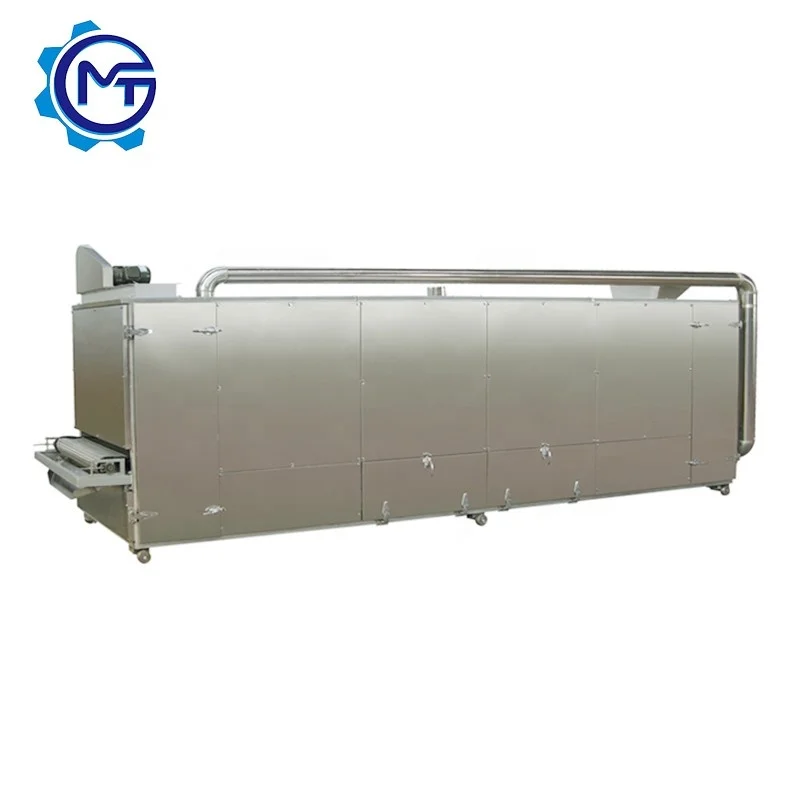


Modified Starch Production Line, Twin-Screw Extrusion, PLC & MCC Control, 220-440V Tri-Phase — engineered for cassava, corn, and potato starch modification across food and industrial applications.
- Twin-screw configuration and die geometry matched to your raw material’s gelatinisation behaviour, controlling expansion and functional properties through precise moisture, shear, and barrel temperature profiling
- Throughput-matched stations from batching to packing supplied under one source, with in-house trial runs on your starch feedstock before shipment to verify output and product specification
Description
Throughput-Matched Engineering — Every station on the modified starch production line turnkey project is capacity-balanced against the others, preventing the extruder from outrunning the dryer or the grinder from choking the cooling conveyor.
Technical Specifications
| Parameter | Value |
|---|---|
| Product Type | Modified Starch Extrusion Production Line |
| Line Configuration | Mixing & batching → Twin-screw extrusion → Cooling conveyor → Pulse grinding → Packing |
| Extruder Type | Twin-screw, generational design adapted for starch, protein and chemical raw materials |
| Power Range | 45–200 kW (basis not stated in source — confirm specific model within range) |
| Output Capacity | 100–1500 kg/h (basis not stated in source — confirm raw material type and moisture content) |
| Line Weight | 1000–5000 kg (basis not stated in source — confirm specific line configuration) |
| Voltage | 220–440V, tri-phase (frequency to be confirmed with buyer’s local supply) |
| Control System | Available with PLC and MCC control |
| Cooling Method | Wind-knife air drying at ambient temperature, low-power fan |
| Grinding System | Pulse grinder with auger feeder, cyclone discharge, rotary valve, filter pocket dust collector |
| Contact Materials | Food-grade stainless steel (except PVC conveyors where applicable) |
| Fuel Options | Gas / diesel / electricity / steam (buyer to confirm at quotation stage) |
| Certifications | CE (declared since 2014), ISO certified |
Application Suitability
| Application | Material or Output |
|---|---|
| Food-grade modified starch production | Cassava, potato, corn, rice and soybean flours for thickener, stabiliser and binder applications |
| Pregelatinised starch for instant foods | Corn and potato starch for bakery, confectionery and instant food formulation |
| Industrial modified starch | Starch-based additives for oil drilling fluid and papermaking chemical applications |
| Nutrition and fortified food processing | Grain-based nutritional powders requiring controlled gelatinisation and particle size |
Why Nominal Capacity Figures Mislead Starch Processors
A modified starch production line turnkey quoted at a single output number rarely holds that throughput once your specific raw material enters the hopper. Actual line capacity depends on the starch source, moisture content and target modification grade — not a generic catalogue figure.
I have watched processors invest in a high-capacity extruder only to discover that their cassava feedstock gelatinises at a different rate than the corn starch used during factory testing, dropping effective output and leaving wet material piled on the cooling conveyor. The extruder pushes hard, but the downstream pulse grinder cannot keep pace, and the entire modified starch production line turnkey stalls at the bottleneck. Capacity must be verified on your actual material before the line is built, not after installation [NEED_CITE: throughput verification methodology for starch extrusion lines].
Layout Planning That Prevents Station Bottlenecks
Designing a modified starch production line turnkey starts with mapping the throughput of every station against the specific raw material behaviour. Cassava starch, for example, absorbs moisture differently than corn starch during extrusion, which changes the load on the cooling conveyor and the residence time required before grinding. Each station is sized so that material flows continuously without queuing at any single point.
Utility Matching Across the Complete Line
Electrical load, steam demand and compressed air consumption are calculated for the full line running simultaneously. The twin-screw extruder draws peak amperage during start-up, while the pulse grinder requires steady three-phase power for the auger feeder and cyclone fan. Utility planning ensures that no single circuit is overloaded and that voltage drop at the farthest station stays within tolerance [NEED_CITE: industrial power distribution standards for food processing plants].
Reading the Specification Sheet for Starch Behaviour
The twin-screw configuration is chosen over single-screw because starch materials require precise shear control and residence time to achieve consistent gelatinisation without burning. The L/D ratio and screw element arrangement determine how long the material stays in the barrel and how much mechanical energy converts to heat. Die geometry then controls expansion ratio and pellet density, which directly affects how the material behaves on the cooling conveyor and how easily the pulse grinder reduces it to target particle size. The wind-knife drying system uses ambient-temperature air to remove surface moisture without thermal degradation, preserving the functional properties that food manufacturers expect from modified starch. Control logic coordinates extruder screw speed with the auger feeder on the grinder so that material flow remains balanced across both stations.
The Cost of Mismatched Upstream and Downstream Equipment
When a buyer sources the extruder from one vendor and the dryer or grinder from another, the throughput gap rarely shows up until commissioning day. Wet starch accumulates between stations, forcing operators to manually shuttle material — introducing contamination risk and labour cost that the line was supposed to eliminate. The grinder runs half-empty because the cooling conveyor cannot deliver dried material fast enough, and the overall modified starch production line turnkey operates well below the paid-for capacity [NEED_CITE: hidden costs of multi-vendor food processing lines].
Why Sourcing the Full Line Under One Supplier Matters
Capacity calculations cover every station from batching to packing, so the twin-screw extruder output is verified against the cooling conveyor speed and the pulse grinder intake rate before production begins. Screw configuration and die design are specified to the buyer’s raw material — cassava, corn, potato or rice — and documented for future wear part reorders. An in-house testing workshop runs trial batches on the buyer’s actual starch before shipment, confirming gelatinisation degree, expansion ratio and particle size. Electrical schematics confirm voltage, frequency and control language matched to the buyer’s local facility. Installation engineers remain on-site through commissioning and operator training, ensuring the line reaches its verified throughput before handover [NEED_CITE: turnkey line project commissioning standards].
Documentation & Verification
- Line layout and capacity calculation showing throughput balance across every station
- Screw and die configuration record matched to the buyer’s specific starch source
- Trial run report on buyer’s raw material covering gelatinisation, expansion and grind size
- Electrical schematic with voltage and frequency confirmed to local supply
- CE declaration of conformity and ISO certificate
- Operation and maintenance manual with wear parts list
Installation, Commissioning & Support
- Foundation plan sized to the total line weight range of 1000–5000 kg with anti-vibration mounting points
- Dedicated tri-phase circuit for the 45–200 kW extruder motor with surge protection at the MCC panel
- Line arrives in modular sections for phased assembly matching workshop access constraints
- First-run parameter setting covers barrel temperature profile, screw speed and die pressure
- Operator training on PLC interface, pulse grinder auger speed adjustment and dust collector maintenance
- Wear parts list covering screws, dies and grinder filter pockets with reorder lead times
What to Prepare Before Requesting a Quotation
Provide the specific starch source — cassava, corn, potato or rice — along with typical moisture content and the target modification grade or end-use application. Share workshop floor dimensions, ceiling height and available utility connections including voltage and frequency. Specify the preferred fuel type for any thermal stations and the control language required for operators.
Frequently Asked Questions
Q: How is line capacity verified against my specific starch raw material?
A: A trial run is conducted in the in-house testing workshop using a sample of the buyer’s actual raw material. The trial covers gelatinisation behaviour, extrusion stability, cooling rate and grind particle size. Results are documented in a trial run report, and the line configuration is adjusted if the output does not meet the target capacity on that specific material.
Q: Can voltage, frequency and control language be matched to my facility?
A: The electrical system is configurable across 220–440V tri-phase. Frequency and control panel language are confirmed during the specification stage before production begins. The electrical schematic is provided for review so the buyer’s electrician can verify compatibility with local power supply standards and existing plant infrastructure.
Q: How is the screw and die configuration chosen for my raw material?
A: Screw element arrangement, compression ratio and die geometry are selected based on the buyer’s starch source and target product specification. The configuration is recorded and retained, so replacement screws and dies can be reordered with identical geometry whenever wear parts need renewal.
Q: What does the trial run report cover before shipment?
A: The report documents raw material input weight and moisture, barrel temperature profile, screw speed settings, extrudate appearance and expansion ratio, cooling conveyor residence time, and final particle size from the pulse grinder. Any adjustments made during the trial are noted so the same parameters can be loaded on the PLC at commissioning.
Q: How is the layout planned to fit my workshop?
A: The buyer provides workshop dimensions and ceiling height. A line layout drawing is produced showing the footprint of each station — mixer, twin-screw extruder, cooling conveyor and pulse grinder — along with utility connection points for power, steam, compressed air and dust extraction ducting.
Related products
-
New Automatic Modified Starch Puffing Production Line – Long Service Life Pregelatinized Starch Equipment
¥65.00 Select options This product has multiple variants. The options may be chosen on the product page -
Automatic Pregelatinized Starch Processing Machine – Large-Scale New Condition Modified Starch Production Line
¥65.00 Select options This product has multiple variants. The options may be chosen on the product page -
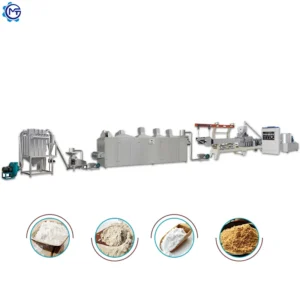
Twin-Screw Extrusion Line for Modified Starch. Producing Pregelatinized Adhesive & Food Grade Powder
¥65.00 Select options This product has multiple variants. The options may be chosen on the product page -
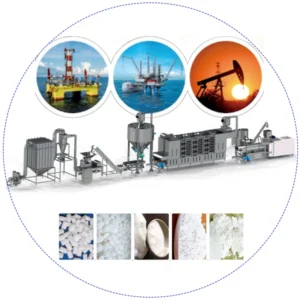
Big Capacity Modified Starch Production Line Making Machine
¥30.00 Select options This product has multiple variants. The options may be chosen on the product page