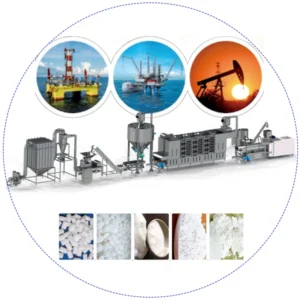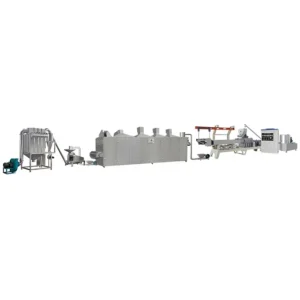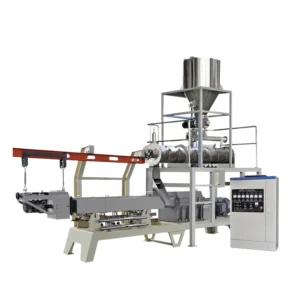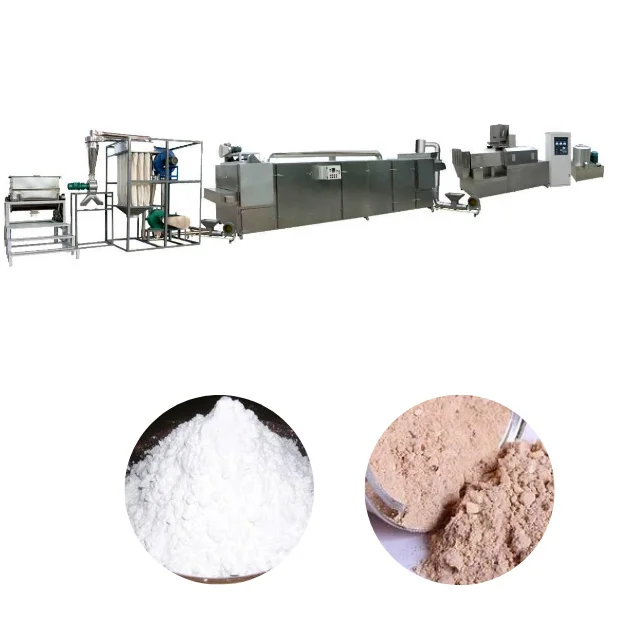


MT85, MT100, MT110, MT135 Modified Starch Processing Line, Twin-Screw Extruder, PLC & MCC Control — configured for corn, tapioca or potato starch feedstock with screw and die geometry matched to target gelatinisation degree and viscosity profile.
- Barrel temperature and shear profile adjustable for physical, chemical or enzymatic modification paths
- Complete turnkey layout from batching through mixing, extrusion, drying, grinding and packing with throughput matched at every station
Line capacity and screw configuration verified via trial run on buyer’s actual raw material in the in-house testing workshop before shipment.
Description
Starch Modification Throughput Matching — every station from batching to packing is configured around the same raw material and gelatinisation target, preventing bottlenecks that commonly appear when extruders, dryers and grinders are sourced separately.
Technical Specifications
| Parameter | Value |
|---|---|
| Model | MT85 / MT100 / MT110 / MT135 |
| Product Type | Modified Starch Twin-Screw Extrusion Line |
| Screw Type | Twin-screw |
| Installed Power | 90 kW (MT85) / 180 kW (MT100) / 200 kW (MT110) / 240 kW (MT135) |
| Real Consumption | 63 kW (MT85) / 120 kW (MT100) / 150 kW (MT110) / 165 kW (MT135) |
| Output Capacity | 100–200 kg/h (MT85) / 500–600 kg/h (MT100) / 500–600 kg/h (MT110) / 1000–1500 kg/h (MT135) (basis not stated in source — confirm raw material type, moisture content and target gelatinisation degree) |
| Raw Materials | Corn starch, tapioca starch, potato starch |
| Barrel & Screw Design | Configurable per raw material and target starch modification |
| Processing Flow | Material preparation → Blending → Mixing → Extruding → Drying → Grinding → Packing |
| Drying System Heating Source | Electric, steam or gas (configured to site utility) |
| Grinding Machine Construction | Stainless steel 304 food-contact parts; bottom butterfly valve discharge |
| Control System | PLC and MCC automated control with frequency speed regulation |
| Assembly State | Complete line from batching to packing |
| Standards | CE (since 2014), ISO |
| Warranty | 1 year |
| Delivery Time | ~30 working days (small capacity) / ~50 working days (large capacity) (basis not stated in source — confirm model and order volume) |
Application Suitability
| Application | Material or Output |
|---|---|
| Pre-gelatinised starch for food processing | Corn starch, tapioca starch with controlled gelatinisation degree |
| Modified starch for textile sizing | Potato starch or corn starch with adjusted thermal viscosity |
| Starch for oil drilling fluids | Corn starch modified for thermal stability under high temperature |
| Modified starch for paper coating | Tapioca starch with film-forming and transparency properties |
| Denatured starch for construction additives | Corn or potato starch with freeze-thaw stability and gel strength |
What "500 kg/h" Leaves Out About Modified Starch Lines
Nominal capacity means nothing until the extruder runs your specific starch feedstock at your target moisture and gelatinisation degree.
I once watched a modified starch processing line turnkey project stall for two weeks because the supplier quoted throughput on pure corn starch, but the buyer in West Africa blended tapioca into the feed. The gelatinisation temperature shifted, the expansion dropped, and the final viscosity readings fell outside the buyer’s textile customer specification. Capacity numbers printed on a brochure assume a fixed raw material and a fixed cook degree — change either one and the real output changes with it [NEED_CITE: starch gelatinisation temperature variance across corn, tapioca and potato sources]. That is why the trial run on your actual raw material matters more than any nameplate figure.
Screw Geometry Dictates the Modification Path
The twin-screw configuration in this modified starch processing line turnkey system allows operators to adjust screw element sequencing — conveying, kneading and reverse elements — based on whether the target is physical gelatinisation, chemical denaturation or enzymatic treatment. Corn starch, tapioca starch and potato starch each demand a different shear profile and residence time inside the barrel. A screw layout copied from a generic snack extruder will not produce the thermal viscosity curve that a textile sizing application requires.
Barrel Temperature Profiling and Gelatinisation Control
Barrel zones are heated and cooled independently, letting the operator build a temperature gradient that matches the starch’s gelatinisation window. Potato starch gelatinises at a lower temperature than corn starch, and pushing it through the same profile causes premature dextrinisation, degrading the film-forming properties the end product needs. The PLC and MCC control system holds each zone within a tight band through frequency speed regulation, maintaining consistent cook degree across long production runs [NEED_CITE: temperature control precision requirements in starch extrusion].
How Power, Moisture and Screw Speed Interact
The installed power ranges from 90 kW on the MT85 to 240 kW on the MT135, but real consumption sits considerably lower — 63 kW to 165 kW respectively — because the twin-screw design converts mechanical shear into thermal energy inside the barrel rather than relying solely on external heaters. Feed moisture content directly affects how much mechanical energy the screws must deliver: drier blends demand higher torque and longer residence, while higher moisture reduces shear load but requires more drying capacity downstream. The configurable barrel and screw design lets the line balance these variables against the target modification outcome, whether that is pre-gelatinised starch with instant thickening properties or denatured starch with altered freeze-thaw stability.
The Cost of Ignoring Downstream Matching
An extruder that delivers consistent gelatinised starch means little when the dryer cannot remove moisture fast enough to prevent retrogradation, or when the grinder produces particles too coarse for the buyer’s mesh specification. I have seen lines where the extruder ran fine but the drying stage became the choke point, forcing the operator to throttle feed rate and lose effective throughput. When a grinding station uses carbon steel contact parts instead of stainless steel 304, contamination risk rises and food-grade certification becomes difficult to defend during audits [NEED_CITE: food contact material compliance standards for starch processing equipment]. These mismatches typically surface only after installation, when the cost to reconfigure is measured in weeks of lost production.
Why Buyers Source This Line Here
The entire modified starch processing line turnkey system comes from one supplier, so the mixer shaft design, extruder screw configuration, dryer capacity and grinder screen size are all calculated against the same throughput target and raw material. Screw and die geometry are documented per the buyer’s starch type and target modification profile before production begins. The in-house testing workshop runs the buyer’s actual raw material — corn, tapioca or potato starch — to verify gelatinisation degree and expansion behaviour before the equipment ships. Electrical schematics, voltage and frequency are confirmed against the buyer’s local grid before fabrication starts, eliminating commissioning delays caused by mismatched power supply. Every line carries CE and ISO certification, and the documentation package includes a trial run report, screw configuration record and capacity calculation tied to the buyer’s specific parameters.
Documentation & Verification
- Line layout showing throughput balance across mixing, extrusion, drying, grinding and packing stations
- Screw and die configuration record matched to your starch type and target modification
- Trial run report on your actual raw material with gelatinisation and expansion data
- Electrical schematic with voltage and frequency confirmed to your site grid
- Operation and maintenance manual covering PLC parameter ranges and wear part replacement
Installation, Commissioning & Support
- Foundation plan aligned to the selected model’s weight and vibration profile
- Power connection sized for the line’s real consumption from 63 kW to 165 kW depending on model
- PLC and MCC cabinet configured to local voltage and frequency before dispatch
- On-site commissioning includes barrel temperature profile tuning and screw speed calibration
- Operator training covers mixer shaft maintenance, screw element inspection and dryer heat source switching
- Wear parts list with lead times for screws, dies and mixer blades
Preparing Your Project Brief
To move from inquiry to line configuration, share your starch source — corn, tapioca or potato — along with the modification type you need, whether physical pre-gelatinisation, chemical denaturation or enzymatic treatment. Specify the target gelatinisation degree, final particle mesh size and the hourly or daily throughput you intend to sustain. Confirm your workshop dimensions, local voltage and frequency, and whether steam, electric or gas heating is available for the dryer. If you have an existing upstream batching system or downstream packing line, note the interface points so the layout can accommodate them.
Frequently Asked Questions
Q: How is output capacity verified for a modified starch processing line turnkey order?
A: Output capacity depends on raw material type, feed moisture and target gelatinisation degree. We run your actual starch in the in-house testing workshop and document the verified throughput, expansion ratio and cook degree in a trial run report before quotation is finalised.
Q: How do you select screw and die configuration for different starch modifications?
A: Screw element sequencing and die geometry are matched to whether the process is physical, chemical or enzymatic modification. Corn, tapioca and potato starch each require different shear profiles, and the configuration is recorded per your raw material and target product properties.
Q: Can the drying system be adapted to our site utilities?
A: Yes. The drying station is configurable with electric, steam or gas heating, selected based on what is available at your facility. Dryer capacity is matched to the extruder output so moisture removal keeps pace with production without becoming a bottleneck.
Q: What electrical details need to be confirmed before production starts?
A: Voltage, frequency and control language are confirmed against your local grid before fabrication. The electrical schematic is included in the documentation package, and the PLC and MCC system is programmed accordingly to avoid commissioning delays on site.
Q: What spare wear parts should we plan for?
A: Screws, dies and mixer blades are the primary wear items. A wear parts list is provided with the documentation package, and we recommend ordering first replacements before installation so they are on hand when initial wear intervals arrive.
Related products
-
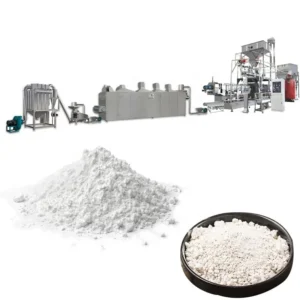
Corn Cassava Modified Starch Powder Production Line Electric-powered Motor Automatic 400kg/h Processing Equipment New Condition
¥65.00 Select options This product has multiple variants. The options may be chosen on the product page -
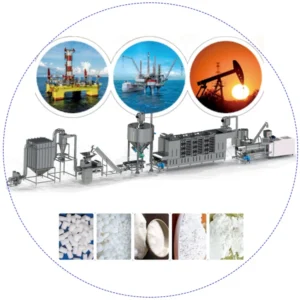
Automatic 304 Stainless Steel Modified Corn Starch Making Machine TWIN SCREW 500kg/h Capacity Starch Processing Production Line
¥50.00 Select options This product has multiple variants. The options may be chosen on the product page -
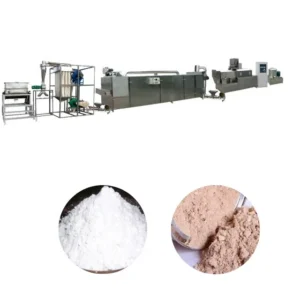
Modified Starch Production Line Industrial Drilling Twin Screw Extruder 304 Stainless Steel High Efficiency Flour Mill CE
¥50.00 Select options This product has multiple variants. The options may be chosen on the product page -
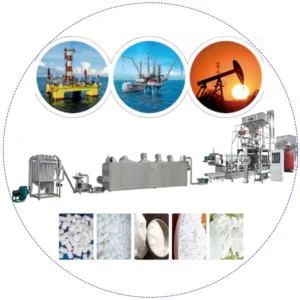
Cassava & Pregelatinized Corn Starch Extrusion Equipment – CE Certified Industrial Twin-Screw Modified Starch Line
¥65.00 Select options This product has multiple variants. The options may be chosen on the product page