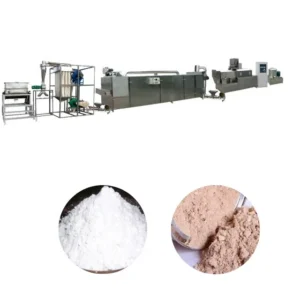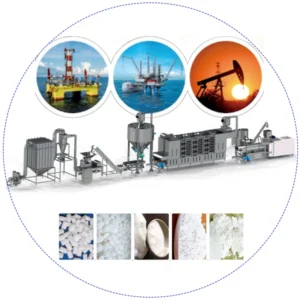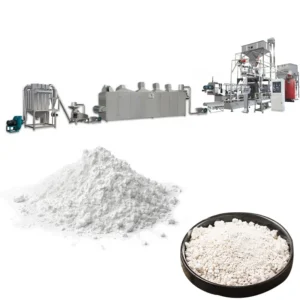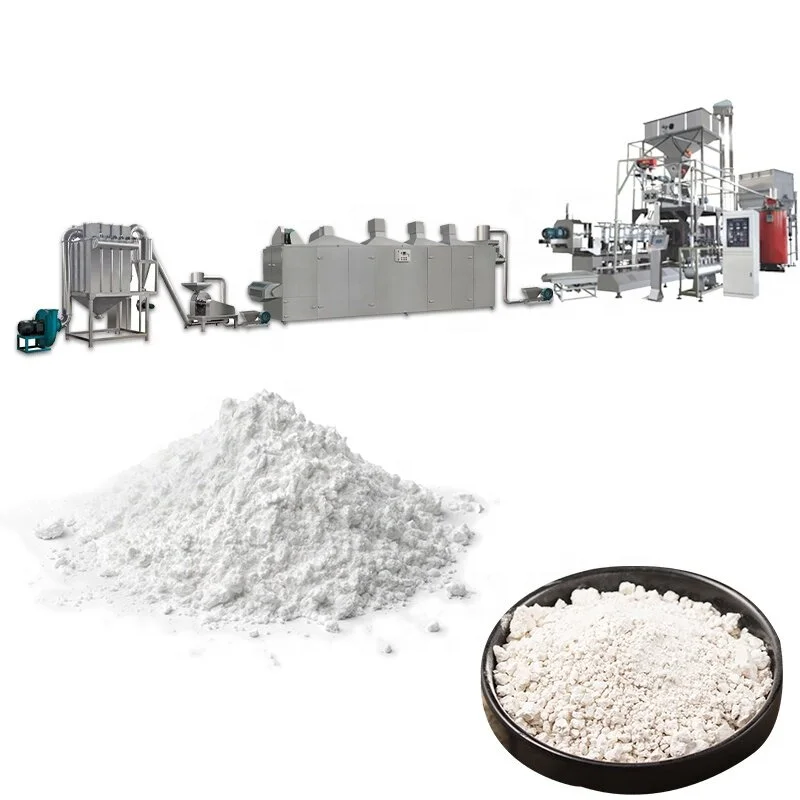


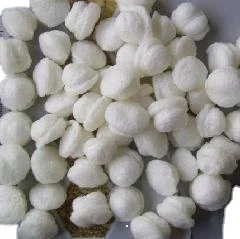
Modified Starch Twin-Screw Extruder Line, 380V/50Hz, CE Certified — complete turnkey solution from batching through extrusion, drying, conditioning, and grinding for construction adhesive applications.
Screw configuration and die design are specified to your starch type — corn, wheat, or potato — matching target gelatinisation degree. Every station throughput is aligned to prevent bottlenecks across the full line.
In-house testing workshop conducts trial runs on your raw material before shipment, with full documentation including line layout, capacity calculation, and screw configuration record.
Description
Throughput-Matched Line Design — every station from batching mixer through extruder, dryer, and grinder is capacity-balanced against your specific starch formulation and target modification degree, eliminating the mid-line bottlenecks that plague assembled-from-separate-vendors setups.
Technical Specifications
| Parameter | Value |
|---|---|
| Product Type | Modified Starch Twin-Screw Extruder Line |
| Capacity Range | 80–500 kg/h (basis not stated in source — confirm raw material type and moisture content) |
| Extruder Type | Twin-screw extruder |
| Mixer Motor | 4.0 kW |
| Mixer Batch Output | 3.0–4.0 kg per batch (basis not stated in source — confirm batch cycle time) |
| Screw Conveyor Motor | 1.1 kW |
| Screw Conveyor Output | 0–150 kg/h (basis not stated in source — confirm material bulk density) |
| Line Power (Electric Heating) | Approx. 100 kW (rated or peak not specified in source) |
| Line Power (Gas/Diesel Heating) | Approx. 50–60 kW (rated or peak not specified in source) |
| Voltage & Frequency | 380 V / 50 Hz (three-phase); 220 V / 50 Hz (single-phase); custom voltage available per country |
| Frame Material | Stainless Steel 201 |
| Contact Material | Food-grade Stainless Steel 304 |
| Energy Options | Electricity / Gas / Diesel / Steam |
| Assembly State | Complete line with supporting stations |
| Certification | CE |
Application Suitability
| Application | Material or Output |
|---|---|
| Construction adhesive production | Modified corn starch, wheat flour, potato starch with controlled gelatinisation for viscosity and bonding performance |
| Industrial paper coating and sizing | Pregelatinised starch for surface strength and printability on paper and board |
| Food-grade modified starch processing | Thermally modified starch for thickening, stabilising, and texturising in food manufacturing |
Why Nominal Capacity Figures Fail on Your Actual Starch Feedstock
Capacity means nothing unless the raw material and moisture basis are locked down before the line is built.
I spent years commissioning extrusion lines across Latin America, and the failures almost always traced back to one thing: a line quoted on a capacity number that was never validated against the buyer’s actual feedstock. We once trial-ran a modified starch production line turnkey project on corn starch in Jinan, and everything checked out. The customer switched to cassava starch on-site without warning. Gelatinisation temperature shifted, screw speed was wrong, and we spent three days rebuilding the parameter set while the production crew waited. [NEED_CITE: starch gelatinisation temperature variance across corn, wheat, potato, and cassava feedstocks]
That is why every modified starch production line turnkey project we ship goes through a testing workshop trial on the buyer’s exact formulation before it leaves the factory. The screw configuration, die design, and barrel temperature profile are all set to the specific starch type and the target degree of modification — not copied from a generic build sheet.
Screw Configuration Matched to Starch Chemistry
Different starch sources behave very differently under heat and shear inside a twin-screw barrel. Corn starch, wheat flour, and potato starch each have distinct gelatinisation onset temperatures and amylose-to-amylopectin ratios, which directly affect how the material flows, expands, and modifies under pressure. The screw element arrangement — conveying, kneading, and reverse sections — is configured to deliver the residence time and shear profile that your specific feedstock requires. This is what separates a modified starch production line turnkey solution that holds its specification from one that drifts off-target the moment you change raw material batches.
Full-Line Station Balancing Eliminates Hidden Bottlenecks
An extruder rated at a certain throughput is only as productive as the weakest station downstream. If the mixer batch cycle cannot keep the extruder fed, or the dryer cannot handle the moisture load coming off the barrel, the entire line throttles back. On this modified starch extruder line, the mixer batch rate, screw conveyor output, extruder throughput, dryer capacity, and grinder feed rate are all calculated against one another during the layout phase. The result is a continuous flow where no single station forces the others to idle. [NEED_CITE: industrial extrusion line throughput balancing principles for starch processing]
Energy Source Selection and Plant Utility Alignment
The line is available with electric, gas, diesel, or steam heating, and the power draw varies accordingly — approximately 100 kW on electric heating versus 50–60 kW when gas or diesel carries the thermal load. This matters because many plants in emerging markets have limited transformer capacity, and an all-electric dryer can trip the main breaker on start-up. Matching the energy source to your facility’s existing utility infrastructure avoids costly electrical upgrades and keeps commissioning on schedule.
Reading the Specification Sheet Against Your Production Target
The twin-screw extruder at the centre of this line handles a capacity range that must be validated against your raw material type and its moisture content at the feed point. The 4.0 kW mixer motor drives batches of 3.0–4.0 kg, and the cycle time of that mixer determines whether it can sustain continuous feed to the extruder. The screw conveyor, powered by a 1.1 kW motor, bridges the two — its 0–150 kg/h range needs to sit comfortably within the extruder’s demand window. Stainless Steel 304 contact surfaces throughout the material path prevent contamination and resist the mildly acidic conditions that some modified starch processes generate. The CE-certified build means the electrical enclosures, guarding, and emergency stop circuits meet European machinery directive requirements, which matters whether your market is the EU or a country that references those standards for local compliance. [NEED_CITE: CE machinery directive requirements for industrial food processing equipment]
What Happens When Configuration Is Copied Instead of Specified
I have walked into plants where the screw and die setup on a starch extruder was lifted from a snack food line — same element sequence, same die geometry — because the supplier did not ask what the buyer was actually producing. The starch either under-gelatinised, leaving raw cores that failed adhesive bond tests, or over-sheared into a degraded paste with no functional viscosity. The cost shows up as rejected batches, customer complaints from adhesive formulators, and eventually a complete screw rebuild that takes the line offline for days. [NEED_CITE: consequences of incorrect screw configuration in industrial starch extrusion]
Why Buyers Source This Line From a Single Supplier
The line layout and capacity calculation document shows matched throughput at every station, not just a list of individual machine ratings pulled from different catalogues. Screw configuration and die design are recorded against your specific starch type and target modification degree, so reorders and wear-part replacements are exact. The in-house testing workshop runs your raw material before shipment, producing a trial run report that becomes the baseline for on-site commissioning. Voltage, frequency, and control language are confirmed in writing before production starts — no surprises when the electrical cabinet arrives. Pre-sales consultation through installation, commissioning, operator training, and ongoing maintenance all come from the same engineering team that designed the line.
Documentation & Verification
- Line layout drawing with station-by-station throughput calculation for your starch formulation
- Screw and die configuration record matched to your target gelatinisation degree
- Trial run report on your raw material conducted in the testing workshop before dispatch
- Electrical schematic with voltage and frequency confirmation for your destination country
- CE declaration of conformity covering the full assembled line
- Operation and maintenance manual with wear parts list and replacement intervals
Installation, Commissioning & Support
- Foundation and utility plan based on the line’s approximately 100 kW electric heating load and station footprint
- Voltage and frequency verified against local grid standards before the electrical cabinet is built
- Line arrives in modular station groups for sequential assembly on your factory floor
- First-run parameter setting performed by commissioning engineers using your trial run report as the baseline
- Operator training covers screw speed, barrel temperature zones, and moisture adjustment at the mixer
- Wear parts list supplied with initial spare screws and dies for first replacement cycle
- Ongoing technical guidance available for formulation changes or capacity adjustments
What We Need to Quote Your Line Accurately
To configure a modified starch production line turnkey project that holds its throughput on your actual feedstock, we need to know your starch source — corn, wheat, potato, or other — along with the target modification specification your end product requires. Share your plant’s available voltage and frequency, the energy source you prefer for heating, and whether you have existing upstream or downstream equipment the line must integrate with. If you can send a sample of your raw material, we will run it in the testing workshop and include the results with your proposal.
Frequently Asked Questions
Q: How is line capacity verified against my specific starch raw material?
A: The 80–500 kg/h range is a starting point that must be validated against your exact starch type, moisture content, and target modification degree. We conduct a trial run using your raw material sample in our testing workshop before the line ships, documenting actual throughput, screw speed, barrel temperatures, and product quality. That report becomes the commissioning baseline.
Q: How do you match screw configuration to different starch types?
A: Corn, wheat, and potato starch each have different gelatinisation temperatures and shear sensitivity. We select the screw element sequence — conveying, kneading, and reverse sections — and die geometry to deliver the residence time and shear profile your feedstock needs. This configuration is recorded and shipped with the line for future reference.
Q: What does the pre-shipment trial run cover?
A: The trial run processes your raw material through the extruder at target throughput, measuring gelatinisation degree, product consistency, and moisture content at the dryer exit. You receive a written report with all operating parameters, product samples, and any recommended adjustments before the line is packed for shipment.
Q: How is throughput balanced between the extruder, dryer, and grinder?
A: During the layout phase, we calculate the mass flow at each station — mixer batch rate, conveyor feed, extruder output, dryer evaporation rate, and grinder capacity — so no single station throttles the others. The line layout document shows these matched values, and any station that falls short is resized before the quotation is finalised.
Q: What electrical standards are confirmed before production begins?
A: We confirm your plant’s voltage, frequency, phase configuration, and preferred control language before the electrical cabinet is wired. The schematic is included in your documentation package, and the CE-certified build ensures compliance with international machinery safety directives for your export market.
Related products
-
Automatic Deep Processing Machine – Food Grade Modified & Pregelatinized Starch Manufacturing Line
¥65.00 Select options This product has multiple variants. The options may be chosen on the product page -
Cassava Corn Potato Flour Starch Production Line – Industrial Pregelatinized & Modified Extrusion Machinery
¥65.00 Select options This product has multiple variants. The options may be chosen on the product page -
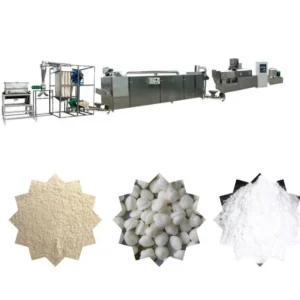
Pregelatinized Low-Cost Modified Starch Line – High-Efficiency Automated Starch Processing Machine
¥65.00 Select options This product has multiple variants. The options may be chosen on the product page -
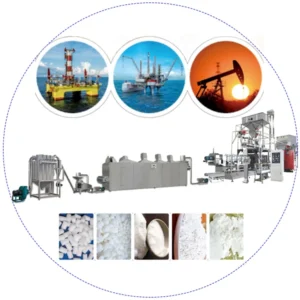
Modified and Pregelatinized Starch Processing Equipment – Pregelatinized Corn Cassava Modified Starch Puffing Machine
¥65.00 Select options This product has multiple variants. The options may be chosen on the product page