

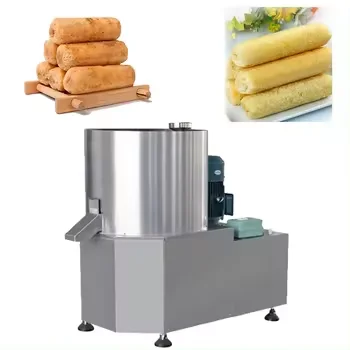
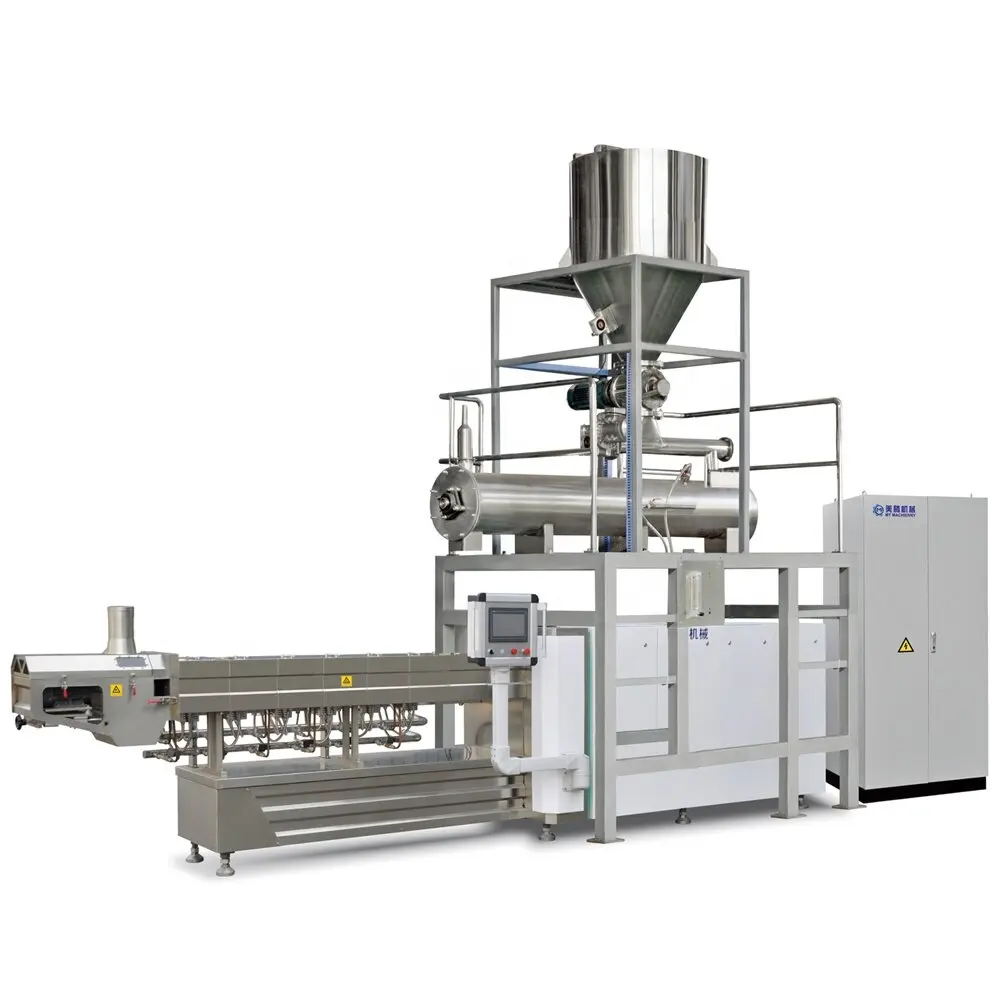
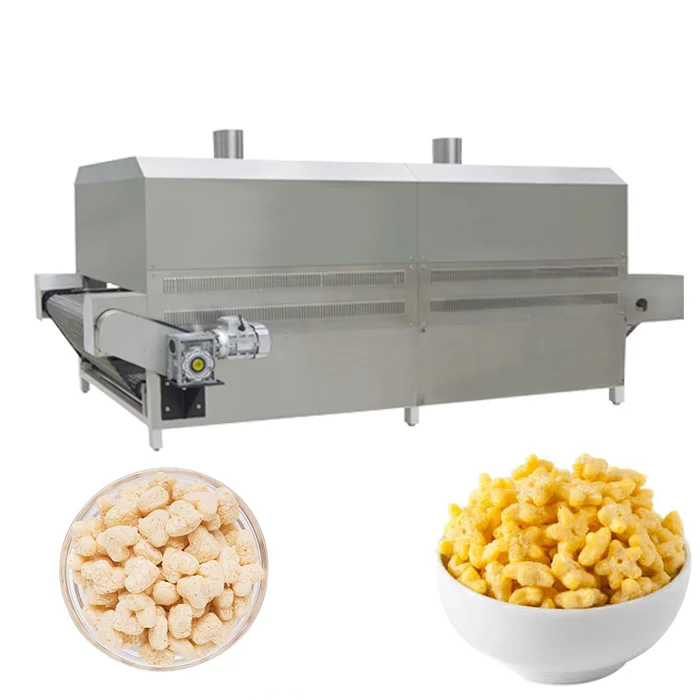
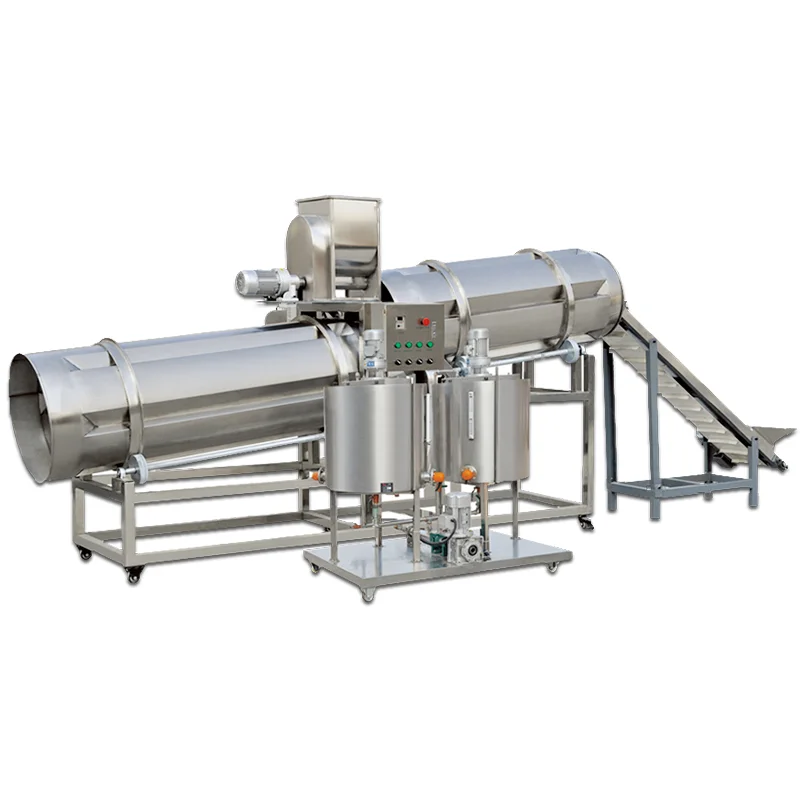

MT65 / MT70 / MT85 / MT100 Twin Screw Puffed Snack Food Extrusion Line, 130–240 kW Installed Power, Frequency Speed Control — engineered for continuous extrusion of corn, rice, wheat, oat and barley flour into cheese balls, tubes, sticks, rings, fruit loops and core-filled formats. Twin screw configuration and interchangeable die system are specified to your raw material moisture and target expansion profile, with drying, double-drum flavoring and packing throughput matched at every station. In-house trial runs on your actual raw material are completed before shipment, with a written report and matched screw configuration record provided.
Description
Throughput-matched turnkey lines — Every station from batching to packing is calculated against the same output target, so no single machine bottlenecks the rest of the puffed snack extrusion production line turnkey.
Technical Specifications
| Parameter | Value |
|---|---|
| Product Type | Twin Screw Puffed Snack Food Extrusion Line |
| Model Options | MT65 / MT70 / MT85 / MT100 |
| Screw Configuration | Twin screw, geometry matched to raw material |
| Installed Power (MT65 / MT70 / MT85 / MT100) | 130 kW / 180 kW / 220 kW / 240 kW |
| Real Consumption (MT65 / MT70 / MT85 / MT100) | 95 kW / 120 kW / 130 kW / 160 kW |
| Nominal Capacity (MT65) | 120–150 kg/hr (basis not stated in source — confirm raw material type, moisture content, product shape) |
| Nominal Capacity (MT70) | 200–300 kg/hr (basis not stated in source — confirm raw material type, moisture content, product shape) |
| Nominal Capacity (MT85) | 300–500 kg/hr (basis not stated in source — confirm raw material type, moisture content, product shape) |
| Nominal Capacity (MT100) | 600–800 kg/hr (basis not stated in source — confirm raw material type, moisture content, product shape) |
| Control System | Frequency speed controlling system |
| Dryer Heating Source | Electric, steam, or gas (based on customer local conditions) |
| Flavoring System | Double drum flavoring line with sugar melting and spraying nozzle |
| Die Configuration | Multiple interchangeable dies (cheese ball, tube, stick, ring, fruit loop, star, wheel, flower, heart) |
| Core Filling Option | Available with additional core filling machine and cutting machine |
| Line Stations | Mixing → Batching → Extruding → Drying → Coating/Flavoring → Cooling → Packing → Stacking |
| Packing Machine | Automatic weighing, sealing, marking, coding (vibration feeding, electronic pad weighing) |
| Warranty | 1 year free warranty |
| Delivery Time | 20 working days (extruder line); 35 working days (with packing and stacking machine) |
| Standards | CE, ISO |
Application Suitability
| Application | Material or Output |
|---|---|
| Puffed corn snacks | Corn flour extruded into cheese balls, tubes, sticks, rings, fruit loops, stars, wheels, flowers, heart shapes |
| Multi-grain extruded snacks | Blends of rice, wheat, oat, and barley flour |
| Core-filled puffed snacks | Cereal-based outer shell with cream or jam center using optional core filling station |
| Seasoned and coated snacks | Oil, melted sugar, liquid seasoning, or flour-based flavor coating via double drum system |
What Your Supplier’s "kg/hr" Number Actually Means
A capacity figure without raw material type, moisture percentage, and product shape is a guess, not a specification.
I have stood on factory floors in Southeast Asia watching a brand-new puffed snack extrusion production line turnkey stall because the local corn flour carried two extra points of moisture the supplier never asked about. The extruder ran, but the dryer could not keep up, material piled up at the transfer chute, and two days of commissioning evaporated. When a quote lists output without stating what formula and shape produced that number, you are buying a machine that will perform differently the moment it meets your actual ingredients [NEED_CITE: moisture content impact on twin-screw extrusion throughput].
How Screw Geometry Decides What Your Line Can Actually Run
A twin screw extruder handles a wider range of raw material formulations than a single screw because the intermeshing screws create a self-wiping action that prevents sticky starches from building up inside the barrel. For buyers running corn, rice, wheat, oat, or barley flour blends — or mixing in minor ingredients like bran or protein concentrate — this geometry keeps the process stable across recipe changes. The puffed snack extrusion production line turnkey must start with screw elements selected for your specific formula, not a generic configuration pulled from a catalog.
Moisture, Barrel Heat, and the Expansion You See at the Die
The expansion that gives puffed snacks their texture happens in the seconds between high-pressure, high-temperature conditions inside the barrel and the sudden pressure drop at the die exit. If incoming flour moisture is off by even a small margin, the starch gelatinisation behaviour shifts, and the product comes out either dense or over-expanded and fragile. Barrel temperature zones and screw speed must be tuned together to compensate, which is why a trial run on your actual raw material before shipment is not optional — it is where these parameters get locked in [NEED_CITE: starch gelatinisation temperature range in twin-screw extrusion].
Reading the Power and Capacity Table Without Getting Misled
Installed power tells you the electrical supply you need to arrange; real consumption tells you what the meter will actually show during production. The gap between these two numbers on the MT65 through MT100 reflects motor sizing for start-up torque and peak load margins. Capacity figures across the four models are listed above with the caveat that they depend on raw material type, moisture, and die shape — always request a capacity calculation that names your specific product. The dryer heating source (electric, steam, or gas) must also be confirmed early because it changes the utility infrastructure your facility needs to provide. Frequency speed control across the line keeps screw speed, conveyor rate, and drum rotation synchronized, which directly affects batch-to-batch consistency in product density and coating uniformity.
When One Undersized Station Stops the Entire Line
I have seen a drying section specified at nominal extruder output on paper, yet unable to handle the actual moisture load coming off the die when the buyer switched to a higher-moisture rice blend. The result was a conveyor full of product that was still too wet to enter the flavoring drums, forcing the entire puffed snack extrusion production line turnkey to shut down every forty minutes. Similar mismatches happen when a single drum flavoring station is paired with an extruder that outputs more than the drum can tumble and coat evenly — you get product with patchy seasoning and customer complaints downstream [NEED_CITE: throughput balancing across extrusion line stations].
Why the Turnkey Line Decision Comes Down to Integration
Complete lines from batching through packing under a single supplier mean throughput is matched at every transfer point rather than assembled from vendors who each guarantee only their own machine. Screw configuration and die design are specified to the buyer’s raw material and target product, not copied from a generic build. An in-house testing workshop allows trial runs before shipment, so product development happens at the factory, not on your floor during commissioning. Twin-screw expertise spanning pet food, aquatic feed, snacks, cereals, starch, and protein means the engineering team has encountered your specific raw material behaviour before. Pre-sales consultation extends through on-site installation, commissioning, and ongoing maintenance, keeping a single point of accountability from first inquiry to first production run.
Documentation & Verification
- Line layout and capacity calculation showing throughput at every station for your target product
- Screw and die configuration record specific to your raw material formula
- Trial run report on your actual raw material completed in the testing workshop before dispatch
- Electrical schematic with voltage, frequency, and control language confirmed for your site
- CE declaration of conformity and ISO certificate for the complete line
- Wear parts list with screw element and die inventory for first replacement cycle
Installation, Commissioning & Support
- Foundation and floor space plan covering the full station sequence from mixer to stacker based on selected model
- Power supply specification matching installed kW of your chosen MT65/MT70/MT85/MT100 configuration
- Dryer heating source setup for your local electric, steam, or gas utility connection
- Frequency speed controlling system commissioning with parameter logging for screw, conveyor, and drum speeds
- Operator training on die changeover procedures across the interchangeable die set
- Wear parts stock recommendation covering twin-screw elements and die plates for the first year of operation
What to Include When You Send an Inquiry
Share your raw material formula — including flour types and target moisture — along with the specific product shapes and coatings you plan to run. Confirm your local voltage, frequency, and preferred control language so the electrical schematic is correct before production starts. State whether you need the optional core filling station and what packing format your market expects. If possible, send a sample of your actual raw material for a trial run in the testing workshop before the line ships.
Frequently Asked Questions
Q: How is the capacity of each model verified, and what conditions does it depend on?
A: Capacity figures for MT65 through MT100 are based on specific raw material type, moisture content, and product shape. Before quotation, a capacity calculation is prepared using your actual formula and target shape. A trial run in the testing workshop then confirms the output under real conditions, and the results are documented in a written report before the line ships.
Q: My raw material is a blend of corn, rice, and oat flour — how are the screw and die selected?
A: Each flour blend behaves differently under heat and shear, so screw element geometry and die opening dimensions are chosen specifically for your formula and target product texture. The configuration record is documented and can be referenced when you reorder wear parts or develop new shapes on the same platform.
Q: Will the dryer and flavoring drums keep up with the extruder at full speed?
A: Throughput at every station is calculated against the same output target during line layout design. The dryer capacity is matched to the moisture load exiting the die, and the double drum flavoring system is sized to handle the extruder’s output without creating a bottleneck or uneven coating.
Q: Can we run a trial with our own raw material before the line is shipped?
A: Yes. The testing workshop conducts trial runs using your actual raw material and target die configuration. A written trial run report covering output rate, product density, and expansion characteristics is provided before dispatch, so you know the line will perform on your specific ingredients.
Related products
-

Automatic Corn Flake Processing Line Corn Coco Pops Breakfast Cereals Snacks Making Machinery
¥7,500.00 Select options This product has multiple variants. The options may be chosen on the product page -

Twin Screw Extruder for Cheese Puffs Food Stainless Steel Simple Puffed Rice Snack Machine
¥8,500.00 Select options This product has multiple variants. The options may be chosen on the product page -

Corn Puff Processing Line with Mixer Fryer Baking Oven Automatic High Productivity Grain Products Snack Making Machine
¥8,300.00 Select options This product has multiple variants. The options may be chosen on the product page -

Automatic High Productivity Puffed Corn Snacks Extruder Production Equipment New Condition Puff Snack Food Making Machine
¥11,050.00 Select options This product has multiple variants. The options may be chosen on the product page


