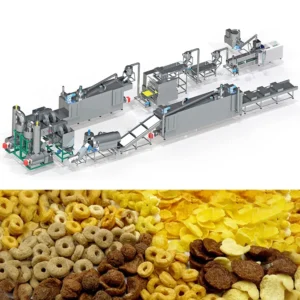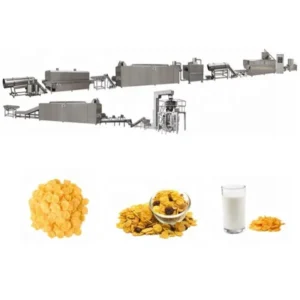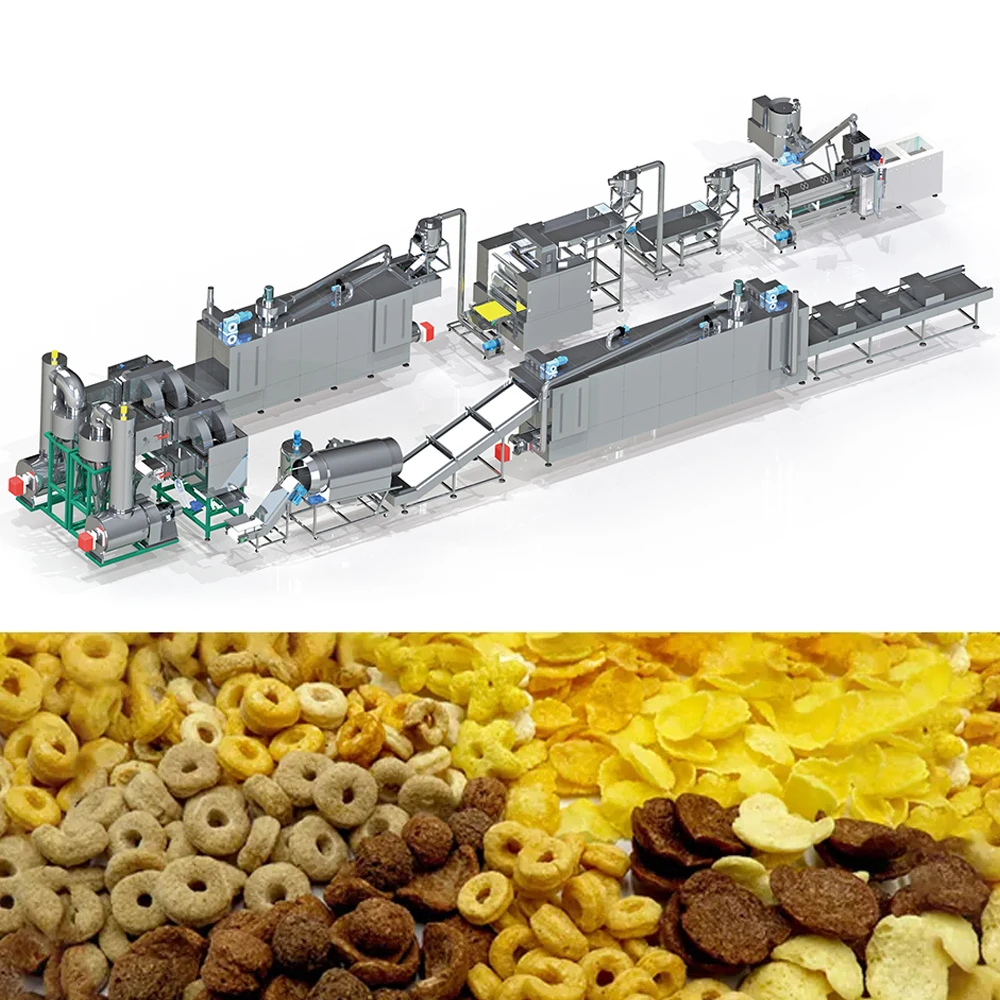


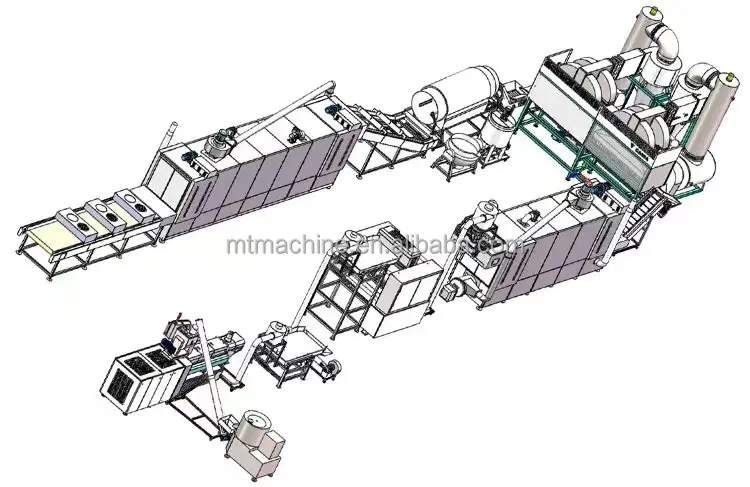
MT70 / MT85 / MT75 Corn Flakes Breakfast Cereal Production Line, twin-screw extrusion with PLC control, complete turnkey layout from mixing to coating.
- Designed as a full project line with throughput matched across extruder, flaker, roaster and coating stations to eliminate bottlenecks
- Hydraulic double-roller flaking with infrared temperature sensing and hot air roasting oven with dual circulating fans for consistent crispiness
Layout planning, in-house raw material trial runs and on-site commissioning ensure the line meets target output from day one.
Description
Complete Line Accountability — Every station from batching through extrusion, flaking, roasting, and coating is throughput-matched under one supplier, eliminating the bottleneck risk of assembling a corn flakes line from separate vendors.
Technical Specifications
| Parameter | Value |
|---|---|
| Product Type | Corn Flakes Breakfast Cereal Production Line |
| Models Available | MT70, MT85, MT75 |
| Installed Power | MT70: 160 kW; MT85: 190 kW; MT75: 210 kW |
| Power Consumption | MT70: 120 kW; MT85: 140 kW; MT75: 150 kW |
| Output Capacity | MT70: 150–200 kg/h (basis to be confirmed); MT85: 300–400 kg/h (basis to be confirmed); MT75: 300–500 kg/h (basis to be confirmed) |
| Overall Dimensions | MT70: 41 × 1.5 × 2.2 m; MT85: 43 × 1.5 × 3.2 m; MT75: 45 × 1.5 × 3.5 m |
| Control System | PLC control with MCC available |
| Extruder Type | Twin Screw |
| Flaking System | Hydraulic double-roller with infrared sensor temperature control |
| Dryer Heating Source | Gas or Electric |
| Roasting Oven | Hot air with dual circulating fans and cyclone dust removal |
| Coating System | Double tumble sugar melting, elevator, coating drum, spray nozzle |
| Line Stations | Mixing → Extrusion → Molding/Cutting → Drying → Flaking → Roasting → Coating/Seasoning |
| Certification | CE, ISO |
| Warranty | 24 months, lifetime service |
Application Suitability
| Application | Material or Output |
|---|---|
| Traditional corn flakes | Corn grits, whole corn meal, sugar and malt flavoring |
| Chocolate breakfast cereal (Chocapic-style) | Corn and rice base with cocoa coating |
| Fortified breakfast cereal | Grain blends with vitamin and mineral premix |
| Puffed snack formats | Corn, wheat, oat, and multi-grain raw materials |
| Various shaped cereal pieces | Die-cut shapes for retail or food service packaging |
Why the Dryer Capacity Matters More Than the Extruder Rating
A corn flakes production line turnkey project succeeds or fails on throughput matching between consecutive stations, not on the extruder’s nameplate output.
In my years walking factory floors from Guangdong to Southeast Asia, the most common failure I see on breakfast cereal lines is not the extruder itself — it is the gap between what the extruder pushes out and what the downstream dryer, flaker, or roaster can actually handle. I once consulted on a line where the buyer sourced the extruder from one vendor and the dryer from another, and the dryer could only handle part of the extruder’s output [NEED_CITE: mismatched station throughput in food processing lines]. Wet product piled up on transfer conveyors, clumping and cooling unevenly before it reached the flaking rolls. The result was inconsistent flake density, surface cracking during roasting, and a line that never reached its rated capacity. When you specify a corn flakes production line turnkey, the question is never just "what does the extruder produce" — it is "what does every single station process, and does each one match the next?"
Throughput Matching Across Every Station
The corn flakes production line turnkey approach treats the entire process as a single hydraulic system — material flows continuously from mixing through extrusion, drying, flaking, roasting, and coating. Each station’s capacity is calculated against the others so that no point in the line restricts what came before or starves what comes after. The extruder’s output rate sets the baseline, and every subsequent piece of equipment — the dryer’s belt length and residence time, the flaker’s roller gap and hydraulic pressure, the roaster’s hot air volume and pan speed — is sized to handle that baseline without accumulation or starvation.
Why Layout Documentation Comes Before the Quotation
A proper turnkey project starts with a line layout and capacity calculation document that maps every station to the next. This is not a brochure drawing — it is a working engineering document showing material flow rates, utility consumption at each point, and physical footprint requirements [NEED_CITE: turnkey food line layout engineering standards]. For factory owners and project contractors, this document is what allows you to plan your building, your utility connections, and your installation sequence before any equipment ships. The layout accounts for maintenance access, operator walkways, and the physical transfer points between stations where material is most likely to accumulate if spacing is wrong.
What the Specification Sheet Actually Tells You About Production
The twin-screw extruder at the heart of this line uses wear-resistant screw elements with an automatic lubricating system that includes cooling. In corn flake production, screw configuration directly controls residence time and shear intensity inside the barrel, which governs starch gelatinisation. Under-gelatinised dough will not flake properly — it cracks instead of flattening. The hydraulic double-roller flaking machinery uses separate motors for each roller, allowing independent speed adjustment to control flake thickness. Infrared sensor temperature control on the rollers keeps the dough at the right plasticity during pressing. The roasting oven uses two separate circulating fans with a cyclone dust removal device, which matters because uneven hot air distribution causes some flakes to scorch while others remain pale and under-toasted. The PLC control system coordinates these stations so that when the extruder speed changes, downstream equipment adjusts accordingly rather than waiting for an operator to notice a pile-up.
What Happens When Stations Are Sized Independently
Buyers who assemble a cereal line from separate vendors often end up with a flaker rated for a certain tonnage that never sees that tonnage because the dryer upstream cannot deliver enough pre-dried product to keep it fed. Or the coating drum finishes its batch cycle faster than the roaster can supply cooled flakes, leaving the drum idle and the sugar crystallising unevenly on whatever small volume is inside [NEED_CITE: coating consistency issues in breakfast cereal production]. These mismatches do not show up in individual machine specifications — they only appear when the full line runs under real production conditions, which is exactly when they cost the most to fix.
Why Single-Source Accountability Changes the Project
Every station on this line — the mixing and batching system, the twin-screw extruder, the dryer, the hydraulic flaker, the hot air roaster, the double tumble coating system — is specified, built, and tested as one integrated project. The screw and die configuration is matched to the buyer’s actual raw material formulation and target flake density, not copied from a generic template. An in-house testing workshop runs trial production on the buyer’s specific corn or grain blend before shipment, so product development does not begin for the first time on the factory floor after installation. Electrical schematics and voltage configurations are confirmed against the destination market before production starts, preventing commissioning delays caused by incorrect frequency or control language settings. The line layout and capacity calculation document is provided during the proposal stage, not after the order is placed.
Documentation & Verification
- Line layout and capacity calculation showing throughput matching across all cereal production stations
- Screw and die configuration record specific to your corn or grain formulation
- Trial run report on customer raw material from in-house testing workshop before dispatch
- Electrical schematic with voltage and frequency confirmed for destination market
- CE declaration of conformity and ISO certificate for export compliance
- Wear parts list covering screws, dies, and flaker roller consumables
Installation, Commissioning & Support
- Foundation and utility planning based on MT75 overall dimensions of 45 × 1.5 × 3.5 m
- Dedicated power circuits sized for installed capacity up to 210 kW depending on model selection
- Phased assembly sequence coordinating extruder, dryer, flaker, and roaster installation
- PLC control system commissioning with operator language configured for destination market
- On-site operator training covering screw configuration changes and flaker roller gap adjustment
- Wear parts supply program for twin-screw elements, die plates, and flaker roller surfaces
What We Need to Start Your Line Proposal
To scope a turnkey corn flakes project accurately, we need your target raw material formulation including grain type and moisture content, the daily or hourly production volume you intend to run, and the destination country so we can confirm voltage, frequency, and control language requirements. If you have an existing building, floor plan dimensions and ceiling height help us determine which model configuration fits your space and whether the line layout needs to accommodate existing utility connections.
Frequently Asked Questions
Q: How is throughput matched across the extruder, dryer, flaker, and roaster to prevent bottlenecks?
A: Each station is sized against the extruder’s output rate during the line layout phase. The dryer belt length and residence time, flaker roller capacity, and roaster hot air volume are all calculated so material flows continuously without accumulation between stations. This calculation is documented before the quotation is issued.
Q: What line layout and utility planning documentation is provided before installation?
A: A complete line layout drawing shows every station’s position, material flow direction, utility connection points, and maintenance access space. An accompanying capacity calculation document maps throughput at each station. Electrical schematics confirm voltage and control specifications for the destination market.
Q: Can a trial run be performed on our specific corn or grain formulation before shipment?
A: Yes. The in-house testing workshop runs production trials using your actual raw material, testing screw configuration, die selection, flaker settings, and roasting profiles. A trial run report is provided documenting the results before equipment ships.
Q: How are voltage, control language, and PLC configuration confirmed for the destination country?
A: During the specification confirmation stage, we verify the destination market’s voltage and frequency standards, confirm the operator interface language, and document all settings in the electrical schematic. This prevents commissioning delays caused by mismatched power supply or unreadable control screens.
Q: What is the phased installation and commissioning schedule for a complete cereal line?
A: Installation follows a sequenced approach where the extruder is positioned first, followed by downstream stations in material flow order. Commissioning begins with individual station testing, then progresses to integrated line runs with your raw material, followed by operator training and handover.
Related products
-

MT Cocoa Flour Puffed Breakfast Cereal Production Line-High Large Capacity Multi-Fuel (Steam/Gas/Electric) New Shandong Origin
¥8,000.00 Select options This product has multiple variants. The options may be chosen on the product page -
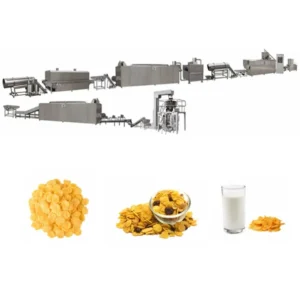
Cereals Corn Flakes with Sugar Corn Flakes Extrusion Food Machine Breakfast Cereal Production Line
¥23,000.00 Select options This product has multiple variants. The options may be chosen on the product page -
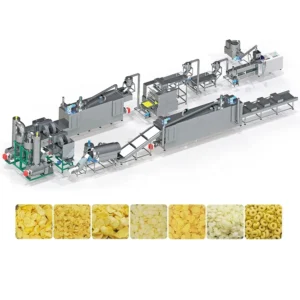
Whole Grain Choco Hoop Crunchy Wheat Cereal Ring Fruit Loops Snacks Extruder Machine /breakfast Cereals Corn Flakes Production
¥48,000.00 Select options This product has multiple variants. The options may be chosen on the product page -
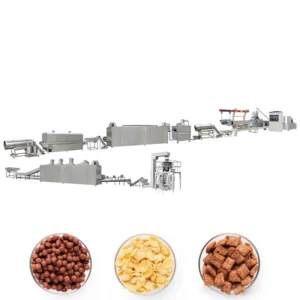
Kelloggs Corn Flakes Breakfast Cereal Normal Making Machine Breakfast Cereal Extruder Production Line
¥30,000.00 Select options This product has multiple variants. The options may be chosen on the product page