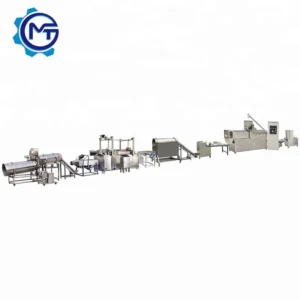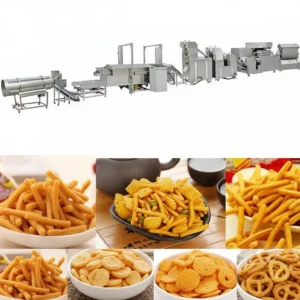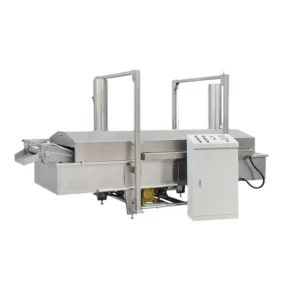
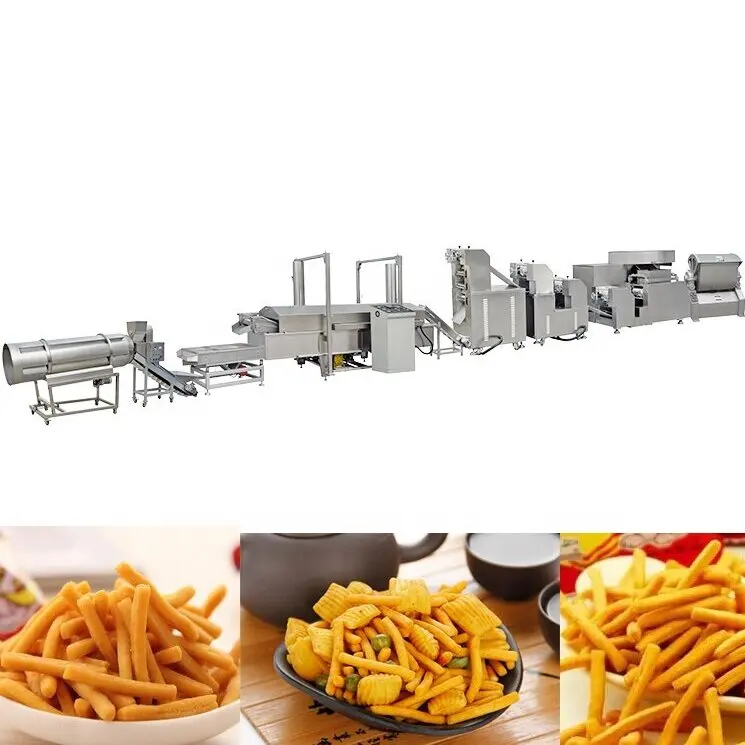
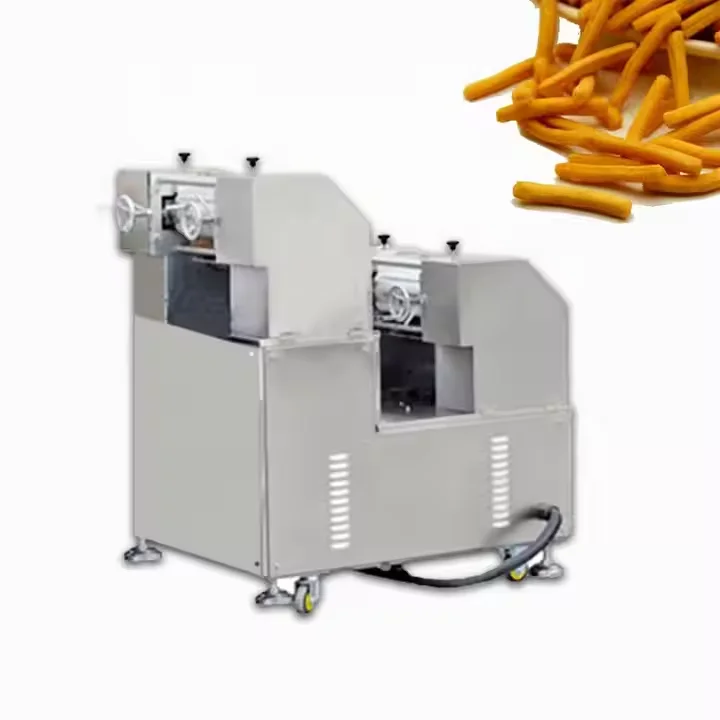
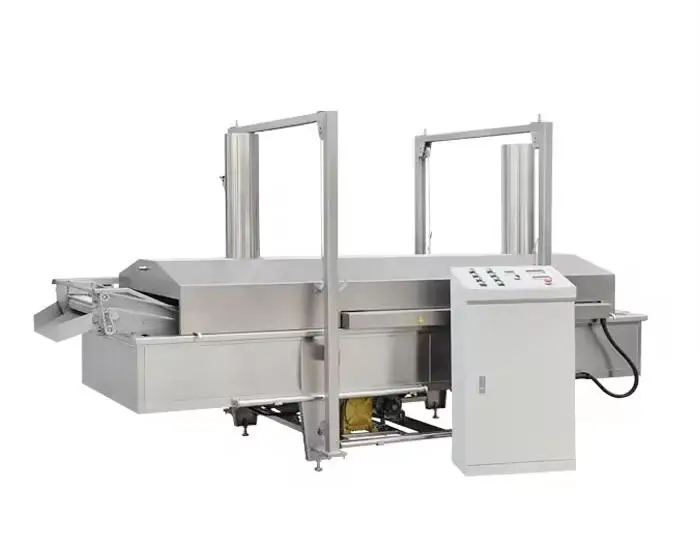
Continuous Frying Machine, 380V/50Hz, PLC Control — designed as a fully integrated station within a turnkey snack production line. Double-layer mesh belt prevents product floating for uniform oil contact, while continuous oil circulation filtration extends edible oil service life. Frequency conversion stepless speed regulation allows frying time tuning to product density and moisture. Throughput is balanced with upstream extrusion and downstream coating to eliminate line bottlenecks. Backed by in-house trial runs on your raw material before shipment, complete electrical schematics with voltage confirmation, and on-site commissioning support.
Description
Integrated Line Sizing — throughput matched across frying, extrusion, and coating stations to eliminate single-point bottlenecks in snack production.
Technical Specifications
| Parameter | Value |
|---|---|
| Product Type | Continuous Deep Fryer |
| Rated Power (Drive/Controls) | 2.6 kW |
| Heating Tube Power | 60 kW |
| Voltage & Frequency | 380V / 50Hz |
| Control System | PLC |
| Overall Dimensions (L×W×H) | 6700 × 2200 × 1200 mm |
| Net Weight | 2000 kg |
| Capacity Range | 100–1000 kg/h (basis not stated in source — confirm product format, raw material, moisture) |
| Oil Tank Capacity | 320 L |
| Heating Method | Electric heating / Gas heating (optional) |
| Belt Type | Upper and lower double-layer mesh belt |
| Belt Speed Control | Frequency conversion stepless speed regulation |
| Oil Filtration | Continuous oil circulation filtration system |
| Slag Discharge | Bottom-mounted residue discharge system |
| Hood Lifting | Automatic lifting system for upper hood and mesh belt |
| Construction Material | Food-grade 304 stainless steel |
| Assembly State | Fully assembled |
| Certification | CE, ISO |
Application Suitability
| Application | Material or Output |
|---|---|
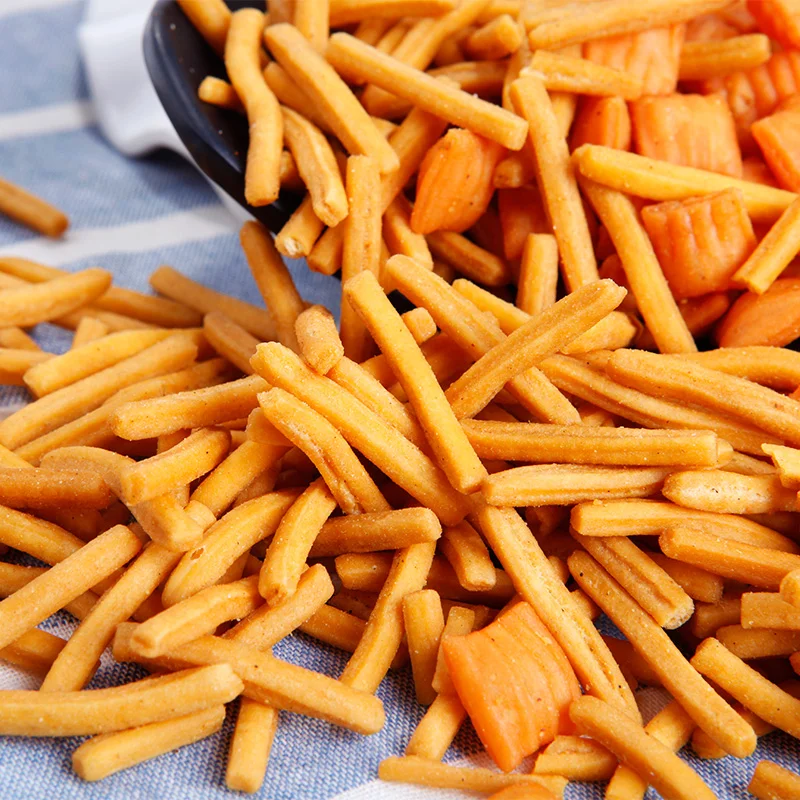
| Corn-based fried snack production | Extruded corn dough pieces, pellet chips |
| Puffed pellet post-frying | 2D/3D starch pellets after extrusion and drying |
| Extruded snack finishing | Core-filled or co-exuded snack pieces requiring oil frying |
| General food factory frying operations | Preformed snack shapes from upstream forming or extrusion stations |
What "100–1000 kg/h" Leaves Out About Your turnkey fried snack line
Capacity numbers only matter when tied to your actual product format, raw material moisture, and upstream extruder output.
A fryer quoted at a nominal throughput tells you nothing about whether it can keep pace with an extruder running corn masa at a specific moisture content. When the upstream station produces more than the fryer can handle, product piles up on the conveyor, cools unevenly, and enters the oil at inconsistent temperatures. The result is variable color, uneven oil absorption, and product that fails to meet the texture specification your market expects [NEED_CITE: capacity matching between extrusion and frying stations in snack lines]. Buyers who skip the throughput calculation often discover the bottleneck only after commissioning, when reconfiguring the line means unplanned downtime and additional capital.
How Belt Geometry Controls Fry Uniformity
The double-layer mesh belt configuration on this continuous frying machine production line sandwiches product between upper and lower surfaces, preventing lighter pieces from floating to the oil surface. When snack pellets or extruded corn shapes float, only the submerged half receives consistent heat transfer, producing uneven color and incomplete frying on the exposed side. The stepless frequency conversion belt speed allows frying time to be tuned to product density and incoming moisture, giving operators a direct control over final oil content and crispness without changing oil temperature.
Oil Circulation and the Acid Value Problem
Continuous oil filtration runs parallel to the frying process, pulling oil through a filter bed that captures fine carbonized particles before they accumulate. In snack frying operations where production runs extend across multiple shifts, unfiltered oil darkens rapidly and the acid value climbs, which transfers off-flavors to the product and forces premature oil replacement [NEED_CITE: oil degradation rates in continuous industrial frying operations]. The bottom-mounted residue discharge system collects heavier sediment that settles below the belt path, separating it from the active frying zone and keeping the oil circulation loop cleaner over extended runs.
Reading the Specification Sheet Against Your Actual Production Target
The 60 kW heating tube power determines how quickly the oil recovers temperature after cold product enters the bath. A high-moisture extruded snack entering at lower temperatures demands more thermal recovery capacity than a pre-dried pellet chip, so the same fryer may sustain different throughputs depending on product format. The 320 L oil tank capacity sets the volume available for temperature stabilization — a larger thermal mass holds temperature more steadily when product loading fluctuates. The 380V / 50Hz electrical specification must match the target market’s industrial supply before the machine ships, because rewiring a 60 kW heating system on site adds cost and delays commissioning [NEED_CITE: voltage and frequency standards by export market].
The Hidden Cost of Undersized Frying Stations
When a fryer is selected based on price rather than line throughput matching, the consequences appear downstream. Product exiting the fryer too slowly backs up the de-oiling station, overloads the flavouring drum, and creates idle time at the packing end. Operators compensate by raising oil temperature to shorten fry time, which accelerates oil degradation and produces a darker, more bitter product that does not meet brand specifications [NEED_CITE: thermal stress effects on edible oil in high-throughput frying]. The cost of replacing oil more frequently, combined with product waste from off-spec output, often exceeds what a correctly sized fryer would have cost initially.
Why Sourcing the Fryer Within the Line Project Matters
Throughput parity across stations is achievable only when one supplier sizes every machine from extrusion through packing, rather than assembling independent quotes from separate vendors. Screw configuration and die design on the upstream extruder determine the shape, density, and moisture of product entering the fryer — parameters that directly affect required fry time and oil load. The in-house testing workshop runs trial batches on customer raw material before shipment, confirming that the continuous frying machine production line delivers the target color and texture rather than discovering mismatches during on-site commissioning. Electrical schematics and voltage confirmation happen at the quotation stage, so the control panel language and power supply match the installation site from day one.
Documentation & Verification
- Line layout showing fryer throughput balanced against extruder and downstream coating capacity
- Machine specification sheet recording belt speed range, oil temperature profile, and heating method
- Electrical schematic with voltage, frequency, and PLC control language confirmed for target market
- Factory test record from trial run on customer raw material before dispatch
- CE declaration of conformity and ISO certificate for machinery compliance
- Wear parts list covering mesh belt sections, heating elements, and filtration media
Installation, Commissioning & Support
- Fully assembled 6700 × 2200 × 1200 mm unit requires level floor with adequate drainage around the oil tank base
- 380V / 50Hz dedicated circuit with isolation for 60 kW heating load and 2.6 kW drive systems
- Automatic hood lifting system enables operator access for first-run belt tracking and oil fill procedures
- PLC control language configured to operator region before commissioning begins on site
- Frequency conversion belt speed calibrated to product format during trial runs with operator present
- Bottom residue discharge and filtration media replacement schedule established during handover training
What to Prepare Before Requesting a Quotation
Share the product format you intend to fry, including shape, approximate dimensions, and moisture content at the point of entering the oil bath. Specify the upstream extruder output rate so the fryer can be sized for throughput parity rather than nominal capacity. Confirm the industrial voltage and frequency at your installation site, along with the preferred PLC control language for your operators.
Frequently Asked Questions
Q: How is fryer capacity verified against upstream extruder output?
A: The line layout includes a capacity calculation that compares extruder throughput at a specific raw material and moisture level against the fryer’s sustained output. Trial runs in the testing workshop use customer raw material to confirm that frying time, oil temperature recovery, and belt speed produce the target product without backlog between stations.
Q: What voltage and frequency options are available for different target markets?
A: The standard configuration is 380V / 50Hz, but electrical specifications are confirmed during the quotation stage to match the installation site’s industrial supply. The 60 kW heating circuit and 2.6 kW drive system are configured accordingly, and the electrical schematic is reviewed with the buyer before production begins.
Q: How does the PLC control language get set for the operator’s region?
A: The preferred interface language is confirmed during specification review before the machine enters production. The PLC screen labels, alarm messages, and parameter menus are set to the agreed language so operators can navigate frying temperature, belt speed, and filtration controls without translation barriers during commissioning.
Q: What is the on-site installation, commissioning, and operator training process?
A: The fully assembled unit is positioned on a prepared floor with drainage and power connections completed before the engineer arrives. Commissioning covers oil fill, belt speed calibration, and trial frying runs with production material. Operators receive hands-on training covering hood lifting for cleaning, residue discharge procedures, and daily filtration maintenance.
Q: How is the fryer matched with downstream de-oiling, flavouring, and cooling stations?
A: Each downstream station is sized to handle the fryer’s confirmed output rate, so product moves continuously from oil bath through de-oiling, seasoning, and cooling without accumulation. The line layout documents throughput at every transfer point to prevent bottlenecks that would otherwise force operators to slow the entire continuous frying machine production line.
Related products
-
Double Screw Extruder Corn Flour Puffs Snack Nacho Chips Tortilla Doritos Making Machine Savory Snack Production Line
¥50.00 Select options This product has multiple variants. The options may be chosen on the product page -
Electric Heating Fried Puffed Food Production Line – Salad Sticks Making Equipment
¥65.00 Select options This product has multiple variants. The options may be chosen on the product page -
Orion TURTLE CHIPS Snack Puffing Machinery Internet Celebrity Puffed Four-layer Crispy Production Line
¥65.00 Select options This product has multiple variants. The options may be chosen on the product page -
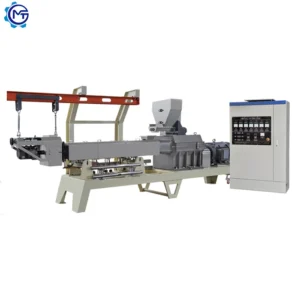
Industrial Wheat Flour Snacks Processing Equipment – Stainless Steel Fried Food Production Line
¥65.00 Select options This product has multiple variants. The options may be chosen on the product page