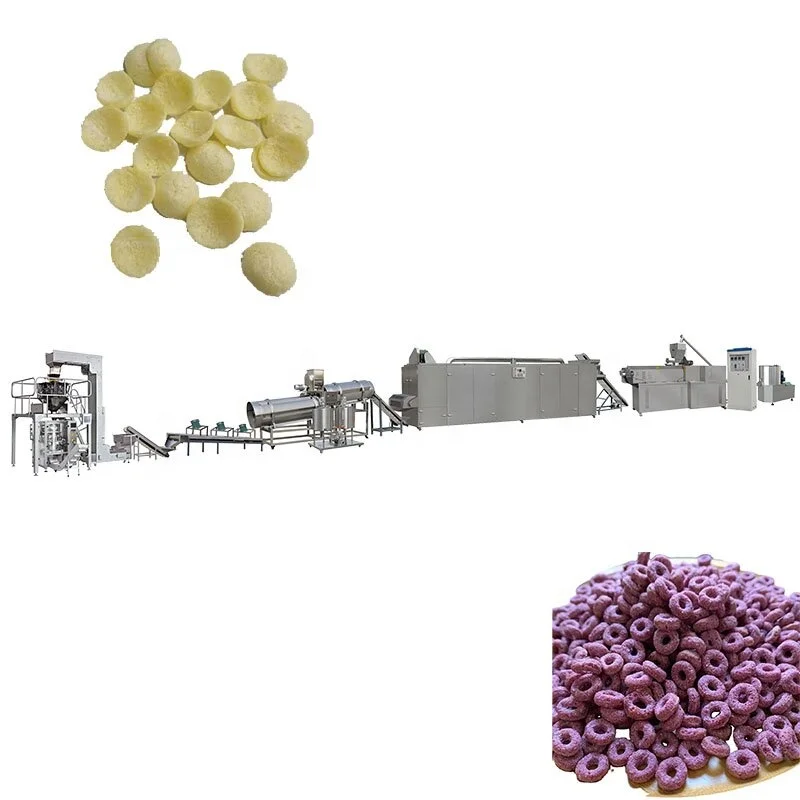
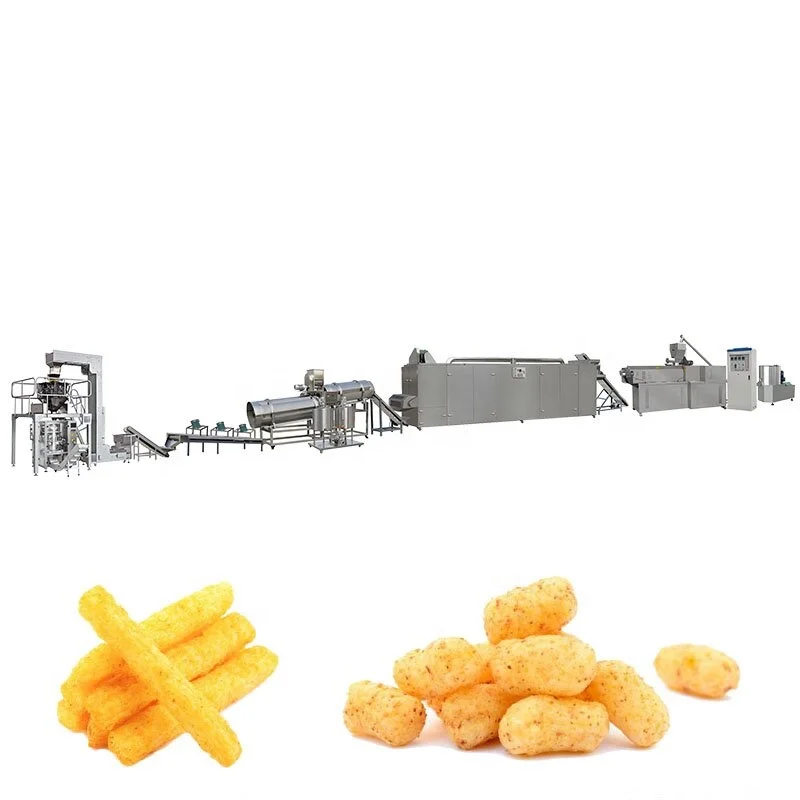
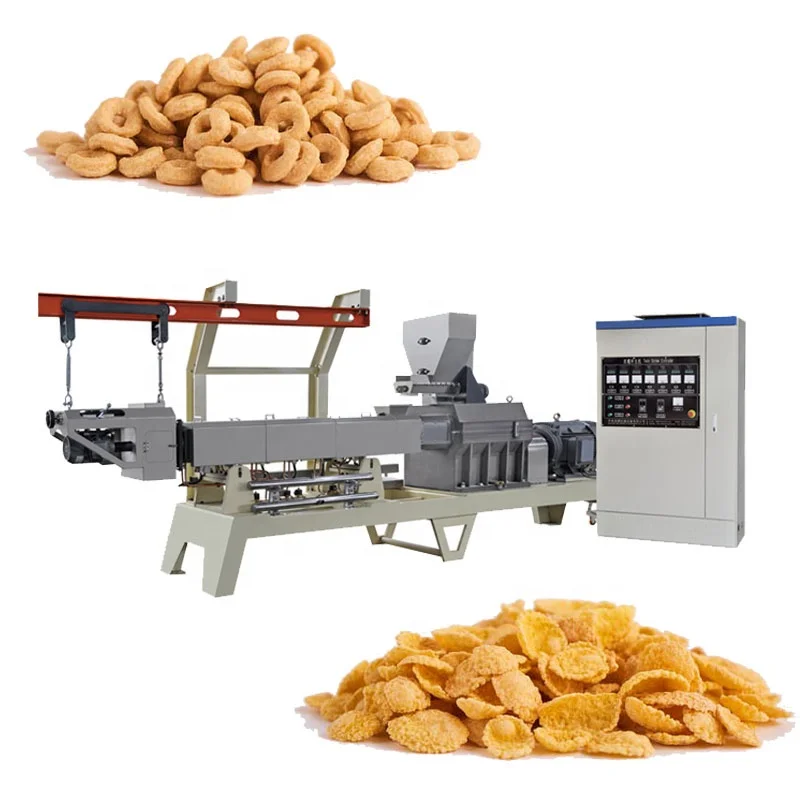

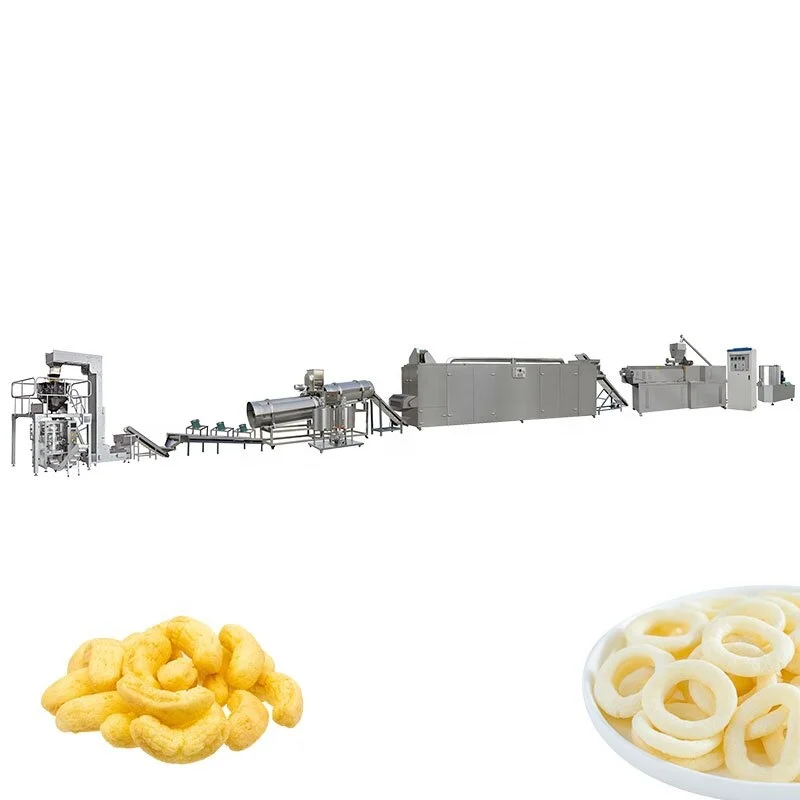
Trial runs on your exact material in our testing workshop verify real output before shipment, with full documentation covering line layout, electrical schematics, and screw configuration records.
Description
Throughput-Matched Engineering — every station on this corn flakes production line from mixing to packing is sized against verified extruder output, eliminating the mid-line material pile-ups that stall uncoordinated builds.
Technical Specifications
| Parameter | Value |
|---|---|
| Product Type | Corn Flakes Production Line (Twin Screw Extrusion Line) |
| Available Models | MT70, MT75, MT85 |
| Extruder Configuration | Twin Screw |
| MT70 Installed Power / Consumption | 160 kW / 120 kW |
| MT70 Output Capacity | 150–200 kg/hr (basis not stated in source — confirm raw material / moisture) |
| MT70 Overall Dimensions | 41 × 1.5 × 2.2 m |
| MT75 Installed Power / Consumption | 210 kW / 150 kW |
| MT75 Output Capacity | 300–500 kg/hr (basis not stated in source — confirm raw material / moisture) |
| MT75 Overall Dimensions | 45 × 1.5 × 3.5 m |
| MT-75 Extruder Capacity | 200–300 kg/hr (basis not stated in source — confirm raw material / moisture) |
| MT85 Installed Power / Consumption | 190 kW / 140 kW |
| MT85 Output Capacity | 300–400 kg/hr (basis not stated in source — confirm raw material / moisture) |
| MT85 Overall Dimensions | 43 × 1.5 × 3.2 m |
| Control System | PLC at line level; MCC and PLC control available |
| Flaking Drive | Double motors with separate roller driving; hydraulic system for double rollers |
| Flaking Temperature Control | Infrared sensor |
| Dryer Heating Source | Gas or Electric |
| Roasting Oven | Hot air with vibrating pan, conciliation burner, dual circulating fans, cyclone dust removal |
| Coating System | Double tumble sugar melting, elevator, coating drum, spraying nozzle |
| Lubrication | Automatic lubricating system with cooling function |
| Screw Material | Wear-resistant alloy, special treatment |
| Basic Raw Materials | Corn, rice, wheat, oat, barley powder |
| Certifications | CE, ISO |
Application Suitability
| Application | Material or Output |
|---|---|
| Natural corn flakes for breakfast cereal retail | Corn powder, target crispness and density to market spec |
| Sugar-coated corn flakes | Corn or multi-grain base with sugar coating drum stage |
| Multi-grain breakfast cereals | Rice, wheat, oat, barley powder blends |
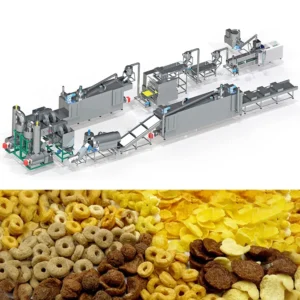
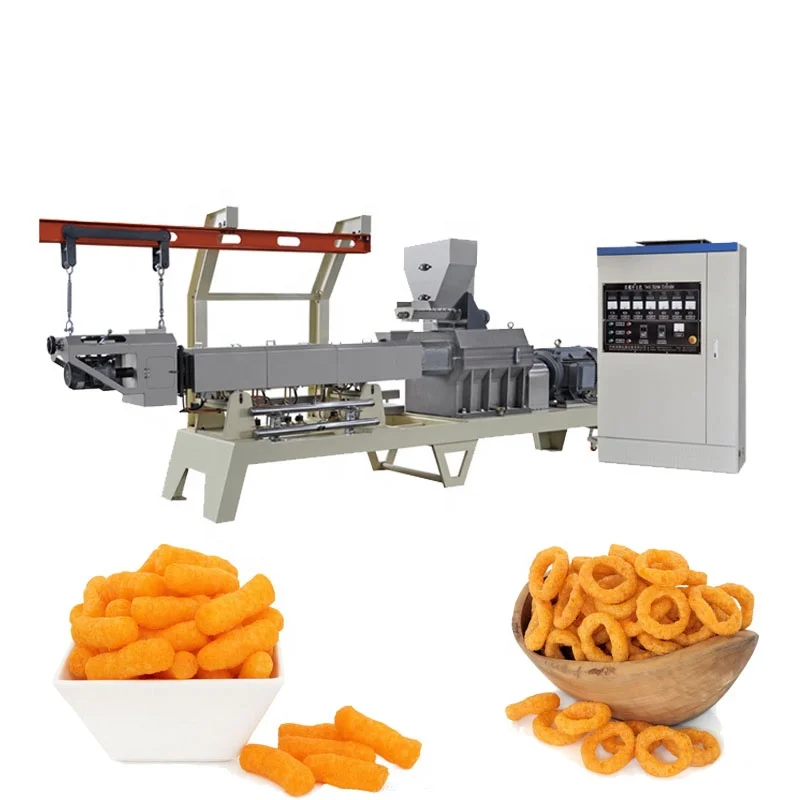
| Shaped cereal formats | Ball, tube, stick, ring, fruit loop, star, wheel, flower, heart via mould adjustment |
Why "Nominal Capacity" on a Corn Flakes Line Can Cost You an Entire Shift
A rated output figure means nothing until it is validated on your actual corn blend at your target moisture.
I have stood on factory floors in the Gulf watching a corn flakes production line turnkey installation grind to a halt because the extruder pushed material faster than the downstream dryer could handle. The mesh belt piled up, operators shut everything down, and a full day of planned capacity vanished. [NEED_CITE: typical throughput mismatch causes in cereal extrusion lines] The problem is rarely the extruder itself — it is the gap between the quoted number and what the line actually sustains on the buyer’s recipe. When a corn flakes production line turnkey project is assembled from separate vendors, each station is sized to its own nameplate, not to the real flow between stations.
Layout Sequencing That Follows the Material, Not the Catalogue
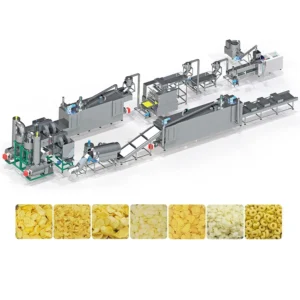
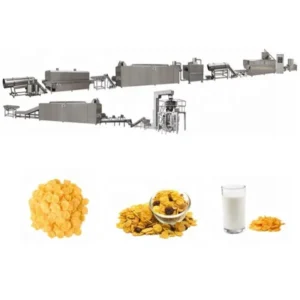
A complete corn flakes production line turnkey build moves through mixing, extruding, flaking, drying, hot air roasting, optional sugar coating, a second drying stage, cooling, and packing. Each transition point is where throughput either holds or breaks. The layout is designed around your available floor space and utility drop points, so the line flows logically without unnecessary conveying distances that cool the product prematurely or create surge points.
Flaking Precision as the Density Gatekeeper
The flaking station is where corn flakes earn their texture. This line uses a hydraulic double-roller system driven by separate motors, with infrared temperature sensing to maintain consistent roller surface conditions. Flake thickness directly determines how the product behaves in the roasting oven — too thick and the core stays soft; too thin and the flake shatters during conveying. [NEED_CITE: flake thickness and roasting uniformity relationship in cereal processing] The PLC-controlled flaking machine holds the gap setting through production runs, reducing thickness drift that would otherwise force operators to constantly adjust roasting time.
Reading the Specs That Actually Matter for Corn Flake Quality
The twin-screw extruder configuration is central to how corn starch gelatinises under heat and shear. Screw elements are arranged to match the raw material — corn grits behave differently from oat or barley powder in terms of moisture absorption and melt viscosity. The die design controls the shape and density of the extrudate before it reaches the flaking rolls. A hot air roasting oven with a conciliation burner and dual circulating fans delivers uniform surface blistering; the cyclone dust removal device keeps fine particulate from recirculating onto the product. Automatic lubrication with cooling extends screw and barrel service intervals, which matters on continuous-run cereal shifts where unplanned stops are expensive.
What Happens When Dryer Capacity Does Not Match Extruder Output
An undersized dryer is the most frequent bottleneck I see on cereal lines in the Middle East. The extruder runs fine, the flaking station keeps up, but the belt dryer cannot pull moisture down fast enough. Material backs up, flakes stick together, and the roasting oven receives product that is still too wet to blister properly. [NEED_CITE: moisture content targets before roasting in corn flake production] The result is a soft, chewy flake that fails the snap test — and an entire batch that cannot ship. This is why throughput matching across every station is not optional; it is the difference between a line that runs and one that idles.
Why Source the Entire Line from One Engineering Team
Every station on this corn flakes line is specified under one supplier scope, so the extruder output, dryer capacity, flaking throughput, and coating drum volume are calculated together before any steel is cut. Screw configuration and die design are matched to your raw material and target flake density rather than copied from a generic build. The in-house testing workshop runs your actual corn blend before shipment, generating a trial report that documents real throughput. Electrical schematics and voltage are confirmed against your local grid before production starts. Pre-sales consultation extends through on-site installation, commissioning, and operator training on your specific line.
Documentation & Verification
- Line layout drawing showing throughput match across mixing, extruding, flaking, drying, and packing stations
- Trial run report on your corn or multi-grain blend confirming actual output before dispatch
- Screw and die configuration record specifying element arrangement to your raw material
- Electrical schematic with voltage and frequency matched to your local grid standard
- CE declaration of conformity and ISO certificate for customs and regulatory clearance
Installation, Commissioning & Support
- Floor plan marking for MT75 footprint (45 × 1.5 × 3.5 m) with utility drop points for gas or electric dryer supply
- Dedicated circuit planning for MT70 at 160 kW installed or MT85 at 190 kW installed load
- Phased assembly sequence from extruder through roasting oven with commissioning checkpoints at each station
- PLC parameter setup for flaking roller gap, dryer temperature zones, and roasting oven fan speed
- Operator training covering screw wear inspection, hydraulic roller adjustment, and automatic lubrication system monitoring
- Wear parts list including screws, dies, and roller surfaces with recommended replacement intervals
What We Need to Configure Your Line
To build an accurate line proposal, share your target raw material — whether straight corn powder or a multi-grain blend with rice, wheat, or oat — along with your desired hourly output and the moisture range you typically work within. Provide your workshop dimensions and ceiling height so the layout fits your space, and confirm your local voltage, frequency, and preferred control language. If you have existing upstream or downstream equipment that the new line must integrate with, include those specifications as well.
Frequently Asked Questions
Q: How is line throughput verified against my specific raw material and recipe before shipment?
A: Your exact corn or multi-grain blend is run in the in-house testing workshop before the line ships. The trial documents actual output, flake density, and roasting behaviour under controlled conditions. You receive a trial run report showing real throughput figures rather than relying on a generic nameplate rating that may not apply to your recipe.
Q: How do you ensure the dryer, flaking, and coating stations are matched to extruder output?
A: Each station is sized during the line configuration stage based on the extruder’s verified output on your material. The dryer belt length, flaking roller width, and coating drum volume are all calculated against that flow rate. This prevents the common failure mode where one station runs faster than the next can accept.
Q: What voltage, frequency, and control language options are confirmed before production begins?
A: Your local grid specifications are confirmed during the quotation stage, and the electrical schematic is built to match. The PLC and MCC control panels are configured to your voltage and frequency, and the HMI language is set to your operator preference before the panels leave the factory.
Q: How is the factory layout designed around my available floor space?
A: You provide workshop dimensions, ceiling height, and utility entry points. The line layout is then drawn to fit, positioning the extruder, flaking station, dryer, roasting oven, and packing end in a logical flow that minimises conveying distances and respects your building constraints.
Related products
-
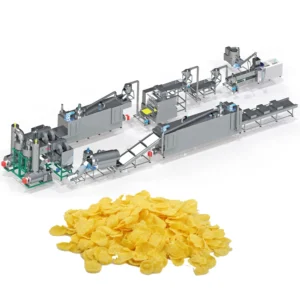
New Automatic Cornflakes Making Machine Oats Snack Food Chips Extruder Processing Line
¥30.00 Select options This product has multiple variants. The options may be chosen on the product page -

200kg/h Breakfast Cereal Extruder Making Machine Hot Sale Corn Flake Production Line
¥30,000.00 Select options This product has multiple variants. The options may be chosen on the product page -
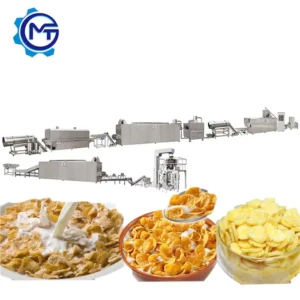
Automatic 500kg/h Corn Flakes Making Machine New Condition High Productivity Sweet Breakfast Cereal Processing Line From Factory
¥8,500.00 Select options This product has multiple variants. The options may be chosen on the product page -

Hot Selling Automatic Corn Flakes Breakfast Cereal Production Line Making Machine
¥20,000.00 Select options This product has multiple variants. The options may be chosen on the product page