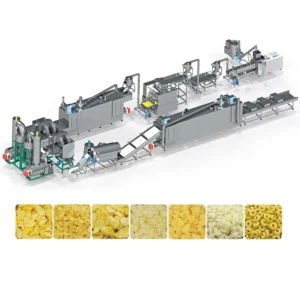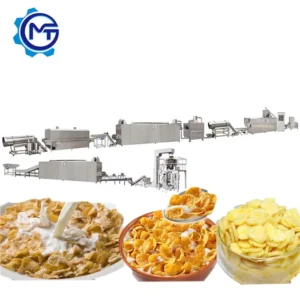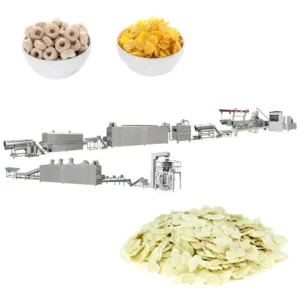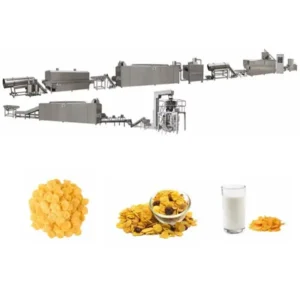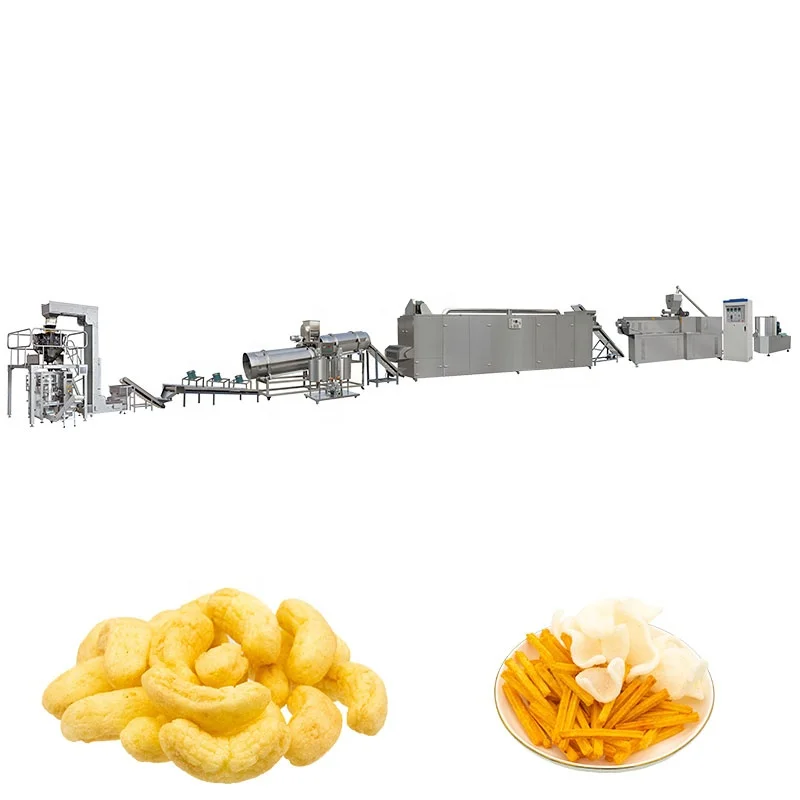
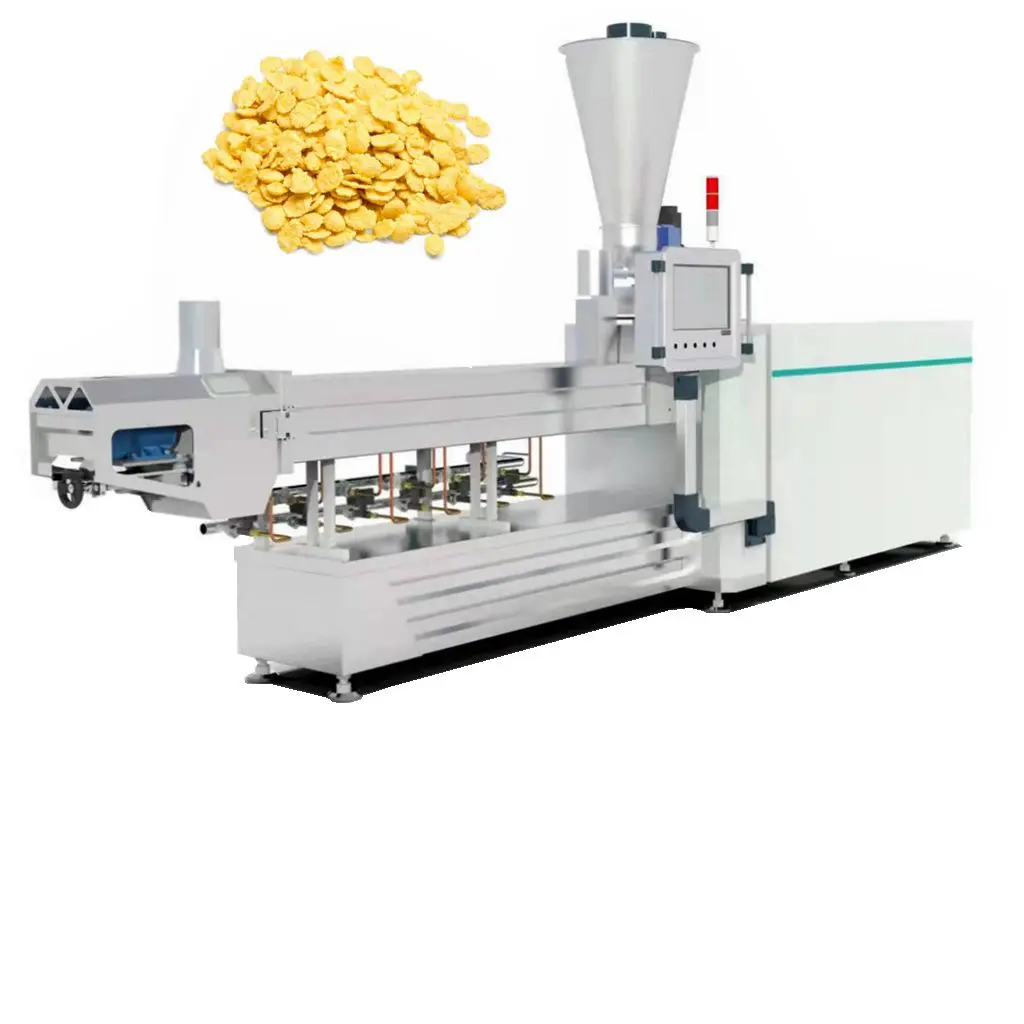
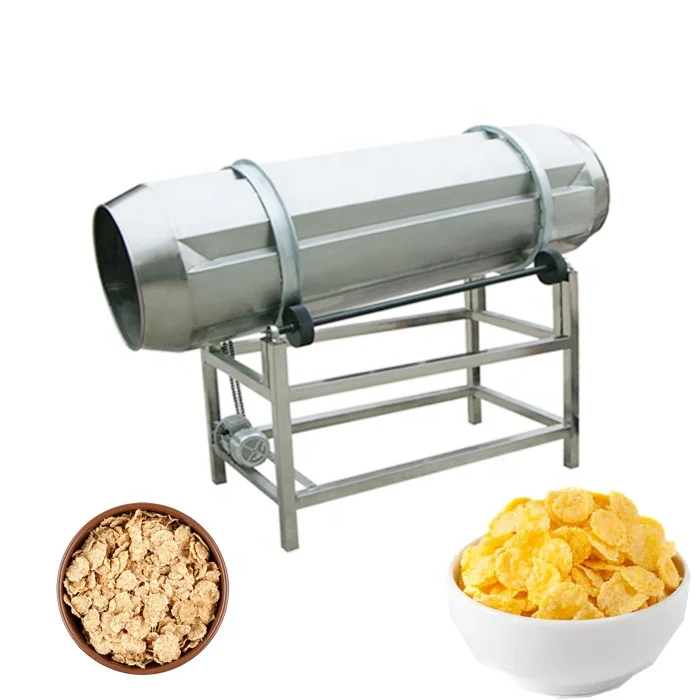
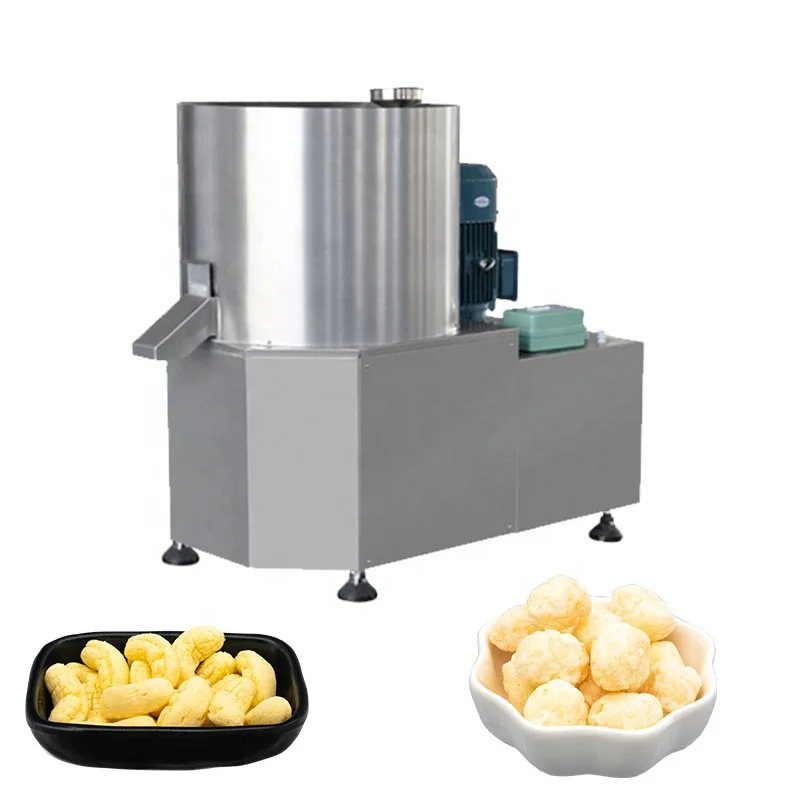

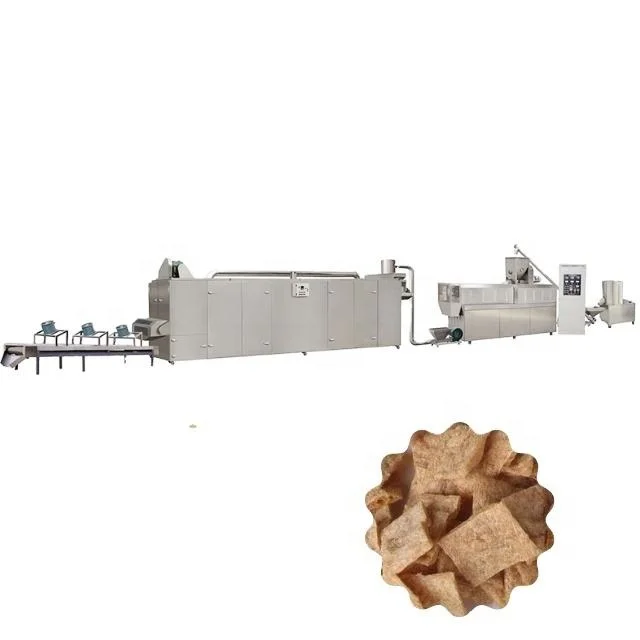
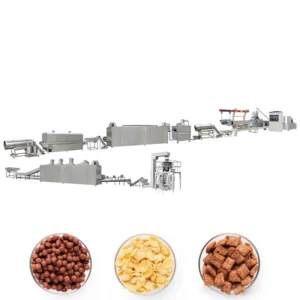
MT70 / MT85 / MT75 Corn Flakes Production Line, Twin-Screw Extrusion, PLC & MCC Control — complete turnkey layout from batching through extrusion, flaking, drying, hot air roasting, coating, and packing. Configured as a throughput-matched project where every station is sized to the buyer’s grain formulation and target flake density, eliminating bottlenecks across the line. Supported by in-house trial runs on customer-supplied raw material before shipment to confirm output and product specification.
- Screw configuration and die design specified to raw material and target flake type
- Hydraulic double-roller flaking with infrared sensor temperature control for uniform thickness
- Hot air roasting oven with dual circulating fans and cyclone dust removal
- Voltage, frequency, and control language confirmed to site utility before production
- Full documentation package: layout, electrical schematic, trial run report, wear parts list
Description
Integrated Throughput Matching — Every station from batching to packing is calculated against your actual grain blend, so the flaker never waits on the extruder and the roaster never starves.
Technical Specifications
| Parameter | Value |
|---|---|
| Model | MT70 / MT85 / MT75 |
| Product Type | Corn Flakes Production Line |
| Screw Type | Twin-screw |
| Installed Power | MT70 160 kW; MT85 190 kW; MT75 210 kW |
| Power Consumption | MT70 120 kW; MT85 140 kW; MT75 150 kW |
| Output Capacity | MT70 150–200 kg/h (basis to be confirmed); MT85 300–400 kg/h (basis to be confirmed); MT75 300–500 kg/h (basis to be confirmed) |
| Overall Dimensions (L×W×H) | MT70 41 × 1.5 × 2.2 m; MT85 43 × 1.5 × 3.2 m; MT75 45 × 1.5 × 3.5 m |
| Basic Raw Materials | Corn, rice, wheat, oat, barley powder |
| Control System | PLC on flaking machinery; MCC available on line |
| Flaking System | Hydraulic double-roller, double motors, infrared sensor temperature control |
| Dryer Heating Source | Gas or electric |
| Roasting Oven | Hot air, vibrating pan, dual circulating fans, cyclone dust removal |
| Coating System | Double tumble sugar melting, elevator, coating drum, spraying nozzle |
| Extruder Features | Automatic lubrication, cooling function, wear-resistant screw technology |
| Final Products | Natural corn flakes, sugar-coated corn flakes, shaped cereals (ball, tube, ring, star, wheel, flower, heart) |
| Assembly State | Complete turnkey line |
| Voltage & Frequency | Customized to local supply (confirm before order) |
| Certification | CE (since 2014), ISO certified |
Application Suitability
| Application | Material or Output |
|---|---|
| Natural corn flakes for breakfast cereal retail | Corn grits or corn flour base, minimal sugar addition |
| Sugar-coated flakes for mass-market distribution | Corn or multi-grain formulation with sugar glaze coating |
| Multi-grain extruded breakfast cereals | Blends of corn, rice, wheat, oat, and barley powder |
| Shaped cereal variants on same platform | Rings, balls, tubes, stars, fruit loops via die change |
| Fortified breakfast cereal formats | Grain base with added vitamin and mineral premix |
What "300 kg/h" Actually Means on Your Grain Blend
Capacity is only real when measured against the exact formulation you intend to run.
I have watched buyers sign off on a corn flakes line rated for a specific hourly output, only to find the extruder struggles and the flaker starves once their actual recipe — perhaps a corn-oat-rice blend with higher fibre content — hits the barrel. The reason is straightforward: different grains gelatinise at different temperatures, absorb moisture differently, and demand different screw shear profiles. A line configured for pure corn grits will behave very differently when oat bran enters the mix. When sourcing a corn flakes production line turnkey, the capacity figure on the quotation must be tied to your specific raw material and target moisture content, or it is just a number on paper [NEED_CITE: twin-screw extrusion behaviour across varying grain formulations].
Throughput Matching Across Every Station
A corn flakes production line turnkey succeeds or fails on whether each station can keep pace with the one before it. The extruder pushes cooked dough to the flaking rolls, which sheet it to a precise thickness before it enters the dryer. If the hydraulic flaking machinery cannot process the extruder’s output continuously, cooked dough backs up, cools, and loses the plasticity needed for clean flaking. This line is laid out so that the flaker’s roller speed, the dryer’s belt length, and the roasting oven’s residence time are all calculated from the same throughput baseline. The PLC on the flaking station and the MCC across the wider line allow operators to monitor and adjust each zone without guesswork.
Why the Flaking and Roasting Stage Decides Your Product
The flaking machinery uses a hydraulic double-roller system driven by separate motors, with infrared sensor temperature control to hold consistent roller surface heat. This matters because uneven roller temperature produces flakes that curl unpredictably or crack during the hot air roasting stage. The roasting oven itself employs a vibrating pan with high-temperature spraying tubes and two separate circulating fans, which ensures every flake receives uniform hot air exposure. Cyclone dust removal captures fine particulate before it can scorch or redeposit. Getting this stage right is what separates a crisp, evenly blistered flake from one that is brittle on the edges and chewy in the centre [NEED_CITE: hot air roasting parameters for cereal flake crispness].
Reading the Spec Sheet for What It Actually Controls
The twin-screw extruder at the heart of this line handles corn, rice, wheat, oat, and barley powder, but each grain demands a different screw configuration and barrel temperature profile. Corn grits at higher moisture gelatinise readily and expand well; a blend heavy in oat or barley requires more shear and a longer residence time in the barrel. The automatic lubrication and cooling functions on the extruder sustain stable barrel temperatures across extended production runs, preventing the gradual heat buildup that alters expansion and density over a shift. The die design determines whether you get a traditional flake-ready pellet or a shaped cereal piece such as a ring or star, and the screw profile must be matched to that die to avoid blockages or uneven cutting. Installed power ranges from 160 kW on the MT70 to 210 kW on the MT75, reflecting the different barrel volumes and throughput targets — but the meaningful figure is power consumption under load, which sits lower at 120 kW to 150 kW depending on model.
The Cost of Skipping the Trial Run
Buyers who approve a line layout without running their actual formulation through a test extruder often discover problems only after installation. The flake may sheet correctly on pure corn but tear when oat is present. Sugar coating may pool rather than distribute evenly if the flake surface porosity differs from what the coating drum was calibrated for. Voltage mismatches can delay commissioning by weeks if the control panels and motor ratings were specified for a different electrical standard [NEED_CITE: voltage and frequency confirmation before machinery export]. These are not defects — they are configuration oversights that a pre-shipment trial run on the buyer’s own raw material would have exposed.
Why Procurement Consolidation Matters Here
Sourcing every station from one supplier means throughput calculations are performed across the entire line rather than per machine. Screw configuration and die design are specified to the buyer’s grain blend and target flake density, not copied from a generic template. An in-house testing workshop allows trial runs on the buyer’s raw material before the line ships, producing a report that confirms output and product quality. Electrical schematics are prepared with the buyer’s site voltage and frequency confirmed, so motor ratings, heating elements, and PLC voltage all match the destination. The documentation package includes screw and die configuration records, wear parts lists, and operation manuals specific to the line as built — not generic manuals covering every model.
Documentation & Verification
- Line layout and capacity calculation based on your grain formulation and factory footprint
- Screw and die configuration record matched to your target flake shape and density
- Trial run report on your raw material confirming throughput before shipment
- Electrical schematic with voltage and frequency confirmed to your site utility
- Operation and maintenance manual covering each station on your specific line
- Wear parts list with part numbers for screws, dies, and roller surfaces
Installation, Commissioning & Support
- Foundation and floor space planning based on the line dimensions (up to 45 m length for MT75)
- Power supply verification for installed loads up to 210 kW before equipment arrival
- Phased mechanical assembly from extruder through flaking, drying, roasting, and packing stations
- PLC and MCC commissioning with control language and HMI set to operator preference
- On-site trial production on your raw material to replicate pre-shipment test results
- Operator training covering screw changes, die swaps, and roller gap adjustment on the flaking machinery
What to Prepare Before Requesting a Quotation
To configure a corn flakes production line turnkey that actually performs at the quoted capacity on your material, we need your specific grain formulation and any additives, your target daily output and shift pattern, and your factory floor dimensions with ceiling height. Confirm your local voltage and frequency, preferred HMI language, and whether you require gas or electric heating for the dryer. If you are running a multi-grain blend, sending a sample of your raw material for an in-house trial run will let us lock in screw configuration and confirm flake density before production begins.
Frequently Asked Questions
Q: How is line capacity verified on my specific grain formulation before delivery?
A: We run your actual raw material through the extruder and downstream stations in our in-house testing workshop before shipment. The trial run report documents throughput, flake thickness, density, and surface quality on your exact blend, so capacity is confirmed against your recipe rather than a generic corn-only benchmark.
Q: How do you match throughput across the extruder, flaker, dryer, and roaster?
A: Every station is calculated from a single throughput baseline tied to your formulation. The flaker roller speed, dryer belt length, and roaster residence time are all sized so no station bottlenecks another. The PLC on the flaking machinery and MCC across the line allow real-time monitoring of each zone.
Q: What voltage and control language options are confirmed before production?
A: We confirm your site voltage, frequency, and preferred HMI language before the electrical schematic is finalised. Motor ratings, heating elements, and PLC power supplies are all specified to match your local utility, avoiding commissioning delays caused by mismatched electrical standards.
Q: What does the installation and commissioning schedule look like for a complete line?
A: Installation proceeds in phases — mechanical assembly, electrical connection, individual station testing, then full-line trial production on your raw material. Our engineers remain on site through commissioning and operator training, covering screw changes, roller adjustment, and daily maintenance routines specific to your configuration.
Q: How are screw and die configurations chosen for natural versus sugar-coated flakes?
A: Natural flakes require a specific pellet density and moisture level so they sheet cleanly on the flaker and blister evenly in the roaster. Sugar-coated variants need a slightly different surface porosity for glaze adhesion. Screw profile, die geometry, and barrel temperature are adjusted accordingly, and both setups can be tested during the pre-shipment trial run.
Related products
-
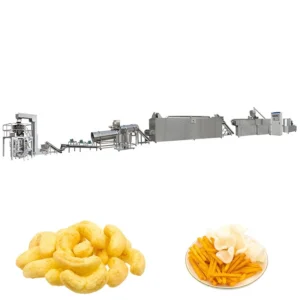
Corn Flake Making Machine Corn Puffs Making Machine Snack Food Production Line
Price range: ¥500.00 through ¥1,200.00 Select options This product has multiple variants. The options may be chosen on the product page -
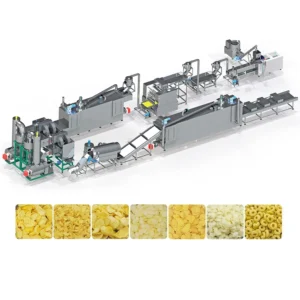
Automatic Commercial Breakfast Wheat Circle Corn Flake Production Line
¥65,000.00 Add to cart -
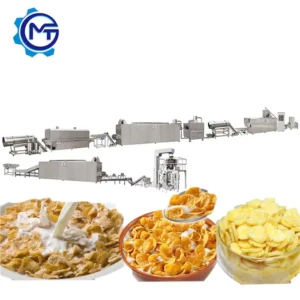
Automatic 500kg/h Corn Flakes Making Machine New Condition High Productivity Sweet Breakfast Cereal Processing Line From Factory
¥8,500.00 Select options This product has multiple variants. The options may be chosen on the product page -
Kelloggs Corn Flakes Breakfast Cereal Normal Making Machine Breakfast Cereal Extruder Production Line
¥30,000.00 Select options This product has multiple variants. The options may be chosen on the product page