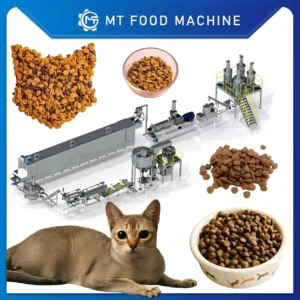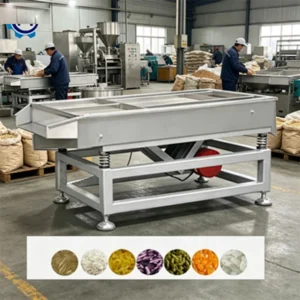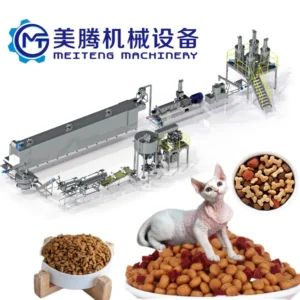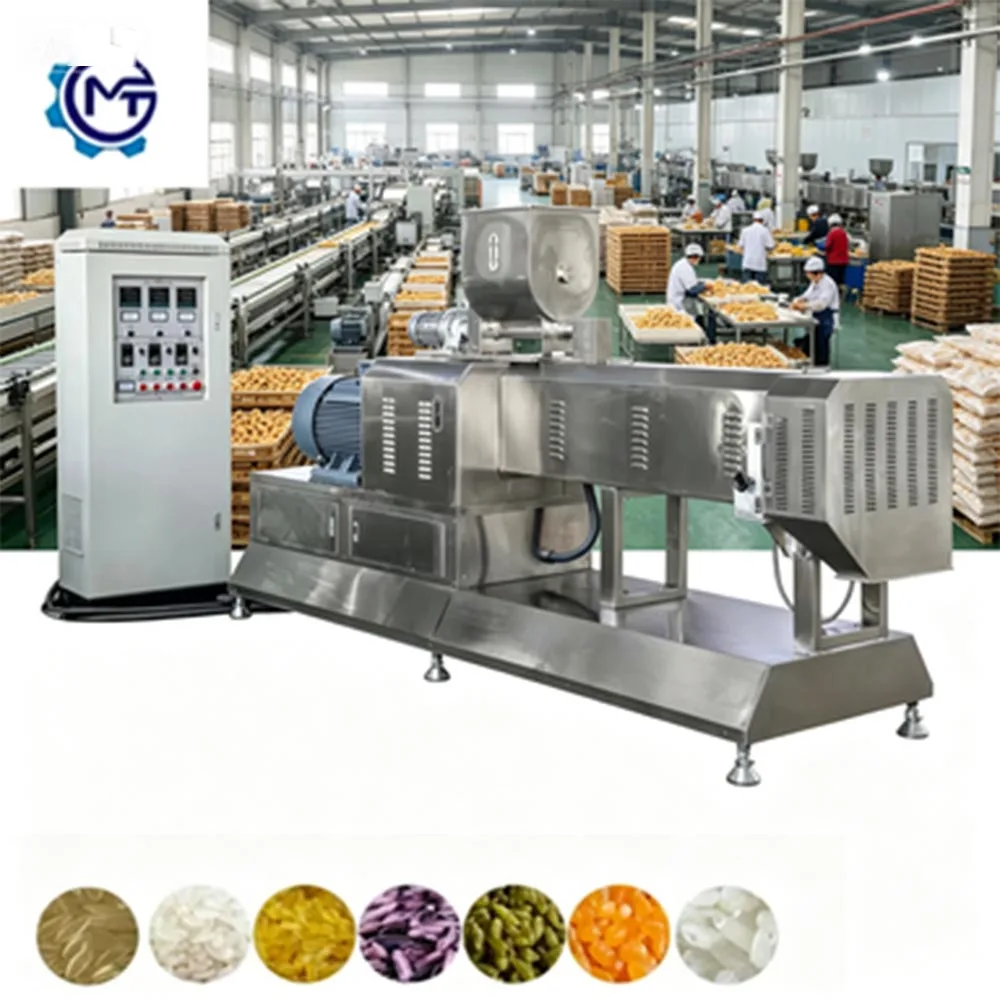
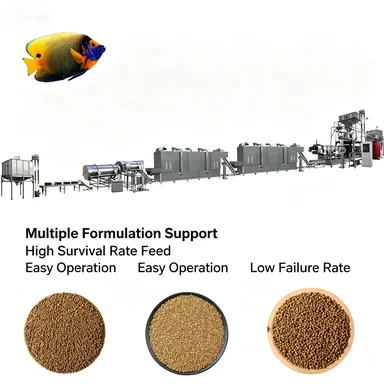


Fish Feed Extruder Production Line, Twin Screw, PLC Control, 304 Stainless Steel — configured for floating and sinking aquatic pellets with screw and die design matched to your raw material formulation.
- Complete turnkey layout from batching through extrusion, drying, seasoning, screening to packing
- Throughput matched across every station so no single unit bottlenecks the line
- In-house testing workshop performs trial runs on your actual raw material before shipment
One supplier delivers the full line with matched throughput, pre-shipment trial runs on your formulation, and on-site commissioning included.
Description
Throughput Matched Across Every Station — This twin-screw aquatic feed line is engineered as a single coordinated system, so the mixer, extruder, dryer, and coater all hold the same output rate on your actual formulation rather than being assembled from mismatched vendor catalogs.
Technical Specifications
| Parameter | Value |
|---|---|
| Product Type | Fish Feed Extruder Production Line |
| Screw Configuration | Twin-screw, geometry matched to raw material |
| Control Architecture | Intelligent PLC automatic control system |
| Contact Material | Food grade 304 stainless steel |
| Pellet Buoyancy | Adjustable for floating and sinking formats |
| Surface Finish | Smooth, uniform density pellets |
| Production Mode | Full continuous automatic operation |
| Line Configuration | Mixer, extruder, dryer, seasoning coater, vibrating sieve, conveyor, packing interface |
| Output Capacity | Medium to large scale industrial production (basis not stated in source — confirm raw material formulation, pellet size, and moisture content) |
Application Suitability
| Application | Material or Output |
|---|---|
| Koi and goldfish floating pellets | Fish meal, soybean meal, corn powder, compound additives |
| Tropical fish slow-sinking granules | High-protein blends with starch binders and micronutrient premix |
| Freshwater aquaculture sinking feed | Soybean meal and grain-based formulations for catfish and tilapia |
| Hatchery and juvenile starter crumbles | Fine-grind raw material mixes requiring precise die and cutter sizing |
What "Nominal Line Capacity" Leaves Out on a Fish Feed Extruder Production Line Turnkey
The extruder barrel might push 500 kg/h, but if the dryer only handles 350 kg/h, your real output is 350 kg/h — and you paid for 500.
I have walked into plants where the fish feed extruder production line turnkey was quoted at a headline number, yet the dryer was undersized and the coating drum ran at half its rated volume. The bottleneck simply shifted downstream. [NEED_CITE: throughput balancing principles in continuous food and feed processing lines] When you source the mixer, extruder, dryer, and seasoning station from separate suppliers, no single party owns the gap between them. The line looks complete on paper but behaves like a relay race where each runner drops the baton.
How Screw Geometry Dictates Pellet Buoyancy
Floating and sinking pellets demand different shear profiles inside the barrel. For floating feed, the screw elements must generate enough mechanical energy to gelatinise the starch fraction fully, trapping steam inside the pellet as it exits the die. Sinking pellets require lower shear and a shorter residence time so the matrix stays dense. On this fish feed extruder production line turnkey, the screw configuration is selected after reviewing your specific raw material blend — not copied from a generic build meant to cover every species at once.
Die Aperture, Cutter Speed, and Pellet Dimensional Control
The die plate defines the cross-section of every pellet, but the rotating cutter determines its length. If the cutter speed drifts or the die holes wear unevenly, you end up with a mixture of oversize and undersize pellets that the vibrating sieve must reject. [NEED_CITE: die wear rates in abrasive aquatic feed formulations] Because this line runs food grade 304 stainless steel contact parts, the die and cutter assembly resist the corrosive salts present in fish meal blends longer than carbon steel alternatives, keeping pellet dimensions within tolerance for a longer service interval.
What the PLC Actually Manages Beyond the Extruder
The intelligent PLC automatic control system does more than start and stop motors. It coordinates feeder rates into the mixer, barrel temperature zones across the extruder, dryer belt speed and air temperature, and the seasoning drum rotation — all as a single continuous recipe. When an operator adjusts moisture at the mixer, the downstream dryer parameters update to compensate, which is what keeps batch-to-batch density consistent. Without that coordination, each station operator makes independent guesses, and pellet buoyancy drifts through the shift.
Reading the Specs That Matter for Aquatic Feed
Twin-screw extrusion is chosen over single-screw here because aquatic feed formulations often contain high fat and fish meal fractions that need thorough mixing and self-wiping action inside the barrel to prevent residue buildup. The food grade 304 stainless steel contact parts are non-negotiable for any feed destined for ornamental species where heavy metal contamination is regulated. Full continuous automatic production means the line is not designed for batch stops between product changeovers — it is engineered to run a single formulation for extended campaigns, which is how most commercial aquaculture feed plants actually operate. [NEED_CITE: food contact material regulations for aquaculture feed in the EU and North America]
The Hidden Cost of Unmatched Line Stations
When the extruder is specified without matching dryer capacity, the wet pellets pile up on the belt, mat together, and emerge with internal moisture pockets that cause mould in storage. When the coating drum is undersized, fat and palatant coverage is uneven, leading to feed rejection at the farm level. [NEED_CITE: post-extrusion moisture and fat coating defects in aquaculture pellets] These failures are not visible during a factory acceptance test run on generic material — they appear weeks after installation when the buyer runs their actual formulation at full speed. That is exactly the scenario this coordinated line configuration is built to prevent.
Why Buyers Specify This Line as a Single Package
The mixer through packing configuration is supplied under one accountability, meaning throughput calculations are cross-checked at every station before the layout is finalised. Screw and die configurations are recorded against your specific raw material formulation rather than left as a default build. An in-house testing workshop allows trial runs on your actual ingredients before shipment, so pellet buoyancy and surface quality are confirmed in advance, not discovered during commissioning. Electrical schematics and voltage are confirmed to the target market standard before production begins. Operator training covers the full line as one system, not separate sessions for each vendor’s machine.
Documentation & Verification
- Line layout and capacity calculation showing matched throughput at each station
- Screw and die configuration record tied to your raw material formulation
- Trial run report on customer raw material completed before shipment
- Electrical schematic with voltage and frequency confirmed for destination market
- CE declaration of conformity and ISO certificate for customs clearance
Installation, Commissioning & Support
- Foundation plan aligned to the full line footprint including dryer and conveyor runs
- Dedicated electrical circuit sized for the PLC control system and extruder main drive
- Sectional assembly sequence for extruder barrel, dryer modules, and coating drum
- First-run parameter setting on your raw material with buoyancy and density verification
- Operator training covering recipe management and screen changes on the vibrating sieve
- Wear parts list for screws, dies, and cutter blades with reorder references
Before You Send an Inquiry
To configure the fish feed extruder production line turnkey accurately, the most useful details are your raw material formulation (including fat and starch percentages), target pellet diameter and whether you need floating, sinking, or both formats. Your facility voltage, frequency, and preferred control language should also be confirmed early so the electrical cabinet and PLC interface are built correctly from the start.
Frequently Asked Questions
Q: How is line throughput matched across the mixer, extruder, dryer, and coating stations?
A: Each station is sized based on the same target output calculated from your raw material density, moisture content, and pellet dimensions. The dryer belt area and airflow, coating drum volume, and mixer batch cycle are all cross-referenced against the extruder screw capacity so no single station creates a bottleneck during continuous operation.
Q: Can the screw and die be configured for both floating and sinking feed on my formulation?
A: Yes, the twin-screw configuration and die geometry are selected after reviewing your specific raw material blend and target buoyancy. A trial run on your actual ingredients in the testing workshop confirms whether the pellet floats or sinks as required before the line is shipped.
Q: What voltage, frequency, and control language are confirmed before the line ships?
A: Your facility electrical standard is confirmed during the specification phase. The PLC interface, motor ratings, and heater elements are all built to match your local supply. Control screen language is set to your operator preference before the factory test.
Q: Is a trial run on my raw material performed before shipment?
A: Yes, your raw material is run through the extruder and supporting stations in the in-house testing workshop. The trial run report documents pellet density, buoyancy, surface quality, and moisture content at the dryer exit, giving you verified product data before the line leaves the factory.
Q: What wear parts are included, and how are replacements sourced after installation?
A: The shipment includes a defined set of spare screw elements, die plates, and cutter blades matched to your configuration. A wear parts list with part numbers is provided so reorder specifications are unambiguous when the first replacement cycle arrives at your plant.
Related products
-
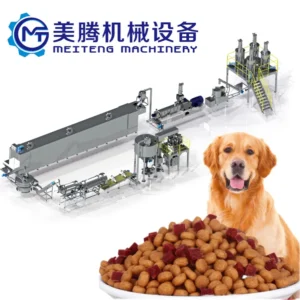
High Capacity Pet Food Extrusion Production Line Suitable for Dog. Cat. Bird. Fish and Cattle Feed
¥9,500.00 Select options This product has multiple variants. The options may be chosen on the product page -
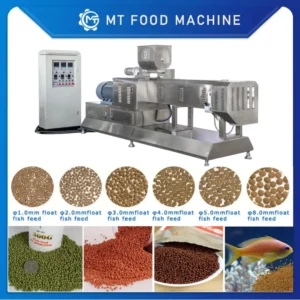
4-5t/h High Capacity Multi-Species Fish Feed Processing Line to Produce Fish Food
¥65,000.00 Select options This product has multiple variants. The options may be chosen on the product page -
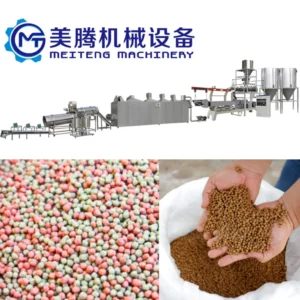
2-3t/h High Capacity Multi-Species Fish Feed Processing Line to Produce Fish Food
¥55,000.00 Select options This product has multiple variants. The options may be chosen on the product page -
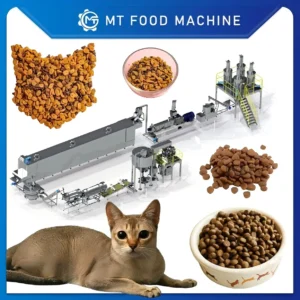
100-200kg/h Capacity PLC Controlled Multi-Species Cat Food Processing Line
¥34,000.00 Select options This product has multiple variants. The options may be chosen on the product page