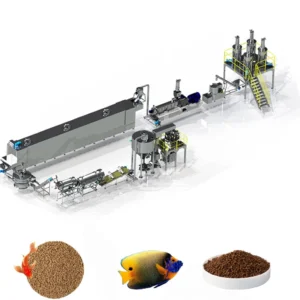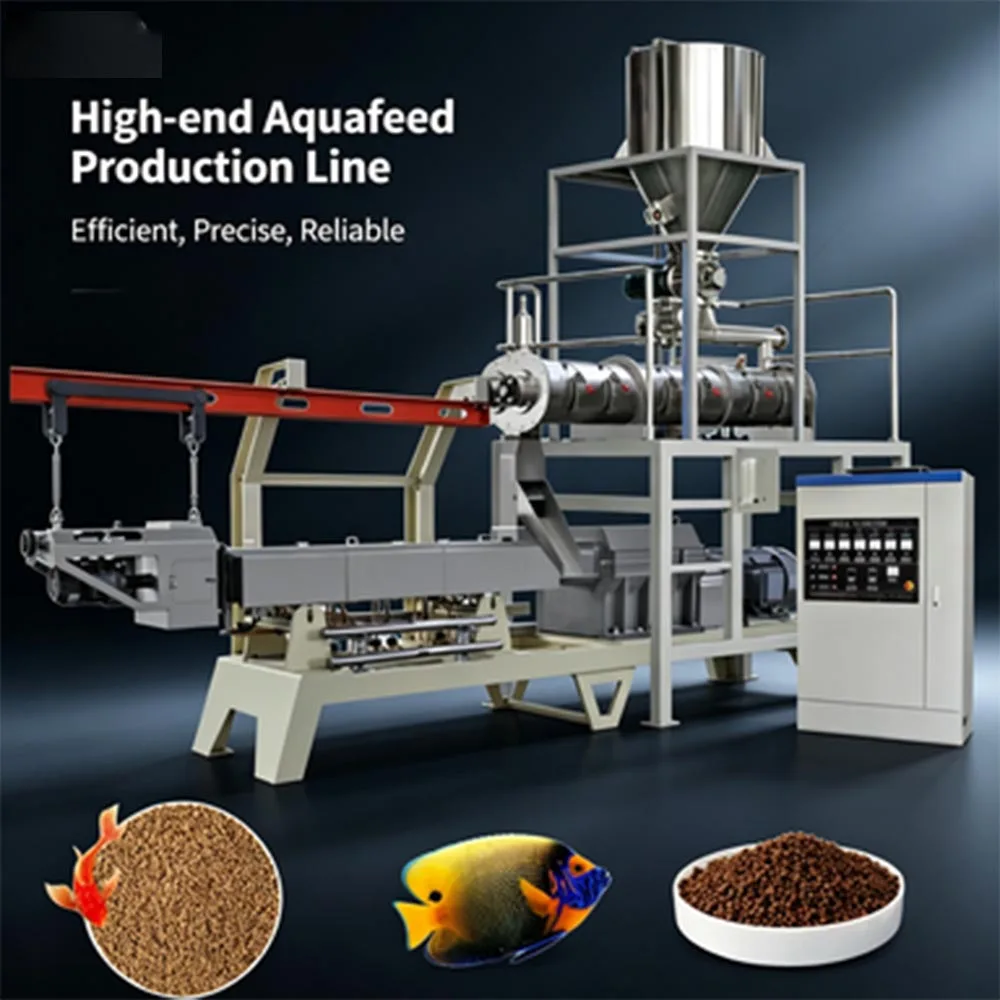


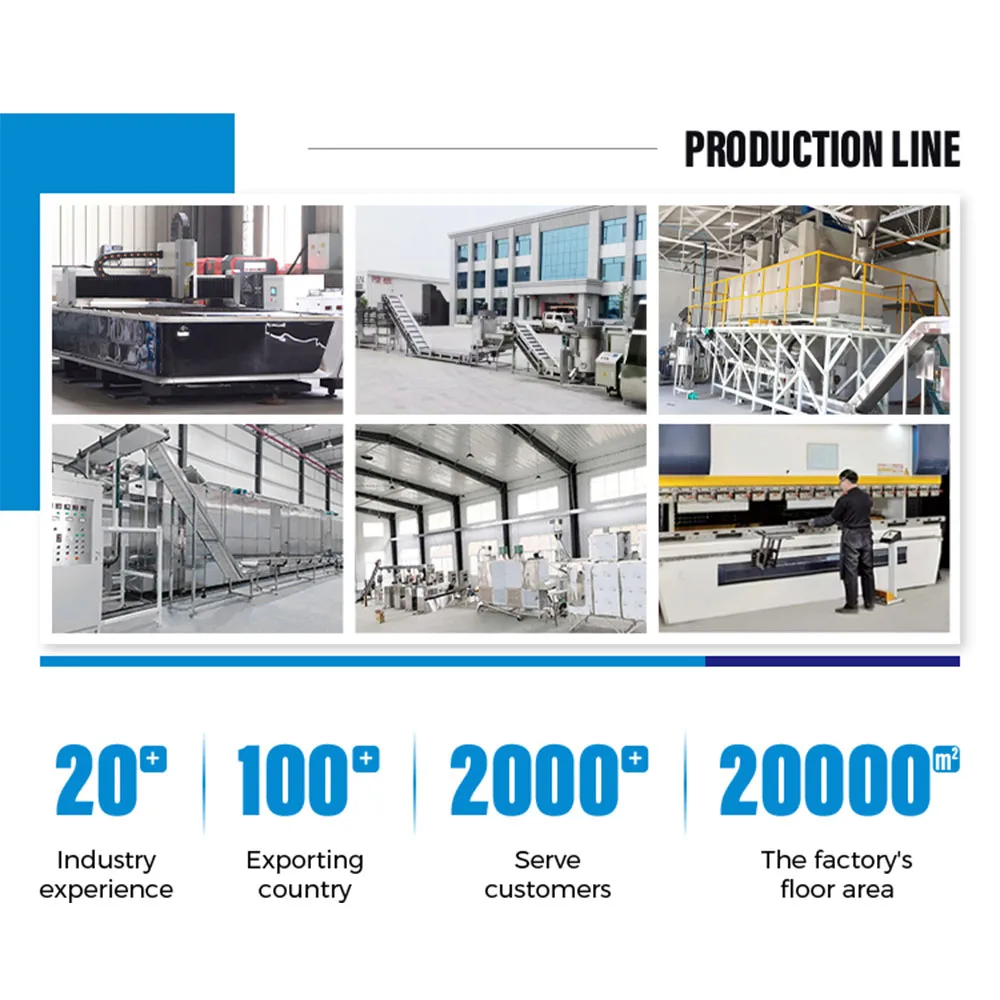
Floating Aquatic Feed Extrusion Line, Twin-Screw, PLC Control, Food-Grade 304 SS — engineered from batching through extrusion, drying, seasoning, screening, and packing as one integrated project.
Screw configuration and die design are specified to your raw material formulation and target pellet density, with throughput balanced across every station to eliminate cross-vendor bottlenecks.
- In-house trial runs validate capacity on your actual ingredients before shipment
- Floating and sinking pellet formats produced on the same line via screw and die changeover
- Complete turnkey scope: layout, utility planning, phased installation, and commissioning
Description
Integrated Line Engineering — Throughput at every station from raw material mixing to packing is calculated against your specific aquatic feed formulation before a single machine is fabricated.
Technical Specifications
| Parameter | Value |
|---|---|
| Product Type | Floating Aquatic Feed Extrusion Line |
| Extruder Type | Twin-screw |
| Control System | PLC automatic control |
| Contact Material | Food-grade 304 stainless steel |
| Pellet Adjustability | Size, hardness, buoyancy (floating and sinking) |
| Line Stations | Raw material mixer, extruder, dryer, seasoning/coating machine, vibrating sieve, conveyor equipment |
| Screw Configuration | Customized to raw material and target pellet |
| Die Configuration | Matched to target pellet size and density |
| Trial Run | In-house testing workshop on customer raw material before shipment |
| Certification | CE (since 2014), ISO |
| Output Capacity | Large-scale continuous production (basis to be confirmed) |
Application Suitability
| Application | Material or Output |
|---|---|
| Commercial catfish and tilapia feed production | Fish meal, soybean meal, corn powder, compound additives |
| Shrimp pellet manufacturing | Compound aquatic feed formulations requiring sinking pellets |
| Ornamental fish feed (koi, goldfish, tropical fish) | Premium formulations requiring color stability and buoyancy control |
| Freshwater aquaculture operations | Floating and sinking pellet formats across species requirements |
Why "Rated Capacity" Means Nothing Without Your Formulation
Every floating aquatic feed extrusion production line turnkey we deliver is validated on your actual raw material blend before it leaves the factory.
I have stood on workshop floors in Southeast Asia watching an extruder choke on a local fish meal substitute that behaved nothing like the test starch used at the factory. The motor drew excessive current, the die blocked within minutes, and the downstream dryer sat empty while operators scrambled. Capacity figures quoted on a standard corn-based recipe tell you very little about what will happen when your specific soybean meal ratio and moisture content enter the barrel [NEED_CITE: raw material variability in aquatic feed extrusion]. That is why we run your ingredients in our testing workshop first.
Screw Geometry Dictates Pellet Buoyancy
The floating aquatic feed extrusion production line turnkey achieves buoyancy control through screw configuration and barrel temperature profiling rather than post-extrusion additives. The twin-screw setup generates controlled shear and residence time, allowing starch gelatinisation to trap air cells within the pellet matrix. Changing from a floating koi pellet to a sinking shrimp pellet involves adjusting screw element sequencing and die land length, not replacing the entire extruder assembly. This flexibility matters when a single facility must supply multiple aquaculture species.
Dryer and Coating Capacity Must Track Extruder Output
An extruder running at full throughput is worthless if the dryer cannot reduce pellet moisture to a stable storage level in the same time window. We calculate the thermal load on the dryer based on your specific extrusion moisture addition and target final moisture, then size the drying chamber and airflow accordingly. The same logic applies downstream to the seasoning drum: coating residence time and liquid fat absorption rate must align with the pellet feed rate [NEED_CITE: moisture management in aquatic feed drying stages]. A mismatch at any station turns the fastest machine into a bottleneck for the entire line.
Reading the Specs That Actually Matter
The twin-screw design allows processing of high-fat and high-protein formulations that would stall a single-screw extruder, because the intermeshing screw flights provide positive conveying independent of material friction. Food-grade 304 stainless steel on all contact surfaces prevents corrosion from the saline and acidic components common in fish meal blends. The PLC automatic control system stores recipes for different pellet sizes, so an operator switching from 2mm sinking fry feed to 6mm floating grower feed loads a saved profile covering screw speed, barrel zone temperatures, and feeder rates. Die configuration is matched to your target pellet, meaning the land length and orifice diameter are selected for the density you need rather than pulled from a generic catalogue.
The Cost of Ignoring Line-Level Throughput Matching
When stations are sourced from different vendors and bolted together on-site, nobody owns the gap between extruder discharge rate and conveyor transfer speed. Pellets accumulate, bridges form in the dryer infeed, and the seasoning drum receives surges rather than a steady curtain. The result is uneven coating, inconsistent moisture, and product rejected at the packing stage [NEED_CITE: throughput mismatch consequences in multi-vendor feed lines]. These problems do not appear during a brief factory acceptance test; they surface during the third shift of continuous production.
Why Engineers Specify This Line as One Project
Throughput at every station — mixer, extruder, dryer, seasoning drum, vibrating sieve, conveyor — is calculated as a single system so no machine waits on another. Screw configuration and die design are specified against your raw material sample, not copied from a reference build for a different formulation. The in-house testing workshop runs your ingredients before shipment, producing a trial report that confirms pellet density, expansion ratio, and actual output. Electrical schematics confirm voltage, frequency, and PLC language before fabrication begins, eliminating commissioning delays caused by wrong motor ratings. Pre-sales consultation extends through on-site installation, operator training, and wear parts planning so the first screw and die replacement is already on your shelf when it is needed.
Documentation & Verification
- Line layout and capacity calculation showing matched throughput from mixer to packing station
- Trial run report on your aquatic feed raw material conducted in our testing workshop
- Screw and die configuration record specific to your pellet buoyancy and size target
- Electrical schematic with confirmed voltage, frequency, and PLC interface language
- CE declaration of conformity and ISO certificate for customs and regulatory clearance
- Wear parts list with replacement intervals for screws, dies, and dryer screen panels
Installation, Commissioning & Support
- Foundation plan provided for extruder and dryer footprint with load distribution points
- Dedicated electrical circuit specification matching PLC and motor power draw of your configuration
- Modular line station delivery allowing phased assembly to fit existing workshop clearances
- First-run parameter logging on your raw material with PLC recipe saved for repeat production
- Operator training covering screw changeover, die cleaning, and dryer temperature adjustment
- Initial wear parts kit including spare screw elements and dies sized for your pellet specification
What We Need to Engineer Your Line
Send us your target aquatic feed formulation including primary protein source, starch ratio, and fat percentage. Specify which pellet formats you intend to produce — floating, sinking, or both — along with the diameter range. Confirm your local voltage and frequency, preferred PLC language, and available workshop floor space so we can draft a layout that fits your facility without compromising maintenance access around the extruder barrel and dryer.
Frequently Asked Questions
Q: How is line capacity verified against my specific aquatic feed formulation?
A: We conduct a trial run using your actual raw material in our testing workshop before shipment. The extruder runs your formulation through the specified screw and die configuration, and we measure actual output, pellet expansion, and density. You receive a trial report documenting these results, so capacity is based on your ingredients, not a generic starch benchmark.
Q: How do you ensure the dryer and coating stations match the extruder output?
A: Every station is calculated as part of one integrated system. We determine the extruder discharge moisture and mass flow rate for your formulation, then size the dryer thermal capacity and seasoning drum residence time to match. This prevents pellet accumulation between stations and maintains consistent product quality through the full line.
Q: What does the turnkey project scope include for a complete aquatic feed plant?
A: The scope covers line layout, throughput matching across all stations, utility planning for electrical and thermal requirements, and a phased installation schedule. Commissioning includes first-run trials on your raw material with parameter logging, operator training on changeover procedures, and a documented maintenance plan with wear parts supply.
Q: Can the line produce both floating and sinking pellets on the same equipment?
A: Yes. Buoyancy is controlled through screw configuration, barrel temperature profile, and die design rather than fixed hardware. Changing from floating to sinking pellets involves adjusting the screw element sequence and swapping the die. The PLC stores separate recipes for each pellet type, so changeover is repeatable without trial and error.
Q: What voltage, frequency, and control language options are confirmed before shipment?
A: We confirm your local power supply specifications and PLC interface language before fabrication begins. The electrical schematic is reviewed with you to verify motor ratings, heating element voltage, and control panel layout. This prevents commissioning delays caused by mismatched electrical standards at the installation site.
Related products
-
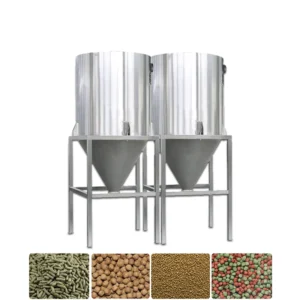
In Stock Pet Feed Production Line / Dog Cat Food Extrusion Machine
¥9,500.00 Select options This product has multiple variants. The options may be chosen on the product page -
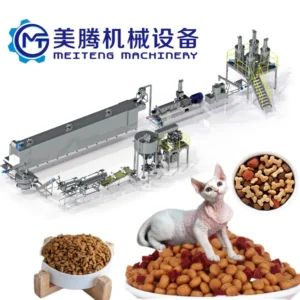
MT70 100-200kg/h Dog & Cat Pet Food Processing Line with 380V 50Hz Three Phase Power
¥35,000.00 Select options This product has multiple variants. The options may be chosen on the product page -
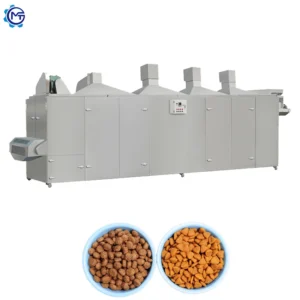
Premium Pet Food Processing Equipment Dog Cat Feed Making Machine
¥9,500.00 Select options This product has multiple variants. The options may be chosen on the product page -
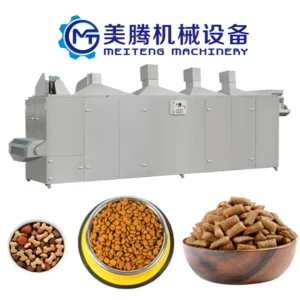
MT85 500kg/h Multi-Purpose Pet Food Processing Line for Dogs Cats Birds Fish & More-380V 50Hz Three Phase 45KW
¥65,000.00 Select options This product has multiple variants. The options may be chosen on the product page