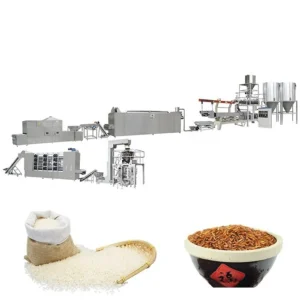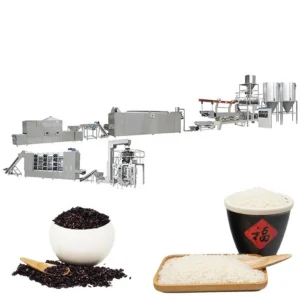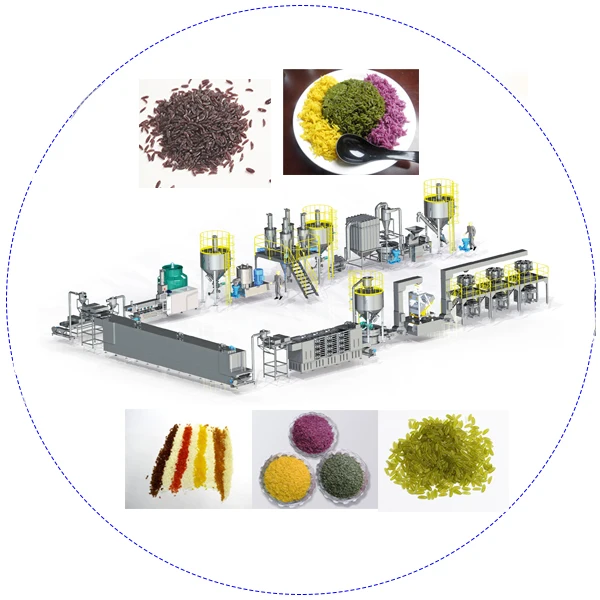
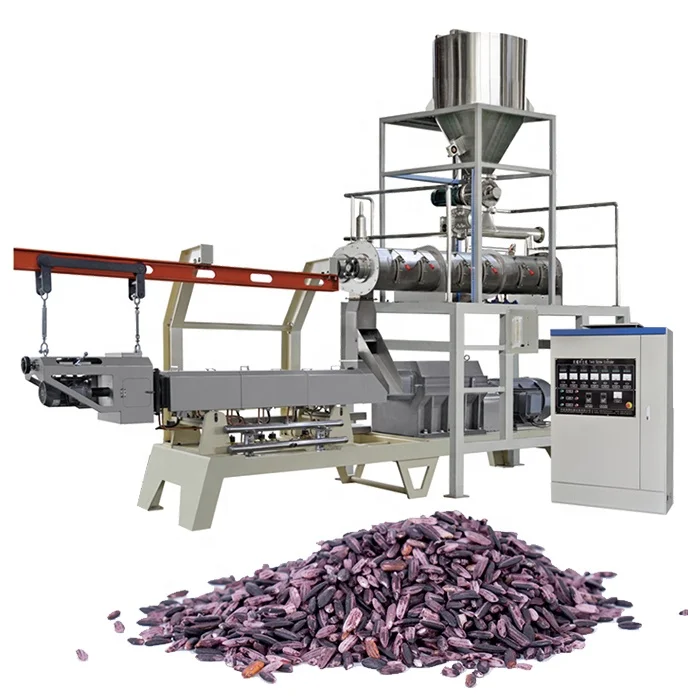
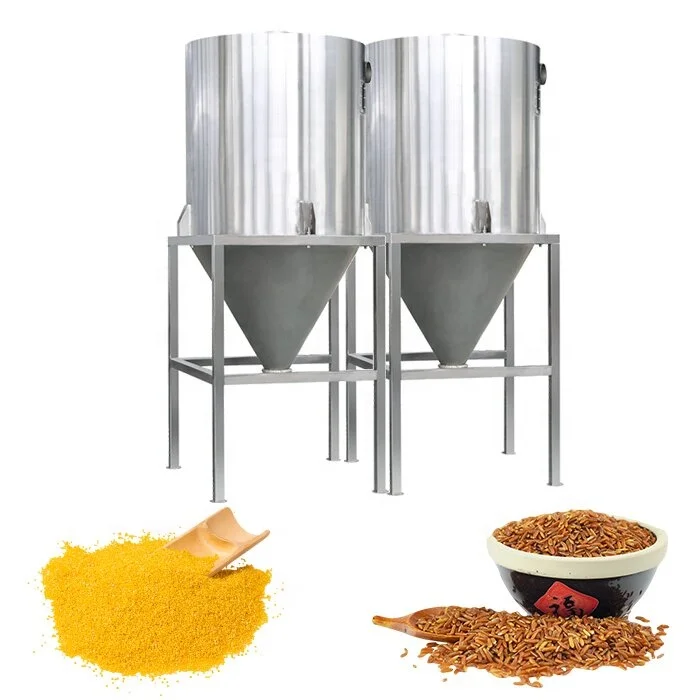


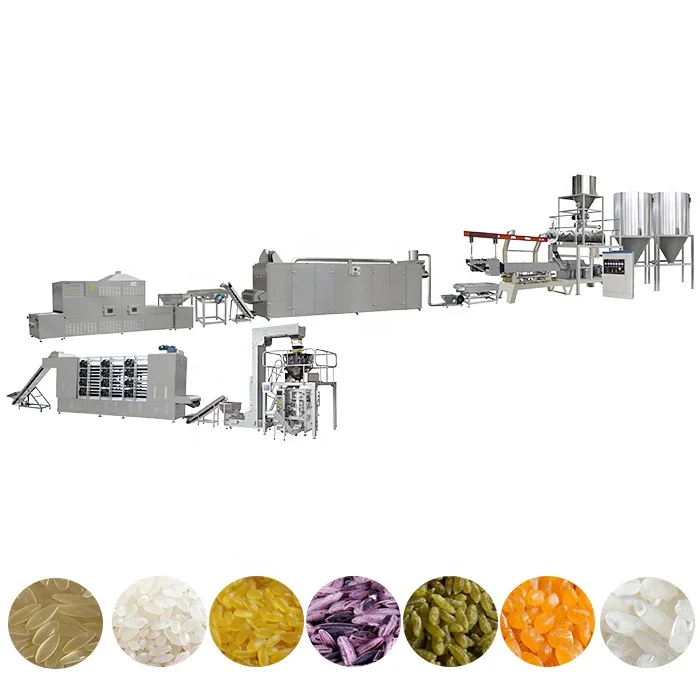
MT65, MT70, MT85, MT75, MT95 Fortified Rice Kernel Extrusion Production Line, Twin-Screw, 100-1000 kg/h Capacity Range — engineered for turnkey food extrusion projects requiring complete line integration from batching through packing.
- Screw configuration and die design specified to your raw material blend, ensuring target kernel density and texture match market expectations
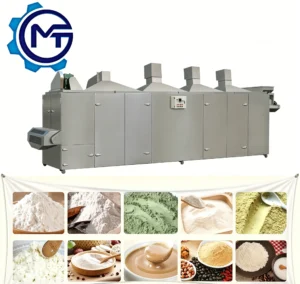
- Drying oven with frequency-controlled mesh belt speed delivers consistent moisture reduction across batches
- Full throughput matching across mixing, extruding, vibrating, drying, cooling, roasting and packing stations eliminates bottleneck risk
Pre-shipment trial runs on your actual raw material in our testing workshop verify line performance before installation.
Description
Line Throughput Integrity — every station from batching to packing is sized against your actual raw material formulation, preventing the dryer bottleneck that stalls extruder output.
Technical Specifications
| Parameter | Value |
|---|---|
| Product Type | Fortified Rice Kernel Extrusion Production Line |
| Model Options | MT65, MT70, MT85, MT75, MT95 |
| Screw Type | Twin-screw |
| Capacity Range | 80–1000 kg/h (basis not stated in source — confirm raw material formulation and moisture content) |
| Feeding System | Single or double screw feeding, selectable based on material |
| Control System | Frequency speed control, automated operation |
| Screw Material | Wear-resistant alloy (verify specification against manufacturer catalog) |
| Lubrication | Automatic lubricating and cooling system |
| Drying Oven Heating Source | Electric or gas |
| Drying Oven Belt Control | Frequency motor for mesh belt speed |
| Production Procedure | Mixing → Extruding → Vibrating → Low-temperature drying → Cooling → High-temperature roasting → Cooling → Packing |
| Basic Materials | Broken rice, rice, corn, millet, wheat, oats, buckwheat, bean, starch, vitamin and mineral additives |
| Standards | CE conformity |
Application Suitability
| Application | Material or Output |
|---|---|
| Fortified rice kernel manufacturing | Broken rice, rice bran and cereal flour blends with micro-nutrient premix |
| Artificial rice kernel production | Rice flour, corn, millet, wheat, oats, buckwheat and starch bases |
| Nutritional food processing for aid programmes | Grain-based formulations fortified with vitamins and minerals |
| Breakfast cereal and grain pellet expansion | Corn, wheat, oat and multi-grain raw material blends |
Why "Rated Capacity" Misses the Real Constraint on a Fortified Rice Kernel Production Line Turnkey
Actual throughput is dictated by your raw material blend, not by the extruder nameplate.
A line spec sheet may list an impressive hourly figure, but that number assumes a reference formulation and moisture level that rarely matches what arrives at your factory door. When the rice flour ratio shifts, or vitamin premix loading changes the dough rheology, the extruder can still push material — but the downstream dryer suddenly cannot remove moisture fast enough, and the entire line slows to match the weakest station [NEED_CITE: throughput matching principles in continuous food extrusion lines]. I watched a cereal line lose nearly a full shift because the dryer mesh belt speed was set for a different product density.
Screw Configuration Dictates Kernel Density and Shape
On a twin-screw extrusion line producing fortified rice kernels, the screw element arrangement controls shear intensity, residence time and starch gelatinisation. A high-shear profile breaks down fibre in brown rice blends, while a gentler profile preserves the structure needed for a firm, separate-grain texture after cooking. Die orifice diameter and land length then define the final kernel cross-section. Meiteng specifies screw and die geometry against the buyer’s exact raw material blend so that the extrudate density meets market expectations for parboiled or instant rice analogues.
Drying Profile Determines Whether the Line Holds Output
Low-temperature drying followed by cooling and high-temperature roasting is a staged moisture removal sequence designed for grain-based extrudates. The frequency-controlled mesh belt lets operators match dwell time to the moisture content leaving the extruder. If the belt runs too fast, kernels reach the roasting zone still holding internal moisture, causing surface cracking or case-hardening. Run it too slow and the line backs up. Getting the drying curve right on the buyer’s formulation during a pre-shipment trial run eliminates on-site guesswork [NEED_CITE: staged drying curves for extruded cereal products].
Reading the Spec Sheet for Production Impact
Twin-screw architecture gives the line the flexibility to handle both starchy cereal flours and high-fibre bran additions without surging. Five model tiers span installed power from 85 kW to 260 kW, allowing selection based on target daily output rather than forcing a single machine size to cover every scenario. The automatic lubricating and cooling system for the screw shaft reduces unplanned stops during continuous multi-shift runs. Electric or gas oven options let the buyer align the drying stage with local energy cost structures. Frequency speed control across feeding, extrusion and drying stations keeps throughput synchronised without manual intervention, which is essential when a recipe change shifts the moisture balance.
The Hidden Cost of Skipping Pre-Shipment Trials
When a fortified rice kernel extrusion line ships without a trial run on the buyer’s actual formulation, every parameter adjustment happens on your factory floor — using your raw materials, your utility connections and your production schedule. Screw speed, barrel temperature zones and dryer belt velocity all need to converge before the product meets specification. Commissioning delays push back first shipment of finished product, and the cost of wasted raw material during dial-in runs is rarely included in the original project budget [NEED_CITE: commissioning delays in turnkey food processing installations].
Why Procure This Line Here
Complete line integration from mixing through packing under one supplier eliminates the finger-pointing that arises when an extruder vendor blames the dryer vendor for throughput shortfalls. Screw configuration and die design are documented against your raw material sample, not copied from a generic build. Every line passes through an in-house testing workshop where the buyer’s formulation is extruded, dried and cooled before the equipment is crated. Voltage, frequency and control language are confirmed during the specification phase, so the electrical cabinet matches the destination site from day one. Wear parts lists and screw element spares ship with the line, avoiding the scramble when the first barrel section reaches end of life.
Documentation & Verification
- Line layout drawing confirming station-to-station throughput match for your target capacity
- Screw and die configuration record tied to your raw material formulation sample
- Factory trial run report on your grain blend conducted before crate packing
- Electrical schematic with confirmed voltage, frequency and control language
- CE declaration of conformity with machinery directive scope listed
- Wear parts catalogue with reorder codes for screws, dies and mesh belt segments
Installation, Commissioning & Support
- Foundation plan accounts for the extruder and dryer combined footprint, up to 36 × 3.5 m for the largest configuration
- Dedicated electrical circuit sized to installed power, from 85 kW for MT65 to 260 kW for MT95
- Equipment ships in modular sections for container loading and on-site reassembly
- Commissioning includes barrel temperature zone calibration and dryer belt speed mapping to your recipe
- Operator training covers screw element changeover and automatic lubrication system monitoring
- Spare screw elements and die plates included in first shipment for scheduled replacement cycles
What to Include in Your Inquiry
Share your raw material composition, including the ratio of broken rice or alternative grains and any vitamin-mineral premix loading. Specify the target kernel shape, size and cooked texture your market expects. Provide your facility’s voltage and frequency, available floor space and ceiling height, and whether gas or electric heating is preferred for the drying oven.
Frequently Asked Questions
Q: How is line capacity verified against my specific raw material formulation before shipment?
A: Your raw material sample is extruded in the in-house testing workshop before the line ships. Operators run the twin-screw extruder at target screw speed and barrel temperature, then pass the extrudate through the dryer at production belt speed. The resulting trial run report documents actual throughput, kernel density and moisture profile so you know the line holds output on your recipe.
Q: How do you ensure throughput is matched across every station — extruder, dryer, cooling and packing?
A: Each station is sized during the layout and capacity calculation phase based on your target output and formulation. The dryer mesh belt length, cooling conveyor capacity and packing weigh-scale speed are all calculated against the extruder’s verified output on your material, eliminating the bottleneck risk of assembling unmatched equipment.
Q: What does phased installation and commissioning look like for a complete turnkey project?
A: Equipment arrives in modular sections matched to container dimensions. Foundation and utility connections are prepared against the line layout drawing. Mechanical assembly starts with the extruder and progresses through the dryer, cooling conveyors and packing station. Commissioning runs each station individually before linking the full line for continuous production trials.
Q: How are screw configuration and die design selected for fortified rice kernel versus artificial rice applications?
A: Fortified kernels carrying vitamin-mineral premixes often require a screw profile that balances starch gelatinisation with gentle mixing to prevent nutrient degradation. Artificial rice from pure starch bases may use a higher-shear configuration. Die land length and orifice shape are chosen to produce the target kernel cross-section and cooking behaviour your market expects.
Q: What utility planning is required for the full line footprint?
A: The line needs a dedicated electrical supply matching the selected model’s installed power, gas piping if gas-heated drying is chosen, compressed air for pneumatic valves and packing, and water for the automatic lubrication and cooling circuit. A utility requirements sheet is issued during the specification phase so your facility team can prepare connections before equipment arrival.
Related products
-

Full Automatic Complete Baby Food Nutrition Powder Porridge Processing Production Line for Infant Nutrition Factory
¥9,500.00 Add to cart -
Fully Automatic 500kg/h Baby Cereal Nutrition Powder Extrusion Drying Line with PLC Control
¥9,500.00 Add to cart -
Small Scale MT Brand Automatic Baby Food Nutrition Powder Rice Flour Making Machine with 500kg/h Production Capacity PLC Control
¥9,500.00 Add to cart -
500kg/h Automatic PLC Controlled Nutrition Baby Food Extruder Machine for Rice Cereal Processing
¥9,500.00 Add to cart