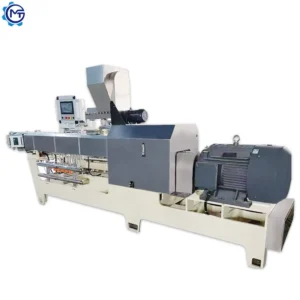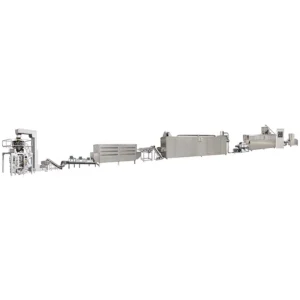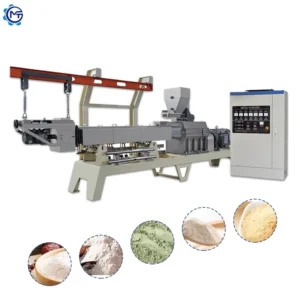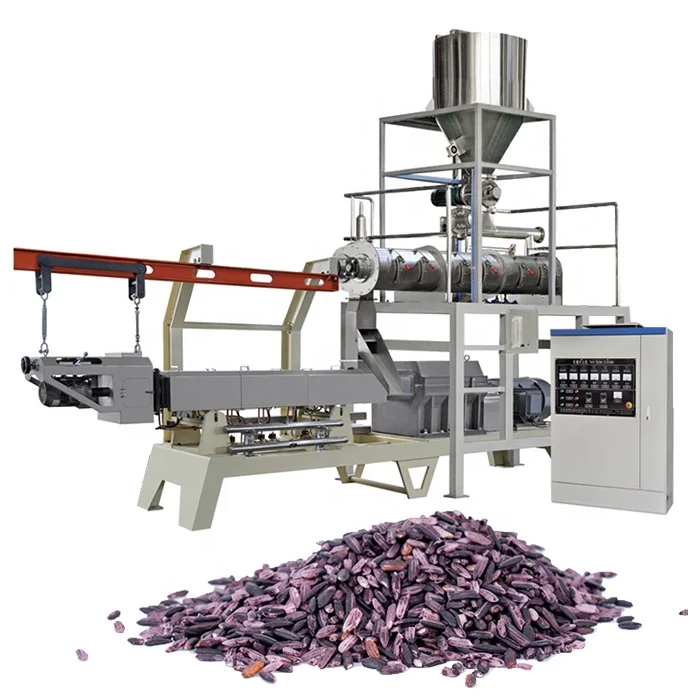
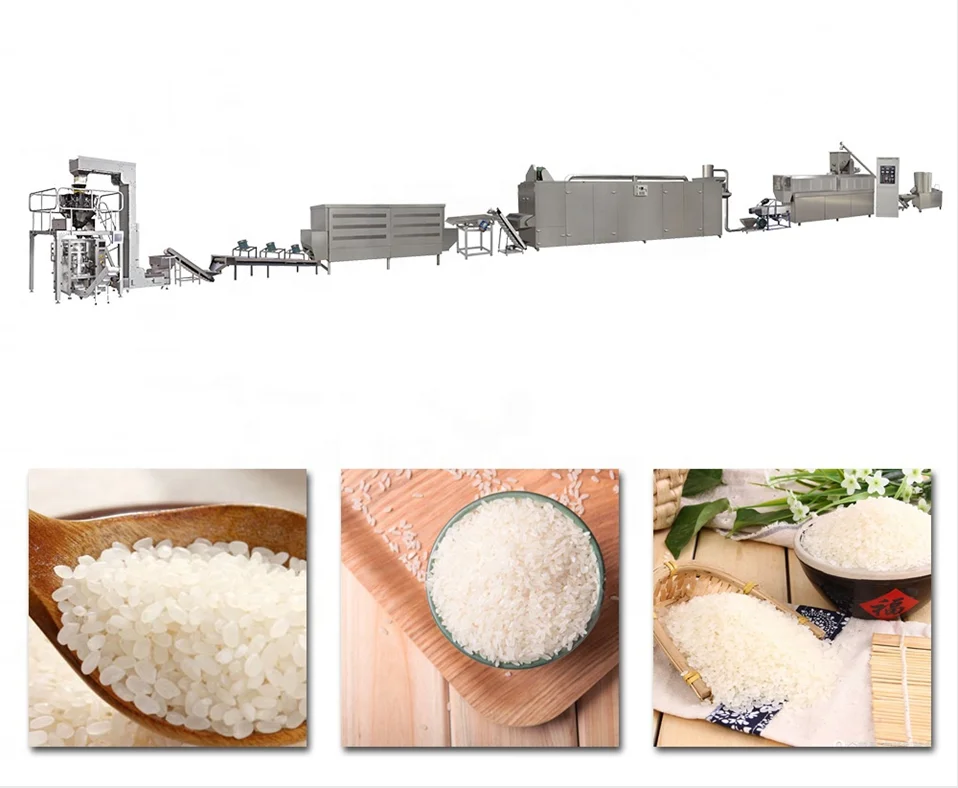
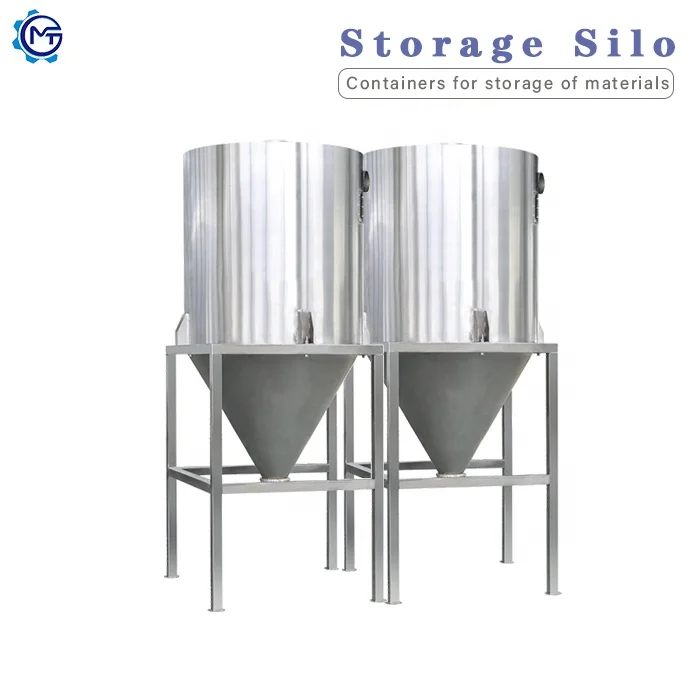
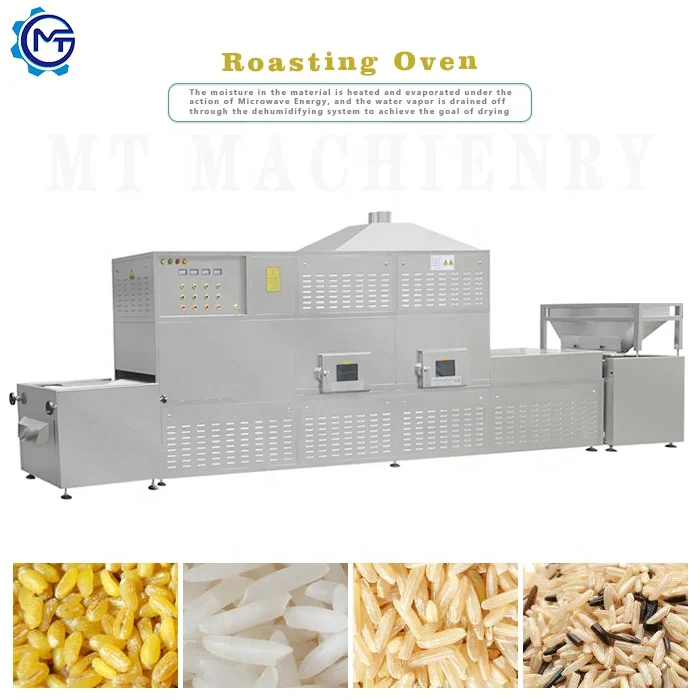
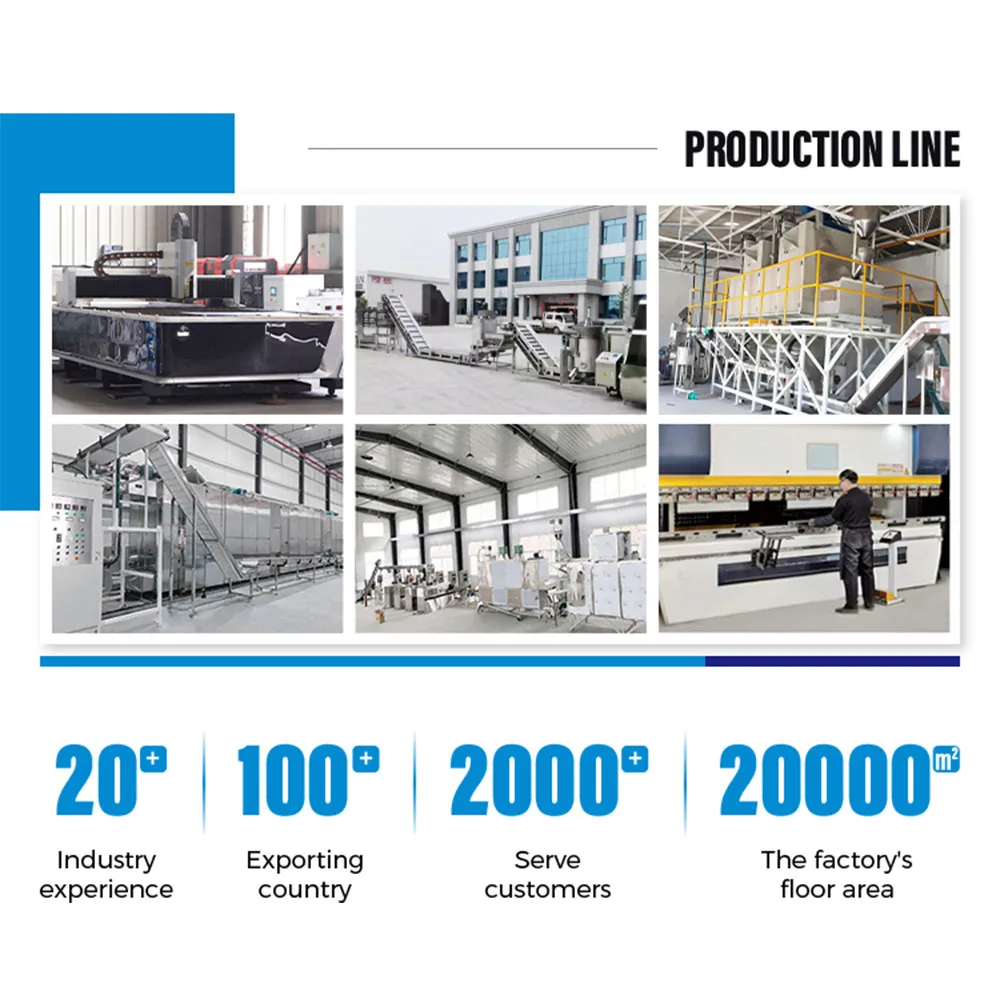
Fortified Rice Production Line, 100kW, 380V/50Hz, Food-Grade Stainless Steel — a complete turnkey system integrating batching, extrusion, drying and packing under one supplier with matched throughput across every station. Screw configuration and die design are specified to your raw material and target rice formulation, with voltage customizable to destination market requirements. Includes line layout, trial run report on your material before shipment, and on-site installation with operator training.
8032
Description
Matched Throughput Across Every Station — a turnkey fortified rice production line where extrusion, drying and packing capacities are calculated together before build, eliminating mid-line bottlenecks that surface only during commissioning.
Technical Specifications
| Parameter | Value |
|---|---|
| Product Type | Fortified Rice Production Line |
| Rated Power | 100 kW |
| Output Capacity | 100–500 kg/h (basis not stated in source — confirm raw material, moisture content and grain formulation) |
| Voltage & Frequency | 380 V / 50 Hz, configurable to destination grid |
| Construction Material | Food-grade stainless steel |
| Control System | Available with PLC or MCC control |
| Certification | CE |
| Assembly State | Complete production line |
Application Suitability
| Application | Material or Output |
|---|---|
| Fortified rice manufacturing | Broken rice flour blended with vitamin and mineral premix |
| Artificial rice production | Cassava, potato or corn starch blended with protein and micronutrients |
| Nutrition-enhanced rice for food programmes | Multi-grain flour with iron, folic acid and vitamin A premix |
| Infant and weaning food rice base | Finely milled rice flour with controlled gelatinisation |
Why Nominal Capacity Rarely Survives First Contact with Your Raw Material
A capacity figure is only meaningful when tied to a specific formulation, moisture level and grain blend.
I spent several years stationed across Southeast Asia, moving from testing and quality control into line integration. One project involved a nutrition powder producer who accepted a capacity quote based on a standard reference formula and placed the order immediately. When their actual protein powder — coarser than the test material — reached the extrusion section, output held up fine, but the dryer could not keep pace. The entire line stalled in the back half, waiting for material to clear. Two extra weeks of parameter tuning were needed before throughput stabilised. That same pattern repeats across fortified rice projects: the flour blend you run daily may gelatinise differently, shift expansion ratios, and force the dryer to work longer cycles. A fortified rice production line turnkey build must be validated on your exact raw material before the first bolt is tightened [NEED_CITE: importance of raw material validation in extrusion line throughput].
Layout, Station Matching and Throughput Verification
Every station on this fortified rice production line turnkey system — from batching and mixing through extrusion, drying, cooling and packing — is sized so that none becomes a bottleneck when running your target formulation. The line layout accounts for dwell time inside the dryer, cooling conveyor length and the packing speed required to clear the output buffer. Rather than assembling extruders and dryers from separate vendors and hoping the throughput aligns, the full line is calculated as a single system.
On-Site Commissioning and Phased Ramp-Up
Installation follows a phased schedule. The extrusion section is commissioned first, with screw speed, barrel temperature profile and moisture addition dialled in on your actual flour blend. Only once the extruder holds a stable output does the dryer come online, with belt speed and zone temperatures adjusted to match the moisture curve leaving the die. This sequential approach prevents the all-at-once startup problems where every station is fighting for its own operating window simultaneously [NEED_CITE: phased commissioning practices for food extrusion lines].
Reading the Spec Sheet Against Your Production Reality
The 100 kW rated power across the line reflects the combined demand of the extruder main drive, feeder motors, dryer heating elements and cooling fans. When planning your electrical room, confirm that the transformer and switchgear can sustain this continuous draw alongside any upstream milling or downstream packing equipment. The food-grade stainless steel construction throughout all product-contact surfaces meets hygiene requirements for nutrition programme suppliers and meets audit expectations for fortified food facilities. Voltage and frequency are confirmed before production begins — a 380 V / 50 Hz default is standard, but many Southeast Asian and African grids require different configurations, and discovering a mismatch during installation delays commissioning by weeks. The control system is available with PLC or MCC control, and the interface language is agreed during the specification phase so operators can read alarms and set-points without translation gaps.
What Happens When Stations Are Mismatched
A dryer that is undersized relative to extruder output forces the line to run at reduced screw speed, cutting actual throughput well below the quoted figure. An undersized cooler lets residual moisture migrate into packed bags, creating caking and spoilage complaints downstream. A packing station that cycles slower than the cooling conveyor accumulates product in buffer bins, increasing breakage and waste. These failures do not show up in a quotation that lists each machine at its independent maximum. They surface only when the line runs as one continuous chain [NEED_CITE: throughput mismatch consequences in integrated food processing lines].
Why Procurement Through a Single Line Integrator Matters
Every throughput calculation is done against your raw material data, not a generic reference flour. The screw configuration and die geometry are specified to the gelatinisation behaviour of your particular starch and protein blend. Trial runs take place in an in-house testing workshop using your supplied raw material, and a written report documents the output rate, moisture profile and product density achieved before the line ships. Electrical schematics and voltage confirmation are reviewed and signed off during the specification phase, so the control panel matches your facility grid on arrival. On-site installation, commissioning and operator training are included in the project scope, with wear parts and a maintenance schedule handed over at acceptance.
Documentation & Verification
- Line layout drawing with station-by-station throughput calculation for your formulation
- Trial run report on your supplied raw material documenting output rate and moisture curve
- Electrical schematic and voltage confirmation sheet signed before production begins
- Screw configuration and die geometry record matched to your target grain shape
- CE declaration of conformity and factory test record included with shipment
Installation, Commissioning & Support
- Foundation plan reflecting the 100 kW line load and vibration isolation for the extruder drive
- Dedicated circuit specification for 380 V / 50 Hz or confirmed local voltage and frequency
- Extruder barrel and screw assembly verified on site before first powered run
- Dryer zone temperatures and belt speed calibrated against your actual flour moisture profile
- Operator training covers PLC or MCC interface, alarm response and daily cleaning sequence
- Wear parts list with screw and die replacement intervals and spare part ordering codes
What to Prepare Before Requesting a Quotation
To size a fortified rice production line turnkey project accurately, share your raw material specification including grain type, flour particle size and premix composition. Provide your target daily output and the shift pattern you plan to run. Confirm the voltage and frequency at your facility, the available floor area and ceiling height, and whether any upstream milling or downstream bagging equipment is already installed. If you can supply a sample of your actual production flour, a trial run in the testing workshop will generate verified throughput data before the quotation is finalised.
Frequently Asked Questions
Q: How is output capacity verified before the line ships?
A: Your raw material is run through the extruder and dryer in the testing workshop under controlled conditions. A trial report documents the achievable throughput, product moisture after drying and grain density. The capacity figure in the quotation is tied to these verified results rather than a generic reference flour.
Q: What if our local power grid does not match 380 V / 50 Hz?
A: Voltage and frequency are confirmed during the specification phase before production starts. The motor ratings, heating elements and control transformer are built to your local grid requirements, and the electrical schematic is reviewed and signed off so the line connects directly on arrival without rewiring.
Q: How do you prevent one station from bottlenecking the rest of the line?
A: Throughput at each station — mixing, extrusion, drying, cooling and packing — is calculated as a linked system using your formulation data. The dryer capacity, cooling conveyor length and packing speed are all matched to the verified extruder output so no single station restricts the chain.
Q: What does on-site commissioning include?
A: Engineers install and align each station, run the extruder on your raw material, set barrel temperatures and screw speed, then bring the dryer and cooler online in sequence. Operators are trained on the control interface, alarm handling, cleaning procedures and daily startup checks before handover.
Related products
-

High Precision Automatic 500kg/h Baby Food Nutrition Powder Rice Extrusion Processing Line
¥9,500.00 Add to cart -
Small Scale MT Brand Automatic Baby Food Nutrition Powder Rice Flour Making Machine with 500kg/h Production Capacity PLC Control
¥9,500.00 Add to cart -
Industrial Instant Corn Paste Production Line Nutritional Powder Processing Equipment Meal Replacement Nutrition Powder Machine
¥65.00 Select options This product has multiple variants. The options may be chosen on the product page -

Full Automatic Complete Baby Food Nutrition Powder Porridge Processing Production Line for Infant Nutrition Factory
¥9,500.00 Add to cart