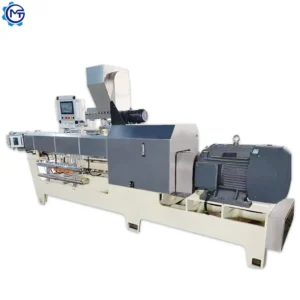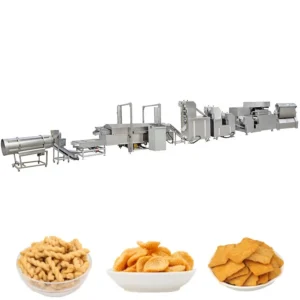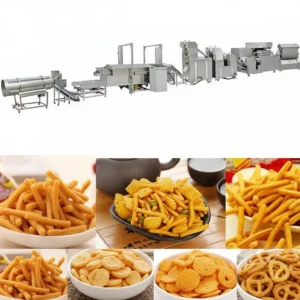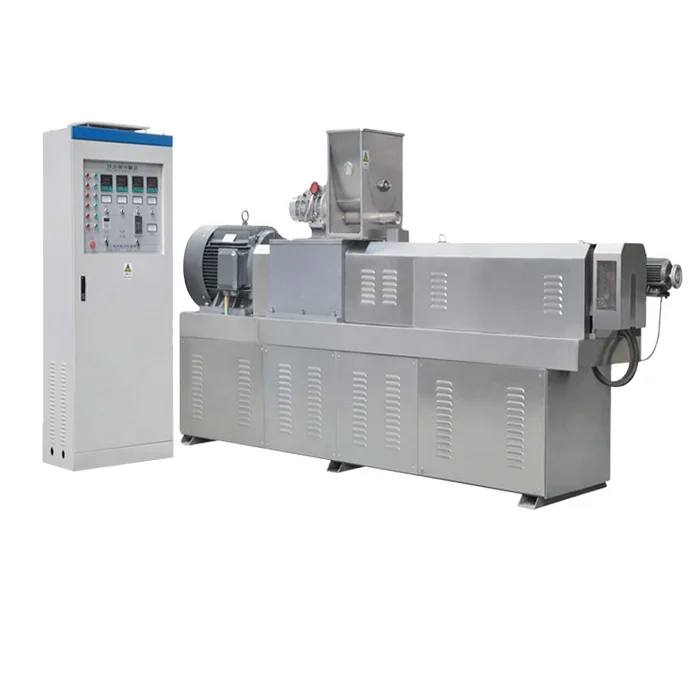


MT65 / MT70 / MT85 / MT75 / MT95 Fried Snack Production Line, Twin-Screw Extrusion, PLC & MCC Control — configured as a complete turnkey project from batching through extrusion, cutting, frying, flavoring to drying, with throughput matched across every station to prevent bottlenecks.
- Screw configuration and die design specified to your raw material and target snack shape, controlling expansion, texture and density
- In-house testing workshop validates output on your actual flour-based formula before shipment
Line layout, capacity calculation and electrical schematic confirmed pre-production, backed by on-site installation, commissioning and operator training from one responsible supplier.
Description
Capacity-Matched Layout — Every station from the powder mixer through the fryer to the flavoring drum is sized to the extruder output, so the fried snack production line turnkey holds its rated throughput instead of stalling at one bottleneck.
Technical Specifications
| Parameter | Value |
|---|---|
| Product Type | Fried Snack Production Line (Bugles / Crisps Extrusion Line) |
| Models Available | MT65, MT70, MT85, MT75, MT95 |
| Installed Power | 142 kW (MT65) / 185 kW (MT70) / 240 kW (MT85) / 245 kW (MT75) / 370 kW (MT95) |
| Real Power Consumption | 100 kW (MT65) / 130 kW (MT70) / 180 kW (MT85) / 185 kW (MT75) / 280 kW (MT95) |
| Output Capacity | 120–150 kg/h (MT65) / 200–250 kg/h (MT70) / 300–500 kg/h (MT85) / 400–500 kg/h (MT75) / 800–1000 kg/h (MT95) (basis not stated in source — confirm raw material type, moisture content and product format) |
| Overall Dimensions | 22000×1200×2200 mm (MT65) to 30000×1500×2800 mm (MT95) |
| Screw Type | Twin Screw |
| Extruder Main Motor Power | 30 kW (MT70 detail unit) |
| Powder Mixer Tank Volume | 150 kg |
| Powder Mixer Rotary Speed | 385 rpm |
| Powder Mixer Mixing Time | 10 min per batch |
| Fryer Temperature Range | 0–260 °C (source value — verify against manufacturer catalog) |
| Flavor Line Output | 400 kg/h |
| Line Stations | Mixing → Twin Screw Extrusion → Cutting/Forming → Frying → Flavoring/Seasoning → Drying |
| Control System | PLC and MCC |
| Material of Construction | Stainless steel |
| Standards | CE, ISO |
Application Suitability
| Application | Material or Output |
|---|---|
| Bugles and crisp horns | Corn flour, corn grits, wheat flour blends |
| Tortilla-style chips and rice crust | Rice flour, corn masa, composite grain flour |
| Shaped puffed crisps (fish, duck, tree, triangle) | Flour-based dough with varying moisture levels |
| Small-to-medium snack manufacturing | Startup or expansion of extruded fried snack production |
| Turnkey fried snack facility projects | Complete new production installations for investors or contractors |
What "Rated Capacity" Hides When Stations Are Mismatched
A fried snack production line turnkey only reaches its stated output when every downstream station is engineered to handle the extruder’s actual discharge rate.
I have watched buyers sign off on an extruder rated at a comfortable throughput, then discover during commissioning that the fryer cannot keep up. The result is product sitting on the conveyor, cooling unevenly, absorbing oil past specification. The extruder runs fine in isolation, but the line as a whole never hits the numbers on paper. [NEED_CITE: throughput matching in continuous food processing lines] This mismatch happens more often than you would expect, especially when equipment is sourced from separate vendors who each quote their own nominal capacity without coordinating against the actual upstream feed rate.
Screw and Die Configuration Matched to Your Flour Blend
The twin-screw extruder in this line is not supplied with a generic screw profile. The screw configuration and die geometry are selected based on the buyer’s specific raw material — corn flour, wheat blend, or composite grain mix — and the target snack shape, whether that is a Bugle horn, a fish crisp, or a flat tortilla chip. Moisture content and starch gelatinisation behaviour differ across these materials, and the wrong screw pitch produces either under-expanded dough or excessive shear heat that degrades texture before the product even reaches the fryer.
Throughput Balancing Across Every Station
Each station on this fried snack production line turnkey is sized against the extruder’s real output rather than its catalogue peak. The powder mixer batch cycle, the fryer belt speed and oil volume, the flavoring drum rotation rate, and the dryer residence time are all calculated so that product flows continuously without queuing or starving at any point. [NEED_CITE: continuous line balancing principles in snack food manufacturing] When a contractor or factory owner reviews the layout proposal, the capacity at each station is documented and traceable back to the extruder’s confirmed discharge rate on their specific material.
Reading the Specifications Without Getting Misled
The installed power figures across the five extruder models range from 142 kW to 370 kW, but the real power consumption sits noticeably lower — from 100 kW on the MT65 up to 280 kW on the MT95. This gap matters for utility planning: your transformer and dedicated circuit need to handle the installed peak, but your operating cost tracks the real draw. The twin-screw design provides the shear and mixing intensity needed for flour-based snack doughs, where single-screw extruders often struggle with sticky or high-moisture blends. The fryer temperature range reaching 260 °C covers the frying window for most corn and wheat-based crisps, though the exact set point depends on oil type, product thickness, and desired final moisture. The PLC and MCC control system ties every station together, so a speed adjustment at the extruder propagates to the cutter, fryer belt, and flavoring drum without manual intervention at each unit.
The Cost of Skipping a Trial Run Before Shipment
Buyers who waive the pre-shipment trial run often face weeks of product development after installation, burning raw material and oil while dialling in screw speed, barrel temperature, and fryer time. I have seen a batch of corn-based Bugles come out with acceptable expansion but oil absorption well above the buyer’s market specification because the local corn grits carried higher moisture than the test flour. [NEED_CITE: impact of raw material moisture on oil uptake in fried extruded snacks] That kind of discovery should happen in the supplier’s testing workshop, not on your factory floor in front of a production deadline.
Why Source the Full Line From One Supplier
The line layout, capacity calculation, and utility plan come from a single engineering team, so there is no finger-pointing between an extruder vendor and a separate fryer supplier when throughput falls short. Screw and die configuration records are maintained against your raw material, making reorders of wear parts straightforward. The in-house testing workshop runs your actual flour blend before the line ships, generating a trial run report you can review before accepting delivery. Electrical schematics, voltage confirmation, and control language are verified against your facility standards during production, not assumed. Documentation packages include CE declarations and ISO certificates alongside operation and maintenance manuals specific to your line configuration.
Documentation & Verification
- Line layout drawing with capacity calculation at each station matched to your target snack shape
- Screw and die configuration record tied to your specific flour blend and moisture content
- Trial run report produced on your raw material before shipment leaves the factory
- Electrical schematic with voltage and frequency confirmed against your facility supply
- CE declaration of conformity and ISO certificate included with shipping documentation
- Wear parts list identifying screw sections, dies, and fryer belt components with reorder codes
Installation, Commissioning & Support
- Foundation and floor space plan based on line dimensions up to 30000×1500×2800 mm for the MT95
- Dedicated electrical circuit sized to installed power up to 370 kW with voltage and frequency matched to your grid
- Station-by-station commissioning with PLC parameter sets calibrated on your raw material
- Operator training covering screw speed, barrel temperature zones, fryer set point, and flavoring drum rate
- Spare screw elements and die plates identified and available for first replacement cycle
- Maintenance schedule covering mixer bearings, fryer oil filtration, and dryer belt tension checks
What to Include in Your Inquiry
Send your raw material type, including flour composition and typical moisture content, along with the snack shapes you plan to produce and your target hourly output. Confirm your facility voltage, frequency, and preferred control language, plus the available floor space and ceiling height for the line layout. If you have existing upstream or downstream equipment you intend to integrate, include those specifications so the layout can account for the connection points.
Frequently Asked Questions
Q: How is line capacity verified against my specific raw material and snack shape?
A: Your flour blend is tested in the in-house workshop before shipment. The trial run confirms extruder screw speed, barrel temperature profile, and die selection against your target shape and expansion level. A written report documents the results, and any adjustments to the fryer time or flavoring rate are captured before the line is finalized for production.
Q: How do you ensure throughput matching between extruder, fryer, flavoring drum and dryer?
A: Each station is sized based on the extruder’s confirmed discharge rate on your material, not on generic catalogue figures. The line layout document shows the calculated throughput at every point. The PLC control system links station speeds so that changes propagate automatically across the full fried snack production line turnkey.
Q: What voltage, frequency and control language options are confirmed before shipment?
A: Your facility electrical supply details are collected during the specification stage. The electrical schematic is drawn to match your voltage and frequency, and the PLC interface language is set to your preference. These parameters are documented in the confirmation record before production begins.
Q: Can I send my raw material for a trial run before the line ships?
A: Yes. Sending your actual flour blend allows the testing workshop to run the extruder and fryer under realistic conditions. You receive a trial run report showing product expansion, oil absorption, and texture data. This step eliminates guesswork during on-site commissioning.
Q: What does on-site installation, commissioning and operator training include?
A: Engineers oversee station placement, utility connections, and first production runs on your floor. PLC parameters are fine-tuned to your local material batch. Operators are trained on daily start-up, shutdown, cleaning, and wear part replacement, with a maintenance schedule specific to your line configuration.
Related products
-
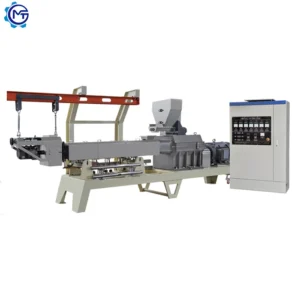
Industrial Wheat Flour Snacks Processing Equipment – Stainless Steel Fried Food Production Line
¥65.00 Select options This product has multiple variants. The options may be chosen on the product page -
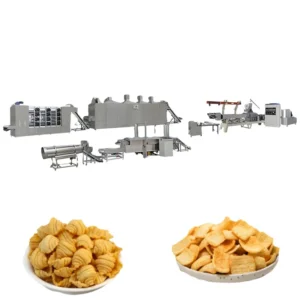
Automatic Fried Crispy Bugles Snacks Food Making Machines Wheat Flour Sala Food Extruder
¥100.00 Select options This product has multiple variants. The options may be chosen on the product page -
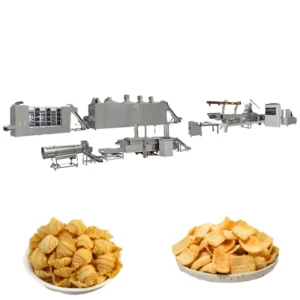
Hot Selling Puffed Ball Snacks Food Processing Line Fried Snacks Processing Line Corn Puff Snacks Machine
¥100.00 Select options This product has multiple variants. The options may be chosen on the product page -
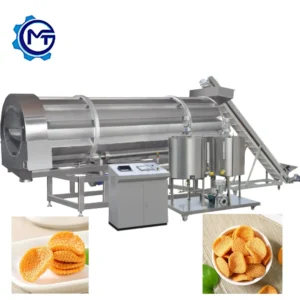
Automatic Rice Crust Chips Making Machine Bugles Pizza Rolls Fried Snack Food Processing Line Machine
¥8,570.00 Select options This product has multiple variants. The options may be chosen on the product page