

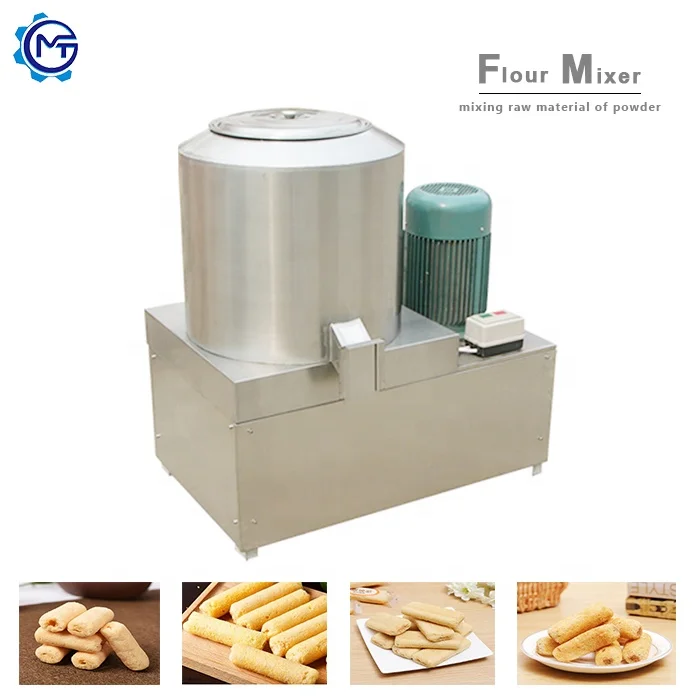
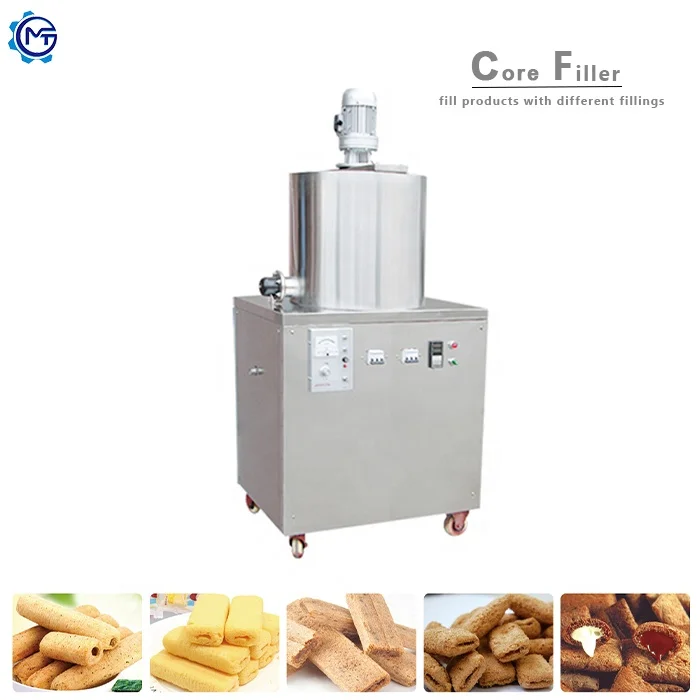
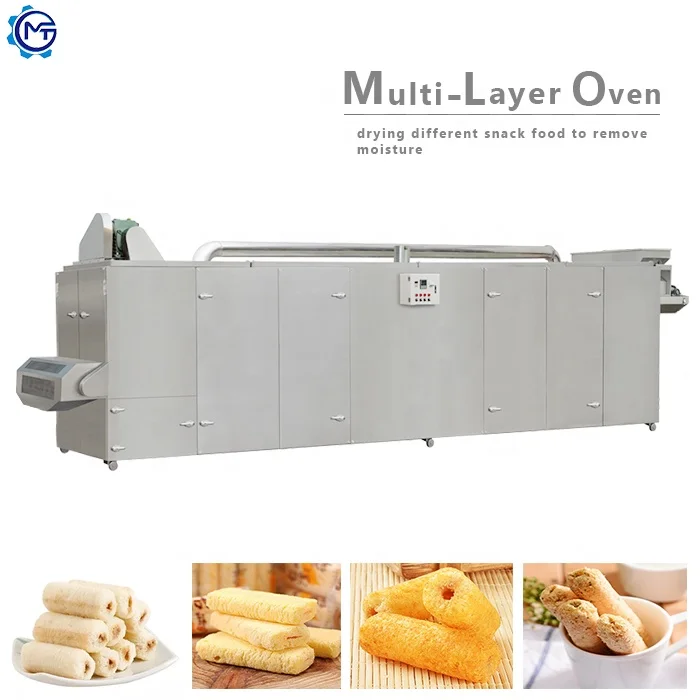
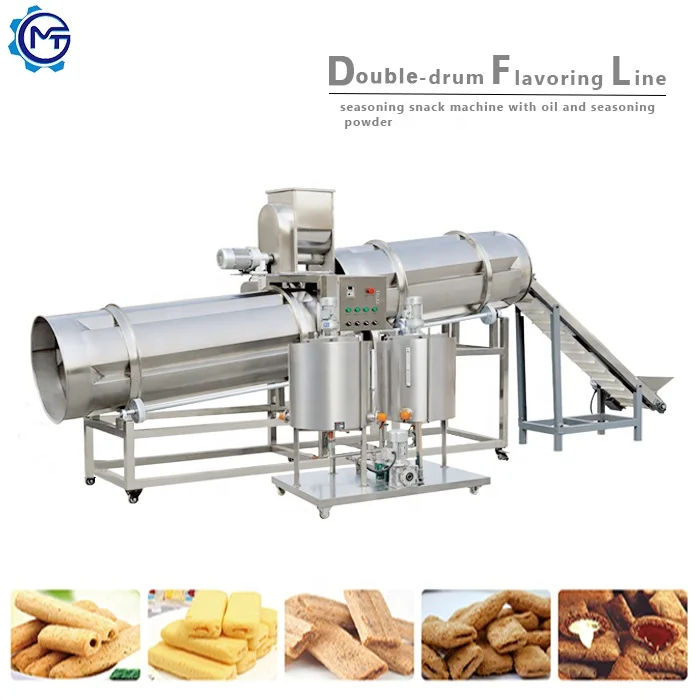
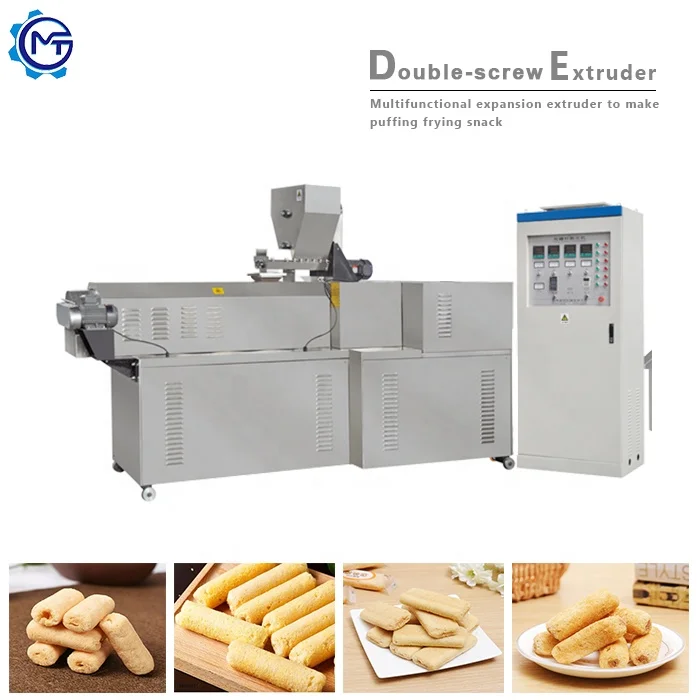
MT70 / MT85 / MT75 Twin Screw Extrusion Puffed Snacks Production Line, 100–500 kg/h, PLC & MCC Control — configured from batching through extrusion, drying, coating, cooling to packing under one turnkey project.
- Screw configuration and die design matched to your raw material and target snack shape, not a generic build
- Twin-screw extrusion with automated PLC control ensures consistent starch gelatinisation, expansion and density across corn, rice, wheat and oat flours
- Three capacity tiers (MT70 / MT85 / MT75) allow phased scaling as production demand grows
Complete line layout, throughput matching and in-house trial runs on your actual raw material before shipment.
Description
Balanced Throughput Across Stations — Every unit from batching to packing is sized so no single station caps your real output below the extruder’s rated capacity.
Technical Specifications
| Parameter | Value |
|---|---|
| Product Type | Twin Screw Extrusion Puffed Snacks Production Line |
| Models Available | MT70, MT85, MT75 |
| Screw Type | Twin Screw |
| Installed Power | 130 kW (MT70) / 180 kW (MT85) / 220 kW (MT75) |
| Power Consumption | 95 kW (MT70) / 120 kW (MT85) / 130 kW (MT75) |
| Output Capacity | 100–120 kg/h (MT70), 200–300 kg/h (MT85), 300–500 kg/h (MT75) (basis not stated in source) |
| Overall Dimensions (L×W×H) | 21×1.5×2.2 m (MT70) / 25×1.5×2.2 m (MT85) / 28×1.5×2.2 m (MT75) |
| Control System | PLC and MCC |
| Raw Materials | Corn, rice, wheat, oat, barley flour |
| Product Shapes | Cheese ball, tube, stick, ring, fruit loop, star, wheel, flower, heart |
| Dryer Heating Source | Gas or Electric |
| Coating System | Double tumble sugar melting, elevator, coating drum, spraying nozzle |
| Line Stations | Mixing → Extruding → Drying → Coating/Flavoring → Cooling → Packing |
| Voltage & Frequency | Customized to local standard |
| Lubrication | Automatic lubricating and cooling system |
| Screw Material | Wear-resistant special alloy |
| Standards | CE, ISO |
Application Suitability
| Application | Material or Output |
|---|---|
| Corn puff and cheese ball production | Corn flour and grits with cheese or sugar coating |
| Rice puff and fruit loop manufacturing | Rice flour blends with flavoring and color addition |
| Multigrain extruded snack processing | Wheat, oat, and barley flour mixtures |
| Core-filled and shaped snack formats | Various grain flours with cream or jam filling |
| Breakfast cereal adjunct production | Corn and rice blends for puffed cereal formats |
What "300 kg/h" Leaves Out When the Dryer Cannot Keep Up
Quoted extruder output means nothing if the dryer or coating drum chokes the line downstream.
I once walked into a snack plant in Jiangsu where the twin screw extrusion snacks production line turnkey setup looked impressive on paper. The extruder was pushing product at full speed, but the dryer was sized for half that throughput. Wet puffed corn sat on the conveyor for minutes, absorbing moisture back, and the texture went hard before it even reached the coating station. The owner had saved money buying a smaller dryer from a different vendor, and paid for it every shift with rejected batches. [NEED_CITE: moisture reabsorption effects on extruded snack texture]
This is not a rare situation. Equipment from separate suppliers often arrives with mismatched capacity curves, and the bottleneck only reveals itself during continuous production runs. A twin screw extrusion snacks production line turnkey package must account for every station’s real throughput, not just the extruder’s peak number.
Screw and Die Configuration Matched to Your Grain Blend
A generic screw profile designed for corn grits will not gelatinize rice flour at the same moisture level or shear rate. Each extruder in this lineup receives a screw configuration and die geometry specified to the buyer’s raw material and target product shape, whether that is a hollow tube, a dense ring, or a light fruit loop. Barrel temperature zones are mapped to the starch behavior of the specific flour blend, which keeps expansion consistent from the first hour of production to the last.
Throughput Matching from Extrusion to Packing
The dryer must handle the full moisture load leaving the extruder, and the coating drum must tumble the full volume of dried product without overflow or under-seasoning. Each station on this twin screw extrusion snacks production line turnkey system is sized against the extruder’s verified output so material flows continuously. [NEED_CITE: industrial dryer capacity matching to extruder throughput] When the cooling conveyor is also matched, the product reaches the packing station at a stable temperature and moisture content, which prevents clumping in the bags.
Reading the Specs Beyond the Nameplate
The installed power figures across the three models reflect the motor capacity needed to maintain screw speed under full barrel load. The power consumption values represent typical running draw, which matters for sizing your electrical supply and calculating energy cost per kilogram of finished snack. The automatic lubricating and cooling system reduces manual greasing intervals, which matters on longer production shifts where bearing temperature can climb. Screw material selection affects how many hours you run before the flights need inspection or replacement, especially when processing abrasive grain blends like corn with high silica content. The PLC and MCC control architecture lets operators store recipes for different product shapes and recall them at changeover, keeping die pressure and barrel temperature profiles repeatable across batches.
The Cost of Mismatched Line Components
When the coating drum is undersized relative to the dryer output, product piles up waiting for tumbling time, and some pieces get over-coated while others pass through with barely any seasoning. The packing station then receives an inconsistent product mix, and rejection rates climb without any single machine showing a fault. I have seen operators blame the extruder for density problems that were actually caused by a dryer running too cool and too slow, leaving residual moisture that collapsed the cell structure hours after extrusion. [NEED_CITE: post-extrusion moisture effects on snack density and shelf life]
Why Source the Complete Line from One Supplier
Every station from mixing to packing comes under a single responsibility, so throughput calculations are not left to the buyer to reconcile across vendors. The screw and die configuration is documented against your specific raw material, not pulled from a standard library. An in-house testing workshop runs your actual flour blend through the extruder before shipment, producing a trial report you can review before the line leaves the factory. Voltage, frequency, and control language are confirmed during the specification stage rather than discovered as a problem at commissioning. CE and ISO documentation is provided as part of the project file, not as an afterthought.
Documentation & Verification
- Line layout drawing showing throughput balance across all stations for your target output
- Screw and die configuration record specifying the geometry matched to your flour blend
- Trial run report from in-house testing on your raw material before shipment
- Electrical schematic with confirmed voltage, frequency, and control language for your site
- CE declaration of conformity and ISO certificate included in project documentation
Installation, Commissioning & Support
- Foundation and floor space planned around the 21–28 m line length depending on model selection
- Dedicated electrical circuit sized to the 130–220 kW installed power range with confirmed voltage
- Equipment shipped in modular sections for on-site assembly and alignment verification
- First production run supervised with PLC parameter tuning for your specific recipe
- Operator training covers screw changeover, die swap, and coating drum adjustment
- Wear parts list provided with screw and die replacement intervals based on your material abrasiveness
Before You Request a Quote
To configure a line that actually holds its rated output, the starting point is your raw material specification, target product shape, and the moisture content you plan to run at. Share your factory floor dimensions and ceiling height so the layout can be drafted around your existing space and utility connections. Confirm your local voltage standard, frequency, and preferred control language early so the electrical cabinet is built to match.
Frequently Asked Questions
Q: How is the quoted capacity verified, and what conditions must hold?
A: Capacity figures for the MT70, MT85, and MT75 are listed per model, but the actual achievable throughput depends on your specific raw material, moisture content, and product shape. A trial run on your flour blend in the testing workshop generates a verified output report before the line ships, so the number you plan around reflects your real production conditions rather than a generic benchmark.
Q: How do you match dryer and coating capacity to the extruder?
A: Each downstream station is sized against the extruder’s output for your specific product format. The dryer is selected to handle the full moisture load at your target throughput, and the coating drum is dimensioned so tumbling time is sufficient without creating a queue. This prevents material backup and keeps seasoning coverage uniform.
Q: Can the line layout be customized to my factory dimensions?
A: The layout is drafted to your floor plan after you share dimensions and utility connection points. Station spacing, conveyor routing, and dryer orientation are adjusted to fit, while maintaining the material flow sequence from mixing through packing. Utility requirements for power, gas, water, and compressed air are mapped on the same drawing.
Q: What happens during the in-house trial run before shipment?
A: Your raw material is processed through the extruder in the testing workshop using the screw and die configuration specified for your order. The trial run verifies product shape, expansion, density, and output rate. A written report with observations and parameter settings is provided so you can review results before the equipment leaves the factory.
Q: How are voltage, frequency, and control language confirmed before production?
A: Your local electrical standard and preferred HMI language are captured during the specification stage and written into the order confirmation. The electrical schematic is prepared to match, and the PLC program is loaded with the correct language before the control cabinet is built, so commissioning does not stall on wiring or translation issues.
Related products
-

Automatic High Productivity Puffed Corn Snacks Extruder Production Equipment New Condition Puff Snack Food Making Machine
¥11,050.00 Select options This product has multiple variants. The options may be chosen on the product page -

New Stainless Steel Automatic Snack Food Machinery Extruder Puffed Corn Maize Puff Processing Line for Food Industry High
¥12,350.00 Select options This product has multiple variants. The options may be chosen on the product page -

Puffed Snacks Seasoning Flavor Machine Twin Screw Corn Puffing Food Making Extruder Equipment
¥8,355.00 Select options This product has multiple variants. The options may be chosen on the product page -

Full Automatic Crispy Maize Chocos Corn Flakes Breakfast Cereals Processing Production Line Industrial Equipment
¥1,000.00 Select options This product has multiple variants. The options may be chosen on the product page


