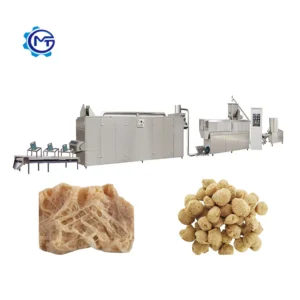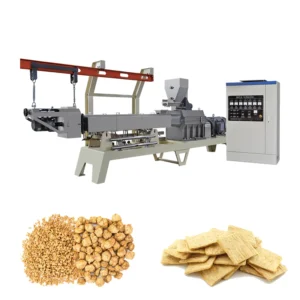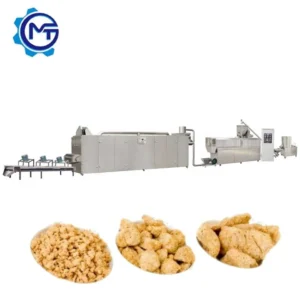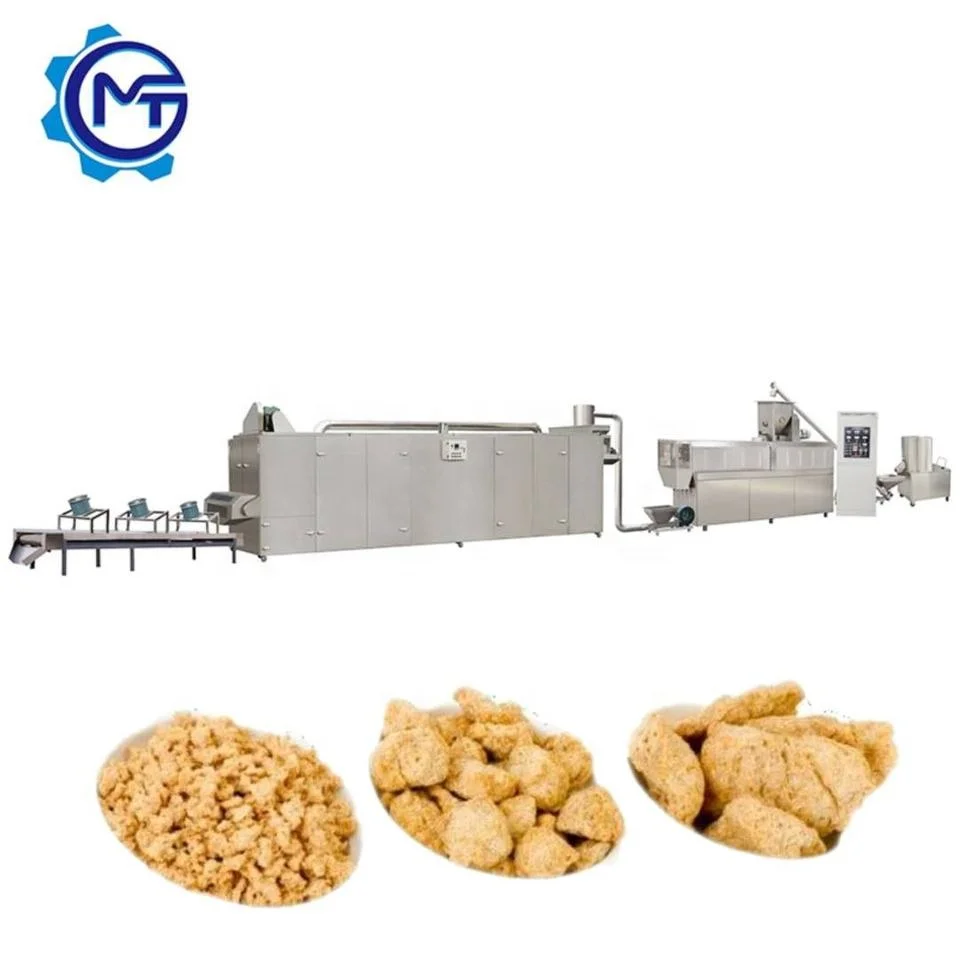

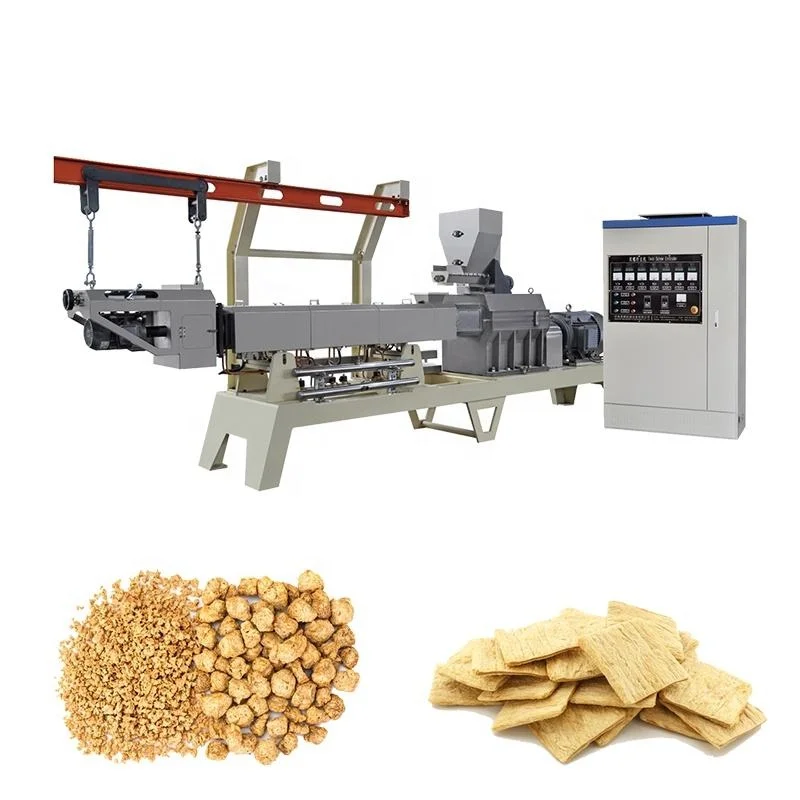

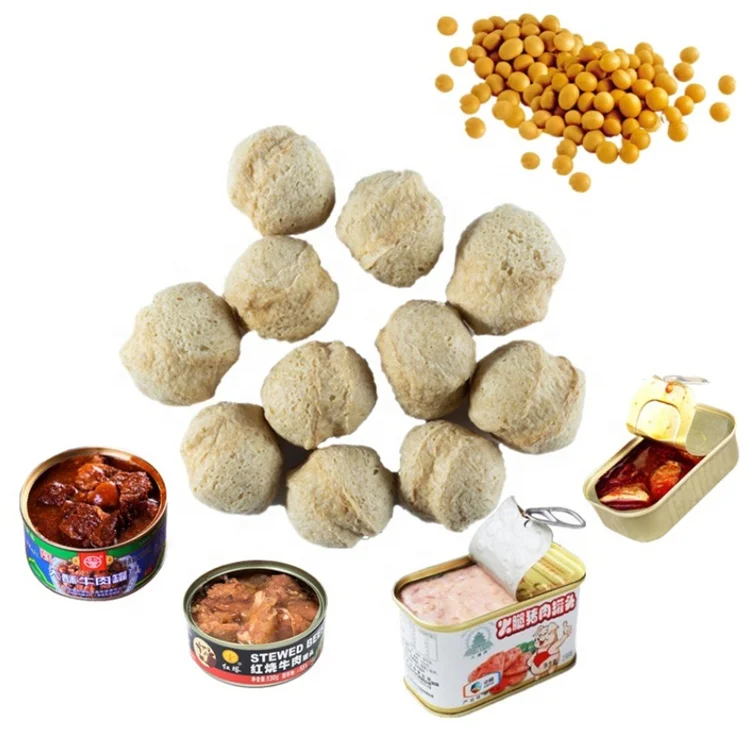
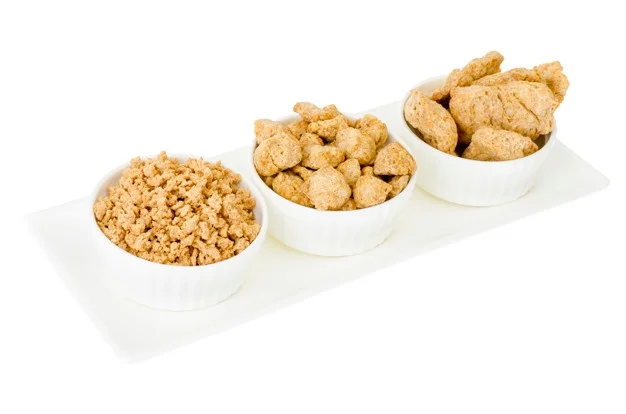
MT65 / MT70 / MT85 Texturized Vegetable Protein (TVP) Extrusion Production Line, Twin-Screw, Stainless Steel Construction — designed for soy protein and plant-based meat cutlet manufacturing.
- Screw configuration and die design matched to low-temperature soybean meal and peanut meal formulations
- Far infrared and gas dual-heat roaster with 3.5 m effective belt length for fiber structure stabilization
- Process flow covers mixing, extrusion, drying, cooling, and packing
Delivered as a complete turnkey line with throughput matched at every station, on-site commissioning, and operator training included.
Description
Line Integration Expertise — Single-source delivery from batching through extrusion to cooling and packing, ensuring throughput is matched at every station rather than assembled from disconnected vendors.
Technical Specifications
| Parameter | Value |
|---|---|
| Product Type | Soy Protein / Texturized Vegetable Protein (TVP) Extrusion Production Line |
| Models Available | MT65 / MT70 / MT85 |
| Extruder Type | Double Screw Extruder |
| MT65 Installed Power | 85 kW |
| MT65 Real Power | 65 kW |
| MT65 Output | 150-200 kg/h (basis not stated in source — confirm raw material formulation / moisture content) |
| MT65 Dimension | 18000 × 1300 × 2300 mm |
| MT70 Installed Power | 120 kW |
| MT70 Real Power | 90 kW |
| MT70 Output | 200-300 kg/h (basis not stated in source — confirm raw material formulation / moisture content) |
| MT70 Dimension | 20000 × 1500 × 2400 mm |
| MT85 Installed Power | 195 kW |
| MT85 Real Power | 165 kW |
| MT85 Output | 600-800 kg/h (basis not stated in source — confirm raw material formulation / moisture content) |
| MT85 Dimension | 24000 × 3500 × 4300 mm |
| Powder Mixer Tank Volume | 150 kg |
| Powder Mixer Mixing Time | 10 min per batch |
| Powder Mixer Power | 4 kW |
| High-temperature Roaster Effective Belt Length | 3.5 m |
| Roaster Far Infrared Heater Power | 3.9 kW × 24 |
| Roaster Gas Consumption | 6.8 m³/h |
| Cooling Machine Capacity | 200-300 kg/h (basis to be confirmed) |
| Material of Construction | Stainless Steel |
| Warranty | 1 year complete, life-time maintenance service |
| Certification | CE, ISO |
Application Suitability
| Application | Material or Output |
|---|---|
| Vegetarian meat cutlets and plant-based patties | Low-temperature soybean meal, peanut meal, wheat protein blends |
| Texturized vegetable protein for ham and sausage processing | Defatted soy flour, soy protein isolate, starch modifiers |
| TVP chunks and mince for canned and quick-frozen food | Soybean meal with variable moisture and fiber targets |
| Plant-based meat ingredients for fast food supply chains | High-protein meal blends requiring specific fibrous texture |
Why the Line Throughput Matters More Than the Extruder Rating
A texturized vegetable protein production line turnkey only delivers its nameplate output when every station from mixing to packing runs at the same cadence.
Buyers often compare extruder motor size and barrel diameter, then discover the dryer cannot keep up with the extruder’s discharge rate. The backlog forces the operator to slow down the screws, and the actual line output drops well below the quoted number. [NEED_CITE: throughput matching principles in continuous food extrusion lines]. When you evaluate a plant-based meat processing line, the bottleneck is rarely the machine with the biggest motor. It is usually the belt dryer or the cooling conveyor that was sized for a different product density.
Phased Layout and Utility Planning
A texturized vegetable protein production line turnkey requires a floor plan that accounts for raw material staging, mixer loading height, extruder discharge trajectory, and dryer infeed elevation. The MT65 footprint sits around 18 meters in length, while the MT85 stretches to 24 meters with a wider cross-section for the roaster belt. Utility drops for water, steam, gas, and three-phase power must land within reach of each station before the equipment arrives.
Commissioning Sequence and Operator Training
Commissioning a full extrusion line follows a fixed sequence: dry run of motors and conveyors, water circulation test on barrel jackets, no-load screw rotation check, then gradual introduction of raw material at reduced feed rate. [NEED_CITE: twin-screw extrusion startup procedures for protein texturization]. The operator must learn how moisture addition at the preconditioner interacts with barrel temperature zones to control fiber formation. Skipping this ramp-up leads to burned material inside the die and hours of downtime for cleaning.
How Screw Configuration and Die Design Shape the Fiber
The twin-screw configuration in these models generates the shear and residence time needed to unfold protein molecules and re-align them into fibrous strands. The L/D ratio determines how long the material stays under heat and pressure before reaching the die. A die with multiple small apertures produces fine mince-grade TVP, while a wider die opening creates chunky cutlet pieces. The moisture content of the incoming meal directly affects expansion: too dry and the protein fails to plasticize, too wet and the strands collapse before the dryer can set them. Barrel zones are independently heated so the operator can create a temperature gradient that controls gelatinization stage by stage. The roaster belt, at 3.5 meters effective length, provides the dwell time to lock in fiber structure using far infrared and gas heat in combination.
The Hidden Cost of Mismatched Stations
When the powder mixer batch cycle is longer than the extruder consumption rate, the screws run starved and the product density fluctuates. When the cooling machine capacity is lower than the dryer discharge, hot TVP accumulates on the belt and fuses into clumps that must be discarded. [NEED_CITE: consequences of throughput mismatch in continuous food processing lines]. These problems do not show up on a quotation sheet. They surface on the first day of production, when the buyer realizes that one station was specified for a different product family and the rest of the line must slow down to match.
Why This Line Is Built as One Project
Single-supplier responsibility means the mixer batch time, extruder screw speed, dryer belt speed, and cooling conveyor rate are all calculated against the same target output. The in-house testing workshop runs your actual soybean meal or peanut meal blend before shipment, so die selection and barrel temperature profile are adjusted to your material, not a generic reference. Documentation includes a line layout drawing, capacity calculation sheet, screw and die configuration record, and a trial run report on your raw material. Voltage, frequency, and control language are confirmed before production begins, so the MCC panel and operator interface match your local electrical standard and your team’s working language.
Documentation & Verification
- Line layout drawing with station-by-station throughput calculation for your target TVP output
- Screw and die configuration record matched to your soybean or peanut meal blend
- Factory trial run report on your supplied raw material before equipment dispatch
- Electrical schematic with voltage, frequency, and control language confirmed per destination
- CE declaration of conformity and ISO certificate for customs and local regulatory filing
- Wear parts list covering screw elements, die inserts, and mixer seals
Installation, Commissioning & Support
- Foundation must support the MT85 footprint of 24000 × 3500 mm with level tolerance for belt dryer alignment
- Dedicated three-phase circuit sized to the MT70 real power draw of 90 kW plus starting surge allowance
- Equipment ships in modular sections for container loading; on-site reassembly includes barrel and screw alignment
- First-run commissioning covers barrel temperature ramp, moisture dosing calibration, and die pressure adjustment
- Operator training addresses screw speed, feed rate, and dryer belt speed coordination for consistent fiber texture
- Wear parts stock includes replacement screw elements and die plates specific to your configured geometry
What We Need to Configure Your Line
To size each station correctly, we need your raw material specification including protein content and moisture range of the soybean meal or peanut meal blend. Tell us the target product form — mince, chunk, or cutlet — and the daily output you plan to run. Share your workshop dimensions and ceiling height so the layout fits your existing building, along with the local voltage and frequency standard and the preferred language for the control interface.
Frequently Asked Questions
Q: How is the quoted output of the MT65, MT70, or MT85 verified against my raw material?
A: Output figures for each model are based on reference formulations. We run your actual soybean or peanut meal in the testing workshop to measure real throughput at the target fiber texture, and we issue a trial run report before shipment confirming what the line produces on your material.
Q: What happens if my soybean meal has a different protein ratio than the standard recipe?
A: Protein content directly affects fiber formation inside the barrel. We adjust screw element arrangement and die aperture size to match your blend, and the trial run confirms the texture before the line ships. This avoids on-site reconfiguration after installation.
Q: How do you ensure the dryer and cooler do not bottleneck the extruder?
A: Each station’s capacity is calculated from the same mass balance. The roaster belt length and heating power, and the cooling conveyor rate, are specified to handle the extruder’s discharge at your target moisture reduction, so no station forces the others to slow down.
Q: What electrical and control details must be confirmed before production starts?
A: We need your local voltage, frequency, and plug standard, plus the language for the operator interface. These are locked in before the MCC panel is wired, so the line powers up correctly on arrival without rewiring delays or transformer rental.
Q: What spare parts should I stock for the first year of production?
A: The wear parts list in your documentation package identifies screw elements, die plates, mixer seals, and dryer belt segments that experience normal abrasion. We recommend ordering the first replacement set before shipment so they arrive with the line and are on hand when the first changeover is due.
Related products
-
Vegetable Meat Making Machine Textured Soybean Protein Maker
¥30.00 Select options This product has multiple variants. The options may be chosen on the product page -
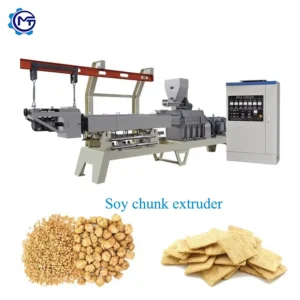
Textured Soybean Protein Extruder Plant Protein Processing Production Line TVP Making Machine
¥30.00 Select options This product has multiple variants. The options may be chosen on the product page -
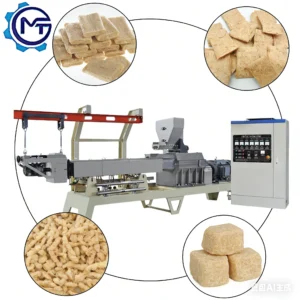
Twin Screw Extruder for Textured Vegetable Protein (TVP)
¥9,500.00 Select options This product has multiple variants. The options may be chosen on the product page -
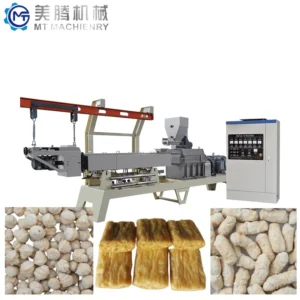
Small Multifunctional Textured Soy Protein Machine – Soy Protein Production Line – Vegetarian Meat Processing Equipment
¥65.00 Select options This product has multiple variants. The options may be chosen on the product page