

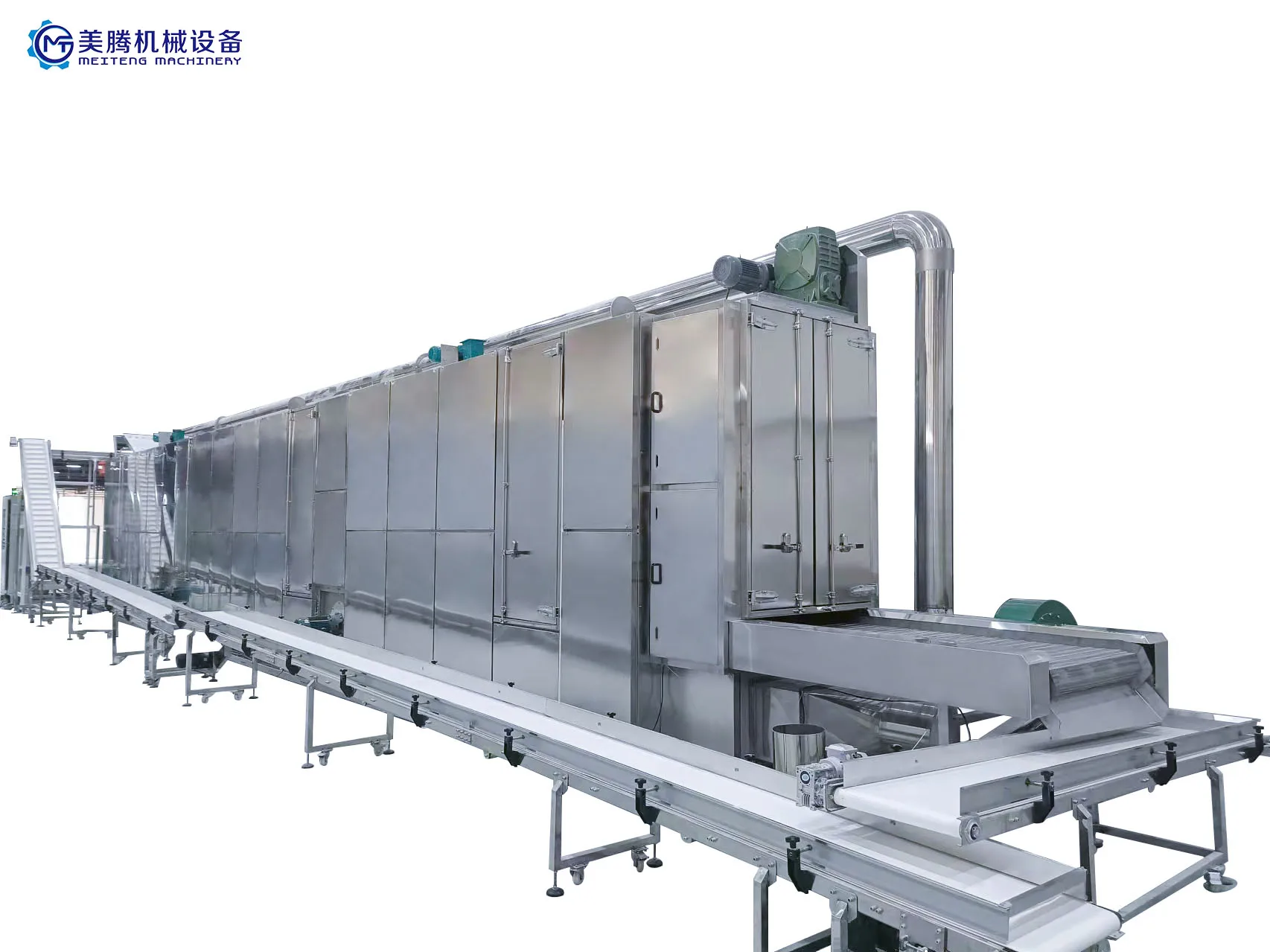
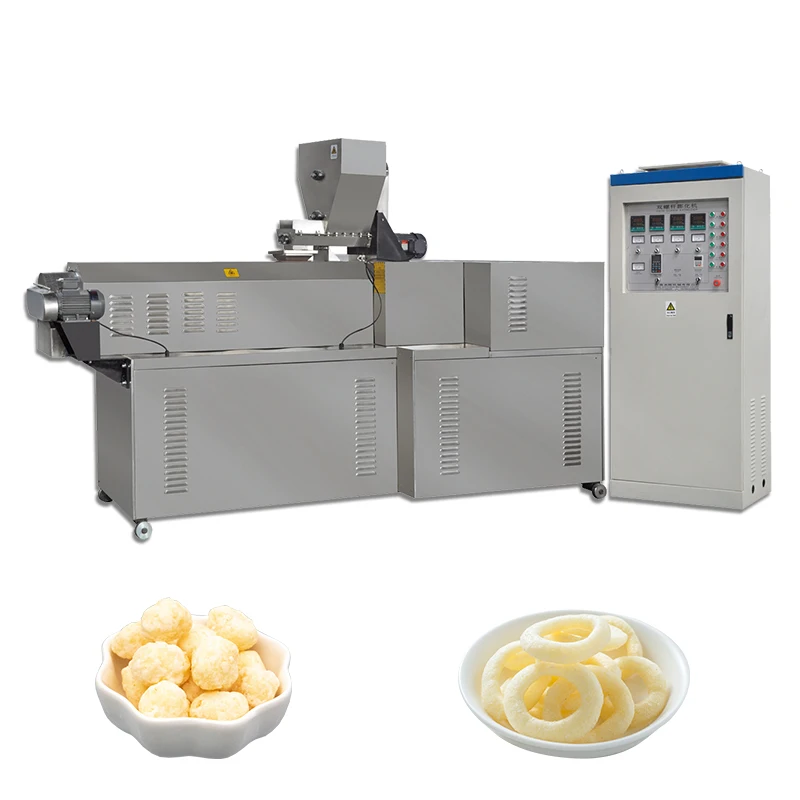

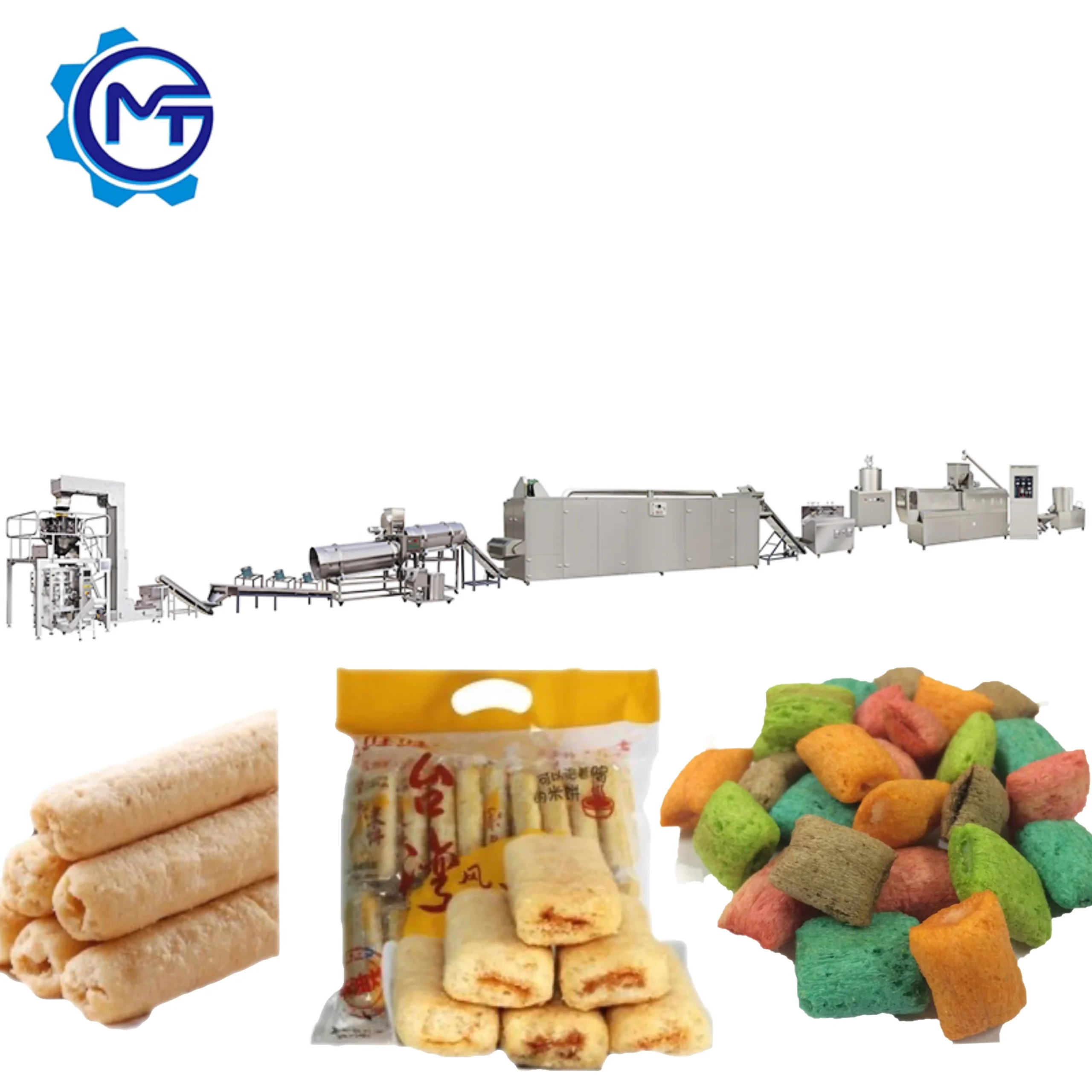
MT70 / MT85 / MT75 Twin Screw Extruder Turnkey Production Line, 130–220 kW, Interchangeable Dies — engineered as a complete integrated project from batching to packing with throughput matched at every station.
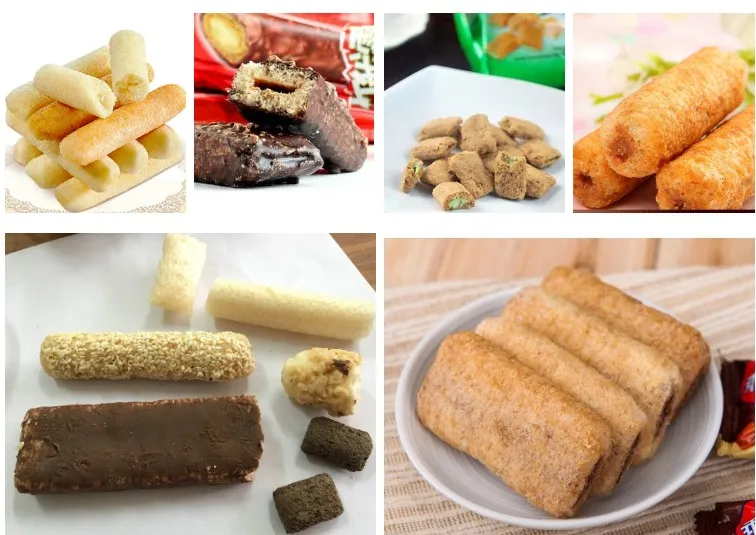
- Designed for corn flakes, puffed snacks, and breakfast cereals with screw configuration and die profile specified to your raw material and target density
- Multiple model tiers cover varying output ranges with automatic lubrication and cooling for continuous operation stability
- Line stations — mixing, extruding, drying, coating, cooling, packing — sized as one system to eliminate bottlenecks between equipment
Trial runs on your actual raw material are completed in our testing workshop before shipment, with a full report confirming product texture and density.
Description
Matched Throughput Design — Every station from batching to packing is calculated against the same raw material profile and target output, eliminating the bottleneck that forms when an extruder outpaces its dryer or coater.
Technical Specifications
| Parameter | Value |
|---|---|
| Product Type | Twin Screw Food Extruder |
| Models Available | MT70, MT85, MT75 |
| Screw Type | Twin Screw |
| Rated Power | 130 kW (MT70) / 180 kW (MT85) / 220 kW (MT75) |
| Power Consumption | 95 kW (MT70) / 120 kW (MT85) / 130 kW (MT75) |
| Output Capacity | 100–120 kg/h (MT70) / 200–300 kg/h (MT85) / 300–500 kg/h (MT75) (basis not stated in source — confirm raw material, moisture content, and die configuration) |
| Overall Dimensions (L×W×H) | 21×1.5×2.2 m (MT70) / 25×1.5×2.2 m (MT85) / 28×1.5×2.2 m (MT75) |
| Control System | Automated control (PLC/MCC presence to be confirmed against manufacturer catalog) |
| Die Configuration | Interchangeable dies for ball, tube, stick, ring, fruit loop, star, wheel, flower, heart shapes |
| Dryer Heating Source | Gas or Electric |
| Lubrication | Automatic lubricating system |
| Screw Material | Wear-resistant alloy (specific grade to be confirmed) |
| Voltage & Frequency | Customized to customer local power supply |
| Line Stations | Mixing → Extruding → Drying → Coating/Flavoring → Cooling → Packing |
| Certifications | CE, ISO |
Application Suitability
| Application | Material or Output |
|---|---|
| Puffed corn snacks and cheese balls | Corn flour, rice flour, wheat flour blends with seasoning coatings |
| Breakfast cereal and corn flakes | Corn grits, oat flour, barley flour requiring controlled gelatinisation and toasting |
| Fruit loops and ring-shaped cereal | Multi-grain flour mixes with sugar coating or vitamin fortification |
| Extruded stick and tube snacks | Wheat and corn blends requiring specific die geometry for hollow or solid cross-sections |
| Star and wheel-shaped puffed products | Rice and corn flour combinations with varying moisture content for density control |
What "Rated Capacity" Leaves Out About Your Extrusion Line
The number on the nameplate only holds true when the raw material, moisture content, and die configuration match the test conditions exactly.
I have watched a breakfast cereal line stall at the dryer because the extruder was pushing product faster than the drying belt could handle moisture removal. The quoted capacity assumed a specific corn grit formulation at a set moisture level. When the buyer switched to a higher-moisture whole grain blend, throughput dropped sharply and the Twin Screw Extruder Turnkey Production Line could not reach its nameplate figure. The extruder was never the problem — the mismatch between stations was [NEED_CITE: throughput balancing across extrusion line stations].
How Screw Configuration Dictates Product Texture
The twin-screw design allows operators to adjust screw element arrangement along the barrel, changing shear intensity and residence time for each product format. A core-filled snack requires a gentler kneading profile to maintain filling integrity, while a dense corn flake demands higher shear to achieve full starch gelatinisation. The MT70, MT85, and MT75 models share this configurability, meaning one Twin Screw Extruder Turnkey Production Line can shift between product families by reordering screw elements and swapping dies rather than replacing hardware.
Die Geometry and Expansion Control
Each die shape — from rings and fruit loops to stars and tubes — creates a different pressure drop at the barrel exit, which directly controls how much the extrudate expands upon leaving the die. A tube die with a thin wall gap produces a light, crispy texture, while a solid stick die with a larger opening yields a denser bite. The interchangeable die set supplied with each model covers standard market shapes, and custom die profiles can be machined when a buyer needs a proprietary format that competitors in their market do not carry [NEED_CITE: die design and expansion ratio relationship in food extrusion].
Reading the Power and Capacity Figures Correctly
The rated power and power consumption values differ across the three models, reflecting motor sizing for different barrel volumes and screw diameters. Power consumption sits below rated power because the motor does not run at full load continuously — actual draw depends on dough viscosity, which shifts with raw material composition and moisture addition. The output capacity ranges stated for each model carry no basis in the source data, so any buyer evaluating these figures should request a trial run report that documents throughput on their specific flour blend and target moisture content before treating the nameplate number as a guaranteed daily output.
The Hidden Cost of an Undersized Dryer
When the dryer capacity is specified independently from the extruder output, the line hits a wall the moment moisture content in the raw material rises. I have seen producers lose entire shifts because wet product piled up between the extruder exit and the dryer inlet, forcing repeated line stops to clear the conveyor. The product that does make it through often exits the dryer with uneven moisture, leading to shelf-life failures or texture complaints from downstream buyers [NEED_CITE: moisture uniformity requirements in extruded snack packaging].
Why Buyers Source the Full Line from One Supplier
Every station on this Twin Screw Extruder Turnkey Production Line is sized against the same throughput target and raw material profile, so the mixer feeds the extruder at a rate the dryer can accept, and the cooler handles what the coating drum releases. Screw configuration and die design are documented against the buyer’s target product density and shape before production begins, not copied from a generic build. An in-house testing workshop runs the buyer’s actual raw material through the extruder before shipment, producing a trial report that confirms texture, expansion, and output under real conditions. Voltage, frequency, and control language are confirmed against the buyer’s facility specifications during the design phase, preventing commissioning delays caused by mismatched electrical panels or untranslated HMI screens. Wear parts lists for screws, dies, and barrel liners ship with the line so the first replacement cycle does not catch the maintenance team unprepared.
Documentation & Verification
- Line layout drawing with station-by-station throughput calculation for your product range
- Trial run report on your raw material documenting expansion, density, and output before dispatch
- Screw element arrangement and die configuration record matched to your target product shape
- Electrical schematic with voltage, frequency, and control language confirmed for your facility
- CE declaration of conformity and ISO certificate for customs and regulatory submission
- Wear parts list with part numbers for screws, dies, and barrel liners
Installation, Commissioning & Support
- Foundation and floor space plan based on the 21–28 m line length depending on model selection
- Dedicated power circuit sizing confirmed against the 130–220 kW rated power range per model
- Equipment arrives in modular sections for assembly on-site with alignment verification at each station
- First-run parameter setting covering barrel temperature zones, screw speed, and moisture addition rate
- Operator training on die changeover procedure and automatic lubrication system monitoring
- Scheduled maintenance intervals documented for screw and barrel wear inspection
What to Prepare Before Requesting a Quote
Share your target product format, the primary flour or grain blend you intend to run, and the daily output you need the line to sustain. Include your facility voltage, frequency, and preferred control language so the electrical design matches your grid from the start. If you have existing upstream mixing or downstream packing equipment, note the connection points so the line layout accounts for integration rather than assuming a standalone installation.
Frequently Asked Questions
Q: How is line throughput matched across the extruder, dryer, and coating stations?
A: Each station is calculated against the same raw material moisture profile and target output figure. The dryer belt length and heating capacity are sized to handle the maximum moisture load the extruder can produce, and the coating drum volume matches the hourly weight of product leaving the dryer, preventing pile-ups at any transfer point.
Q: Can a trial run be performed on our specific raw material before shipment?
A: Yes. The in-house testing workshop runs your flour blend through the extruder with the proposed screw configuration and die set. The resulting report documents product expansion ratio, density, texture, and achievable throughput so you can verify the line meets your specification before it leaves the factory.
Q: How is the factory layout planned for a complete turnkey project?
A: The layout drawing places each station — mixer, extruder, dryer, coater, cooler, and packing table — in sequence with conveyor lengths and utility drop points marked. The plan accounts for your building dimensions, ceiling height, and access doors so the installation team can position equipment without on-site rework.
Q: What voltage and control options are confirmed before the line ships?
A: The electrical schematic is built around your local voltage and frequency, and the control panel language is set to match your operators. This confirmation happens during the design phase so commissioning proceeds without rewiring or software replacement after the equipment arrives at your facility.
Q: How are screw configuration and die design matched to our product?
A: The screw element sequence is arranged to deliver the shear and residence time your raw material requires for proper gelatinisation. The die is selected or machined to produce the exact shape, wall thickness, and expansion ratio your market expects, and both are recorded in the configuration document shipped with the line.
Related products
-

Fully automatic puff snack processing line
¥8,500.00 Select options This product has multiple variants. The options may be chosen on the product page -

Automatic Corn Flake Processing Line Corn Coco Pops Breakfast Cereals Snacks Making Machinery
¥7,500.00 Select options This product has multiple variants. The options may be chosen on the product page -

Twin Screw Corn Puffs Extruder Machine Small Corn Snack Food Extruder Machine
¥100.00 Select options This product has multiple variants. The options may be chosen on the product page -

Puffed Snacks Seasoning Flavor Machine Twin Screw Corn Puffing Food Making Extruder Equipment
¥8,355.00 Select options This product has multiple variants. The options may be chosen on the product page


