

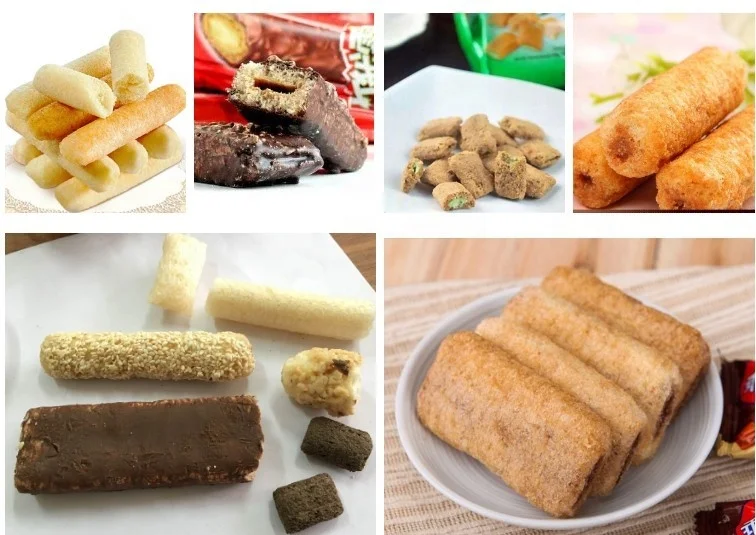
Trial runs on your actual raw material validate screw configuration and product texture before shipment.
Description
Throughput-matched turnkey layout — every station from batching to packing is sized against your actual cereal flour recipe rather than a generic nameplate figure.
Technical Specifications
| Parameter | Value |
|---|---|
| Product Type | Twin Screw Extrusion Puffed Snacks Production Line |
| Model | MT70 (also available: MT85, MT75) |
| Screw Type | Twin-screw |
| Installed Power | 130 kW (MT70) / 180 kW (MT85) / 220 kW (MT75) |
| Power Consumption | 95 kW (MT70) / 120 kW (MT85) / 130 kW (MT75) |
| Output Capacity | 100–120 kg/h (MT70, basis not stated in source) / 200–300 kg/h (MT85) / 300–500 kg/h (MT75) |
| Overall Dimensions (L×W×H) | 21 × 1.5 × 2.2 m (MT70) / 25 × 1.5 × 2.2 m (MT85) / 28 × 1.5 × 2.2 m (MT75) |
| Raw Materials | Corn, rice, wheat, oat, barley flour |
| Die Configuration | Interchangeable moulds for ball, tube, stick, ring, fruit loop, star, wheel, flower, heart shapes |
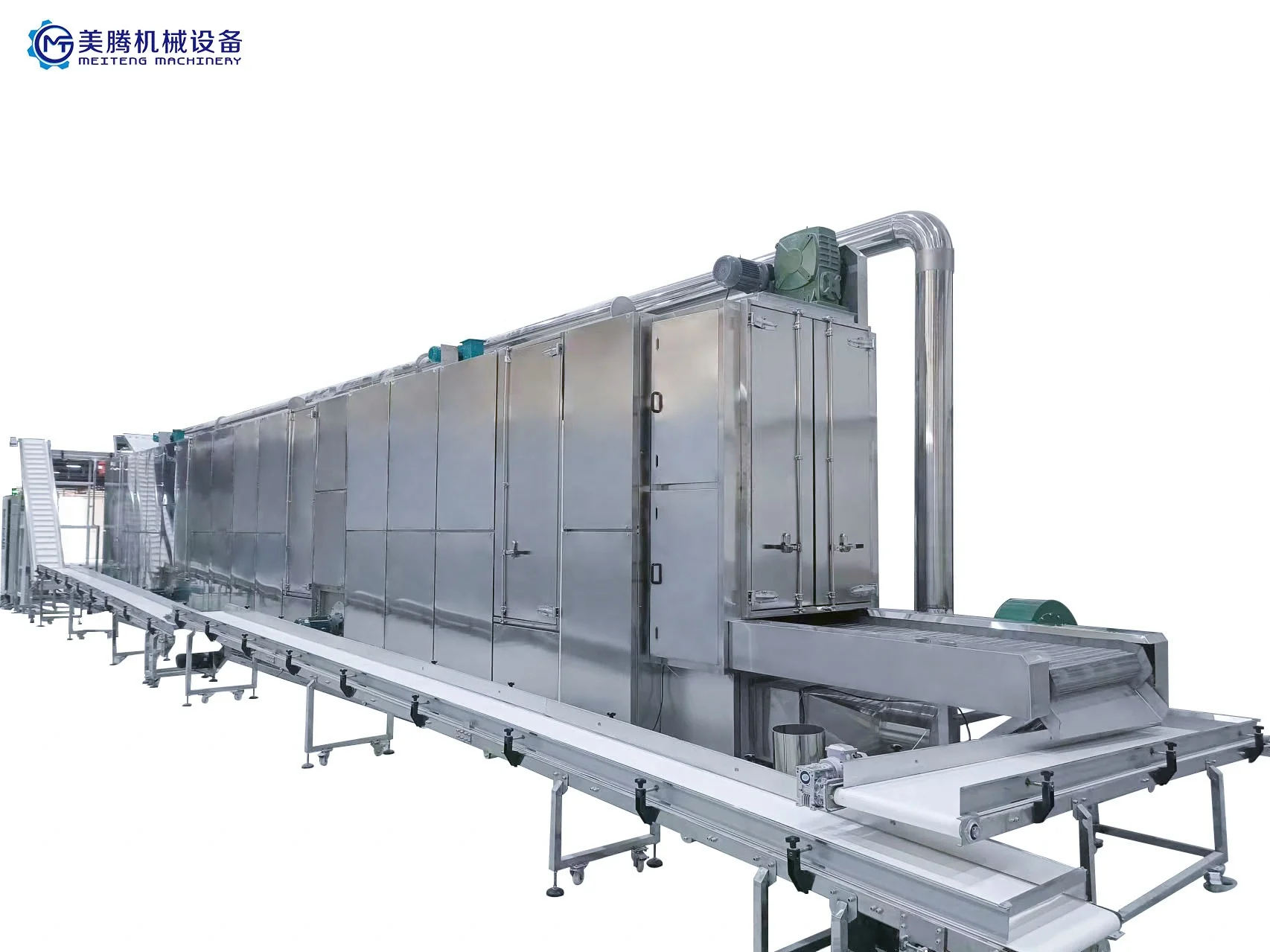
| Dryer Heating Source | Gas / Electric (selectable) |
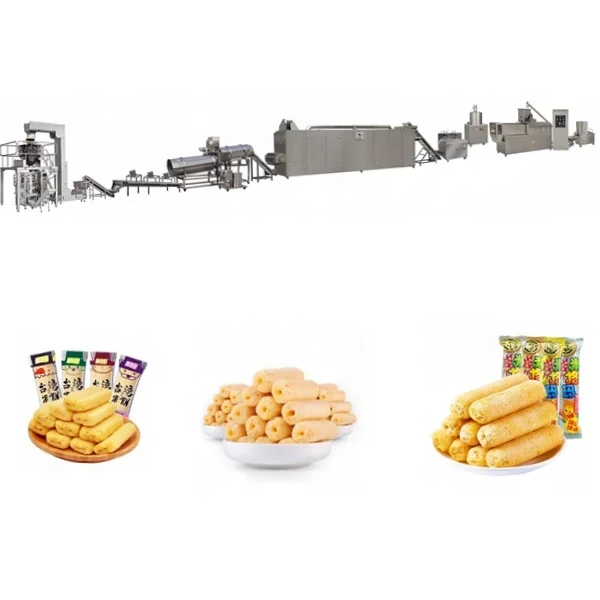
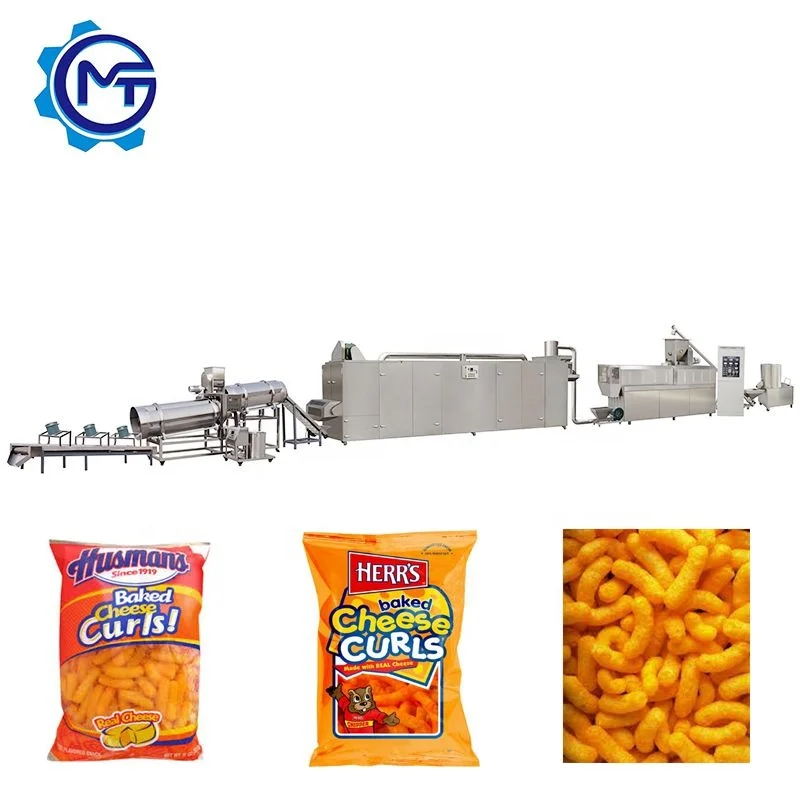
| Line Stations | Mixing → Extruding → Drying → Coating / Flavouring → Cooling → Packing |
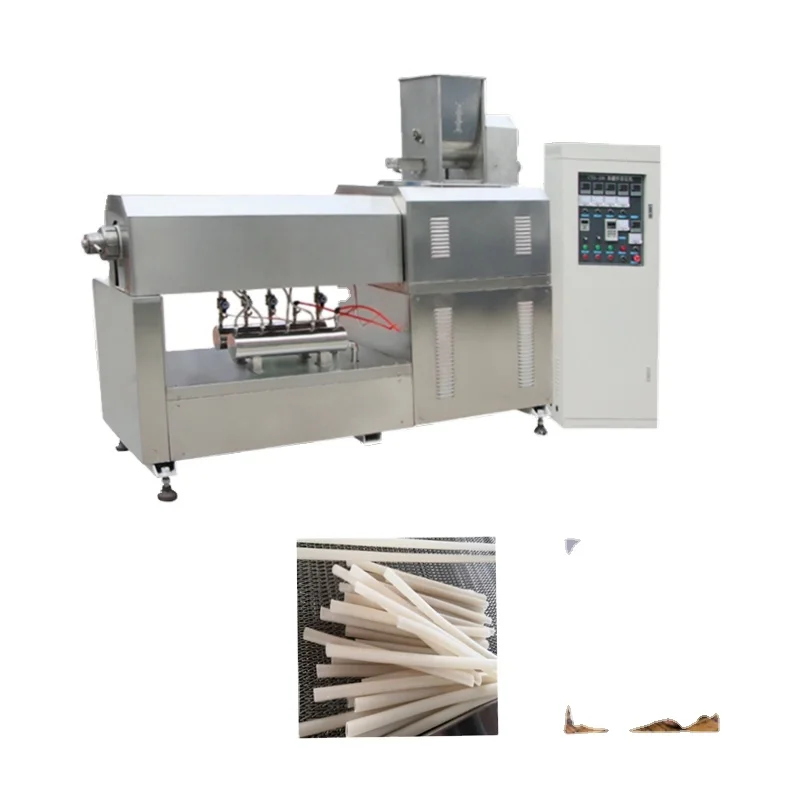
| Extruder Working Principle | Feeding system, extruding system, cutting system, heating system, gearing system, controlling system |
| Screw Feature | Special manufacturing technique, wear-resistant construction |
| Automatic Lubrication & Cooling | Yes |
| Certification | CE, ISO |
| Assembly State | Complete turnkey line |
Application Suitability
| Application | Material or Output |
|---|---|
| Direct-expanded puffed snacks | Corn, rice, wheat, oat, barley flour formed into balls, sticks, rings, fruit loops |
| Sugar-coated and flavoured variants | Extruded cereal shapes passed through coating and seasoning drums |
| Multi-shape snack portfolios | Quick die changes across star, wheel, flower, heart and tube formats |
| Fortified nutrition programme snacks | Cereal-based puffed shapes with documented screw and die configuration |
Why Nominal Capacity Figures Fail on Your Factory Floor
A twin screw extrusion puffed snacks production line turnkey only meets its quoted throughput when the screw profile, die geometry and dryer capacity are all matched to your specific flour blend.
I have walked into facilities where the extruder nameplate promised steady output, yet the line kept choking because the corn flour fat content was different from what the generic screw configuration expected. Density drifted outside what the local market wanted, and operators spent weeks guessing at barrel temperatures [NEED_CITE: impact of raw material fat content on extrusion expansion]. The same problem appears when a dryer sized for electric heating cannot keep pace with an extruder running at full barrel capacity, forcing the whole line to slow down. That is why we run your actual raw material in our testing workshop before anything ships.
Line Architecture That Prevents Station Mismatch
The complete sequence from mixing through packing stays under one supplier, so the conveyor between the extruder and dryer is sized for the actual mass flow rather than a catalogue assumption. Each station in this twin screw extrusion puffed snacks production line turnkey connects through matched transfer points, reducing product loss at transitions.
Scaling Capacity Without Rebuilding the Factory
The MT70, MT85 and MT75 models share the same line architecture, allowing capacity scaling within a consistent footprint layout. A buyer starting with the MT70 can plan a future MT85 installation using the same dryer and coating drum specifications, because downstream equipment is selected to handle the upper range from the beginning [NEED_CITE: phased capacity expansion in snack extrusion plants].
Reading the Spec Sheet Like a Process Engineer
The twin-screw configuration matters because cereal flours with varying starch and protein ratios respond differently to shear and residence time inside the barrel. A longer barrel allows more complete gelatinisation of corn and rice blends, which directly affects the expansion ratio at the die face. Interchangeable dies covering ball, tube, stick, ring and fruit loop shapes let a single extruder cover multiple SKUs without changing the screw profile. Automatic lubrication and cooling on the gearbox maintain consistent screw speed under continuous load, which keeps product density stable across long production runs.
The Cost of Skipping Pre-Shipment Verification
When a line arrives without a trial run report on your actual flour blend, the first week of production becomes an expensive experiment. Screams from the die face, uneven puffing and coating drum bottlenecks all trace back to configurations that were never validated against your raw material. Operators end up adjusting parameters blindly, and scrap rates climb until someone finally maps the correct barrel temperature profile [NEED_CITE: commissioning delays from untested extrusion configurations]. The lost production time often exceeds the cost of a proper pre-shipment trial.
Why Sourcing the Full Line from One Supplier Matters Here
Screw configuration and die design are specified to your raw material and target shape before the quotation is finalised, not copied from a generic template. Our in-house testing workshop runs your cereal flour blend and documents expansion behaviour before the extruder leaves the factory. Throughput matching across mixing, extruding, drying, coating, cooling and packing eliminates the interface gaps that appear when stations come from separate vendors. Pre-sales consultation covers layout engineering to your factory footprint, including utility routing and phased installation planning [NEED_CITE: turnkey project coordination in food extrusion]. Operator training and wear parts support continue after commissioning, with screw and die replacement records kept on file.
Documentation & Verification
- Line layout drawing matched to your factory footprint and utility connection points
- Screw and die configuration record tied to your cereal flour blend and target shapes
- Trial run report on your actual raw material documenting expansion and density
- Electrical schematic with voltage and frequency confirmed for your market
- CE declaration of conformity and ISO certificate for customs clearance
- Wear parts list identifying replacement intervals for screws and dies
Installation, Commissioning & Support
- Foundation plan reflecting the 21–28 m line length and 1.5 m width across all stations
- Dedicated power circuit sized for up to 220 kW installed load depending on model selected
- Pre-assembled modules arrive with labelled connections to reduce on-site assembly time
- Barrel temperature profile and screw speed calibrated during first run on your flour blend
- Operator training covers die changeover procedure across all nine shape formats
- Spare screw and die inventory recommended based on your planned annual running hours
What We Need to Prepare Your Line Proposal
Send us your cereal flour specification including moisture content and fat ratio, along with the target snack shapes from the die range. We also need your local voltage and frequency, available workshop length and ceiling height, and whether gas or electric drying suits your utility setup. If you have existing upstream mixers or downstream packing machines, include their throughput figures so we can match the interface.
Frequently Asked Questions
Q: How is throughput matched between the extruder, dryer and coating drum to avoid bottlenecks?
A: Each station is selected based on the mass flow from your specific flour recipe and target shape, not a generic catalogue figure. The dryer belt width and coating drum volume are calculated against the extruder output so that no single station forces the rest of the line to slow down.
Q: What documentation do you provide for utility planning and commissioning?
A: You receive a line layout drawing with utility connection points, an electrical schematic showing confirmed voltage and frequency, and a commissioning schedule aligned to your factory readiness. The trial run report from our testing workshop is included so your team can see validated parameters before the equipment arrives.
Q: Can the screw configuration and die design be specified to our raw material before shipment?
A: Yes. We run your actual cereal flour blend in our in-house testing workshop and document the screw profile, barrel temperature settings and die selection that produce the correct expansion and density. This configuration record ships with the machine so your operators start with validated parameters.
Q: How is phased installation and operator training handled on site?
A: Our engineers follow a staged installation plan that brings each station online in sequence, starting with mixing and extruding before connecting downstream drying and coating. Operator training covers die changeover, screw speed adjustment and routine maintenance, with a focus on keeping density consistent across shift changes.
Related products
-

Automatic Corn Flake Processing Line Corn Coco Pops Breakfast Cereals Snacks Making Machinery
¥7,500.00 Select options This product has multiple variants. The options may be chosen on the product page -

Puffed Snack Food Machine Snack Food Machine Puffed Snack Machine
¥11,050.00 Select options This product has multiple variants. The options may be chosen on the product page -

Automatic Puffed Food Snack Machine Electric Corn Puffs Snacks Making Machinery New Condition Flavorful Puff Snack Production
¥7,550.00 Select options This product has multiple variants. The options may be chosen on the product page -

New Condition Automatic Corn Puff Snacks Food Extruder Cheese Ball Making Machine Plant
¥100.00 Select options This product has multiple variants. The options may be chosen on the product page


