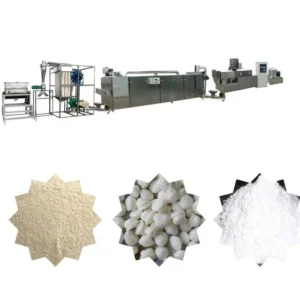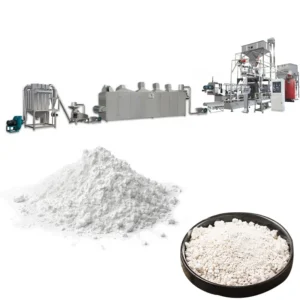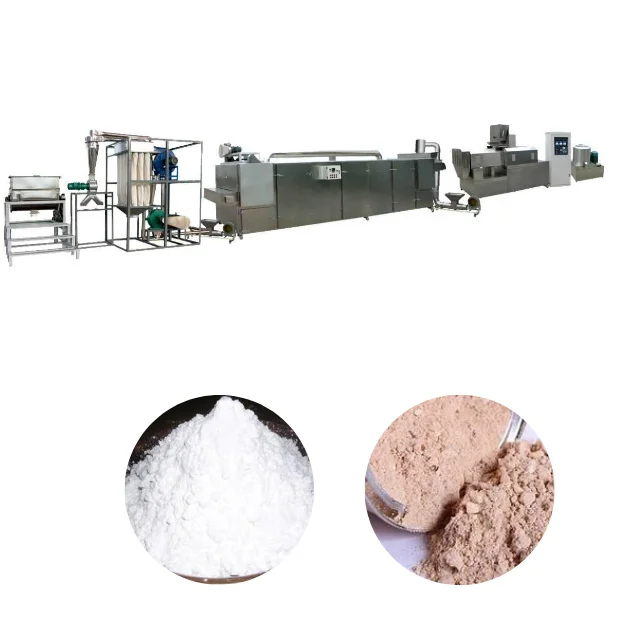
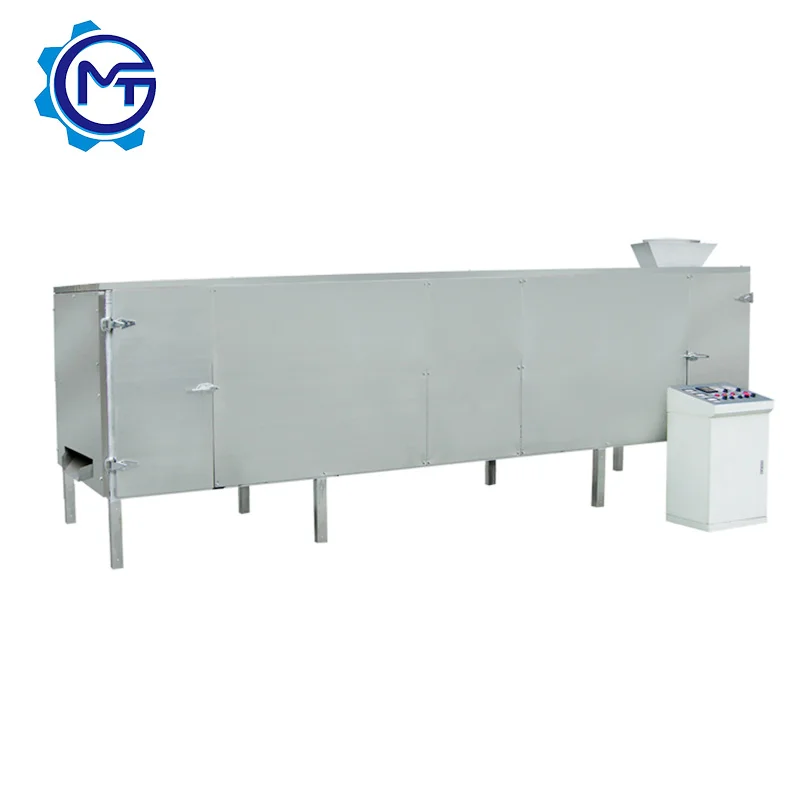
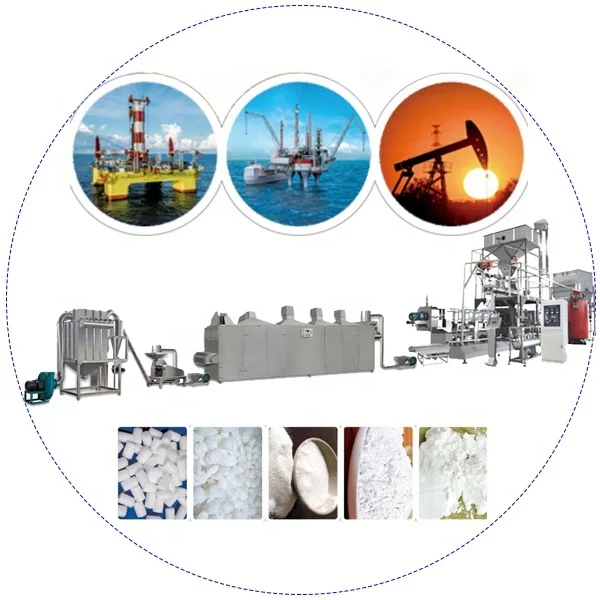
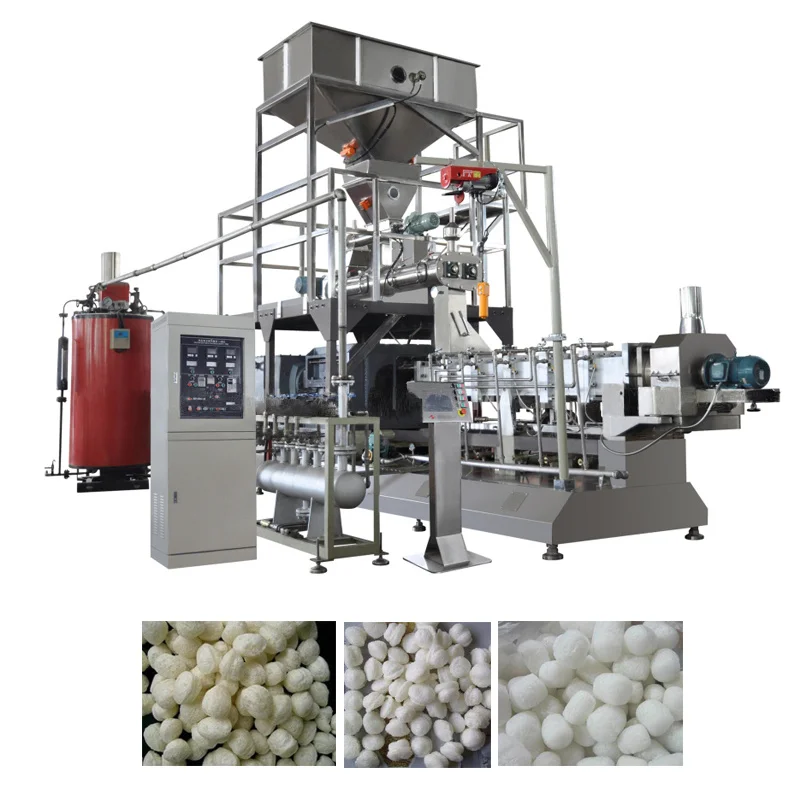
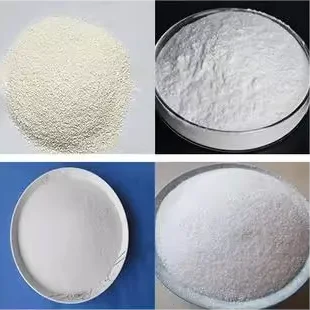

MT85, MT100, MT110, MT135 Modified Starch Production Line, Twin Screw, PLC Control — complete turnkey system from material blending through extrusion, drying, grinding and packing. Twin-screw configuration with barrel and die design matched to corn, tapioca, or potato starch source, targeting specific α-form structure and thermal viscosity properties. Frequency speed control with automatic lubrication ensures stable continuous operation, while dryer heating source is selected per site utility conditions.
Every capacity figure is verified against your actual starch source and moisture content through in-house trial runs before shipment.
- CE declared conformity
- Stainless steel 304 food-contact grinding station
- Line throughput matched across all stations to prevent bottlenecks
- Electrical schematic and voltage confirmed to your site power supply
Description
Configured Screw Geometry — Every barrel segment and screw element on this modified starch line is selected after running your specific starch source in our testing workshop, not copied from a generic build.
Technical Specifications
| Parameter | Value |
|---|---|
| Product Type | Modified Starch Production Line |
| Available Models | MT85 / MT100 / MT110 / MT135 |
| Installed Power | 90 kW (MT85), 180 kW (MT100), 200 kW (MT110), 240 kW (MT135) |
| Real Consumption | 63 kW (MT85), 120 kW (MT100), 150 kW (MT110), 165 kW (MT135) |
| Output Capacity | 100–200 kg/h (MT85), 500–600 kg/h (MT100), 500–600 kg/h (MT110), 1000–1500 kg/h (MT135) (basis not stated in source — confirm raw material type / moisture content / starch source) |
| Screw Type | Twin Screw |
| Control System | Frequency speed controlling system, PLC and MCC control |
| Lubrication | Automatic lubricating and cooling system |
| Barrel and Screw Design | Configurable per raw material and target product |
| Heating Source Options | Electric, steam, or gas (for dryer) |
| Grinding Station | Stainless steel 304 food-contact parts, bottom butterfly valve discharge, particle fineness < 10 mm |
| Processing Flow | Material preparation → Blending → Mixing → Extruding → Drying → Grinding → Packing |
| Assembly State | Complete turnkey line from batching through packing |
| Certification | CE declared conformity, ISO certified |
| Warranty | 1 year |
Application Suitability
| Application | Material or Output |
|---|---|
| Pregelatinized starch for instant food mixes | Corn starch, tapioca starch, potato starch |
| Modified starch for textile sizing | Corn starch with target viscosity profile |
| Denatured starch for paper manufacturing | Tapioca or potato starch |
| Modified starch for oil drilling fluids | Corn starch processed for thermal stability |
| Pregelatinized starch for construction additives | Corn or tapioca starch for cold-water solubility |
| Nutritional programme starch with controlled gel strength | Starch blends specified by buyer |
Why "500 kg/h" Means Nothing Without the Starch Source
Every capacity figure on this modified starch production line is tied to the starch type, moisture content, and target α-form structure you specify.
I remember a project where a buyer sourced a line rated for corn starch, then switched to wheat starch on day one. The gelatinisation temperature shifted by several degrees, the barrel profile was wrong, and the first batch came out gummy and unusable. A Modified Starch Production Line turnkey should never be quoted on a number alone — the starch source defines the entire thermal and mechanical setup. That mismatch cost the buyer days of lost material and a full screw reconfiguration on site. [NEED_CITE: starch gelatinisation temperature ranges by botanical source]
Barrel Temperature Profiling Across Starch Types
Corn starch, tapioca starch, and potato starch each demand a different barrel temperature gradient to reach full gelatinisation without degrading the polymer chains. On a Modified Starch Production Line turnkey, the heating zones are mapped to the specific onset and peak gelatinisation temperatures of the buyer’s raw material. The twin-screw configuration allows segmented barrel heating, so operators can fine-tune each zone rather than applying a single blanket temperature that either under-processes or scorches the starch.
Shear Control and the α-Form Structure Target
The degree of starch modification depends heavily on the mechanical shear applied during extrusion. Screw element spacing, flight depth, and rotational speed together determine how thoroughly the starch granules are disrupted and converted into the target α-form structure. Frequency speed control on every model in the range lets operators adjust screw RPM in real time, holding the shear profile steady across long production runs without stopping to reconfigure mechanical drives.
Moisture Content and Expansion Behaviour
The moisture level entering the barrel directly controls expansion ratio and final density of the modified starch output. Too little moisture and the starch fails to gelatinise fully; too much and the extrudate collapses after leaving the die. [NEED_CITE: moisture content impact on starch extrusion expansion] The mixing and blending stations upstream of the extruder are sized to condition the raw starch to the exact moisture percentage the screw configuration requires, so the material enters the barrel in a consistent state every cycle.
What Installed Power and Real Consumption Tell You
The gap between installed power and real consumption on each model reflects the actual energy draw during steady-state extrusion, not the peak motor rating. MT85 draws 63 kW in operation against a 90 kW installed base, while MT135 runs at 165 kW against 240 kW installed. This margin matters for sizing your facility’s electrical supply and for calculating operating cost per kilogram of output. The automatic lubricating and cooling system accounts for a portion of that auxiliary load, keeping the gearbox and bearings within safe temperature limits during continuous shifts.
When the Dryer Is Undersized for the Line
A common failure in starch processing lines is an extruder pushing material faster than the dryer can handle. The result is wet, partially gelatinised starch accumulating at the dryer infeed, which then clogs the grinding station downstream. Throughput across every station — mixing, extruding, drying, grinding, and packing — must be calculated as a single chain. [NEED_CITE: throughput matching principles in continuous food processing lines] If one station is undersized, the entire line stalls regardless of how capable the extruder is.
Why Procurement Belongs Under One Supplier
Sourcing the extruder from one vendor and the dryer from another shifts the throughput-matching burden onto the buyer. Every station on this line — from the batching system through the grinding station with its stainless steel 304 contact parts and butterfly valve discharge — is specified as a matched set. The screw and die configuration record documents exactly what was built for your starch source. An in-house testing workshop runs your actual raw material before shipment, producing a trial run report that confirms output behaviour. Electrical schematics and voltage are confirmed against your site supply before production starts. Documentation includes a CE declaration of conformity, ISO certificate, and a complete wear parts list so the first screw or die replacement does not catch you unprepared.
Documentation & Verification
- Line layout and capacity calculation matching every station from batching to packing
- Screw and die configuration record tied to your specific starch source
- Trial run report on your actual raw material from in-house testing workshop
- Electrical schematic with voltage and frequency confirmed to your site supply
- CE declaration of conformity and ISO certificate included with shipment
- Wear parts list covering screws, dies, and barrel segments for first replacement cycle
Installation, Commissioning & Support
- Foundation and floor space plan provided per selected model (MT85 through MT135) footprint
- Electrical connection points matched to confirmed voltage and frequency before production
- Twin-screw extruder arrives with barrel segments pre-assembled; site assembly covers auxiliary stations
- First-run parameter setting covers barrel temperatures, screw RPM, and dryer heat source calibration
- Operator training includes frequency speed control interface and PLC navigation in confirmed language
- Wear parts inventory covers screws, dies, and grinder screens for initial operational period
What We Need to Configure Your Line
To move from general specifications to a line built around your process, share your starch source (corn, tapioca, potato, or blend), target product properties such as viscosity or solubility, and expected daily output volume. Include your site voltage, frequency, and preferred control language so the electrical package is correct from the start. If you have upstream or downstream equipment already in place, let us know the interface points so the layout fits your existing floor plan.
Frequently Asked Questions
Q: How is output capacity verified on a specific starch source?
A: We run your actual raw material in our in-house testing workshop before shipment. The trial covers barrel temperature profile, screw speed, and moisture conditioning to confirm throughput and product quality. You receive a trial run report documenting the results, which becomes the baseline for on-site commissioning parameters.
Q: What screw configuration is selected for corn versus tapioca versus potato starch?
A: Each starch source has different gelatinisation temperatures and shear sensitivity. Corn starch typically requires higher barrel temperatures and moderate shear, while tapioca starch needs gentler handling to avoid polymer degradation. The screw element arrangement, flight depth, and die geometry are selected and documented specifically for your material.
Q: How is throughput balanced across the extruder, dryer, and grinder?
A: Every station is calculated as a linked chain based on your target output. The dryer capacity and heating source — electric, steam, or gas — are matched to the extruder discharge rate, and the grinding station with its butterfly valve discharge is sized to handle the dried output without bottlenecking the line.
Q: What electrical details are confirmed before production begins?
A: We confirm your site voltage, frequency, and control language preference. The electrical schematic is prepared to match these specifications, and the PLC and MCC control system is programmed accordingly. This step eliminates commissioning delays caused by mismatched power supply or unreadable interface text.
Q: What does the in-house trial run include and deliver?
A: The trial run processes your raw material through a scaled setup that replicates the production line’s extrusion and drying parameters. You receive a written report covering output rate, product characteristics, and recommended operating settings. This report travels with the shipment and guides the on-site commissioning process.
Related products
-
Automatic Modified Tapioca Starch Production Line 304 Stainless Steel Flour Mill and Bakery Machine
¥30.00 Select options This product has multiple variants. The options may be chosen on the product page -
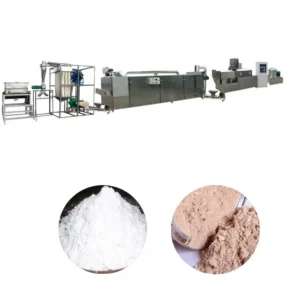
Automatic Modified Starch Making Machine Oil Drilling Starch Processing Production Line
¥30.00 Select options This product has multiple variants. The options may be chosen on the product page -
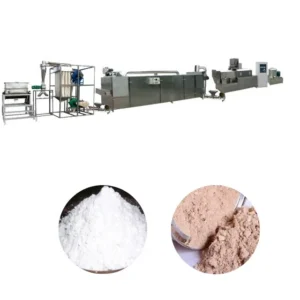
Big Capacity Modified Starch Industrial Use and Food Additives
¥50.00 Select options This product has multiple variants. The options may be chosen on the product page -
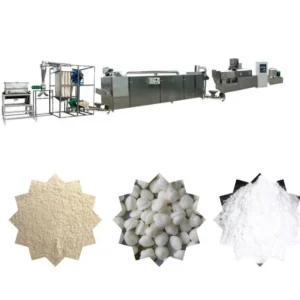
Pregelatinized Low-Cost Modified Starch Line – High-Efficiency Automated Starch Processing Machine
¥65.00 Select options This product has multiple variants. The options may be chosen on the product page