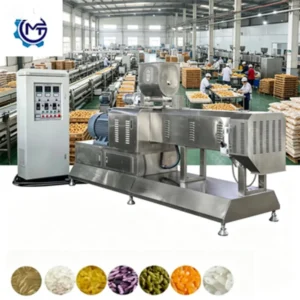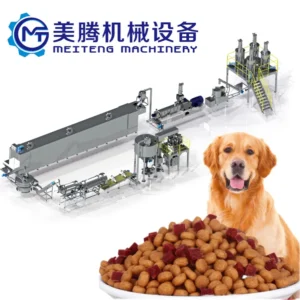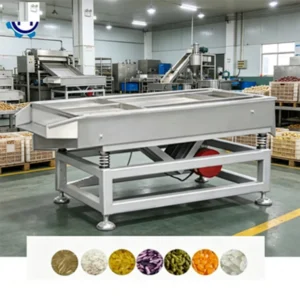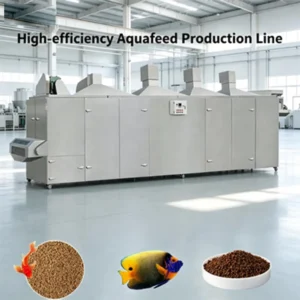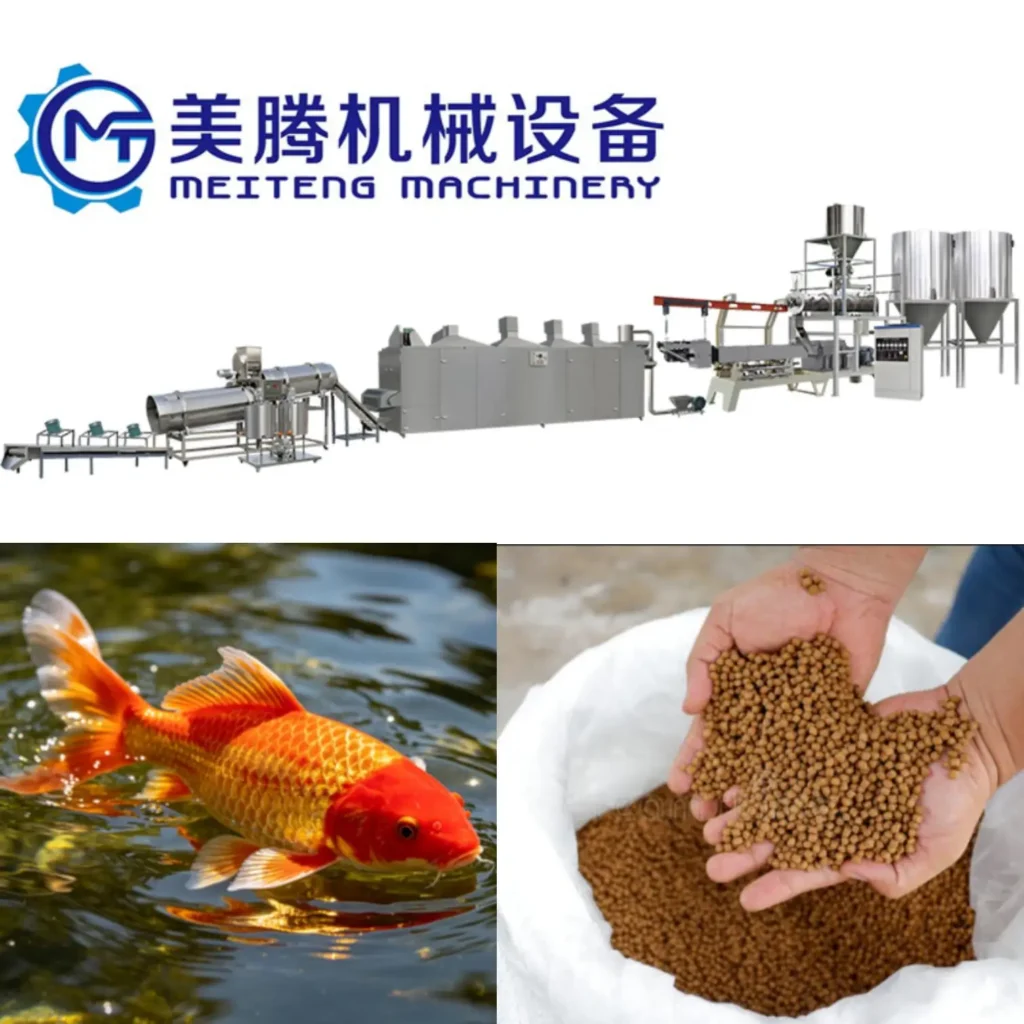

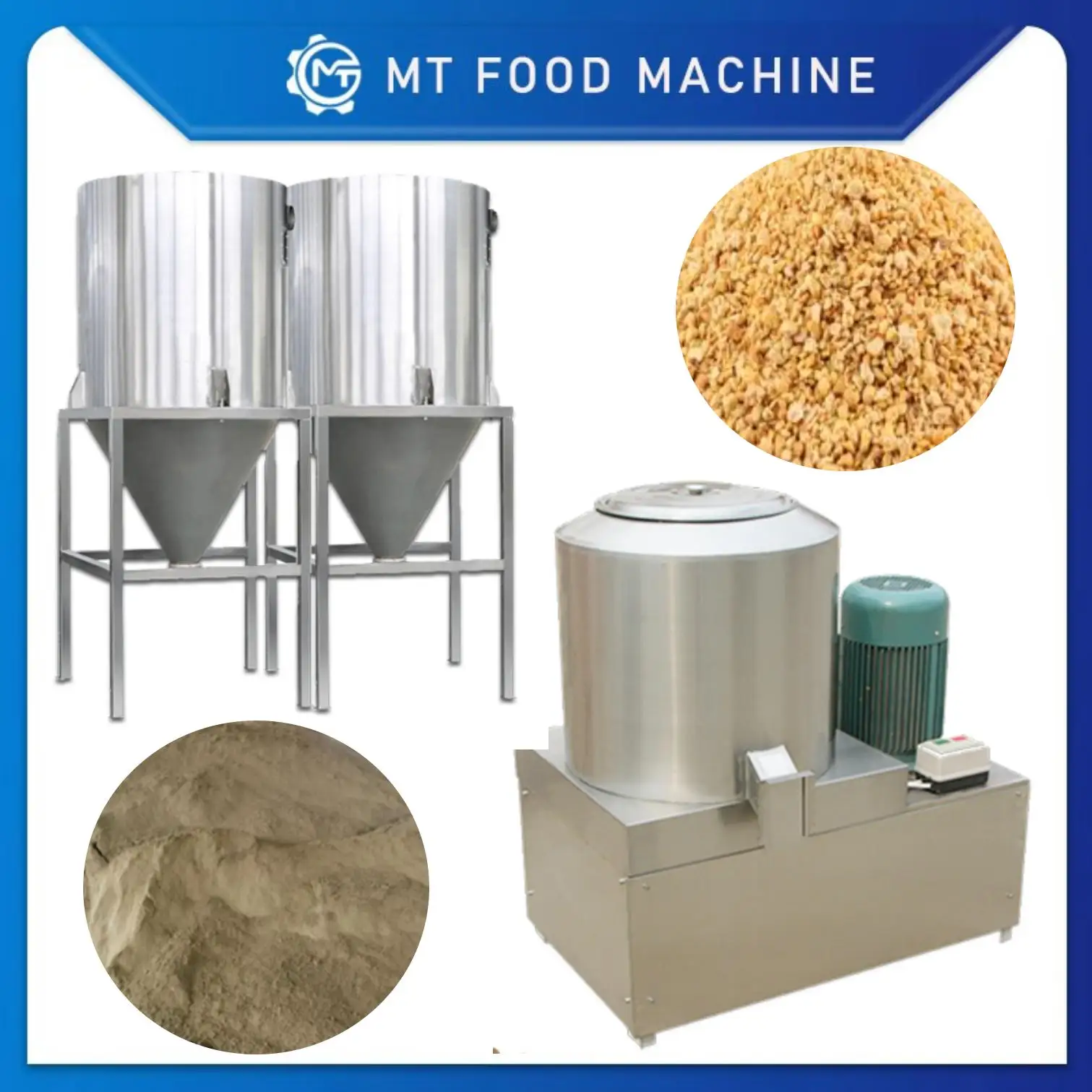
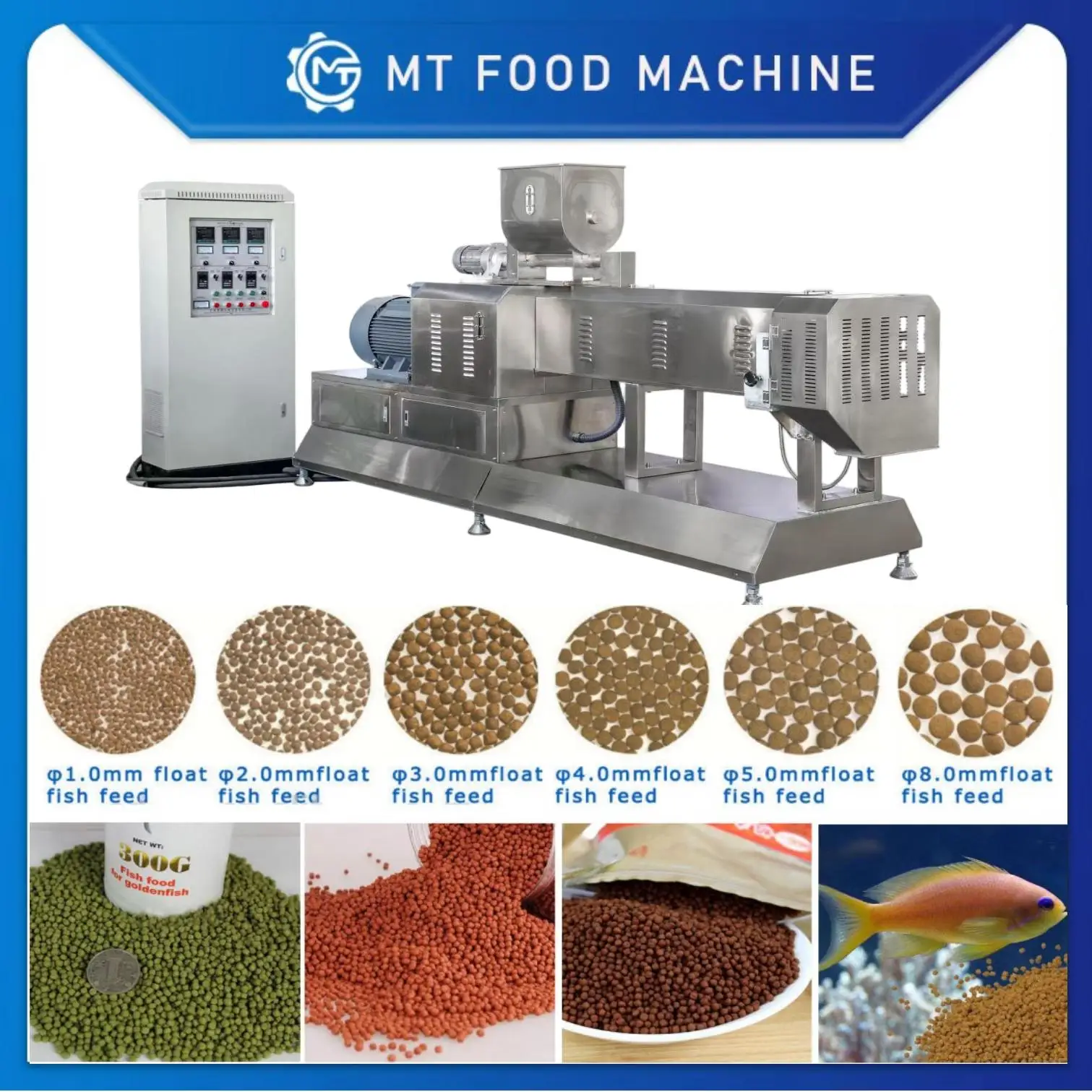


Multi-Species Fish Feed Production Line, Twin-Screw Extruder, 304 Stainless Steel — configured end-to-end from batching through extrusion to packing under one supplier. Twin-screw extrusion enables precise control of starch gelatinisation, expansion and pellet density for both floating and sinking formats across trout, salmon and catfish applications. Screw configuration and die design are matched to your raw material formulation and target pellet size, not copied from a generic build. Every line is validated with a trial run on customer material in the testing workshop before shipment.
Description
Turnkey Line Integration — A complete fish feed processing line from batching to packing under one supplier, ensuring throughput at every station is matched to your target pellet specification rather than assembled from mismatched vendors.
Technical Specifications
| Parameter | Value |
|---|---|
| Product Type | Fish Feed Production Line |
| Output Capacity | 1.0–1.5 t/h (basis not stated in source — confirm raw material formulation, moisture content, pellet size) |
| Extruder Type | Twin-screw extruder |
| Construction Material | 304 stainless steel contact zones |
| Suitable Species | Trout, salmon, catfish, and other aquaculture species |
| Control System | Available with PLC or MCC control (confirm configuration) |
| Certification | CE and ISO compliant (verify per quotation) |
Application Suitability
| Application | Material or Output |
|---|---|
| Floating aquaculture pellets | Fish meal, soybean meal, corn starch blends requiring high expansion |
| Sinking benthic feed | High-protein formulations for shrimp and bottom-feeding species |
| Multi-species feed production | Flexible die and screw changes for trout, salmon, and catfish formats |
| Fortified nutritional pellets | Vitamin and mineral premixes integrated into starch-protein matrix |
Why "Nominal Capacity" Becomes a Costly Bottleneck in Feed Mills
A line rated on paper often fails when it meets your actual raw material formulation.
When sourcing a fish feed production line turnkey, buyers frequently receive a capacity figure based on a standard test formulation that does not reflect their local ingredient availability. I once supported an installation where the extruder ran perfectly on a premium fish meal recipe, but when the mill switched to a cost-effective rapeseed meal blend, the pellets lost buoyancy and sank immediately. The line had the capacity, but the screw configuration was wrong for the starch and protein ratio in that specific mix. Every Meiteng line is validated with a trial run on your actual material before shipment [NEED_CITE: twin-screw extrusion rheology and ingredient variability].
Matching Starch Gelatinisation to Pellet Buoyancy
The twin-screw extruder at the core of this line allows precise control over barrel temperature profiles and residence time. By adjusting the screw configuration and moisture injection, operators can manage the degree of starch gelatinisation, which directly dictates whether a pellet floats or sinks. For species like trout and salmon that require specific feeding zones in the water column, this control over expansion and density is critical for the fish feed production line turnkey to meet market specifications.
Eliminating Upstream-Downstream Throughput Mismatches
A common failure in assembled lines is an extruder that outpaces the dryer, causing wet pellets to clump before coating. This processing line is configured end-to-end so that the mixing, extrusion, drying, and coating stations operate at synchronized rates. The 304 stainless steel construction across food-contact zones ensures hygiene compliance and withstands the humid, corrosive environments typical of aquaculture feed mills, extending the service life of the equipment [NEED_CITE: corrosion resistance of 304 stainless steel in feed processing environments].
Interpreting Screw Configuration and Die Geometry
The output capacity and pellet density are not determined by motor power alone; they depend on the screw element arrangement and die aperture. A high-shear configuration is necessary for complex, multi-ingredient formulations to ensure uniform dispersion of nutritional premixes. The die design must match the target pellet diameter and the expansion ratio required for the specific fish species. This line provides screw and die configurations specified to the buyer’s raw material rather than a generic build, ensuring the texture and density remain consistent across long production runs.
The Hidden Costs of Generic Line Configurations
Purchasing a line without verifying the screw and die match for your formulation leads to high rejection rates and inconsistent pellet durability. Producers often face sinking feed when the market demands floating pellets, or excessive fines in the packaging that degrade water quality. These issues force mills to halt production and re-engineer the process, causing significant downtime and wasted raw material [NEED_CITE: economic impact of pellet durability and water stability in aquaculture].
Engineering a Cohesive Production Environment
This line is sourced from a single supplier, meaning the batching system, extruder, and packing stations are designed to communicate through a unified control architecture. The in-house testing workshop allows for validation of your specific formulation before the equipment leaves the factory. The documentation includes a screw and die configuration record and a trial run report, providing a technical baseline for your operators. This approach ensures the line meets the specific demands of multi-species aquaculture production from day one.
Documentation & Verification
- Line layout and capacity calculation matching throughput across all stations.
- Screw and die configuration record matched to your raw material formulation.
- Trial run report on customer raw material from the in-house testing workshop.
- Electrical schematic with confirmed voltage, frequency, and control language.
- CE declaration of conformity and ISO certificate for the complete line.
Installation, Commissioning & Support
- Foundation planning for the twin-screw extruder and heavy-duty dryer units.
- Power distribution setup matching the confirmed voltage and frequency requirements.
- On-site assembly of the 304 stainless steel drying and coating drums.
- Parameter setting for starch gelatinisation based on local ingredient profiles.
- Operator training on screw element changes for different species formulations.
- Wear parts inventory including replacement screws and die plates.
Initiating the Technical Consultation
To configure a fish feed production line turnkey that meets your mill’s targets, provide your raw material formulation, target pellet diameter, and required buoyancy characteristics. Specify your local voltage and frequency standards, along with the available workshop footprint. Sharing your current production bottlenecks allows for a more accurate throughput calculation and layout proposal.
Frequently Asked Questions
Q: How is the 1.0–1.5 t/h capacity verified for our specific formulation?
A: The capacity is verified through a trial run in the in-house testing workshop using your actual raw material. We measure the throughput while maintaining the target pellet density and durability, ensuring the rated output is achievable on your specific mix of proteins and starches, not just a standard test recipe.
Q: How do you ensure pellet density matches our market’s floating or sinking requirements?
A: We specify the screw configuration and die geometry to control starch gelatinisation and expansion. By adjusting the barrel temperature profile and shear forces, we tune the pellet density to meet the exact buoyancy specifications required for your target species, whether they feed at the surface or the bottom.
Q: Can we send our raw material for a trial run before the line ships?
A: Yes, we require a sample of your raw material to conduct a trial run in our testing workshop. This allows us to validate the screw configuration, die design, and drying parameters, providing you with a trial run report and product samples before the equipment is finalized for shipment.
Related products
-
2-3t/h High Capacity Multi-Species Fish Feed Processing Line to Produce Fish Food
¥55,000.00 Select options This product has multiple variants. The options may be chosen on the product page -
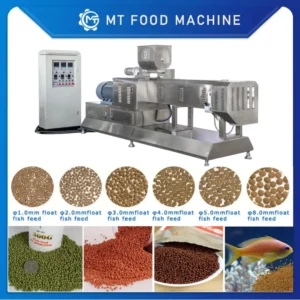
4-5t/h High Capacity Multi-Species Fish Feed Processing Line to Produce Fish Food
¥65,000.00 Select options This product has multiple variants. The options may be chosen on the product page -
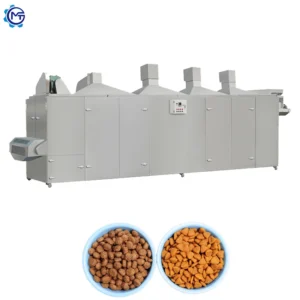
Premium Pet Food Processing Equipment Dog Cat Feed Making Machine
¥9,500.00 Select options This product has multiple variants. The options may be chosen on the product page -
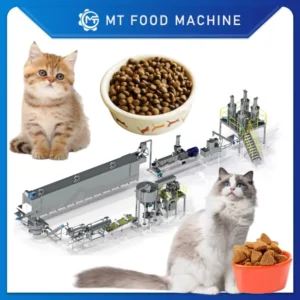
MT Brand 450-550kg/h PLC Controlled Multi-Species Pet Food Processing Line
¥40,000.00 Select options This product has multiple variants. The options may be chosen on the product page