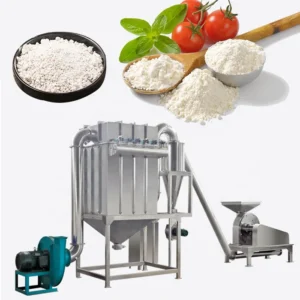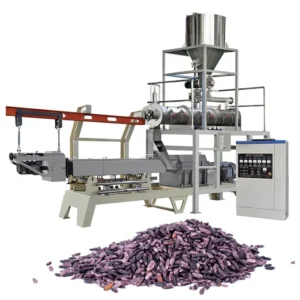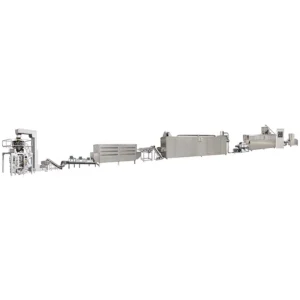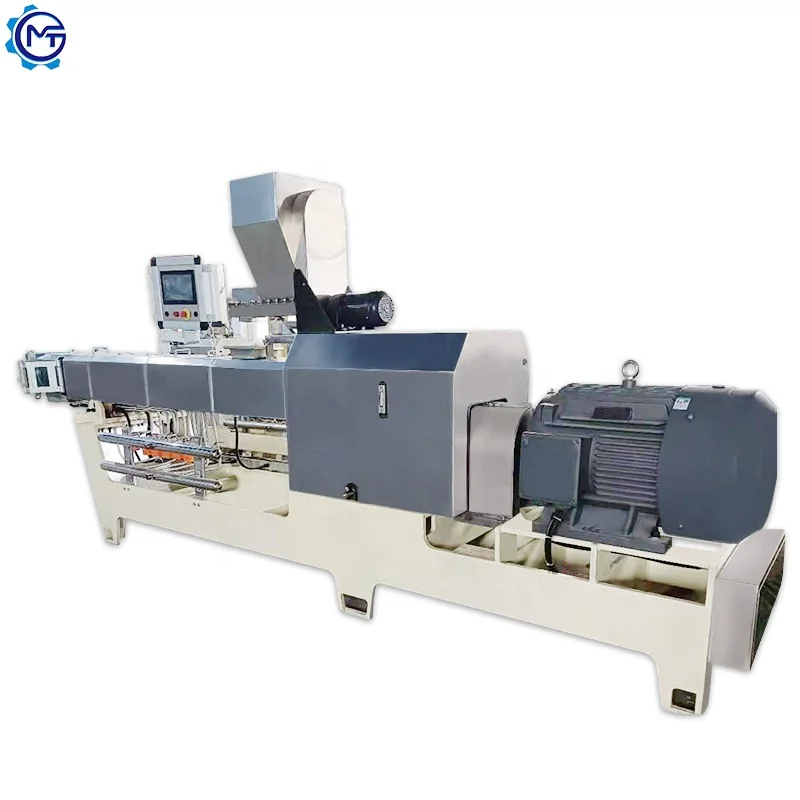


MT65 / MT70 / MT85 / MT75 / MT95 Fortified Rice Processing Line, Twin-Screw, Electric/Gas Drying — configured as a complete turnkey project from batching through extrusion, low-temperature drying, roasting, cooling and packing. Each station is throughput-matched under one supplier, with screw and die design specified to your raw material and target kernel density. Trial runs on your formulation are completed in our testing workshop before shipment, and layout, utility planning and commissioning are included.
- CE and ISO certified production line
- Automatic lubricating and cooling system for continuous operation
- Frequency-controlled mesh belt drying oven for flexible kernel specification
- Electrical schematic and voltage confirmed for your target market before production
Description
Integrated throughput matching — Every station from batching to packing is engineered as one coordinated project, preventing the bottleneck effect that occurs when an extruder outpaces its downstream dryer or packing station.
Technical Specifications
| Parameter | Value |
|---|---|
| Product Type | Fortified Rice Processing Line / Artificial Rice Making Machine |
| Available Models | MT65, MT70, MT85, MT75, MT95 |
| Screw Configuration | Twin-screw |
| Installed Power | 85 kW (MT65) to 260 kW (MT95) |
| Power Consumption | 60 kW (MT65) to 195 kW (MT95) |
| Processing Capacity | 80–100 kg/h (MT65) to 800–1000 kg/h (MT95) (basis not stated in source — confirm raw material composition, moisture content and kernel size) |
| Overall Dimensions (L×W×H) | 28×1.2×2.2 m (MT65) to 36×3.5×4.3 m (MT95) |
| Feeding System | Single or double screw feeding system selectable according to material |
| Control System | Frequency speed controlling with high automation |
| Lubrication | Automatic lubricating and cooling system |
| Drying Oven Heating Source | Electric or gas |
| Drying Oven Feature | Circulation drying process with frequency motor controlled mesh belt speed |
| Screw Material | Special wear-resistant alloy |
| Assembly State | Complete line (mixing, extruding, vibrating, low temperature drying, cooling, high temperature roasting, cooling, packing) |
| Standards | CE, ISO |
Application Suitability
| Application | Material or Output |
|---|---|
| Fortified Rice Kernel Production | Broken rice, rice bran, corn, millet, wheat, oats, buckwheat, bean, starch base with added vitamins and minerals |
| Artificial Rice Manufacturing | Grain-based formulations shaped into rice-like kernels for nutritional food programmes |
| Infant Formula Rice Processing | Pre-gelatinised grain blends fortified with micro-nutrients for infant nutrition products |
| Staple Food Fortification Projects | Government and NGO nutrition initiatives requiring fortified rice kernels at production scale |
What "300 kg/h" Really Means on Your Raw Material
Capacity figures only hold when the formulation, moisture content, and kernel geometry match the test conditions.
I spent two weeks on a client’s floor adjusting screw configurations because a line that ran smoothly on standard rice flour during factory acceptance choked repeatedly on their杂粮预混料. The daily output dropped to roughly sixty percent of the contracted value while the dryer and packing stations sat idle. A fortified rice processing line turnkey project must account for the specific grain blend and micronutrient additives you will actually run, not just a generic reference material [NEED_CITE: raw material variability in extrusion throughput]. Without a trial run on your exact formulation before the equipment leaves the factory, capacity claims remain theoretical.
Layout as a Coordinated System
When a factory specifies a complete production installation, the physical arrangement of stations determines daily operational efficiency. The fortified rice processing line turnkey delivery includes a layout document showing material flow from the mixing station through extrusion, vibrating separation, low temperature drying, cooling, high temperature roasting, a second cooling stage, and final packing. Each transition point is calculated so that product accumulates nowhere and starves nowhere.
Phased Installation for Active Construction Sites
Many buyers order processing equipment while the factory building is still under construction. The project schedule can be divided into phases: utility rough-in and foundation preparation first, main equipment positioning second, and electrical commissioning last. This approach lets the construction contractor work on the building shell while the extruder, dryer, and roasting oven are staged and assembled in sequence, reducing the total time from equipment delivery to first production run [NEED_CITE: phased installation planning for food processing facilities].
Reading the Specification Sheet
The twin-screw configuration across the MT65 through MT95 range matters directly for fortified rice production. Twin-screw extruders handle high-moisture, multi-ingredient formulations more effectively than single-screw designs because the intermeshing screws create a self-wiping action that prevents sticky grain pastes from building up inside the barrel. The automatic lubricating and cooling system maintains barrel temperature stability during extended runs, which is critical when producing uniform rice kernels where even slight thermal drift alters the gelatinisation degree and final kernel density. The frequency-controlled feeding system and mesh belt dryer speed together allow operators to adjust the residence time and moisture removal rate without stopping the line, maintaining consistency across production batches of varying grain compositions.
The Cost of Mismatched Downstream Equipment
When the extruder is sourced from one vendor and the dryer from another, the buyer becomes responsible for throughput matching. I have seen lines where the drying oven could not remove moisture fast enough for the extruder’s output, forcing the operator to slow the entire line or accept under-dried kernels that cracked during roasting. The roasting stage then compounded the problem because kernels entering at inconsistent moisture levels browned unevenly [NEED_CITE: moisture variation effects on grain roasting uniformity]. These problems surface only after installation, when changing equipment is expensive and production deadlines are already slipping.
Why Source the Full Line From One Project Supplier
The layout and capacity calculation covers every station, so the MT95 extruder rated for higher throughput is paired with a correspondingly sized dryer and packing system rather than generic downstream units. Screw configuration and die design are specified to your target kernel size and cooking behaviour, not copied from a standard build. The in-house testing workshop runs your actual raw material before shipment, generating a trial report that confirms output on your formulation. Electrical schematics and voltage are confirmed for your market before production starts, avoiding commissioning delays caused by incompatible power supply. Operator training and a documented wear parts list are included so your team can maintain the screw elements, dies, and mesh belts without waiting for external service.
Documentation & Verification
- Line layout and capacity calculation showing throughput matching across mixing, extrusion, drying, roasting, and packing stations
- Trial run report produced on your grain formulation in the testing workshop before dispatch
- Screw and die configuration record matched to your target kernel dimensions and density
- Electrical schematic with voltage and frequency confirmed for your local power grid
- Factory test record documenting operational parameters before crating
- Operation and maintenance manual covering all line stations
Installation, Commissioning & Support
- Foundation plan specifying load-bearing requirements for the 36 m maximum line length and individual station weights
- Dedicated circuit planning for the 260 kW maximum installed power draw on the MT95 configuration
- On-site assembly supervision covering station alignment and material flow verification
- First-run parameter setting including barrel temperature profile and mesh belt speed calibration
- Operator training on frequency drive controls and automatic lubrication system monitoring
- Wear parts list covering screws, dies, and dryer mesh belts with replacement intervals
Preparing Your Project Enquiry
To configure a line that matches your production targets, share your intended grain formulation including the base ingredients and micronutrient additives, along with the target kernel size and daily output requirement. Specify your facility’s available floor area and ceiling height, as the line dimensions range up to 36 metres in length. Confirm your local voltage and frequency standards and preferred control language so the electrical system is built correctly from the start.
Frequently Asked Questions
Q: How is capacity verified on my specific raw material formulation before the line ships?
A: Your grain blend, including base ingredients and micronutrient additives, is run in the in-house testing workshop using the configured screw and die set. A trial report documents the achievable throughput, kernel density, and gelatinisation degree on your actual formulation before the equipment is approved for dispatch.
Q: What layout and utility planning is included when ordering the full project?
A: You receive a line layout drawing showing the position of every station from mixing through packing, along with utility connection points for water, electricity, and gas. The document includes power requirements for each station and the total connected load for your electrical contractor.
Q: How is throughput matched between the extruder, dryer and downstream stations to prevent bottlenecks?
A: Each station is sized based on the extruder output and the moisture removal rate required at the drying stage. The circulation drying oven length and mesh belt speed are calculated so the dryer handles the extruder’s full output without product accumulation or starvation at the roasting stage.
Q: What is the commissioning schedule and does it include operator training on our site?
A: Commissioning covers station-by-station startup, parameter calibration on your raw material, and a sustained production run to verify throughput. Operator training is included, covering frequency drive controls, automatic lubrication monitoring, screw and die changeover, and daily maintenance routines.
Q: Can the line be phased for installation if the factory build is still in progress?
A: The project schedule can be divided into phases aligned with your construction timeline. Utility rough-in specifications are provided first, main equipment delivery and positioning second, and electrical commissioning last, allowing building work and equipment staging to proceed in parallel.
Related products
-

Industrial Automatic 500kg/h Baby Cereal Nutrition Powder Extruder Manufacturing Process Line
¥8,238.27 Add to cart -

Hygienic Stainless Steel Infant Rice Powder Processing Line Automatic 500kg/h Capacity PLC Controlled
¥9,500.00 Add to cart -

High Precision Automatic 500kg/h Baby Food Nutrition Powder Rice Extrusion Processing Line
¥9,500.00 Add to cart -

Automatic Iron Fortified Baby Rice Cereal Nutrition Powder Making Machine 500kg/h PLC Controlled
¥8,238.27 Add to cart