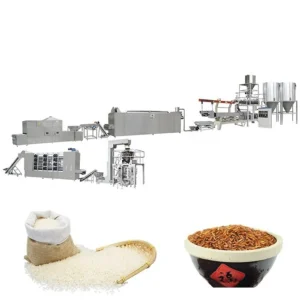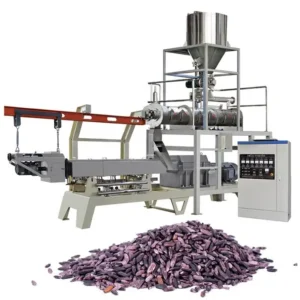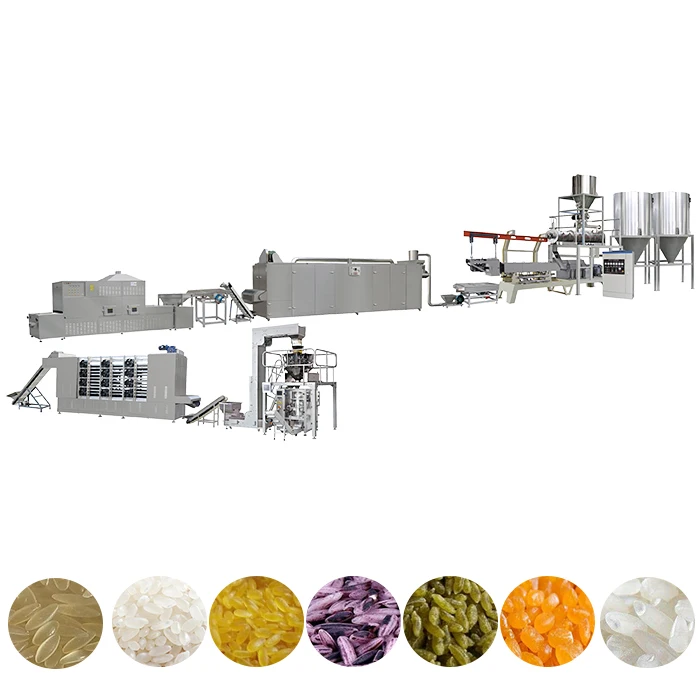
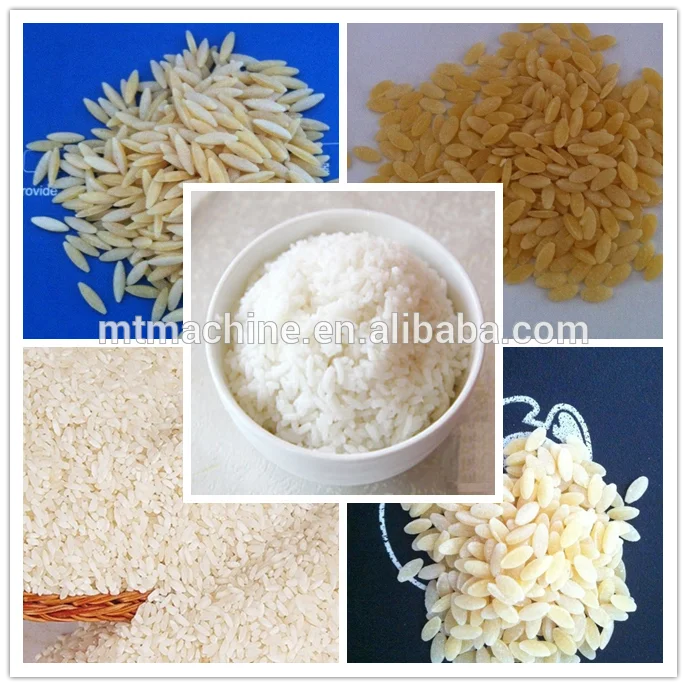

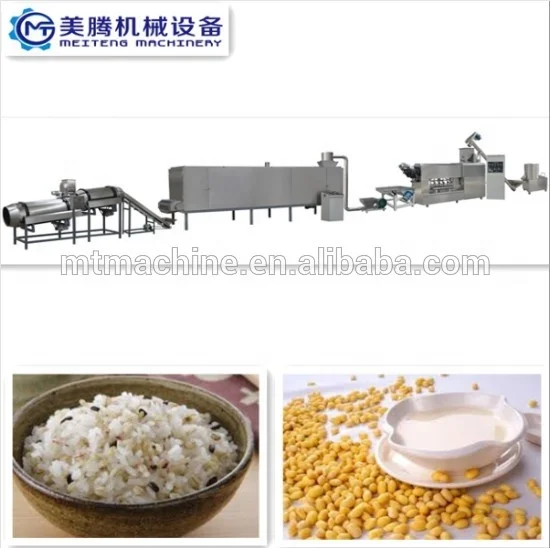
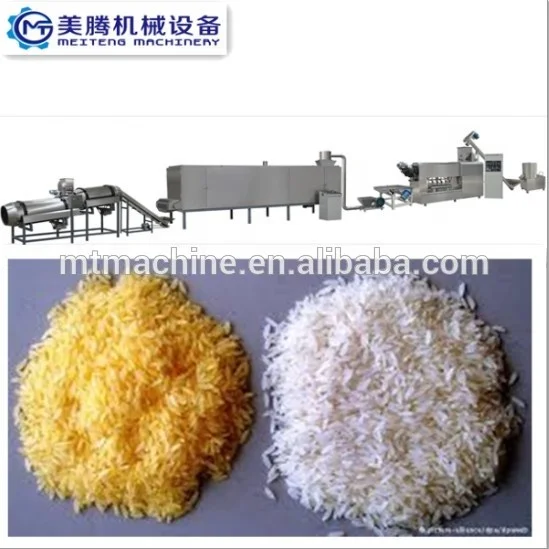
MT-70 Artificial Fortified Rice Production Line, Single-Screw, SS304 Contact — engineered for complete nutritional rice processing from batching through extrusion to packing.
- Line throughput matched across mixer, conveyor, and extruder to eliminate bottlenecks on your actual rice flour formula
- Screw length and die configuration specified for optimal starch gelatinisation and vitamin retention
- CE and ISO certified with food-grade stainless steel construction throughout
Complete turnkey layout planning, in-house trial runs on your raw material before shipment, and documented screw and die configuration records ensure your production targets are met from day one.
Description
Throughput-Matched Line Engineering — Every station from mixing to packing is calculated against your actual rice flour formula so the Artificial Fortified Rice Production Line turnkey holds its rated output without bottlenecks.
Technical Specifications
| Parameter | Value |
|---|---|
| Product Type | Artificial Fortified Rice Production Line |
| Model | MT-70 |
| Capacity Range | 100-500 kg/h (basis not stated in source — confirm raw material blend, moisture, and grain size) |
| Screw Type | Single-screw |
| Screw Length | 1510 mm |
| Construction Material | Stainless Steel (SS201 & SS304) |
| Mixer Motor Power | 4.0 kW |
| Mixer Batch Output | 3.0-4.0 kg/time (source value — verify against manufacturer catalog) |
| Mixer Dimensions | 1.2 × 0.9 × 1.4 m |
| Screw Conveyor Motor | 1.1 kW |
| Screw Conveyor Throughput | 0-150 kg/h (basis not stated in source — confirm material density and incline angle) |
| Screw Conveyor Dimensions | 2.5 × 0.6 × 2.3 m |
| Line Stations | Mixer, Screw Conveyor, Extruder, Dryer, Packing |
| End Products | Artificial Rice, Puffed Rice, Fortified Rice |
| Control System | PLC and MCC available |
| Certifications | CE, ISO |
Application Suitability
| Application | Material or Output |
|---|---|
| Fortified rice for nutrition programmes | Rice powder blended with vitamin and mineral premix |
| Artificial instant rice production | Broken rice flour and corn powder reconstituted into uniform grains |
| Puffed rice snack manufacturing | Rice grits expanded through controlled gelatinisation and die-cutting |
| Contract turnkey food line projects | Full processing line commissioned in phased installation schedules |
What "Rated Capacity" Leaves Out When You Buy an Artificial Fortified Rice Production Line Turnkey
The number on the nameplate means nothing if the dryer cannot keep up with the extruder.
I once watched a fortified rice line stall in its second week because the ribbon mixer batch cycle was forty seconds longer than the extruder’s feed interval. The operator kept the screw running to compensate, and within an hour the hopper bridged with clumped rice flour and vitamin premix. The whole shift was lost to cleaning. That experience shaped how I approach every turnkey project now: before I quote a line, I pull the customer’s actual formula and run it through the in-house testing workshop. Only when every station — mixer, conveyor, extruder, dryer — can sustain continuous flow on that specific blend do I sign off on the capacity figure [NEED_CITE: throughput matching principles in food extrusion lines].
Single-Screw Geometry Built for Rice Flour Gelatinisation
The MT-70 uses a single-screw configuration with a 1510 mm barrel length, giving rice flour blends a controlled residence time that allows starch gelatinisation to progress evenly without scorching heat-sensitive vitamin additives. This screw profile was selected specifically for low-shear processing of fine rice powders where twin-screw aggression would degrade micronutrient integrity.
Matching Mixer Batch Cycles to Extruder Feed Demand
An Artificial Fortified Rice Production Line turnkey fails when the upstream mixer cannot deliver material as fast as the extruder consumes it. The 4.0 kW ribbon mixer produces batches at a rate that must align with the screw conveyor’s 0-150 kg/h delivery window. We calculate batch timing against your specific rice-to-corn powder ratio and vitamin loading percentage to ensure no starvation gaps form in the feed throat.
Reading the Specs That Actually Matter for Fortified Rice
The screw length of 1510 mm determines how long material stays inside the barrel. For fortified rice, that residence time must be long enough to fully gelatinise rice starch yet short enough to prevent thermal degradation of added vitamins A, B-complex, and iron compounds. The stainless steel construction (SS201 & SS304) in food-contact zones prevents iron contamination that could react with premix minerals and alter product colour. Motor ratings across the mixer (4.0 kW) and conveyor (1.1 kW) indicate how much torque is available when denser, oil-enriched formulas increase resistance through the barrel. Die design, specified after a trial run, controls whether the reconstituted grain mimics long-grain basmati or short-grain japonica shapes [NEED_CITE: starch gelatinisation temperature ranges for rice-based extrusion].
The Hidden Cost of Skipping the Trial Run
Buyers who approve a line on paper and skip the workshop trial often discover formula incompatibilities only after the equipment is bolted to the factory floor. A rice flour blend with three percent added fat behaves entirely differently from the standard test material — it can coat the screw flights, reduce conveyance efficiency, and produce grains that crack during drying. Rectifying these issues on-site costs production days and replacement tooling that a pre-shipment trial would have identified [NEED_CITE: post-installation modification costs in extrusion projects].
Why Project Buyers Source This Line Here
The complete Artificial Fortified Rice Production Line turnkey ships from one supplier, meaning throughput is calculated across every station rather than assembled from mismatched vendor quotes. Screw and die configuration is documented against your specific rice flour formula and target grain geometry before fabrication begins. The in-house testing workshop processes your actual raw material blend and produces a trial run report you can review before authorising shipment. Electrical schematics, voltage specifications, and control panel language are confirmed in writing during the design phase, eliminating commissioning surprises at your site. CE and ISO documentation accompanies every delivery for customs and regulatory clearance in the destination market.
Documentation & Verification
- Line layout drawing with throughput calculations for each station matched to your rice formula
- Screw and die configuration record specific to your target grain shape and fortification level
- Factory trial run report on your actual rice flour blend before dispatch
- Electrical schematic with confirmed voltage, frequency, and panel language
- CE declaration of conformity and ISO certificate for import clearance
Installation, Commissioning & Support
- Floor plan and utility connections mapped to mixer (1.2 × 0.9 × 1.4 m) and conveyor (2.5 × 0.6 × 2.3 m) footprints
- Dedicated electrical circuits sized to the 4.0 kW mixer and 1.1 kW conveyor motors plus extruder and dryer loads
- Assembled line sections delivered with matching bolt patterns for rapid on-site alignment
- First-run parameter setting by commissioning engineer using your rice flour and vitamin premix
- Operator training covering die changeover, screw cleaning, and barrel temperature adjustments
- Wear parts list including replacement screws and dies with reorder lead times documented
What We Need to Configure Your Line
Send us your rice flour blend ratio, the specific vitamins and minerals you are adding, and your target hourly output. Include your workshop dimensions and ceiling height so we can plan the line layout, along with local voltage and frequency. If you have existing upstream milling or downstream packing equipment, share those specifications so we can match interface points.
Frequently Asked Questions
Q: How is throughput matched between the mixer, extruder, and dryer to prevent bottlenecks?
A: We calculate the batch cycle time of the ribbon mixer against the extruder’s continuous feed rate and the dryer’s residence capacity. Each station is sized so material flows without queuing or starvation, verified during the in-house trial run on your actual rice flour formula before the line ships.
Q: Can a trial run be performed on my rice flour formula before the line ships?
A: Yes. The in-house testing workshop processes your supplied raw material blend through the MT-70 single-screw extruder. You receive a trial run report documenting screw speed, barrel temperature profile, die selection, and product quality metrics before authorising shipment.
Q: What does phased installation and commissioning look like for a complete line?
A: Foundation and utility rough-in come first, followed by station placement in sequence from mixer to packing. Each station is aligned, wired, and tested individually before full-line continuous runs begin. Commissioning engineers remain on-site through operator training and initial production validation.
Q: How are voltage, frequency, and control language confirmed for the target market?
A: During the design phase we collect your site’s electrical specifications and confirm motor winding ratios, control panel voltage, and HMI language in writing. Electrical schematics are issued for your approval before fabrication begins, preventing mismatches at commissioning.
Q: What spare wear parts are included, and how are replacements supplied?
A: The initial shipment includes replacement screws and dies matched to your product specification. A wear parts list documents part numbers, material grades, and expected service intervals. Replacements are manufactured to the same configuration and shipped on documented lead times.
Related products
-
150-500kg/h Twin Screw Extruder Baby Rice Flour Making Machine
¥9,500.00 Select options This product has multiple variants. The options may be chosen on the product page -

Full Automatic Complete Baby Food Nutrition Powder Porridge Processing Production Line for Infant Nutrition Factory
¥9,500.00 Add to cart -
500kg/h Automatic PLC Controlled Nutrition Baby Food Extruder Machine for Rice Cereal Processing
¥9,500.00 Add to cart -

High Precision Automatic 500kg/h Baby Food Nutrition Powder Rice Extrusion Processing Line
¥9,500.00 Add to cart