

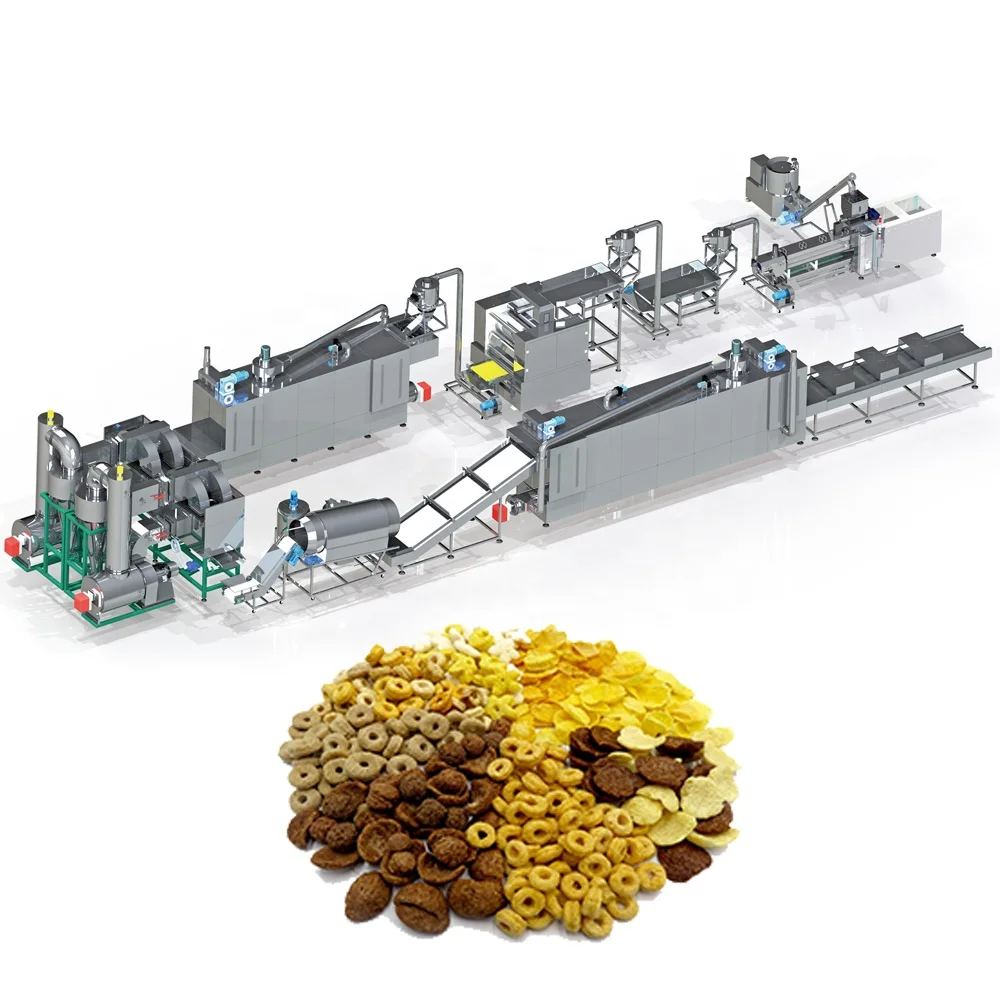
Automatic Corn Flake Processing Line, Twin Screw Extruder, Food-Grade Stainless Steel — designed for breakfast cereal and corn flake production from batching to packing.
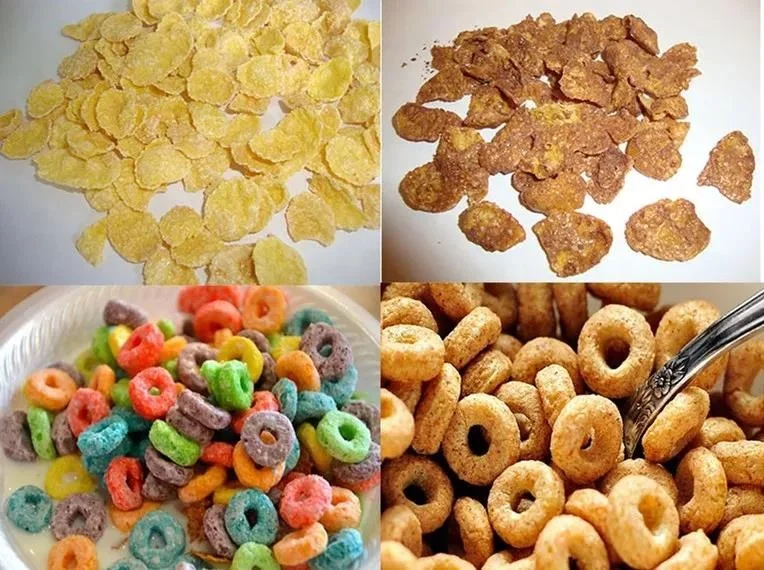
- Screw configuration and die design matched to your grain blend, controlling expansion and flake density across corn flakes, coco pops, and fruit loops
- Energy flexibility with electricity, gas, diesel, or steam heating to suit local utility conditions
One supplier delivers matched throughput at every station, factory trial runs on your raw material, and on-site commissioning with operator training.
Description
Throughput-Matched Line Design — Every station from mixing through roasting is sized to the extruder’s real output on your grain blend, preventing the dryer or cooler from choking your cereal line.
Technical Specifications
| Parameter | Value |
|---|---|
| Product Type | Breakfast Cereal & Corn Flake Extrusion Line |
| Extruder Type | Twin Screw Extruder |
| Contact Material | Food grade stainless steel 201/304 |
| Voltage & Frequency | Three phases 380V/50Hz, Single phase 220V/50Hz (customizable to local voltage) |
| Motor | Siemens (made in China) or China top brand |
| Inverter | Delixi or Delta |
| Heating Power | ~100 kW (electricity); ~50–60 kW (gas or diesel) |
| Energy Options | Electricity / Gas / Diesel / Steam |
| Output Shapes | Ball, tube, stick, ring, fruit loop, star, wheel, flower, heart (via die change) |
| Raw Material Form | Powder (flour) or grits |
| Line Stations | Mixer → Extruder → Vibrate Cooler Machine → Roasting Machine → Packing Machine |
| Control System | Available with PLC or MCC control (basis to be confirmed) |
| Output Capacity | To be confirmed with specific raw material and moisture content |
| Screw Configuration | L:D ratio and diameter matched to product (basis to be confirmed) |
| Certification | CE; ISO certified |
Application Suitability
| Application | Material or Output |
|---|---|
| Corn flakes and breakfast cereals | Corn grits, corn flour, maize blends |
| Coco pops and chocolate ball cereals | Rice flour, cocoa powder, sugar blends |
| Grain-based puffed snacks | Corn, rice, millets, wheat, oat, barley |
| Artificial and fortified rice | Rice flour with added vitamins and minerals |
| Multi-shape extruded snacks | Grain blends producing ball, ring, stick, fruit loop formats |
Why Nominal Capacity Rarely Survives Contact with Your Actual Grain Blend
A breakfast cereal production line turnkey only delivers its quoted output when every station is balanced to what the extruder actually produces on your specific formula.
I learned this the hard way commissioning a corn flake line years back. The factory trial ran on standard corn grits and the flakes came out golden and crisp. When we reached the buyer’s site and loaded their high-fiber multigrain blend, the expansion collapsed entirely. The first two days of production went straight to waste. The extruder was rated for a certain throughput, but the downstream cooler and roaster had been sized to that number without accounting for how the buyer’s formula changed moisture release and dwell time requirements. [NEED_CITE: starch gelatinisation behaviour across different grain blends]
This is the gap that turns a promising line investment into months of troubleshooting.
Matching Screw Geometry to Your Grain Blend
The twin screw extruder at the heart of a breakfast cereal production line turnkey must have its screw configuration and die design specified to the buyer’s actual raw material. Corn grits behave differently from rice flour under shear and heat; a blend with oat or barley introduces beta-glucan that alters viscosity inside the barrel. The screw elements — conveying, kneading, and reverse sections — are arranged to control residence time and mechanical energy input so that starch gelatinisation reaches the level your target flake density requires. A generic screw build copied from a standard catalogue cannot account for these variables, which is why the configuration must be documented against the buyer’s specific formulation before the machine ships.
Energy Source Selection and Its Impact on Roasting Uniformity
The line offers heating flexibility across electricity, gas, diesel, and steam, and this choice affects more than utility cost. Gas-fired roasting tends to produce a more aggressive surface heat that suits thick corn flakes seeking a toasted colour, while steam-based heating delivers gentler, more uniform moisture removal across thinner cereal formats. On-site, I have seen plants where the roaster energy source was decided by whoever handled procurement rather than whoever understood the product, and the resulting colour variation across the belt led to sorting rejections downstream. The decision belongs in the line configuration stage, informed by local utility rates and the cereal format you intend to produce [NEED_CITE: industrial roasting energy options and thermal uniformity].
Reading the Specifications That Actually Matter
The L:D ratio of the twin screw extruder determines how long your grain blend stays inside the barrel under pressure and heat. A longer barrel gives more zones for staged temperature control, which matters when processing blends that contain ingredients with different gelatinisation temperatures — corn starch and rice starch do not open up at the same point. The food-grade stainless steel contact parts across 201 and 304 grades ensure that moisture and acidic components in fortified cereal blends do not corrode surfaces over continuous shifts. The motor and inverter pairing from Siemens or Delixi/Delta governs how precisely screw speed responds to load changes when the feeder introduces a slightly denser batch of grits, maintaining consistent expansion rather than surging. Power consumption splits between roughly 100 kW for electric heating and 50 to 60 kW for gas or diesel heating, meaning the choice of energy source shifts the electrical load profile the plant must support [NEED_CITE: electrical infrastructure planning for food extrusion facilities].
The Bottleneck That Hides Until the Line Is Running
When the extruder and the roaster are quoted as separate items by different vendors, nobody owns the throughput match. The extruder pushes output at a rate the roaster cannot dry in time, so wet flakes pile up on the belt, stick together, and enter the packing station out of specification. I have walked into plants where the roaster was physically longer than the extruder’s output required, but the airflow and temperature zones were configured for a different product entirely, leaving the centre of the belt under-dried. The cost shows up as scrap, as rework, and as the slow erosion of buyer confidence in the line they invested in. These failures are not dramatic — they accumulate quietly over the first months of production. [NEED_CITE: throughput balancing in multi-station food processing lines]
Why Sourcing This Line from One Supplier Changes the Commissioning Conversation
Every station on this breakfast cereal production line turnkey — mixer, extruder, vibrate cooler, roaster, and packing — is sized and configured by the same engineering team, so throughput calculations are not handed off between vendors. Screw configuration and die design are specified against the buyer’s grain blend and target flake format before the machine enters production, not adjusted as an afterthought. The in-house testing workshop runs your actual raw material before shipment, generating a trial report that confirms expansion, density, and colour against your product specification. Pre-sales consultation extends through layout engineering, on-site installation, commissioning, and operator training so the people running the line understand why parameter changes matter. Documentation includes electrical schematics with voltage and frequency confirmed to the destination country, eliminating the commissioning delays that occur when a control panel arrives wired for the wrong grid standard.
Documentation & Verification
- Line layout and capacity calculation with throughput matched across mixing, extrusion, cooling, roasting, and packing stations
- Factory trial run report on your grain blend confirming flake density and expansion before dispatch
- Screw and die configuration record specific to your target corn flake or cereal format
- Electrical schematic with voltage, frequency, and control language confirmed to your destination country
- Operation and maintenance manual covering all line stations with wear parts list
Installation, Commissioning & Support
- Foundation and floor space planned from the line layout document covering mixer through packing station footprint
- Dedicated electrical circuits sized to the confirmed heating load, whether 100 kW electric or 50–60 kW gas/diesel configuration
- Extruder barrel alignment and screw element assembly verified on-site against the documented configuration record
- Roaster temperature zones and airflow calibrated to your grain blend during the commissioning trial run
- Operator training covering screw speed, barrel temperature profile, and die change procedures for shape switching
- Wear parts list with reorder intervals for screw elements, die plates, and roaster belt components
What to Prepare Before Requesting a Quotation
To move from enquiry to line configuration, share your target cereal format — corn flakes, coco pops, fruit loops, or a blend — along with the grain composition and moisture content of your raw material. Confirm the voltage and frequency standard at your plant, the control language your operators require, and the daily production target you need the line to sustain. If you have existing upstream milling or downstream packing equipment, provide those specifications so the line can be designed to integrate rather than replace. A sample of your actual raw material sent to the testing workshop allows us to run trials and return a capacity figure tied to your formula, not a catalogue estimate.
Frequently Asked Questions
Q: How is line capacity verified against my actual grain raw material and moisture content?
A: Before the line ships, your raw material is run through the extruder in the factory testing workshop. The trial records actual throughput, expansion ratio, and flake density against your specification. This report becomes the baseline for commissioning, so the capacity figure you receive is tied to your formula rather than a standard test grain.
Q: How do you match dryer and roasting capacity to extruder output so no station becomes a bottleneck?
A: Each station is sized during the layout engineering phase using the extruder’s verified output on your grain blend. The roaster belt length, airflow volume, and temperature zones are calculated to handle the moisture load the extruder delivers, preventing wet flakes from accumulating or under-dried product reaching the packing station.
Q: What is the phased installation and commissioning schedule for a complete cereal line?
A: Installation follows the line layout document, typically starting with the extruder and cooler as the centre stations, then extending to the roaster and packing end. Commissioning proceeds station by station, with parameter setting and trial runs on your raw material before the full line is operated continuously.
Q: How are screw configuration and die design selected for corn flakes versus coco pops versus fruit loops?
A: Corn flakes require a screw profile that delivers moderate shear for flat flake formation through a slit die. Coco pops need higher expansion from a round die with adjusted kneading elements. Fruit loops use a multi-hole die with a cutting face. Each configuration is documented and tested on your material before the extruder ships.
Q: What operator training and wear parts support is included with on-site commissioning?
A: Training covers extruder screw speed and temperature control, die change procedures, and roaster zone management. The wear parts list identifies screw elements, die plates, and roaster belt components with expected replacement intervals, so your maintenance team can plan reorder timing before the first changeover is needed.
Related products
-

Puff Corn Extruder Machine Puffed Core Filled Snack Food Production Line Machine
¥8,500.00 Select options This product has multiple variants. The options may be chosen on the product page -

Full Automatic Crispy Maize Chocos Corn Flakes Breakfast Cereals Processing Production Line Industrial Equipment
¥1,000.00 Select options This product has multiple variants. The options may be chosen on the product page -

Twin Screw Extruder for Cheese Puffs Food Stainless Steel Simple Puffed Rice Snack Machine
¥8,500.00 Select options This product has multiple variants. The options may be chosen on the product page -

Automatic Rice Crispies Extruder Machine/Chocolate Corn Flakes Extrusion Plant/wheat Flaking Snacks Production Line
¥8,500.00 Select options This product has multiple variants. The options may be chosen on the product page


