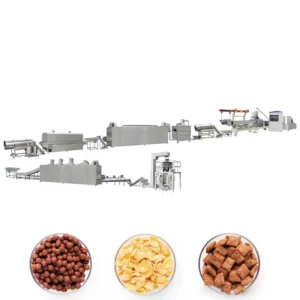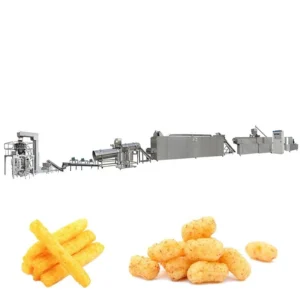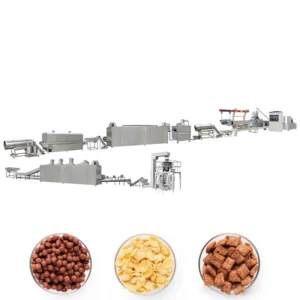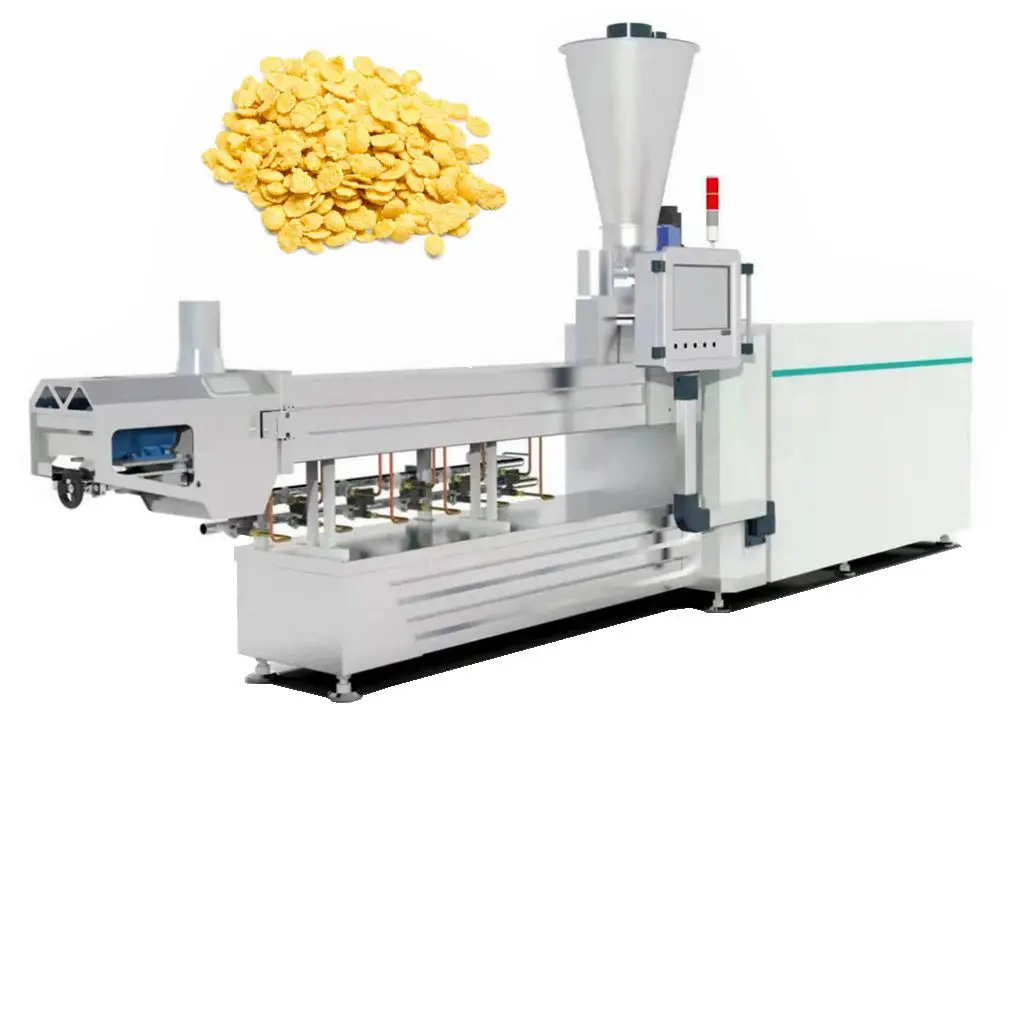
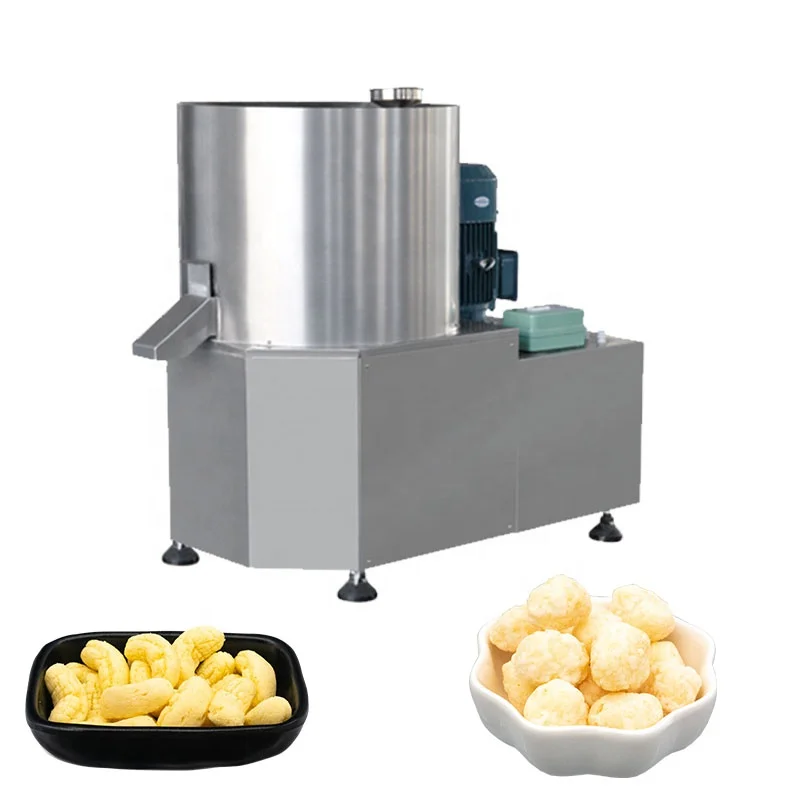
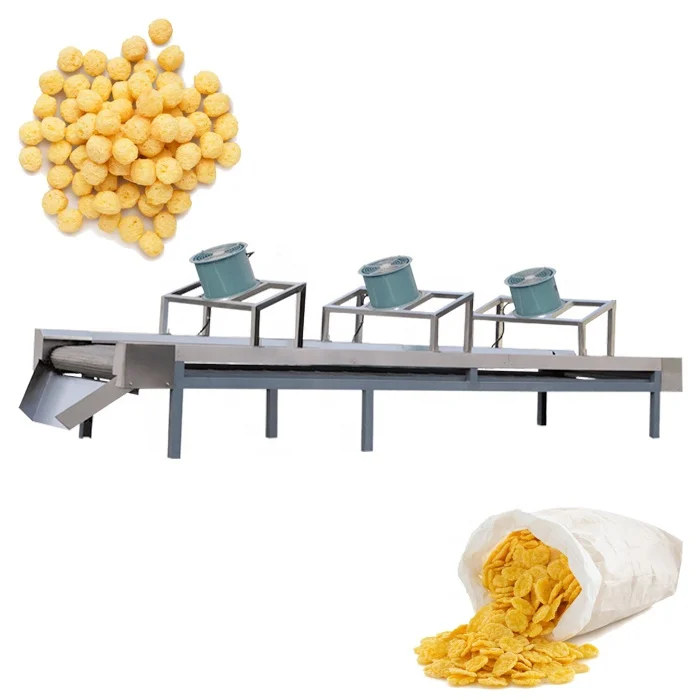
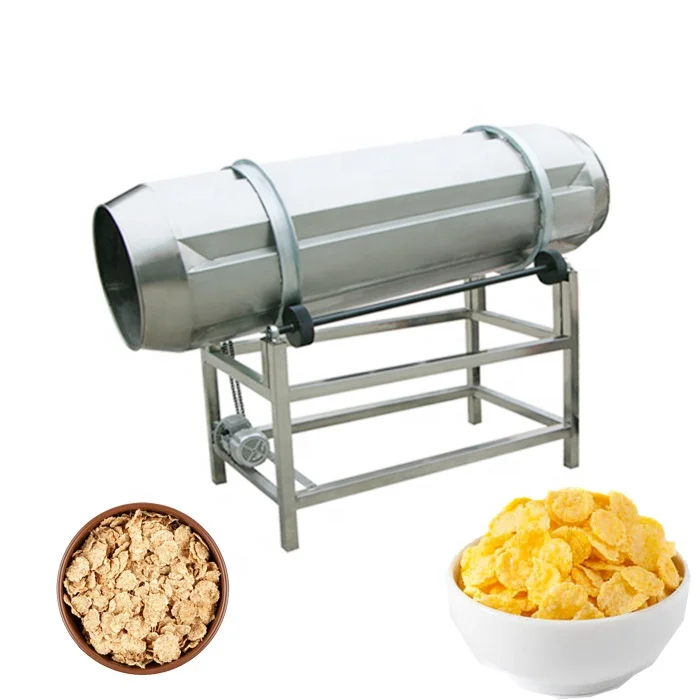

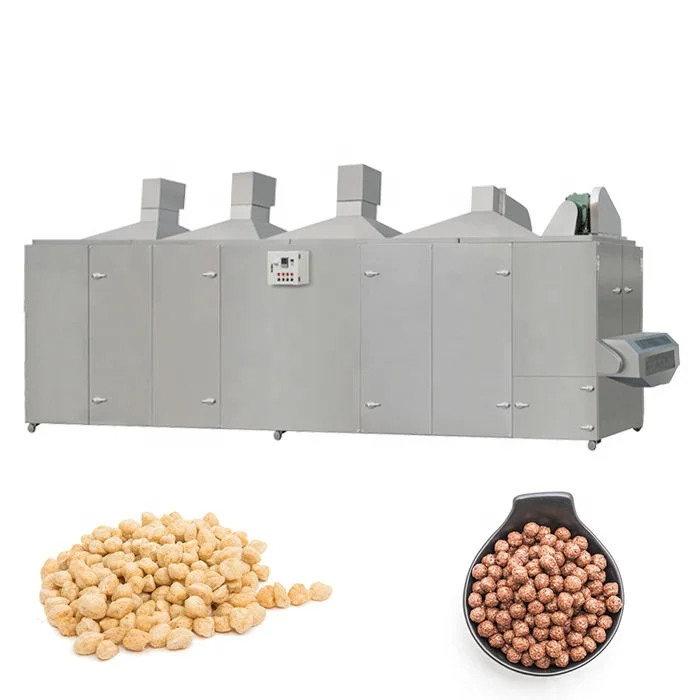
MT70 / MT85 / MT75 Corn Flakes Production Line, Twin-Screw Extrusion, PLC Control — throughput-matched from mixing through flaking, drying and roasting under one turnkey layout.
- Screw configuration and die design specified to the buyer’s grain blend and target flake density
- Hydraulic double-roller flaking with infrared temperature control for uniform thickness
- Hot air roasting oven with dual circulating fans and cyclone dust removal
In-house trial runs on customer raw material verify output before shipment, with full layout engineering and on-site commissioning included.
Description
Screw configuration and die design specified to the buyer’s grain blend — every extruder in this corn flakes line is built around your raw material and target flake density, not a generic template.
Technical Specifications
| Parameter | Value |
|---|---|
| Model | MT70 / MT85 / MT75 |
| Product Type | Corn Flakes Production Line |
| Screw Type | Twin-screw |
| Installed Power | MT70 — 160 kW; MT85 — 190 kW; MT75 — 210 kW |
| Power Consumption | MT70 — 120 kW; MT85 — 140 kW; MT75 — 150 kW |
| Output Capacity | MT70 — 150–200 kg/h (basis to be confirmed); MT85 — 300–400 kg/h (basis to be confirmed); MT75 — 300–500 kg/h (basis to be confirmed) |
| Extruder Capacity (MT75) | 200–300 kg/h (basis to be confirmed) |
| Overall Dimensions | MT70 — 41 × 1.5 × 2.2 m; MT85 — 43 × 1.5 × 3.2 m; MT75 — 45 × 1.5 × 3.5 m |
| Control System | PLC / MCC (line-level integration) |
| Flaking Machinery | Hydraulic double-roller, separate motor drives, infrared sensor temperature control |
| Dryer Heating Source | Gas / Electric |
| Roasting Oven | Hot air, vibrating pan, high-temperature spraying tubes, conciliation burner, dual circulating fans, cyclone dust removal |
| Coating System | Double tumble sugar melting, elevator, coating drum, spraying nozzle |
| Extruder Features | Automatic lubricating, cooling function, wear-resistant screw technology |
| Assembly State | Complete line from batching to packing |
| Standards | CE; ISO |
Application Suitability
| Application | Material or Output |
|---|---|
| Natural corn flakes | Corn, rice, wheat, oat, barley, and other cereal powders |
| Sugar-coated corn flakes | Same cereal base with sugar spraying and coating stages |
| Breakfast cereal shapes | Ball, tube, stick, ring, fruit loop, star, wheel, flower, heart via die change |
| Snack food variations | Cereal-based snack formats using the same extrusion and flaking platform |
Why Nominal Line Capacity Often Disappoints at Start-Up
A corn flakes production line turnkey quotation only means what the testing workshop can prove on your actual grain blend.
I have watched buyers sign off on a rated output figure, then spend months chasing that number on the shop floor because the extruder screw profile was copied from a different cereal application, or the flaking rolls were never matched to the pellet moisture coming out of the extruder barrel. The gap between brochure capacity and real throughput is rarely about the extruder alone — it is about whether every downstream station can actually absorb what the front end produces. [NEED_CITE: throughput balancing principles in continuous food processing lines]
Matching Every Station to the Grain You Actually Run
A corn flakes production line turnkey project succeeds or fails on how well the extrusion parameters align with your specific cereal blend. Corn grits behave differently from oat or barley flour inside the barrel — gelatinisation temperature, moisture absorption rate, and melt viscosity all shift. The screw configuration and die geometry on the MT70, MT85, and MT75 extruders are therefore specified after reviewing your raw material data sheet, not pulled from a standard build.
The flaking stage is where many lines lose their rhythm. Pellets leaving the extruder carry a precise moisture window, and if the hydraulic double-roller flaker is not set to the right gap pressure and surface temperature, you get uneven sheet thickness going into the dryer. That variance compounds through roasting and coating, producing a final flake that does not meet the crispness or density spec your market expects.
What Happens When Dryer and Oven Capacity Fall Behind
Once the flakes are pressed, the drying and hot air roasting stages must handle the full extruder output without creating a queue on the conveyor. The roasting oven on this line uses a conciliation burner with two separate circulating fans and a cyclone dust removal device, which keeps temperature distribution even across the vibrating pan. If the oven is sized for a lower throughput than the extruder delivers, flakes pile up before the roasting zone, moisture drops unevenly, and blistering becomes inconsistent across the batch. [NEED_CITE: thermal distribution requirements in industrial cereal roasting equipment]
The sugar coating loop adds another layer of complexity. The double tumble system melts sugar, elevates it to the coating drum, and applies it through spraying nozzles. If the coating drum speed and the upstream roasting output are not synchronised, you either starve the drum or flood it, and coating uniformity suffers batch after batch.
Reading the Specification Sheet Against Your Production Target
The installed power figures — 160 kW for the MT70, 190 kW for the MT85, and 210 kW for the MT75 — reflect the total connected load across the extruder and its immediate auxiliaries. Power consumption values run lower, at 120 kW, 140 kW, and 150 kW respectively, indicating actual operating draw under typical conditions. These numbers matter when you are planning dedicated electrical circuits and confirming that your facility transformer has the headroom for sustained operation plus start-up surge.
The twin-screw extruder design gives operators control over shear and residence time by adjusting screw element sequencing. For cereal blends with higher fat or fibre content, a longer residence time at moderate shear prevents burning inside the barrel while still achieving full starch gelatinisation. The automatic lubricating and cooling function keeps the gearbox stable during extended production runs, which is essential when you are planning multi-shift schedules.
Line dimensions range from 41 metres for the MT70 configuration to 45 metres for the MT75, all within a 1.5-metre width envelope. Before committing to a layout, confirm ceiling height against the tallest station — the MT75 reaches 3.5 metres — and ensure floor drainage aligns with the cleaning protocol your food safety scheme requires.
The Hidden Cost of Skipping the Trial Run
Buyers who waive the pre-shipment trial run to save a few weeks often discover the real cost during commissioning. The screw configuration that worked on the supplier’s test grain may not produce the same pellet structure on your locally sourced corn or oat blend. Flake thickness, surface blistering, and sugar adhesion all trace back to how the extruder handles your specific raw material — and those variables are far cheaper to adjust in a testing workshop than on your factory floor with a full crew standing by. [NEED_CITE: risks of skipping factory acceptance testing in food processing equipment]
What This Supplier Actually Brings to the Project
Every station from the batching system through extrusion, flaking, drying, roasting, coating, and packing is sourced from a single supplier, which means throughput matching is calculated internally rather than left to the buyer to reconcile across multiple vendors.
Screw configuration and die design are specified to your raw material and target flake specification before the extruder enters production, not selected from a default catalogue.
The in-house testing workshop runs your actual grain blend through the extruder and flaking machinery before shipment, generating a trial run report that documents pellet structure, flake thickness, and roasting behaviour under controlled conditions.
Voltage, frequency, and control language are confirmed against your destination market requirements during the specification phase, reducing the risk of delays during on-site commissioning.
Pre-sales consultation extends through layout design, installation, commissioning, operator training, and ongoing wear parts support, keeping one technical team accountable from first inquiry through sustained production.
Documentation & Verification
- Line layout and capacity calculation matched to your factory footprint and utility plan
- Screw and die configuration record tied to your specific grain blend and flake target
- Trial run report on your raw material from the in-house testing workshop before dispatch
- Electrical schematic with voltage and frequency confirmed for your destination market
- CE declaration of conformity and ISO certificate for the complete line
- Operation and maintenance manual with wear parts list for extruder screws, dies, and flaking rollers
Installation, Commissioning & Support
- Floor plan verification against the 41–45 metre line length and 1.5 metre width envelope before foundation work
- Dedicated circuit planning for the 160–210 kW installed power range with start-up surge allowance
- PLC and MCC control panel commissioning with operator language set before first production run
- Hydraulic flaking roller gap and pressure calibration against trial-run pellet moisture data
- Hot air roasting oven temperature profiling across the vibrating pan using the dual circulating fans
- Wear parts inventory covering twin-screw elements, die plates, and flaking roller surfaces for first replacement cycle
What to Prepare Before Requesting a Quote
To size the right corn flakes production line turnkey configuration, share your primary grain blend with moisture content, the target flake density and dimensions, and whether you need natural, sugar-coated, or both output streams. Confirm your available floor length, ceiling height, and local voltage and frequency so the electrical schematic matches your facility from the start. If you have existing upstream milling or downstream packing equipment, provide model details so the line interfaces cleanly at both ends.
Frequently Asked Questions
Q: How is line capacity verified against the buyer’s actual grain blend and moisture level?
A: The supplier runs your raw material through the extruder and flaking machinery in the in-house testing workshop before shipment. A trial run report documents pellet structure, moisture at each stage, flake thickness, and roasting behaviour, so the capacity figure is tied to your grain blend rather than a generic benchmark.
Q: What voltage, frequency, and control language options are confirmed before production begins?
A: Electrical schematics and control panel configurations are finalised during the specification phase. You confirm your facility voltage, frequency, and preferred PLC interface language, and these are locked into the build. This prevents commissioning delays caused by mismatched electrical standards or unreadable HMI screens on the shop floor.
Q: How is throughput balanced across mixing, extrusion, flaking, drying, and roasting?
A: Every station is sized against the extruder output so no single machine creates a bottleneck. The flaking roller capacity, dryer belt speed, and roasting oven pan volume are all calculated to absorb the full extruder throughput continuously, which is documented in the line layout and capacity calculation provided before order confirmation.
Q: What does the in-house trial run cover, and what report is delivered before shipment?
A: The trial run uses your supplied raw material to test extrusion stability, pellet formation, flaking uniformity, and roasting response. The delivered report records screw configuration, die selection, barrel temperature profile, flake dimensions, and moisture readings at each stage, giving you a verified baseline for commissioning.
Q: How are screw and die configurations selected for different cereal raw materials?
A: The screw element sequence and die geometry are chosen based on your grain blend’s starch content, fat level, and fibre profile. Higher fibre blends may need longer residence time at lower shear, while pure corn grits can run at higher throughput with a different compression ratio. The configuration record is documented and shipped with the machine.
Related products
-

Small Scale Breakfast Cereal Manufacturing Machine for Corn Flakes Process Line
¥45,000.00 Select options This product has multiple variants. The options may be chosen on the product page -
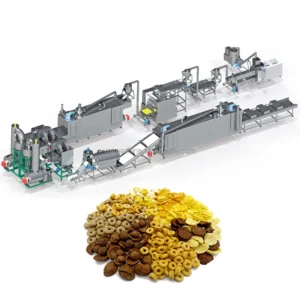
Stainless Steel Honey Small Corn Flake Breakfast Cereal Flakes Maker Making Machine Production Plant
¥30,000.00 Add to cart -
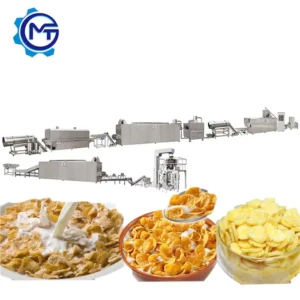
Automatic 500kg/h Corn Flakes Making Machine New Condition High Productivity Sweet Breakfast Cereal Processing Line From Factory
¥8,500.00 Select options This product has multiple variants. The options may be chosen on the product page -
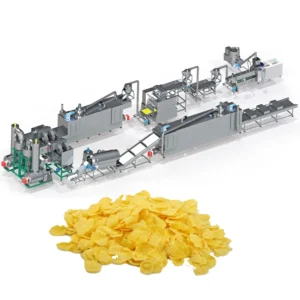
New High Efficiency Electric Corn Flakes Production & Manufacturing Machine
¥7,500.00 Select options This product has multiple variants. The options may be chosen on the product page