

SKIP: no identifier
Description
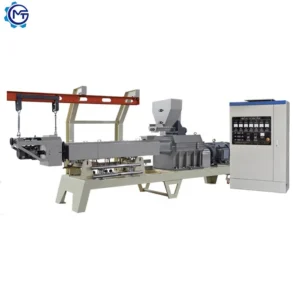
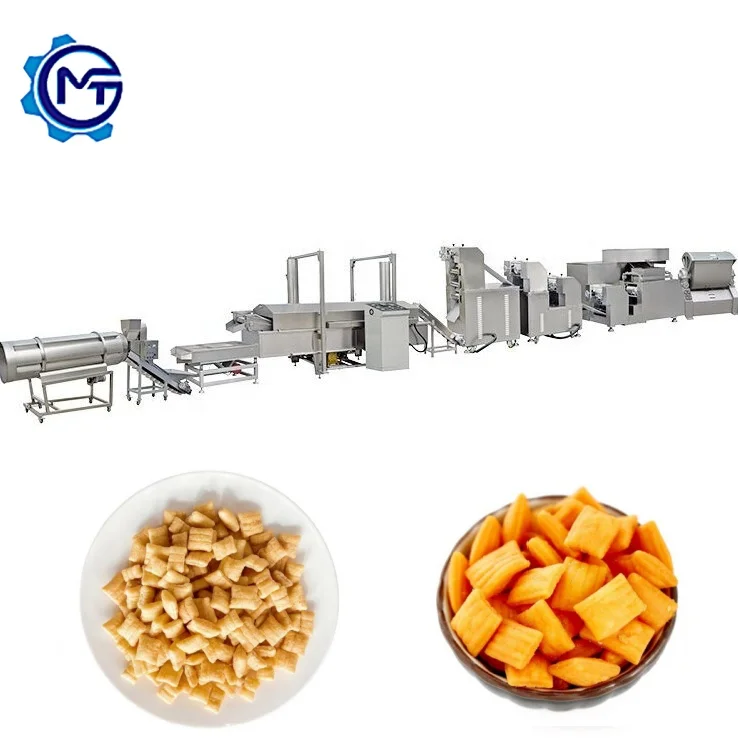
Throughput-Matched Turnkey Layout — every station from extrusion through frying to packing is capacity-balanced so no single machine caps your line below its quoted output.
Technical Specifications
| Parameter | Value |
|---|---|
| Product Type | Continuous Deep Frying Machine |
| Heating Method | Electric / Gas (selectable) |
| Rated Power | 60 kW (heating tube); 2.6 kW (drive and auxiliary) |
| Voltage & Frequency | 380V / 50Hz (configurable per facility supply) |
| Control System | PLC with frequency conversion stepless speed regulation |
| Oil Capacity | 320 L |
| Overall Dimensions (L×W×H) | 6700 × 2200 × 1200 mm |
| Net Weight | 2000 kg |
| Output Capacity | 100–1000 kg/h (basis not stated in source — confirm product type, moisture, frying time) |
| Belt Type | Upper and lower double-layer mesh belt |
| Oil Filtration | Continuous oil circulation filtration system |
| Slag Discharge | Bottom slag discharge system |
| Lifting System | Automatic lifting for upper hood and mesh belt |
| Construction Material | Food-grade 304 stainless steel |
| Warranty | 1 Year |
| Certification | CE, ISO |
Application Suitability
| Application | Material or Output |
|---|---|
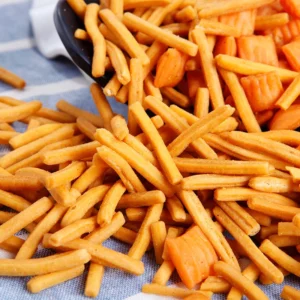
| Fried bugles and triangular snack production | Wheat flour and corn-based extruded半成品, fried to golden finish |
| Corn chips and tortilla chip frying | Masa and corn grits pellets, continuous deep frying with uniform oil contact |
| Fried dough snack formats | Extruded dough pieces, requiring clamped belt frying to prevent floating |
| Snack line integration with extrusion upstream | Paired with twin-screw extruder and dryer for full continuous operation |
What a Fryer Bottleneck Actually Costs Your Line
A continuous frying machine production line quoted at a nominal output will underperform the moment one station cannot absorb the upstream feed rate.
When I was commissioning a fried snack line in Lagos, the extruder was pushing product at full capacity while the fryer belt ran slower to hit the target color. The result was a pile of half-dried extrudate sitting on the transfer conveyor, cooling unevenly and absorbing moisture from the humid workshop air. The entire line ran at maybe two-thirds of what the buyer had paid for. [NEED_CITE: line throughput matching in snack food processing]
The fryer is often the station that gets sized last, after the extruder and dryer are already specified. But frying residence time, oil temperature recovery rate, and belt loading density all determine whether your turnkey fried snack line actually delivers its rated throughput or silently caps it.
How Double-Layer Belt Clamping Changes Fryer Performance
Extruded puffed snacks are low-density and tend to float in hot oil. A single-belt fryer lets product ride the surface, producing uneven color on the submerged side and pale spots where pieces cluster together. The double-layer mesh belt on this continuous frying machine production line clamps the product between upper and lower belts, holding each piece fully submerged for the entire residence time. This produces uniform color and texture across every piece, which matters when your downstream flavouring drum expects a consistent surface for seasoning adhesion.
Oil Filtration and Acid Value Management in Continuous Frying
Frying snack foods generates fine particulate that carbonizes in the oil, raising the acid value and shortening oil service life. The continuous oil circulation filtration system on this fryer removes sediment in real time, passing oil through a filter screen before returning it to the heating zone. Combined with the bottom slag discharge system, heavier debris settles into a removable tray rather than recirculating through the heating tubes. [NEED_CITE: oil degradation rates in continuous industrial frying operations] For a snack manufacturer running multiple shifts, this means fewer full oil changeovers and more consistent product color from the first hour of production to the last.
Reading the Specs That Actually Matter for Fried Snack Lines
The 60 kW heating tube rating tells you how fast the fryer can recover temperature after cold product enters the oil bath. A higher kW rating means shorter recovery time, which matters when your extruder feeds product continuously and the oil temperature must stay within a narrow band. The 320 L oil capacity determines the thermal mass available to absorb that temperature shock — a smaller bath would see larger temperature swings with each product load.
Frequency conversion stepless speed regulation on the belt drive lets you adjust frying residence time without stopping the line. If you switch from a thin corn chip to a thicker bugle format, you slow the belt to extend frying time rather than changing oil temperature, which takes longer to stabilize. The PLC control stores these parameters per product recipe, so changeover between SKUs becomes a menu selection rather than a manual calibration exercise.
Food-grade 304 stainless steel construction throughout the contact zones means the fryer meets hygiene standards required by most export markets, and it resists the corrosive effect of hot oil and salt-laden seasoning dust that migrates back from downstream stations.
The Hidden Cost of a Fryer Specified in Isolation
Ordering a fryer based on its standalone capacity rating, without verifying throughput against your extruder output and downstream cooling capacity, creates a constraint you will not discover until commissioning. The extruder may produce 500 kg/h of dried半成品, but if the fryer belt speed and oil recovery rate can only handle 350 kg/h at your target moisture and color, the remaining capacity is wasted capital. [NEED_CITE: consequences of unbalanced line throughput in food processing] Worse, the product queue between stations absorbs moisture and degrades, producing inconsistent frying results that no amount of parameter tuning can fix.
Why Sourcing the Fryer Within the Full Line Matters
Specifying the continuous frying machine production line from a single supplier means the extruder output, dryer discharge rate, fryer belt loading, and flavouring drum capacity are all calculated against the same target throughput. The line layout and capacity calculation document shows each station’s rated capacity and the transfer rate between them, so you can see the balance before the equipment ships.
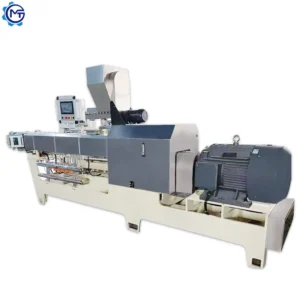
Screw configuration and die design on the upstream extruder are matched to the product format the fryer will receive, so density and moisture content entering the oil bath are predictable. The in-house testing workshop runs your actual raw material through the extruder and fryer before shipment, generating a trial run report that confirms frying time, oil temperature, and final product specification. [NEED_CITE: pre-shipment testing protocols for food extrusion lines]
Voltage, frequency, and PLC language are confirmed against your facility supply and operator requirements before production begins, preventing the delay of rewiring or reprogramming on site. The electrical schematic and voltage confirmation document ensures the 380V / 50Hz supply matches your workshop, or specifies the alternative configuration needed for markets running 440V or 60Hz.
Documentation & Verification
- Line layout drawing showing throughput balance from extruder through fryer to packing station
- Trial run report on your raw material confirming frying time and oil temperature profile
- Electrical schematic with voltage and frequency matched to your facility before dispatch
- Screw, die, and fryer belt speed configuration record for your target product format
- Machinery test report and video outgoing inspection provided before shipment
- CE declaration of conformity and ISO certificate for customs and regulatory clearance
Installation, Commissioning & Support
- Foundation must support 2000 kg static load plus dynamic vibration from the drive motor across the 6700 mm footprint
- Dedicated 380V circuit with capacity for 60 kW heating load plus 2.6 kW auxiliary drive, confirmed before shipment
- Fryer ships partially assembled; hood, belt, and oil tank require on-site joining and leveling
- First-run commissioning includes oil temperature profiling and belt speed calibration against your product specification
- Operator training covers PLC recipe selection, oil filtration maintenance, and automatic lifting system operation
- Wear parts list includes mesh belt sections, heating tubes, and filter screens with first replacement set included
What We Need to Size Your Frying Line Correctly
Send your target product format with a photo or drawing, the raw material recipe you plan to extrude, and the hourly output you need the finished line to sustain. Include your workshop voltage and frequency, the language your operators read, and whether you have an existing extruder or dryer the fryer must integrate with. If you want a trial run on your material before shipment, provide enough raw material for a full test batch.
Frequently Asked Questions
Q: How is frying capacity verified against my actual product format and moisture content?
A: We run your raw material through the extruder and fryer in the testing workshop before shipment. The trial run report records frying time, oil temperature, belt speed, and final product density for your specific format. This confirms the continuous frying machine production line will meet your throughput target on your actual product, not just on a generic test.
Q: How do you match fryer throughput with upstream extruder output and downstream cooling speed?
A: Every station in the turnkey fried snack line is capacity-calculated against the same target output. The line layout document shows the rated throughput at the extruder, dryer, fryer, and packing station so you can verify the balance before ordering. No station is allowed to become a bottleneck that caps the others.
Q: What voltage, frequency, and PLC language options are confirmed before shipment?
A: We confirm your facility supply voltage, frequency, and the control language your operators require before production begins. The electrical schematic documents this configuration. The PLC on the continuous frying machine production line is set to your specification, preventing rewiring or reprogramming delays during commissioning.
Q: Can a trial run be done on my raw material before the line ships?
A: Yes. The in-house testing workshop runs your material through the extruder and fryer, generating a trial run report that documents frying parameters and final product specification. You review and approve this report before the line is packed for shipment, so product development is not delayed until after installation.
Q: What spare parts and wear items are included, and how are replacements supplied?
A: The first replacement set of mesh belt sections, heating tubes, and filter screens ships with the line. The wear parts list documents every consumable item with part numbers. Replacements are available through ongoing maintenance support, and we confirm availability before you place the initial order.
Related products
-
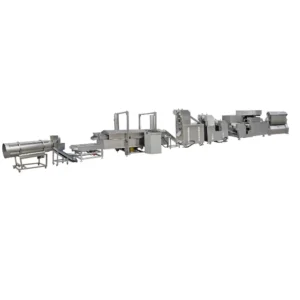
Frying Crispy 3D Corn Bugles Pellets Fried Chips Snacks Food Machine Production Line Bugles Making Extruder
¥100.00 Select options This product has multiple variants. The options may be chosen on the product page -
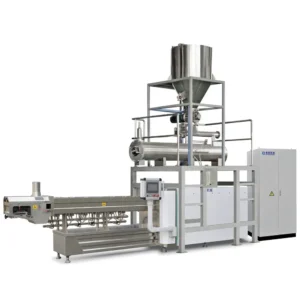
New Automatic 150-200kg/h Nimko Fried Pasta Snacks & Kurkure Making Machine Food Grade Stainless Steel High Productivity
¥8,585.00 Select options This product has multiple variants. The options may be chosen on the product page -

Electric Heating Fried Puffed Food Production Line – Salad Sticks Making Equipment
¥65.00 Select options This product has multiple variants. The options may be chosen on the product page -
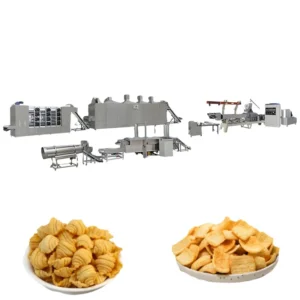
New Automatic Portable High Productivity Frying Salad Sticks Chips Snacks Food Production Line
¥100.00 Select options This product has multiple variants. The options may be chosen on the product page