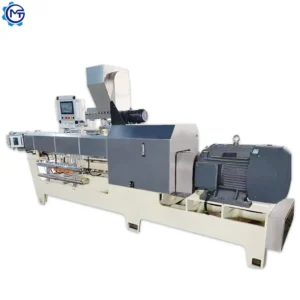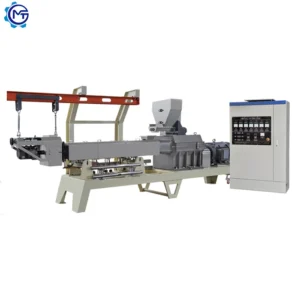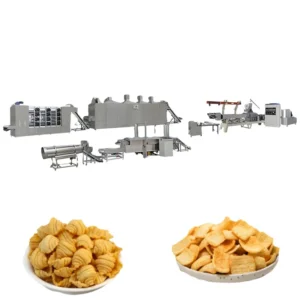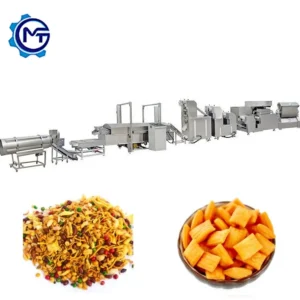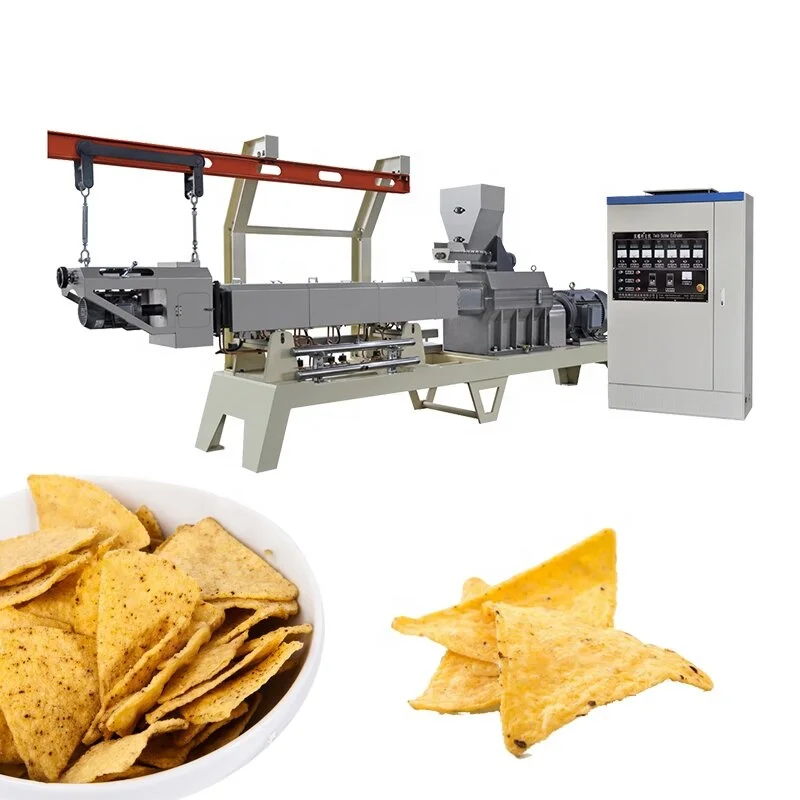


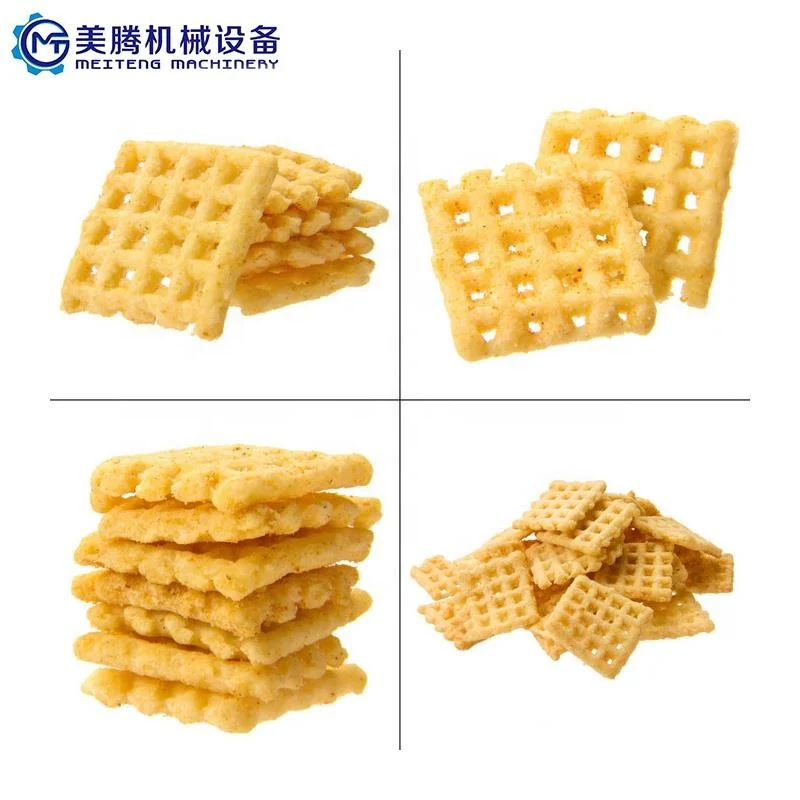
Automatic Fried Potato Chips Line, Single Screw Extruder, 50–70 kW, Food-Grade Stainless Steel — engineered for starch-based snack producers expanding into fried formats.
- Multiple die shapes from one extrusion platform — screw shell, tube, ring, and custom profiles
- Dual energy options for the frying station let buyers match local utility costs
- Throughput-matched stations from mixing through packing under one supplier, with in-house trial runs on your raw material before shipment
Description
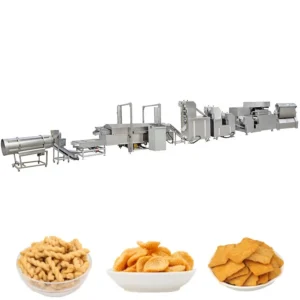
Turnkey integration under one factory — every station from mixing to packing is throughput-matched so no single node chokes the fried potato chips production line turnkey once installed.
Technical Specifications
| Parameter | Value |
|---|---|
| Product Type | Fried Potato Chips Production Line |
| Extruder Type | Single screw extruder |
| Raw Materials | Potato starch, corn starch, wheat flour |
| Output Capacity | 120 kg/h (basis not stated in source — confirm raw material ratio, moisture content, and product shape) |
| Installed Power | 50–70 kW (electric); 50–60 kW (gas/diesel heating variant) |
| Voltage & Frequency | Three-phase 380V/50Hz, Single-phase 220V/50Hz; customizable to local voltage |
| Energy Options | Electricity / Gas / Diesel / Steam |
| Overall Dimensions | 12000–26000 × 1200 × 2200 mm (L×W×H) |
| Contact Material | Food-grade stainless steel 201/304 |
| Motor & Inverter | Siemens (China-made) or equivalent China top brand; Delixi or Delta inverter |
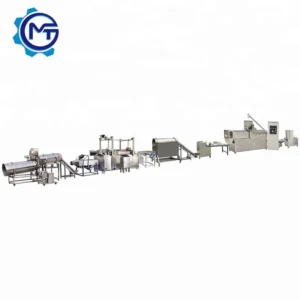
| Process Flow | Mixer → Screw Conveyor → Single Screw Extruder → Pulling and Cutting Machine → Automatic Fryer → Automatic Flavoring Line → Cooling |
| Die Configuration | Interchangeable dies for screw shell, round tube, square tube, ring, cartoon shapes |
| Certification | CE, ISO 9001 |
| Assembly State | Complete line, multi-station |
| After-sales | Engineers available for overseas installation and commissioning |
Application Suitability
| Application | Material or Output |
|---|---|
| Golgappa / pani puri production | Potato starch and wheat flour blends shaped through interchangeable dies before frying |
| Fried chip-style extruded snacks | Corn starch and potato starch mixes extruded into flat or tubular profiles |
| Secondary puffing snack formats | Starch-based dough expanded in the fryer to achieve final crispness and volume |
| Shaped fried pellets for retail packing | Screw shell, round tube, square tube, ring and cartoon shapes from a single extruder platform |
Why "120 kg/h" Means Nothing Without the Raw Material Context
Capacity figures on a fried potato chips production line turnkey are only valid when the exact starch blend, moisture content and die shape are specified alongside them.
A few years ago I configured a frying line for a buyer in the Middle East who ordered based on a brochure capacity number. Their local potato starch had a different gelatinisation profile than the material we tested with, and the extruder output dropped noticeably until we adjusted barrel temperature and screw speed. The fryer then ran below its thermal design point because the upstream feed was thinner than expected [NEED_CITE: starch gelatinisation temperature variance by crop origin]. That kind of mismatch is avoidable when the line capacity is calculated against the buyer’s actual raw material rather than a generic reference blend. Most fried snack lines on the market quote a single headline number that assumes an ideal moisture window and a standard die — conditions that rarely hold on a real factory floor.
Throughput Matching Across Every Station on the Line
When a fried potato chips production line turnkey is assembled from separate vendors, the extruder might deliver more shaped dough than the fryer can handle, or the flavoring drum might not keep pace with the cooling conveyor. This line is specified end-to-end so the pulling-and-cutting machine, fryer and flavoring station all hold the same throughput rate. The single-screw extruder feeds directly into the cutting unit, which drops shaped pieces into the automatic fryer at a controlled interval, preventing oil temperature crashes that cause uneven colour and texture.
Die Flexibility Without Re-engineering the Downstream Process
Swapping dies on the single-screw extruder changes the snack profile — from a hollow tube to a flat chip-style piece — but the rest of the line still needs to handle the new shape correctly. A hollow tube carries more oil after frying than a flat piece, which shifts the de-oiling and flavoring requirements. Because every station is specified together, the fryer belt speed and flavoring drum residence time are set to accommodate the full die range rather than optimised for just one shape [NEED_CITE: oil absorption rates by extruded snack geometry].
Reading the Specs That Actually Matter
The single-screw extruder on this line relies on shear and barrel heat to gelatinise starch, which behaves differently from a twin-screw setup when processing high-amylose potato starch blends. Long barrel residence time at controlled moisture gives the dough enough elasticity to hold shape through the cutting station without collapsing. The installed power band of 50–70 kW on the electric variant reflects both the extruder motor and the barrel heating zones — a figure buyers should compare against their local electricity tariff before choosing between electric, gas or diesel fryer heating. Stainless steel 201/304 contact materials across every food-touch station mean the line meets export hygiene requirements without needing aftermarket upgrades. The 12 to 26 metre overall length range indicates how the line can be arranged in a straight or L-shaped layout depending on factory floor constraints.
The Hidden Cost of Underspecifying the Frying Station
I once saw a snack line where the fryer was sized for a lower throughput than the extruder could deliver. The buyer ended up running the extruder at reduced speed, which altered the dough density and produced a heavier, oilier chip than the market expected. The flavoring drum then received unevenly fried product, and seasoning adhesion varied from batch to batch. Correcting that mismatch after installation meant replacing the fryer and rewiring its heating circuit — work that could have been avoided if the fryer capacity had been calculated against the extruder’s real output on the buyer’s starch blend [NEED_CITE: fryer thermal recovery rate and product load matching].
Why Source the Full Line from One Supplier
Every station on this fried potato chips production line turnkey is configured in-house, so the pulling-and-cutting speed is set to match the extruder output rather than left to a third-party guess. Screw configuration and die selection are documented against the buyer’s raw material before the line ships. The testing workshop runs trial production on the buyer’s actual starch blend, generating a report that confirms shape, density and fryer behaviour before the equipment leaves the factory. CE and ISO 9001 certification is held at the factory level, simplifying customs clearance in regulated markets. Voltage, frequency and control panel language are confirmed to the destination country during the engineering stage, so the line powers up correctly on arrival [NEED_CITE: industrial voltage and frequency standards by region].
Documentation & Verification
- Line layout and capacity calculation matched to your starch blend and target snack shape
- Screw and die configuration record specifying barrel profile for your raw material
- Trial run report on your potato starch or corn starch blend before dispatch
- Electrical schematic with voltage, frequency and control language confirmed to destination
- CE declaration of conformity and ISO certificate for customs and import compliance
- Wear parts list covering screws, dies and cutting blades with replacement intervals
Installation, Commissioning & Support
- Foundation and floor space planned around the 12–26 m line length and 1.2 m station width
- Dedicated power circuit sized to the 50–70 kW electric load or gas supply for the fryer
- Multi-station assembly sequenced so extruder, fryer and flavoring drum align on arrival
- First-run parameter setting covering barrel temperature, screw speed and oil temperature curve
- Operator training on die changes, fryer oil management and flavoring drum adjustment
- Spare screws, dies and cutting blades shipped with the line for initial replacement cycles
What to Include in Your Inquiry
To configure the fried potato chips production line turnkey correctly, share the exact starch blend and moisture content you plan to run, the snack shapes you need from the die set, and your target daily output. Confirm your factory’s voltage and frequency, available energy source for the fryer, and any ceiling height or floor length constraints. If you have existing upstream mixers or downstream packing equipment, provide their throughput rates so the new line can integrate without bottlenecks.
Frequently Asked Questions
Q: How is the line capacity verified before shipment?
A: We run a trial on your actual potato starch or corn starch blend in our testing workshop, using the die shape you specify. The trial report records extruder output, fryer behaviour and final product density so you can confirm the line meets your production target on your own raw material.
Q: Can the electrical system match our local voltage and frequency?
A: The line is built to your destination country’s three-phase or single-phase voltage and frequency. Motor windings, heating elements and the control panel are all specified to match, and the HMI language is set to your operator’s preference before the equipment ships.
Q: How do you prevent bottlenecks between the extruder and the fryer?
A: Every station is specified together so throughput is matched end-to-end. The pulling-and-cutting unit, fryer belt speed and flavoring drum are all calculated against the extruder’s real output on your raw material, eliminating the mismatch risk of sourcing stations from separate vendors.
Q: What spare wear parts ship with the line?
A: The initial spare set includes screws, interchangeable dies and cutting blades. The wear parts list documents replacement intervals based on the trial run, so you can plan reorder timing before the first scheduled changeover.
Q: Is a gas-heated fryer available instead of electric?
A: The frying station can be configured for electric, gas, diesel or steam heating. The choice affects the installed power draw and utility infrastructure, so we confirm the energy source during the engineering stage to match your factory’s available supply and local operating cost.
Related products
-
Automatic Rice Crust Chips Making Machine Bugles Pizza Rolls Fried Snack Food Processing Line Machine
¥8,570.00 Select options This product has multiple variants. The options may be chosen on the product page -
Double Screw Extruder Corn Flour Puffs Snack Nacho Chips Tortilla Doritos Making Machine Savory Snack Production Line
¥50.00 Select options This product has multiple variants. The options may be chosen on the product page -
Frying Crispy 3D Corn Bugles Pellets Fried Chips Snacks Food Machine Production Line Bugles Making Extruder
¥100.00 Select options This product has multiple variants. The options may be chosen on the product page -
Fried Puffs Snack Food Making Machine Whole Line Solution Design by Factory Price Crispy Snack Machine
¥20.00 Select options This product has multiple variants. The options may be chosen on the product page