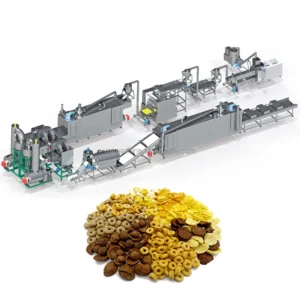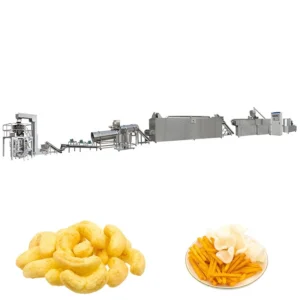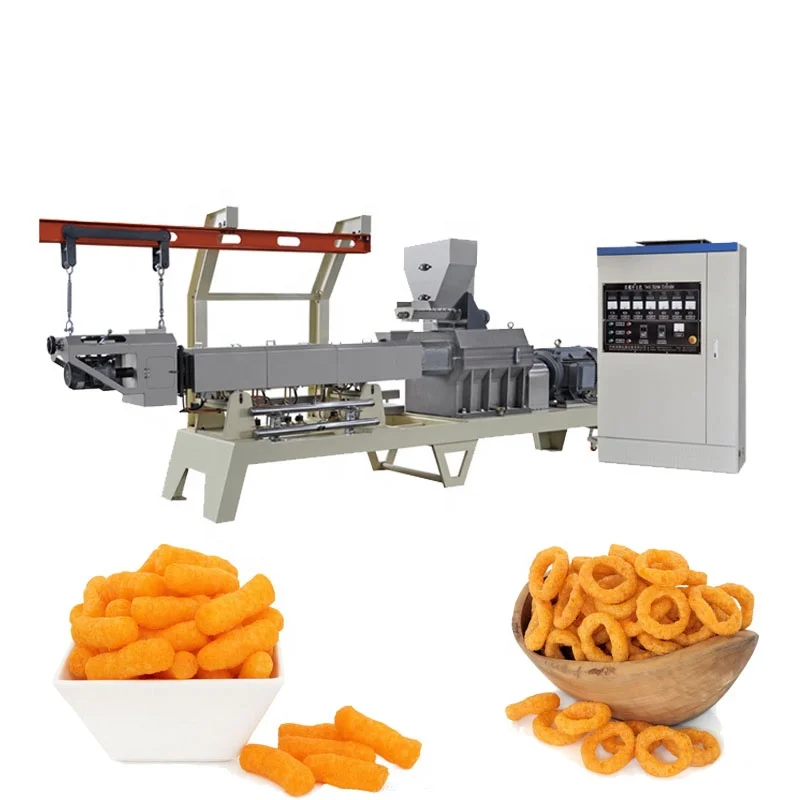
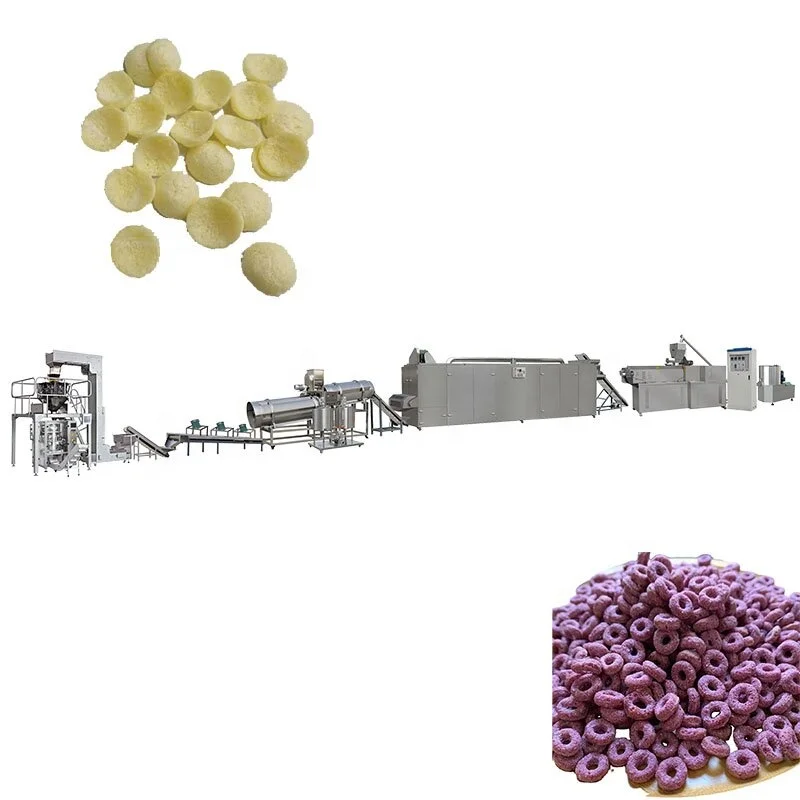
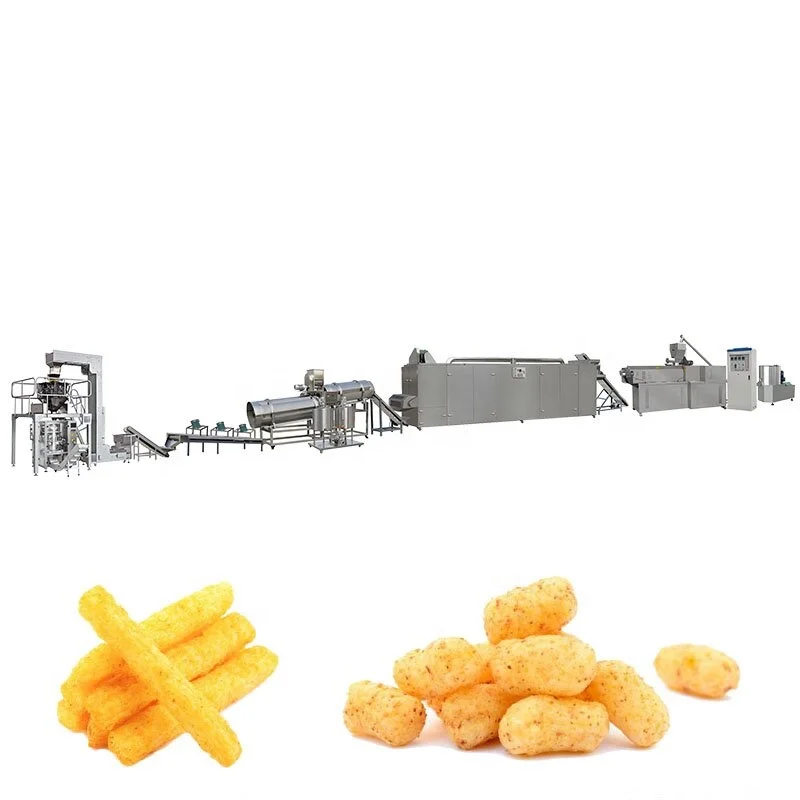
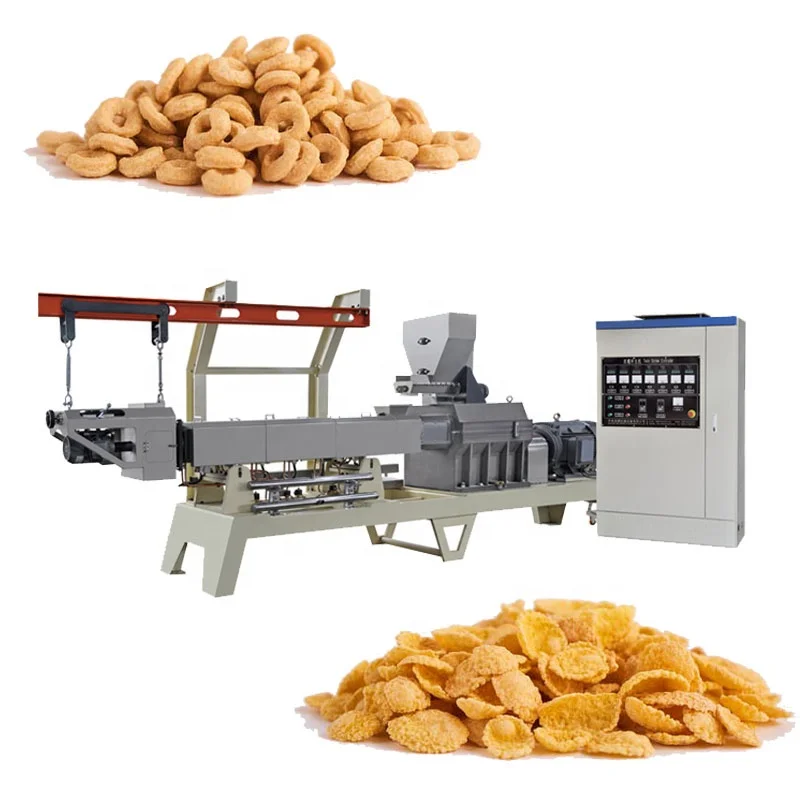
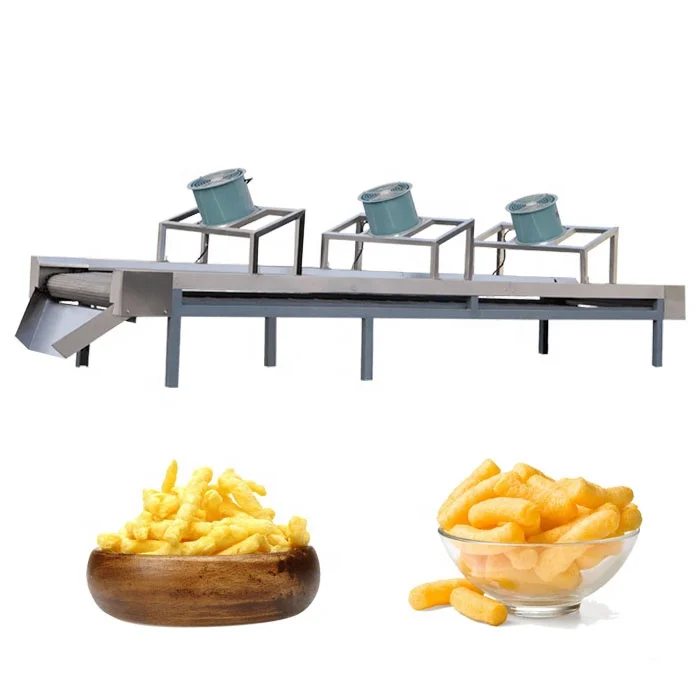
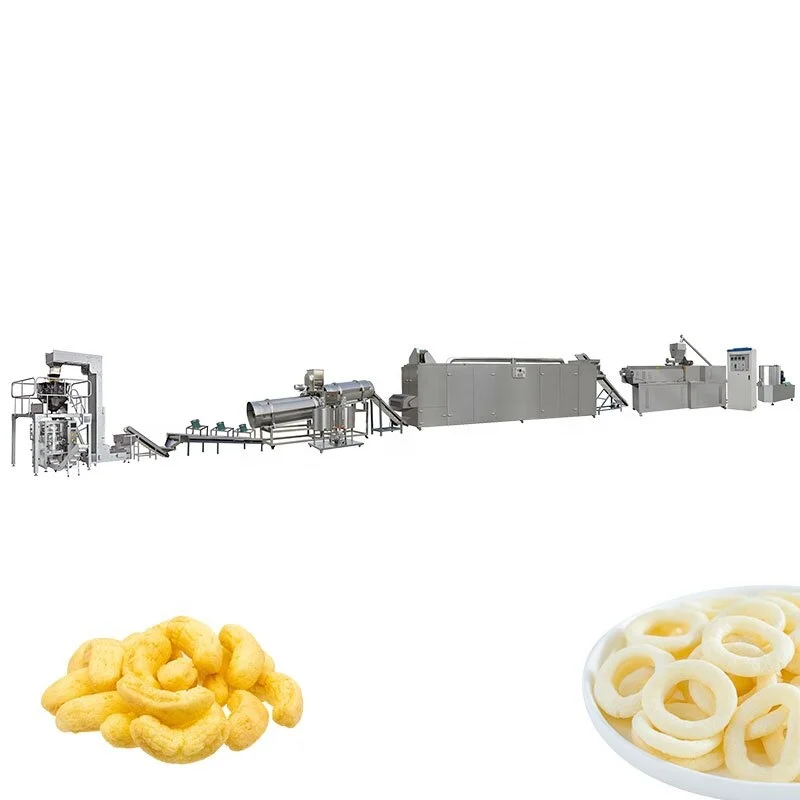
MT70 / MT85 / MT75 Corn Flakes Production Line, Twin Screw Extruder, PLC Control — complete breakfast cereal line from mixing through extrusion, flaking, drying, roasting, optional sugar coating and packing. Each station throughput-matched to prevent bottlenecks; screw configuration and die design specified to your raw material and target flake density. Hydraulic double-roller flaking with infrared temperature control ensures consistent thickness.
- Screw and die configuration record documented for your product specification
- In-house trial runs on your raw material before shipment
- Phased installation, commissioning and operator training included
Description
Line-Throughput Engineering — Every station from the batching mixer to the coating drum is capacity-matched on paper before steel is cut, eliminating the mid-line bottlenecks that plague assembled-from-vendors breakfast cereal projects.
Technical Specifications
| Parameter | Value |
|---|---|
| Product Type | Corn Flakes Production Line (Twin Screw Extrusion) |
| Extruder Models Available | MT70 / MT85 / MT75 |
| Extruder Type | Twin Screw |
| Installed Power | MT70: 160 kW; MT85: 190 kW; MT75: 210 kW |
| Power Consumption | MT70: 120 kW; MT85: 140 kW; MT75: 150 kW |
| Output Capacity | MT70: 150–200 kg/hr (basis to be confirmed); MT85: 300–400 kg/hr (basis to be confirmed); MT75: 300–500 kg/hr (basis to be confirmed) |
| Overall Dimensions (L×W×H) | MT70: 41 × 1.5 × 2.2 m; MT85: 43 × 1.5 × 3.2 m; MT75: 45 × 1.5 × 3.5 m |
| Basic Material Compatibility | Powder of corn, rice, wheat, oat, barley, etc. |
| Control System | PLC (flaking machine); MCC / PLC available for line |
| Dryer Heating Source | Gas / Electric |
| Flaking Machine Features | Hydraulic double-roller system; separate motor driving; infrared sensor temperature control |
| Hot Air Roasting Oven | Vibrating pan; high-temperature spraying tubes; reconciliation burner; dual circulating fans; cyclone dust removal |
| Coating System | Double tumble sugar melting, elevator, coating drum, spraying nozzle |
| Screw Feature | Wear-resistant; automatic lubricating and cooling function |
| Voltage & Frequency | Customizable to local site requirements |
| Standards | CE, ISO |
Application Suitability
| Application | Material or Output |
|---|---|
| Natural Corn Flakes Manufacturing | Corn grits and corn flour blends |
| Sugar-Coated Breakfast Cereals | Corn, wheat, and oat bases with sugar or honey coating |
| Multi-Grain Cereal Production | Blends of rice, barley, wheat, and oat powders |
| Shaped Cereal Snacks | Rings, stars, loops, balls, tubes, and wheels via die exchange |
Why the "Nominal Capacity" Quote Is Only Half the Story
A line rated at 400 kg/hr on the extruder means nothing if the flaking rollers and roasting oven are sized for 250 kg/hr.
When sourcing a corn flakes production line turnkey, buyers often receive quotes based on the extruder’s maximum theoretical output, ignoring the reality that downstream stations dictate actual throughput. I have walked into facilities where the twin-screw extruder was pushing product faster than the hydraulic flaking machine could press it, causing a backlog of dough balls that cooled and hardened on the conveyor before reaching the rollers [NEED_CITE: throughput matching in continuous food processing lines]. The result is a line that technically runs but never hits the contracted daily tonnage. The only way to prevent this is to demand a station-by-station capacity calculation document before the purchase order is signed, ensuring the dryer, roaster, and coating drum are all specified to handle the extruder’s real-world output on your specific grain recipe.
Station Synchronization Across the Corn Flakes Line
A corn flakes production line turnkey is only as reliable as its slowest station. The extrusion phase generates a continuous mass of gelatinized dough that must be immediately cooled, flaked, and dried to prevent retrogradation. If the vibrating conveyor between the extruder die and the flaking rollers is undersized, the dough temperature drops below the threshold required for proper sheeting, resulting in cracked or uneven flakes. Our layout engineering begins by calculating the mass flow rate at the die exit and sizing every subsequent belt, elevator, and drum to maintain that flow without accumulation.
Phased Installation and Utility Planning
Deploying a full breakfast cereal facility requires coordinating heavy rigging, electrical drop placement, and thermal utility routing across a 40-meter-plus footprint. The MT85 configuration, for example, demands a dedicated gas supply for the hot air roasting oven and separate electrical circuits for the hydraulic flaking system and dual circulating fans. We sequence the installation so that foundation work for the extruder and dryer occurs in parallel with overhead utility drops, reducing the window between equipment arrival and first production run [NEED_CITE: industrial food line commissioning schedules]. This approach prevents the common scenario where the extruder is bolted down but cannot be energized because the MCC panel was specified for a different voltage than the site transformer provides.
Reading the Specs: What Actually Drives Flake Quality
The hydraulic double-roller system on the flaking machine is not just about pressure; it determines the final flake thickness and surface integrity. Separate motor driving for each roller allows differential speed adjustment, which controls the shear applied to the dough sheet — too little shear and the flake is dense and hard; too much and it tears. The infrared sensor temperature control on the rollers maintains a consistent surface condition, preventing the dough from sticking in high-humidity summer conditions or shattering in cold, dry environments. In the roasting phase, the reconciliation burner paired with dual circulating fans ensures that the surface blistering — the signature visual cue of a quality corn flake — occurs evenly across the entire vibrating pan rather than only in the center zone. The cyclone dust removal device is critical here, as fine grain particles generated during roasting will carbonize and contaminate subsequent batches if they are not continuously evacuated from the hot air stream.
The Hidden Cost of Mismatched Upstream and Downstream Equipment
When the sugar coating drum is specified without considering the output rate of the cooling conveyor upstream, you end up with a batch-coating bottleneck that forces the entire roasting oven to idle. I have seen projects where the extruder and dryer were correctly sized, but the double tumble coating system could only handle half the hourly volume, forcing the operator to run the line in stop-start cycles that destroyed the roaster’s temperature profile [NEED_CITE: thermal profile stability in continuous roasting ovens]. The flakes produced during the restart phase are invariably over-toasted or under-blistered, creating a reject stream that erodes the margin the line was supposed to deliver. This is why the coating system’s spray nozzle flow rate and drum rotation speed must be calculated against the roaster’s discharge rate, not the extruder’s nominal capacity.
Why Source This Line From a Single Project Supplier
The entire production sequence from batching through extrusion, flaking, drying, roasting, coating, and packing is engineered under one roof, meaning the mass flow calculations are performed by a single team rather than negotiated between separate vendors. The screw configuration and die design are specified against the buyer’s actual grain blend and target flake geometry, verified through trial runs in our testing workshop before the extruder ships. Electrical schematics are produced with the buyer’s confirmed voltage, frequency, and PLC language requirements, so the MCC panel communicates correctly with the flaking machine’s hydraulic controls on day one. Wear parts lists for screws, dies, and flaking rollers are provided at the quotation stage, so the first replacement cycle does not catch the maintenance team off guard. Every line is backed by documentation that traces from the initial capacity calculation through to the factory test record on the customer’s own raw material.
Documentation & Verification
- Line layout and capacity calculation showing station-by-station throughput match for your target output
- Screw and die configuration record mapped to your specific grain blend and flake geometry
- Trial run report performed on your raw material in our testing workshop before dispatch
- Electrical schematic with voltage, frequency, and PLC control language confirmed to your site conditions
- Operation and maintenance manual with wear parts replacement intervals for rollers and screws
Installation, Commissioning & Support
- Foundation plan for extruder and roasting oven accounting for the 41–45 m line length and thermal expansion clearances
- Dedicated circuit specification for the MT75’s 210 kW installed power and hydraulic flaking system motors
- Pre-commissioning checklist verifying MCC panel voltage against site transformer before extruder energization
- Parameter setting for infrared roller temperature and reconciliation burner profile during first production run
- Operator training covering screw configuration changes for different grain blends and flake shapes
- First replacement schedule for wear-resistant screws, die plates, and flaking roller surfaces
What We Need to Configure Your Line
To produce an accurate layout and capacity calculation, we require the specific grain powders you intend to process, the target flake thickness and shape, and your desired hourly output in kilograms. We also need to know the available voltage and frequency at your facility, the preferred control language for the PLC interface, and whether your workshop has existing upstream milling or downstream packing equipment that the new line must integrate with. If you have a sample of your raw material, we can schedule a trial run in our testing workshop to verify extrusion behavior and die selection before the line is built.
Frequently Asked Questions
Q: How do you verify the line capacity against our specific grain recipe before shipment?
A: We conduct a trial run in our in-house testing workshop using your actual raw material — corn, wheat, oat, or a custom blend. The extruder is fitted with the screw configuration and die specified for your product, and we measure throughput, flake integrity, and roasting behavior under real conditions. The results are documented in a trial run report that accompanies the shipment.
Q: How is throughput matched across the extruder, flaking machine, and roasting oven?
A: Our engineering team calculates the mass flow rate at each station based on your target output and raw material characteristics. The flaking machine’s hydraulic roller speed, the dryer’s belt residence time, and the roasting oven’s vibrating pan feed rate are all specified to handle the extruder’s actual discharge volume, preventing mid-line accumulation or idle gaps.
Q: What happens if our site voltage differs from standard Chinese industrial supply?
A: Voltage, frequency, and phase are confirmed during the specification stage before any electrical components are ordered. The MCC panel, PLC controls, and all motor drives are built to match your site’s exact electrical supply. The electrical schematic provided with the documentation reflects these confirmed values, preventing commissioning delays caused by incompatible transformers or breakers.
Q: How is the phased installation schedule structured for a complete breakfast cereal facility?
A: The installation is sequenced to allow foundation work, utility drops, and equipment positioning to occur in logical stages. Heavy stations like the extruder and roasting oven are positioned first, followed by conveyor and elevator connections, and finally the coating and packing stations. Our commissioning engineers remain on-site through the first production runs to verify parameter settings and train operators.
Q: What wear parts should we stock for the first year of operation?
A: The wear parts list provided at quotation identifies components with the shortest replacement intervals, typically the extruder screw elements, die plates, and flaking roller surfaces. We recommend stocking one full set of screws and dies configured for your primary product, plus replacement roller segments, so that scheduled maintenance does not require waiting for international shipment.
Related products
-

MT Cocoa Flour Puffed Breakfast Cereal Production Line-High Large Capacity Multi-Fuel (Steam/Gas/Electric) New Shandong Origin
¥8,000.00 Select options This product has multiple variants. The options may be chosen on the product page -

Best Price Corn Flakes Making Machine Breakfast Cereals Processing Line with Motor As Core Component
¥19,000.00 Select options This product has multiple variants. The options may be chosen on the product page -

200kg/h Breakfast Cereal Extruder Making Machine Hot Sale Corn Flake Production Line
¥30,000.00 Select options This product has multiple variants. The options may be chosen on the product page -
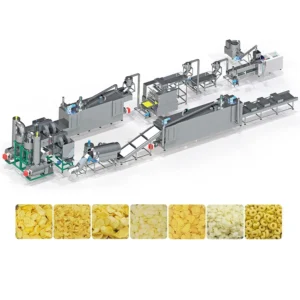
Automatic Cornflakes Making Machine Corn Flakes Breakfast Cereals Processing Production Line
¥500.00 Select options This product has multiple variants. The options may be chosen on the product page