

6069
Description
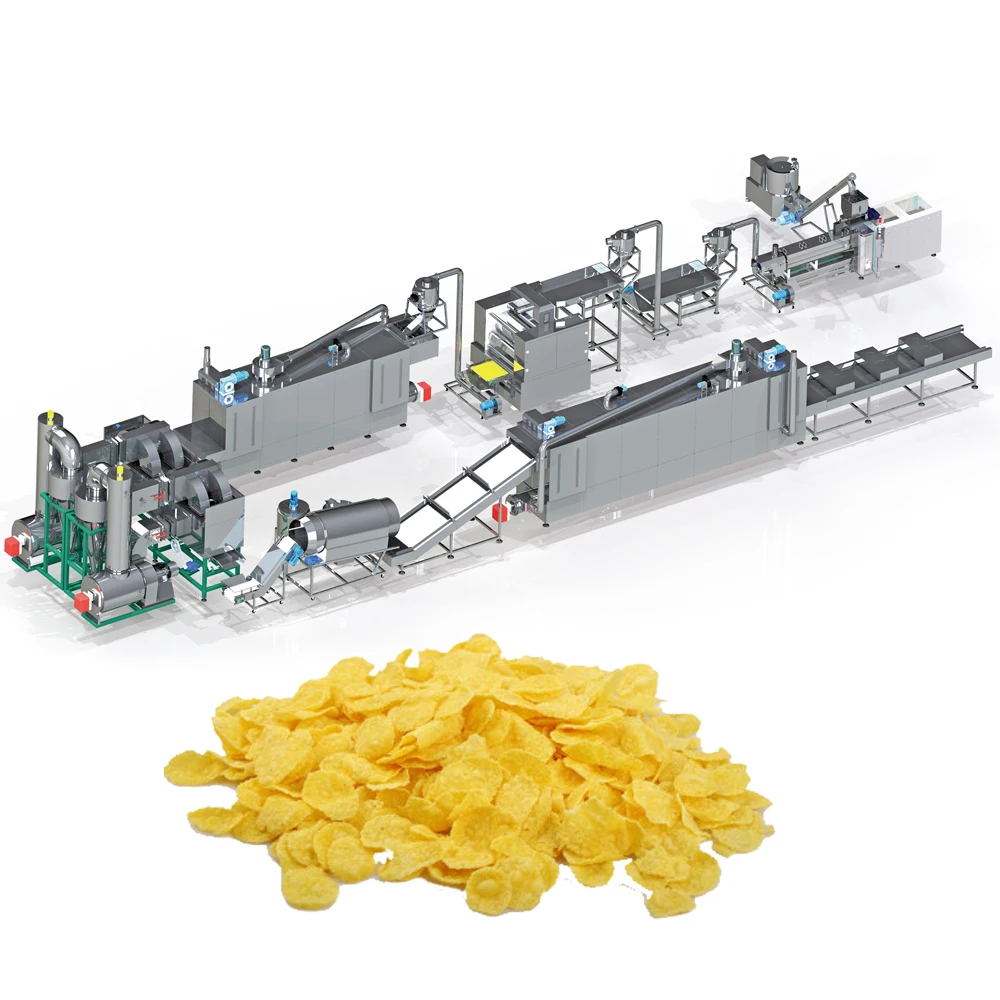
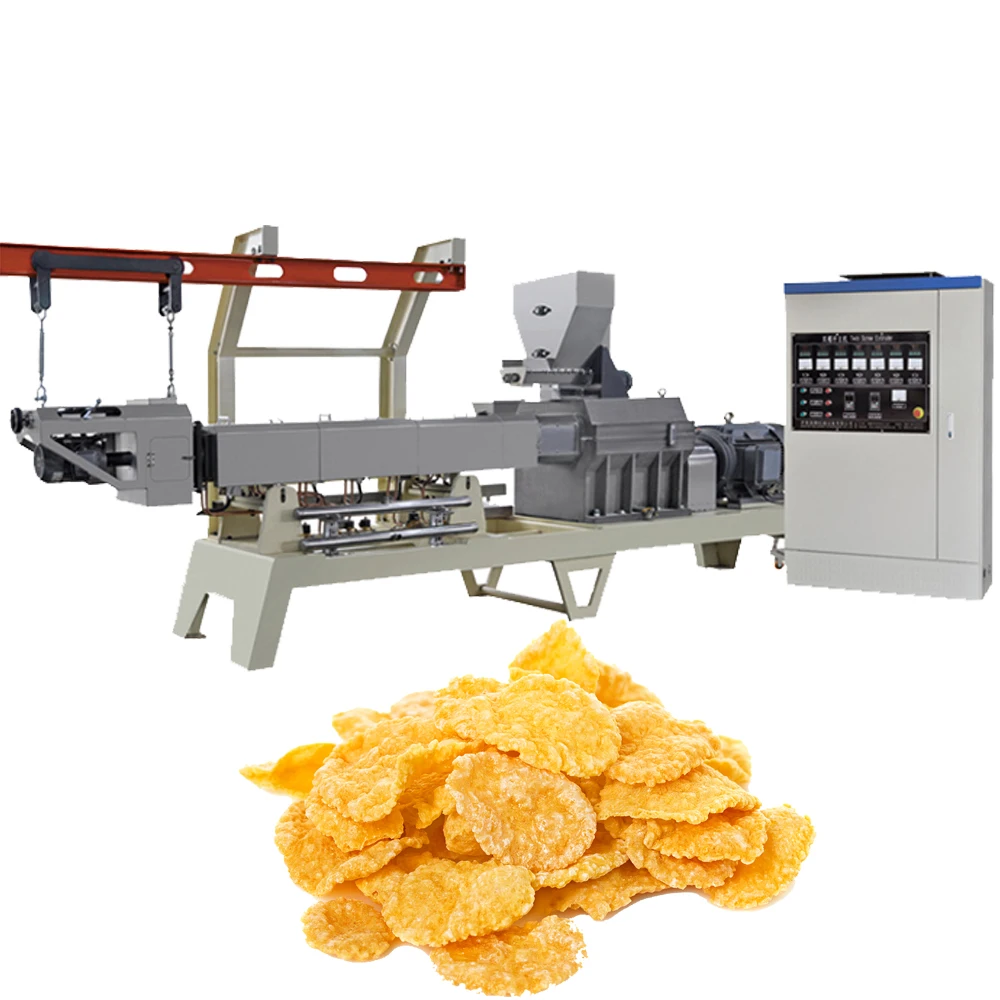
Throughput-Matched Integration — Every station on this corn flakes line, from mixing through packing, is sized as one system rather than assembled from standalone machines, preventing the mid-line bottlenecks that typically delay cereal startups.
Technical Specifications
| Parameter | Value |
|---|---|
| Product Type | Twin Screw Extruder Corn Flakes Production Line |
| Models Available | MT70, MT85, MT75 |
| Screw Type | Twin Screw |
| MT70 Installed Power | 160 kW |
| MT70 Power Consumption | 120 kW |
| MT70 Capacity | 150–200 kg/hr (basis not stated in source — confirm raw material and moisture content) |
| MT70 Overall Dimensions | 41 × 1.5 × 2.2 m |
| MT85 Installed Power | 190 kW |
| MT85 Power Consumption | 140 kW |
| MT85 Capacity | 300–400 kg/hr (basis not stated in source — confirm raw material and moisture content) |
| MT85 Overall Dimensions | 43 × 1.5 × 3.2 m |
| MT75 Installed Power | 210 kW |
| MT75 Power Consumption | 150 kW |
| MT75 Capacity | 300–500 kg/hr (basis not stated in source — confirm raw material and moisture content) |
| MT75 Overall Dimensions | 45 × 1.5 × 3.5 m |
| Extruder Working Principle | Feeding, extruding, cutting, heating, gearing and controlling systems |
| Screw Feature | Automatic lubricating and cooling; wear-resistant screw technology |
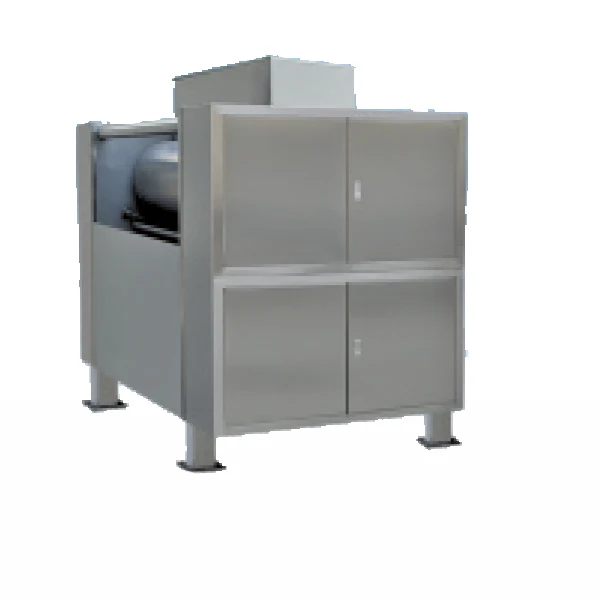
| Flaking Machine Control | PLC with hydraulic double rollers, separate motor drives, infrared temperature control |
| Dryer Heating Source | Gas or Electric |
| Hot Air Roasting Oven | Vibrating pan, conciliation burner, dual circulating fans, cyclone dust removal |
| Coating System | Double tumble sugar melting, elevator, coating drum, spray nozzle |
| Control System | PLC and MCC |
| Basic Raw Materials | Corn, rice, wheat, oat, barley powder |
| Production Procedure (Natural) | Mixing → Extruding → Flaking → Drying → Hot Air Roasting → Cooling → Packing |
| Production Procedure (Sugar Coated) | Mixing → Extruding → Flaking → Drying → Hot Air Roasting → Sugar Spraying → Coating → Drying → Cooling → Packing |
| Standards | CE (since 2014), ISO certified |
Application Suitability
| Application | Material or Output |
|---|---|
| Natural corn flakes production | Corn grits and corn flour |
| Sugar-coated corn flakes | Corn base with sugar syrup coating |
| Multi-shape breakfast cereals | Corn, rice, wheat, oat, or barley powder with die changes for ball, tube, ring, star, wheel, flower, heart shapes |
| Fortified breakfast cereals | Cereal base with nutritional premix |
| Puffed snack variants | Same extrusion platform with adjusted die and moisture profile |
Why "Rated Capacity" Tells Only Half the Story for a Corn Flakes Line
A capacity figure without the raw material basis is an estimate, not a commitment. When buyers compare a corn flakes production line turnkey proposal against another, the number that usually wins the quote is the highest throughput claim. I have stood on factory floors in Southeast Asia watching a dryer idle while the flaker upstream ran at half speed because the two stations were never balanced on the actual corn formulation the buyer intended to use. The line was rated for one output on paper but produced noticeably less in practice [NEED_CITE: common causes of throughput mismatch in cereal extrusion lines]. A turnkey corn flakes production line turnkey project only delivers its stated output when every station — mixer, extruder, flaker, dryer, roasting oven, coater, cooler — is calculated against the same raw material moisture, bulk density, and target flake thickness.
Screw and Die Configuration Dictates Flake Density Before the Flaker Ever Sees the Pellet
The twin-screw extruder is where the corn flakes production line turnkey project earns or loses its reputation. The screw profile and die geometry determine how completely the starch gelatinises inside the barrel, which in turn controls the expansion and density of the extruded pellet. If the pellet is too dense, the flaking rollers crush rather than flatten it, producing broken flakes that fail the market’s visual standard. If the pellet is too light, the resulting flake shatters during roasting. On this line, screw configuration and die design are specified to the buyer’s raw material blend and target flake density before the extruder is assembled.
Throughput Balancing Across the Full Line Prevents the Hidden Mid-Station Bottleneck
A corn flakes line is only as productive as its slowest matched station. The PLC-controlled flaking station uses hydraulic double rollers driven by separate motors, with infrared sensors maintaining even temperature across the roller face so that pellet deformation stays consistent over long runs. Downstream, the hot air roasting oven uses a vibrating pan with a conciliation burner and two separate circulating fans plus a cyclone dust removal device to deliver uniform surface blistering and crispness [NEED_CITE: hot air roasting principles for flaked cereal products]. If the roasting oven cannot accept flakes at the rate the flaker produces them, the entire line backs up. Each station on this line is sized so the corn flakes production line turnkey runs as one continuous flow rather than a chain of independent machines waiting on each other.
Reading the Specs: What Power, Dimensions, and Control Choices Mean on the Floor
The three available models — MT70, MT85, MT75 — differ in installed power (160 kW, 190 kW, 210 kW respectively) and overall footprint (41 m to 45 m line length). Higher installed power on the MT75 supports the additional torque needed when processing high-fibre or multi-grain formulations that demand greater shear inside the barrel. The twin-screw design allows a wider range of corn, rice, wheat, oat, and barley blends compared to single-screw extruders, because the intermeshing screws provide positive conveyance for sticky or high-moisture doughs. The PLC and MCC control architecture separates logic control from motor control, meaning the operator can adjust barrel temperature profiles and screw speed on the HMI while high-current circuits remain isolated in the MCC panel — a layout that simplifies troubleshooting during night shifts when only one technician may be on the floor. Choosing between gas and electric heating on the dryer depends on local energy costs and available utility capacity at the installation site.
The Cost of Skipping the Trial Run Before Shipment
I once watched a cereal line in Vietnam sit idle for two weeks because the extruder die produced pellets that were too thick for the buyer’s local corn variety, and nobody had tested the formulation before the machine left the factory. The flaker rollers could not flatten the pellets without cracking them, and the roasting oven produced uneven blistering because the flake geometry was wrong from the start [NEED_CITE: importance of pre-shipment material trials in extrusion projects]. Correcting die geometry on-site meant flying in a technician, machining new die plates, and losing valuable production time. A trial run in the supplier’s testing workshop on the buyer’s actual raw material catches these mismatches before the equipment ships.
Why Sourcing the Complete Line From One Supplier Matters Here
When mixing, extruding, flaking, drying, roasting, coating, and packing equipment come from separate vendors, no single party owns the throughput match between stations. On this line, the layout and capacity calculation is produced as one document covering every station, so a change in extruder output automatically triggers a recheck of dryer residence time and roasting oven belt speed. Screw configuration records are tied to the buyer’s raw material specification, not pulled from a generic build sheet. The in-house testing workshop runs the buyer’s formulation before dispatch, generating a trial run report that becomes part of the delivery documentation. Pre-sales consultation continues through engineer design, on-site installation, commissioning, and ongoing maintenance, keeping one team accountable from first inquiry to steady-state production.
Documentation & Verification
- Line layout showing matched throughput across mixing, extrusion, flaking, roasting, and packing stations
- Screw and die configuration record tied to your corn formulation and target flake density
- Trial run report on your raw material conducted in the testing workshop before shipment
- Electrical schematic with voltage, frequency, and control language confirmed for your market
- CE declaration of conformity and ISO certificate included with shipping documentation
- Wear parts list covering screws, dies, and flaker roller consumables
Installation, Commissioning & Support
- Foundation must accommodate line lengths from 41 m to 45 m depending on model, with level tolerance for flaker alignment
- Dedicated power circuit sized for installed power up to 210 kW on the MT75, with MCC panel on isolated feed
- Extruder arrives in modular sections; on-site assembly includes barrel alignment and screw insertion with automatic lubrication check
- First-run commissioning covers barrel temperature profile tuning and die cut-off timing against your raw material
- Operator training addresses PLC interface navigation, flaker hydraulic pressure adjustment, and roasting oven fan balance
- Spare screw elements and die plates stocked against the wear parts list for scheduled replacement intervals
What to Include in Your Inquiry
To size the line accurately, share your target raw material blend — whether straight corn grits, a multi-grain mix, or a fortified formulation — along with the moisture content you plan to run. Specify the flake format you need, including any sugar-coated variants, and your daily production target so the station throughput can be calculated. Confirm the voltage and frequency at your facility and the preferred control language for the PLC interface so that commissioning is not delayed by electrical or interface mismatches.
Frequently Asked Questions
Q: How is line capacity verified on my actual corn or cereal formulation?
A: Capacity figures for each model are published with a basis-to-be-confirmed note because throughput depends on raw material moisture, bulk density, and target flake thickness. Before shipment, a trial run is conducted in the testing workshop using your supplied raw material, and the results are documented in a trial run report that states achievable output under tested conditions.
Q: How are screw configuration and die design matched to my raw material?
A: The screw profile and die geometry are selected based on your formulation’s starch content, moisture level, and the pellet density needed for proper flaking. A configuration record is generated and included in your documentation package, so die changes or screw adjustments during future product runs have a known baseline to reference.
Q: How is throughput balanced between the extruder, flaker, and roasting oven?
A: Each station is calculated as part of one system rather than quoted independently. The flaker’s hydraulic roller speed, the dryer’s residence time, and the roasting oven’s belt speed are all set against the extruder’s verified output on your raw material, so no station becomes a bottleneck during continuous production.
Q: What does the pre-shipment trial run cover?
A: The trial run uses your raw material in the testing workshop and covers extrusion stability, pellet geometry, flake formation, and roasting behaviour. You receive a trial run report documenting process parameters, product samples, and any recommended adjustments to screw configuration or moisture conditioning before the line ships.
Q: How are voltage and control language confirmed before commissioning?
A: During the specification confirmation stage, an electrical schematic is produced showing the voltage, frequency, and control language for your market. This document is reviewed and signed off before production begins, ensuring the MCC panel and PLC interface match your facility’s power supply and operator requirements.
Related products
-
Automatic Cornflakes Making Machine Corn Flakes Breakfast Cereals Processing Production Line
¥500.00 Select options This product has multiple variants. The options may be chosen on the product page -
New Automatic Cornflakes Making Machine Oats Snack Food Chips Extruder Processing Line
¥30.00 Select options This product has multiple variants. The options may be chosen on the product page -
New Technical Automatic Cereal Nutritional Powder Instant Porridge Baby Food Making Machine
¥10,000.00 Select options This product has multiple variants. The options may be chosen on the product page -
1000 Lbs Automatic Corn Flakes Production Line Mixer Breakfast Cereal Corn Flakes Production Line
¥45,000.00 Select options This product has multiple variants. The options may be chosen on the product page