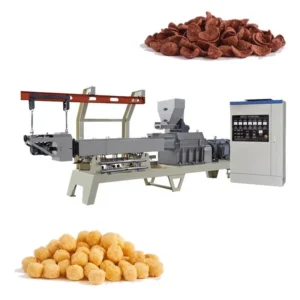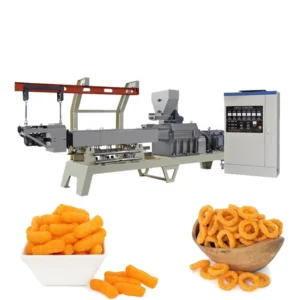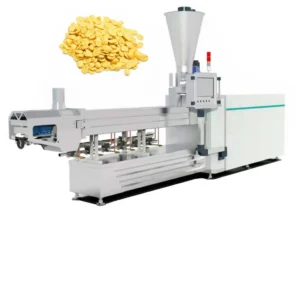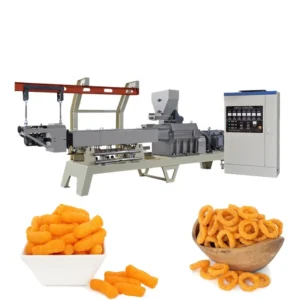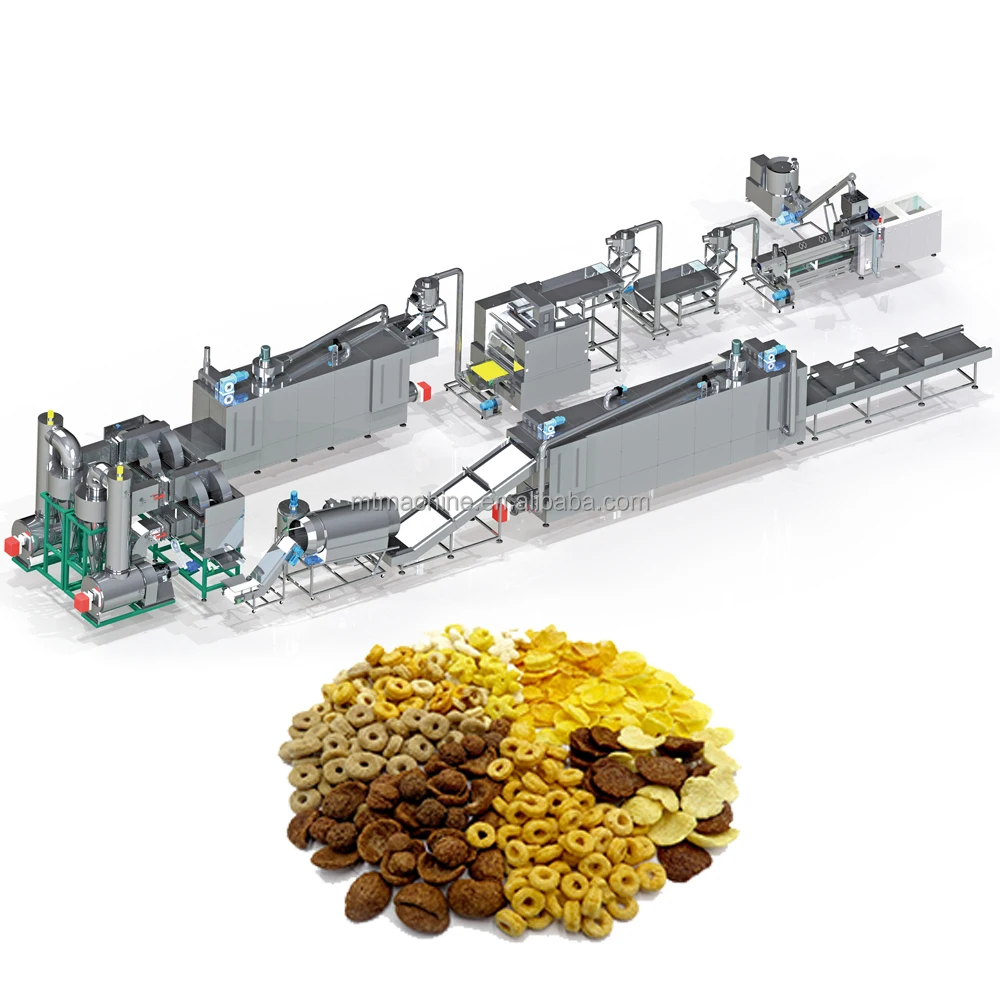
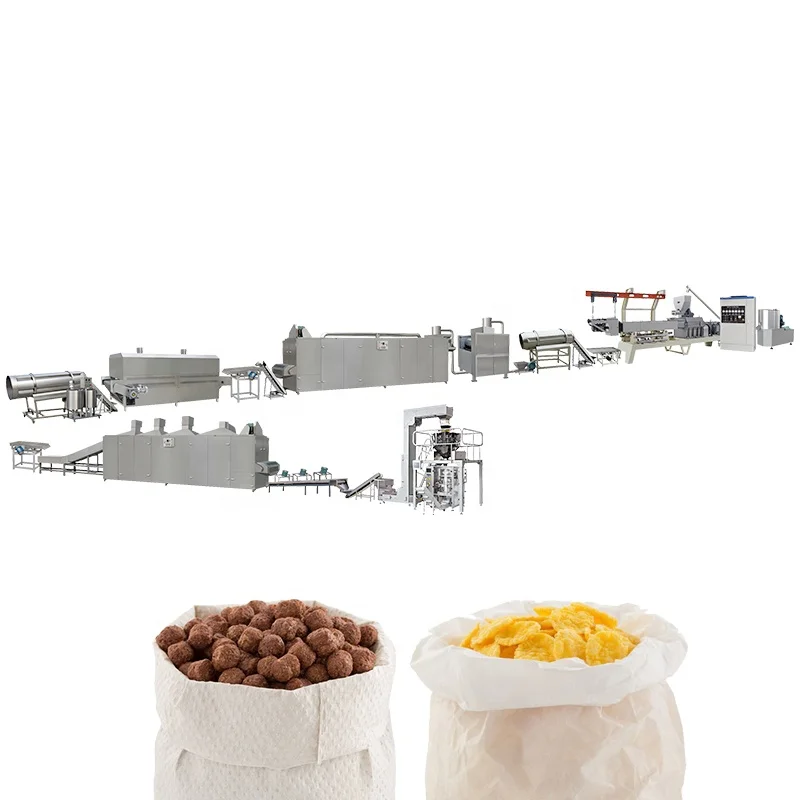

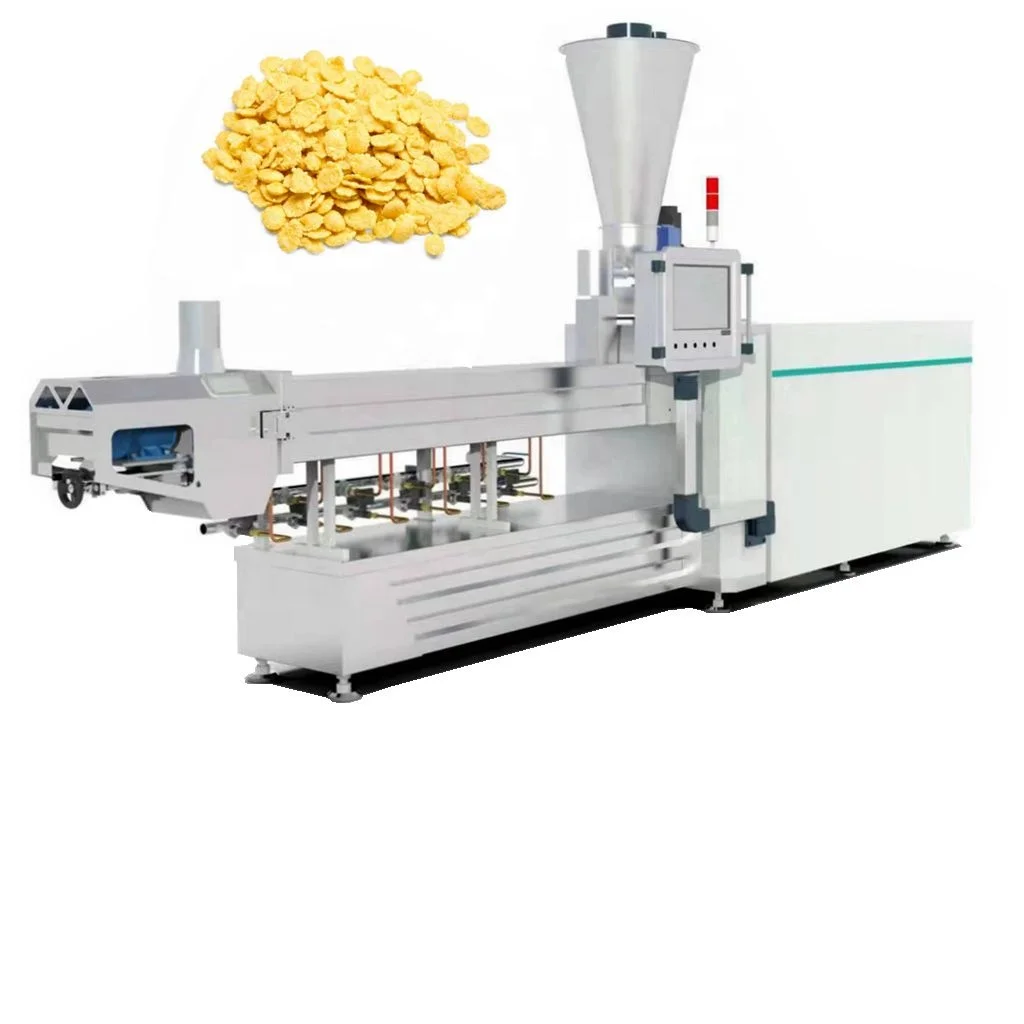
MT70 / MT85 / MT75 Corn Flakes Production Line, Twin-Screw Extruder, PLC & MCC Control — complete turnkey system from mixing and extrusion through flaking, drying, hot air roasting and sugar coating.
Designed for whole-line throughput matching, the twin-screw extruder features automatic lubricating and cooling with screw and die configuration specified to your corn blend and target flake density, while hydraulic double-roller flaking machinery with infrared temperature control ensures consistent flake thickness across all cereal formats.
Layout, trial run on your raw material, and on-site commissioning are handled under one supplier so every station is capacity-matched before production begins.
Description
Turnkey Line Integration — Every station on this corn flakes production line is throughput-matched from batching to packing under a single supplier, preventing the bottleneck effect that occurs when extruders, flakers, and dryers are sourced from separate vendors.
Technical Specifications
| Parameter | Value |
|---|---|
| Product Type | Corn Flakes Breakfast Cereal Production Line |
| Models Available | MT70, MT85, MT75 |
| Extruder Configuration | Twin Screw with automatic lubricating and cooling |
| Installed Power | MT70: 160 kW; MT85: 190 kW; MT75: 210 kW |
| Power Consumption | MT70: 120 kW; MT85: 140 kW; MT75: 150 kW |
| Overall Dimensions (L×W×H) | MT70: 41×1.5×2.2 m; MT85: 43×1.5×3.2 m; MT75: 45×1.5×3.5 m |
| Basic Raw Materials | Corn, rice, wheat, oat, and barley powder |
| Flaking System | Hydraulic double-roller with separate motors and infrared temperature control |
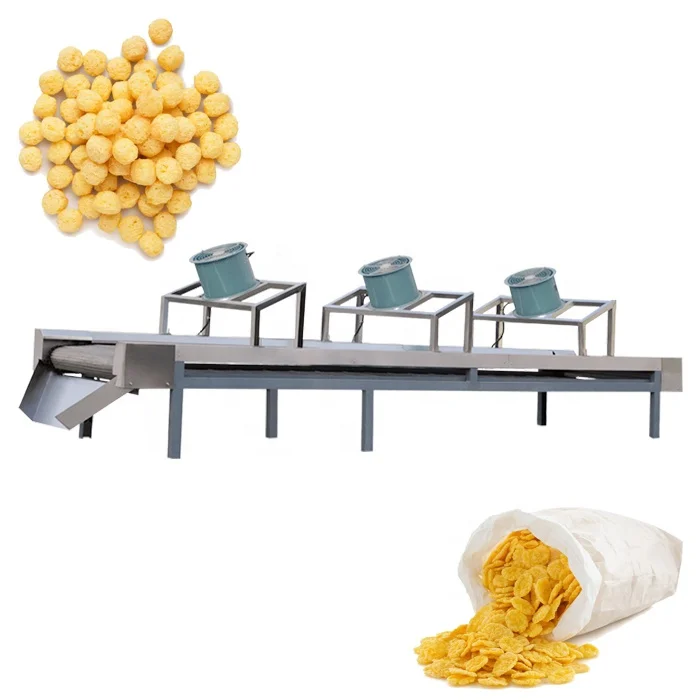
| Hot Air Roasting | Vibrating pan, dual circulating fans, cyclone dust removal |
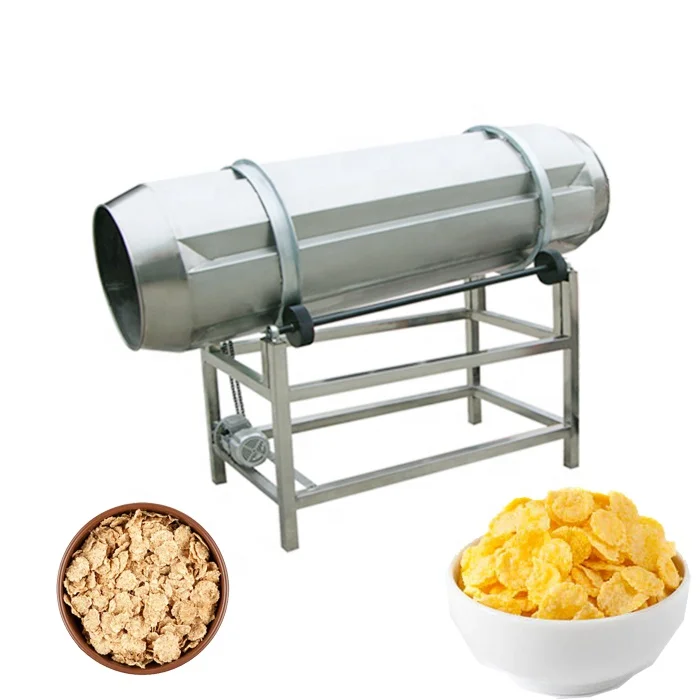
| Coating System | Double tumble drum for sugar melting, elevator, coating drum, spray nozzles |
| Control System | PLC and MCC control architecture |
| Heating Source | Gas or Electric |
Application Suitability
| Application | Material or Output |
|---|---|
| Natural Corn Flakes | Corn grits and maize blends roasted to a crisp finish |
| Sugar-Coated Cereals | Extruded flakes passed through the double tumble coating drum |
| Multi-Shape Breakfast Cereals | Balls, tubes, rings, stars, and fruit loops via die configuration changes |
| Fortified Cereals | Blends of rice, wheat, oat, and barley powder with nutritional premixes |
Why Nominal Capacity Fails When the Dryer is Undersized
A line is only as fast as its slowest station, and mismatched drying capacity is the most common bottleneck in cereal extrusion.
When evaluating a corn flakes production line turnkey project, buyers often focus on the extruder’s rated output. However, if the downstream hot air roasting oven or drying tunnel cannot handle the moisture load of that specific throughput, wet flakes accumulate on the conveyor. This causes inconsistent roasting, uneven sugar coating adhesion, and eventual product spoilage before packing. [NEED_CITE: industrial drying throughput vs extruder output matching] Matching the flaking machinery speed, the dryer residence time, and the cooling belt length is the only way to hold a steady production rhythm.
Sequencing the Extruder, Flaker, and Roaster
The production procedure moves from mixing to extruding, then flaking, drying, hot air roasting, and optional sugar coating. If the twin-screw extruder pushes material faster than the hydraulic double-roller flaking machinery can press it, the cooked dough mass cools and loses plasticity. The PLC control system manages this sequencing, ensuring the feed rate into the flaker aligns with the roasting oven’s vibrating pan capacity.
Utility Planning for High-Moisture Thermal Stages
Drying and roasting demand significant thermal energy, whether sourced from gas or electricity. The hot air roasting oven utilizes two separate circulating fans and a cyclone dust removal device to maintain uniform temperature distribution across the vibrating pan. Planning the utility drops for these thermal stations alongside the 210 kW installed power requirement of the MT75 extruder prevents voltage sag during simultaneous startup of heating elements and main drive motors. [NEED_CITE: thermal load planning in food extrusion facilities]
Die Design and Flake Density Control
The final texture of a corn flake depends on the expansion achieved at the die face and the subsequent compression in the flaking machinery. The twin-screw configuration allows for precise control over shear and residence time, which dictates how the starch gelatinizes. Adjusting the die design changes the output format from flat flakes to rings or stars, but each shape requires a different moisture target before it enters the hot air roasting oven.
Interpreting the Power and Footprint Requirements
The installed power ranges from 160 kW on the MT70 to 210 kW on the MT75, reflecting the torque required to process dense corn and oat blends through the twin-screw assembly. The automatic lubricating and cooling function on the extruder maintains screw integrity during continuous operation. Physically, the line stretches up to 45 meters in length for the MT75 configuration. This footprint dictates the facility layout, requiring clear access for the elevator that feeds the sugar coating drum and adequate clearance for the cyclone dust removal exhaust ducting.
The Hidden Cost of Generic Screw Configurations
Using a generic screw build copied from a standard snack line often results in the wrong texture for breakfast cereals. Corn flakes require a specific degree of gelatinization that differs from direct-expanded puffed snacks. If the shear profile is incorrect, the flakes emerge from the roasting oven with a hard, glassy center rather than a crisp bite. [NEED_CITE: starch gelatinization requirements for flaked cereals] Re-tooling the screw elements after installation halts production and requires a new series of trial runs to dial in the correct density.
Why Sourcing the Entire Line Matters
Procuring the extruder, flaker, and roaster from separate vendors often leaves the buyer responsible for resolving throughput mismatches. By sourcing the complete corn flakes production line turnkey from a single supplier, the mechanical linkages, control logic, and material transfer points are engineered as a unified system. The flaking machinery’s infrared sensor temperature control communicates with the upstream extruder to adjust feed rates if the dough mass temperature deviates. The documentation package includes a line layout and capacity calculation that proves every station can sustain the target output. [NEED_CITE: turnkey line integration vs fragmented equipment sourcing] The in-house testing workshop runs trial batches on the buyer’s actual raw material before the equipment is crated, ensuring the screw configuration and die design produce the exact flake thickness and roasting profile required.
Documentation & Verification
- Line layout and capacity calculation matching the extruder, flaker, and roaster throughput.
- Screw and die configuration record specific to the target corn or oat blend.
- Trial run report on customer raw material conducted in the testing workshop.
- Electrical schematic and voltage confirmation for the local grid frequency.
- CE declaration of conformity and ISO certificate for the complete assembly.
Installation, Commissioning & Support
- Foundation planning for the 45-meter MT75 line footprint and heavy vibrating pan loads.
- Electrical drops configured for the 210 kW extruder and high-amperage roasting oven heating elements.
- PLC and MCC control language set to the local operator preference during commissioning.
- Hydraulic double-roller calibration on the flaking machinery to achieve target flake thickness.
- Training on the automatic lubricating system and screw wear inspection intervals.
- Cyclone dust removal ducting integration with the facility’s central extraction system.
Preparing the Inquiry for Line Configuration
To configure a layout that holds the target throughput, the inquiry should specify the exact raw material blend, the desired final product format, and the available facility dimensions. Providing the local voltage and frequency ensures the MCC and PLC panels are built correctly before dispatch.
Frequently Asked Questions
Q: How is the line capacity verified against my specific raw material?
A: Capacity is verified through trial runs in the in-house testing workshop using your actual corn, rice, or oat blend. The resulting trial run report documents the throughput, moisture content at each stage, and the final flake density, ensuring the extruder and roaster are matched to your material’s behavior.
Q: Can the screw and die be changed to produce different cereal shapes?
A: The twin-screw extruder platform accommodates various die configurations to produce balls, tubes, rings, stars, and fruit loops. The screw configuration record is adjusted for each shape to maintain the correct starch gelatinization and expansion profile required for breakfast cereals.
Q: How are the dryer and roaster capacities matched to the extruder?
A: The thermal stations are sized based on the moisture load generated by the extruder’s maximum output. The line layout and capacity calculation documents the residence time in the hot air roasting oven and the drying tunnel to ensure no bottleneck occurs at peak throughput.
Q: What control systems are used to synchronize the line?
A: The line utilizes a PLC and MCC control architecture. The PLC manages the sequencing between the extruder, the hydraulic flaking machinery, and the coating drum, adjusting feed rates and temperatures to maintain consistent product quality across all stations.
Related products
-
Whole Grain Choco Hoop Crunchy Wheat Cereal Ring Fruit Loops Snacks Extruder Machine /breakfast Cereals Corn Flakes Production
¥48,000.00 Select options This product has multiple variants. The options may be chosen on the product page -
Corn Flake Making Machine Corn Puffs Making Machine Snack Food Production Line
Price range: ¥500.00 through ¥1,200.00 Select options This product has multiple variants. The options may be chosen on the product page -

MT Cocoa Flour Puffed Breakfast Cereal Production Line-High Large Capacity Multi-Fuel (Steam/Gas/Electric) New Shandong Origin
¥8,000.00 Select options This product has multiple variants. The options may be chosen on the product page -
Complete Corn Flakes Production Line Breakfast Cereal Processing Machine Core Motor Component Cornflakes Processing Equipment
¥19,000.00 Select options This product has multiple variants. The options may be chosen on the product page