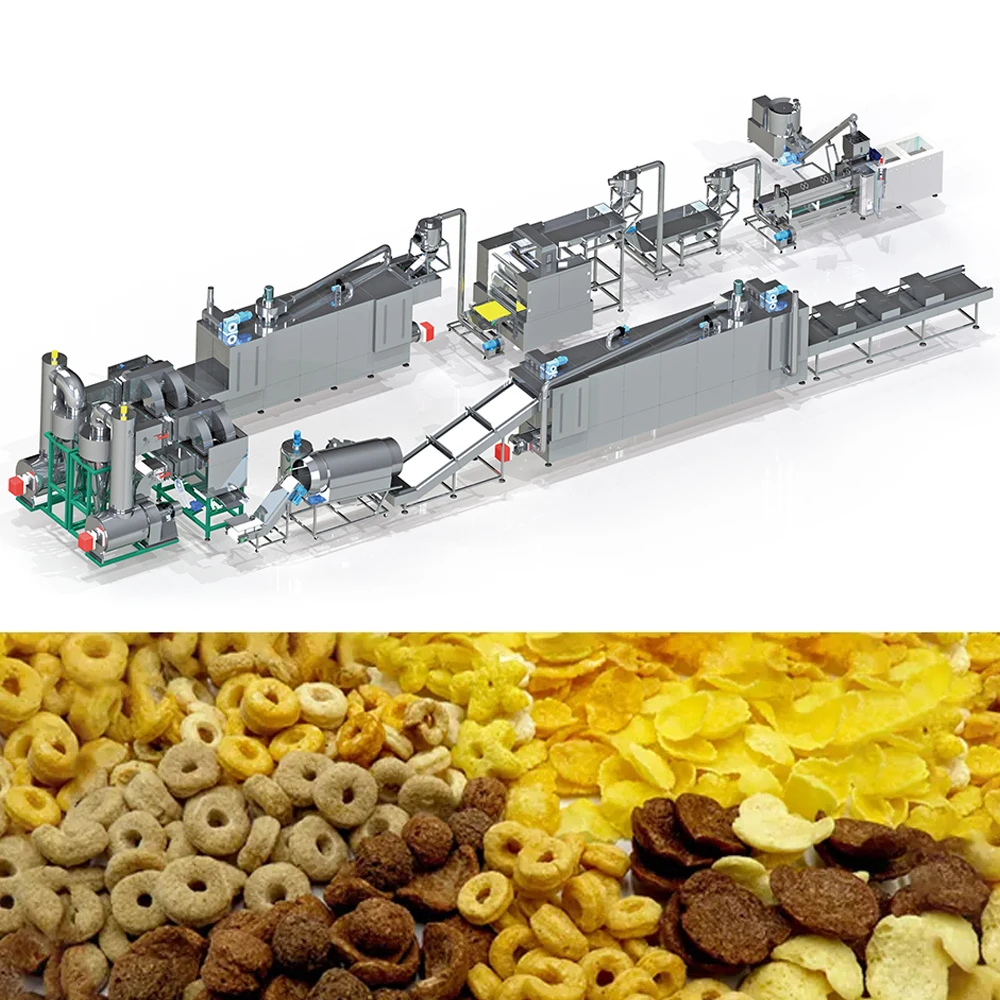


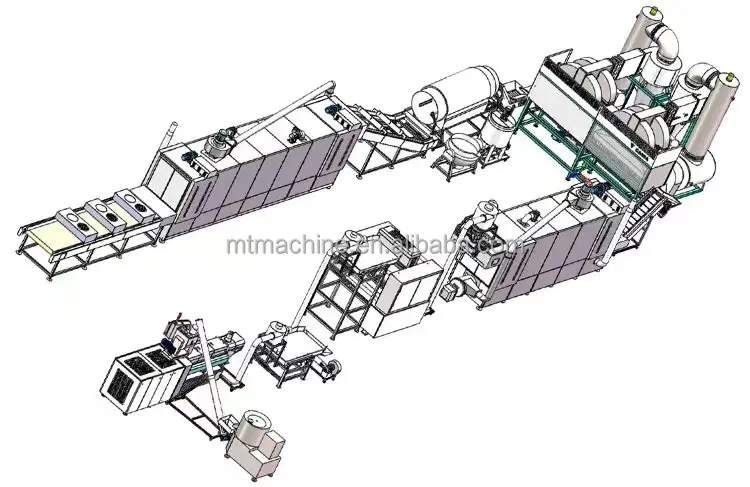
MT70 / MT85 / MT75 Corn Flakes Production Line, Twin-Screw Extruder, PLC & MCC Control — configured as a turnkey project from mixing through extrusion, flaking, roasting to coating, with every station throughput-matched under a single supplier.
- Screw and die configuration specified to your corn formulation and target flake density
- Flaking rollers driven by dual independent motors with infrared-sensor temperature control
- Line layout, capacity calculation and trial run on your raw material completed before shipment
- Voltage, frequency and control language confirmed to match your facility before production
Description
Throughput-Matched Extrusion Stations — Every mixer, flaker, and roaster on this corn flakes production line turnkey project is sized against the extruder’s real output on your grain recipe, not a catalog maximum.
Technical Specifications
| Parameter | Value |
|---|---|
| Product Type | Corn Flakes Breakfast Cereal Production Line |
| Model | MT70 / MT85 / MT75 |
| Installed Power | MT70 — 160 kW; MT85 — 190 kW; MT75 — 210 kW |
| Power Consumption | MT70 — 120 kW; MT85 — 140 kW; MT75 — 150 kW |
| Output Capacity | MT70 — 150–200 kg/hr (basis to be confirmed); MT85 — 300–400 kg/hr (basis to be confirmed); MT75 — 300–500 kg/hr (basis to be confirmed) |
| Overall Dimensions (L×W×H) | MT70 — 41 × 1.5 × 2.2 m; MT85 — 43 × 1.5 × 3.2 m; MT75 — 45 × 1.5 × 3.5 m |
| Extruder Screw Type | Twin Screw |
| Control System | PLC control with MCC integration |
| Flaking Machinery | Hydraulic double-roller, dual independent motors, infrared-sensor temperature control |
| Flaking Capacity | 200–300 kg/hr (basis to be confirmed) |
| Dryer Heating Source | Gas or Electric |
| Hot Air Roasting Oven | Conciliation burner, dual circulating fans, cyclone dust removal |
| Coating System | Double tumble sugar melter, elevator, coating drum, spray nozzle |
| Assembly State | Complete turnkey production line |
| Warranty | 24 months, lifetime service |
Application Suitability
| Application | Material or Output |
|---|---|
| Classic corn flakes production | Corn-based formulations, degerminated corn grits |
| Chocolate breakfast cereal | Grain-based recipes with cocoa coating stage |
| Various flake formats | Shared line equipment for multigrain and fortified cereal recipes |
| Institutional nutrition programmes | Fortified grain blends requiring full documentation package |
Why Nominal Capacity Fails When the Grain Hits the Barrel
A line rated on paper often stalls on the buyer’s actual raw material, making throughput verification the first engineering step, not the last.
I spent years assembling twin-screw barrels bolt by bolt, and the most expensive mistake I have watched a client make is signing off on a corn flakes production line turnkey package based on a single output number. Two years ago I configured a line for a Middle East client using standard corn flour during our factory trial. The flakes came out golden and crisp. Then the client shipped their actual raw material — degerminated corn grits with a completely different starch profile. Gelatinization never reached target, and the pressed flakes were thick and hard. We rebuilt the screw combination and cooking-zone temperatures from scratch, losing two full weeks before handover. That gap between catalog capacity and real-world throughput is where cereal projects quietly fail [NEED_CITE: starch gelatinization behavior varies by corn cultivar and milling method].
Matching Extrusion Chemistry to Your Corn Source
Twin-screw extrusion gives operators control over residence time, shear, and barrel temperature zones simultaneously. On a corn flakes line, the screw profile determines how completely starch granules rupture before the dough reaches the die. When the raw material shifts from fine flour to coarse grits, the same screw configuration leaves uncooked cores that flatten poorly on the flaking rolls. Our testing workshop runs your exact formulation before shipment, so screw elements and barrel heating zones are locked in against real data rather than a generic build sheet.
Flaking, Roasting, and the Stations That Decide Final Texture
After extrusion, the dough pellets pass through hydraulic double-roller flaking machinery where infrared sensors keep roller surface temperature even across the full width. Uneven heat here produces flakes that toast inconsistently in the roasting oven. The hot air roasting stage uses a conciliation burner with two independent circulating fans and a cyclone dust collector, holding temperature within a narrow band so that moisture drops to the level the market expects without scorching the flake edges. Every station on this corn flakes production line turnkey layout is throughput-balanced so that the roaster does not starve while the flaker catches up [NEED_CITE: moisture target range for shelf-stable breakfast cereal flakes].
Reading the Numbers Behind the Models
The MT70, MT85, and MT75 differ in installed power and footprint, but the more meaningful split is how each extruder pairs with the downstream flaker and roaster. The flaking machinery handles 200–300 kg/hr on a standard corn dough, so pairing it with the MT75 at its upper output range requires careful scheduling or an upgraded flaker module. Power consumption figures — 120 kW for the MT70, 140 kW for the MT85, 150 kW for the MT75 — reflect the full line draw under load, not just the extruder motor. Overall line length stretches from 41 m to 45 m depending on model, which affects workshop layout and utility routing. The PLC and MCC control architecture centralizes every station, meaning a single operator interface manages barrel temperatures, roller pressure, oven zones, and coating drum speed in one place.
What a Mismatched Dryer Costs You in the First Month
If the dryer capacity lags behind the extruder, wet pellets pile up before the flaking rolls, sticking together and forcing unplanned line stops. I have seen cereal producers lose entire shifts because the drying stage was specified from a generic template rather than calculated against the actual dough moisture leaving the die. On a corn flakes line, the pre-dry stage must drop surface moisture just enough to prevent sticking without case-hardening the pellet, and that window is narrow. A hot air roaster that cannot hold temperature uniformity across the pan adds broken flakes to the waste stream and shortens shelf life through residual moisture pockets [NEED_CITE: post-extrusion moisture management in cereal flake processing].
Why Buyers Source This Line Here
Every station from batching through packing sits under one supplier, so the extruder, flaker, roaster, and coating drum are matched on throughput before they leave the factory. Screw configuration and die geometry are set against your specific corn formulation during an in-house trial run, not copied from a generic template. The testing workshop processes your raw material before shipment, producing a documented trial report you review before the crate is sealed. Pre-sales engineering covers line layout, utility planning, and phased installation scheduling so that foundation work and electrical drops are ready when the equipment arrives. Operator training and wear-part schedules are built into the commissioning visit, not treated as an afterthought.
Documentation & Verification
- Line layout and capacity calculation specific to your corn formulation and target flake weight
- Screw and die configuration record matched to trial-run results on your raw material
- Trial run report with product samples generated from your shipped ingredient batch
- Electrical schematic with voltage, frequency, and control language confirmed before build
- Operation and maintenance manual with wear parts list and replacement intervals
Installation, Commissioning & Support
- Foundation plan accounts for the 41–45 m line length and utility drop points per model selected
- Dedicated electrical circuit sized to the MT75 210 kW installed load or equivalent model draw
- Equipment ships in modular sections for container loading, reassembled on-site by our crew
- PLC interface language and alarm labels verified against operator requirements during commissioning
- Twin-screw elements and flaking roller surfaces inspected and adjusted during first production run
- Wear parts list with lead times provided so first replacement screws and dies arrive before needed
What We Need to Size Your Line Correctly
Send us your raw material specification — corn variety, grit size, moisture content, and any fortification additives. Include your target daily output and the flake thickness your market expects. Let us know your workshop dimensions, ceiling height, and the voltage and frequency available at the site so that motor windings and control components are specified correctly before production begins.
Frequently Asked Questions
Q: How is line capacity verified on my specific corn formulation and moisture content?
A: We run your actual raw material in our in-house testing workshop before shipment. The extruder screw profile, barrel temperatures, and die geometry are adjusted during the trial until flake density and texture meet your specification. A full trial report with samples is delivered before the line is packed.
Q: How is throughput matched across mixing, extrusion, flaking, roasting, and coating stations?
A: Each station is sized against the extruder output on your specific recipe, not a catalog maximum. The flaker roller width, roaster pan area, and coating drum volume are calculated so no single station bottlenecks the corn flakes production line turnkey layout during continuous operation.
Q: What is the phased installation and commissioning schedule for a complete cereal line?
A: Foundation and utility preparation starts before equipment ships using our layout drawings. Mechanical assembly takes place in stages — extrusion, then flaking and drying, then roasting and coating — with electrical integration and PLC commissioning following. Operator training runs alongside the first supervised production batches.
Q: Can the line produce multiple cereal formats beyond corn flakes on the same equipment?
A: Yes. Changing the die plate and adjusting the screw configuration allows the extruder to produce different pellet shapes. The flaking rolls and roasting oven accommodate various flake sizes, and the coating drum handles sugar, chocolate, or vitamin slurry applications for different breakfast cereal formats.
Related products
-
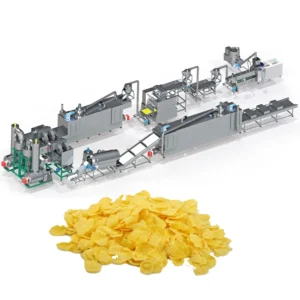
New High Efficiency Electric Corn Flakes Production & Manufacturing Machine
¥7,500.00 Select options This product has multiple variants. The options may be chosen on the product page -
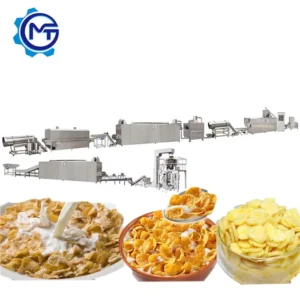
Sweet Corn Flakes Maize Breakfast Cereal Full-automatic Food Grade Stainless Steel Heat Exchanger Mixer Fryer Processing Line
¥8,000.00 Add to cart -

Best Price Corn Flakes Making Machine Breakfast Cereals Processing Line with Motor As Core Component
¥19,000.00 Select options This product has multiple variants. The options may be chosen on the product page -
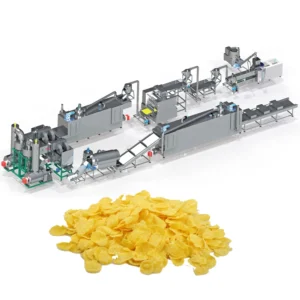
Intelligent Corn Flakes Production Line Twin Screw Extruder to Make Corn Flakes amd Morning Cereals
¥30.00 Select options This product has multiple variants. The options may be chosen on the product page