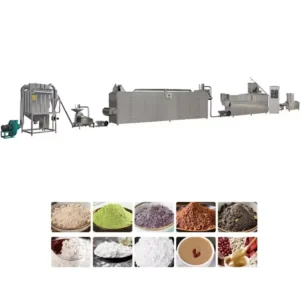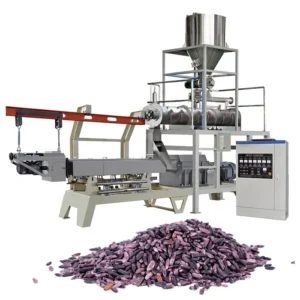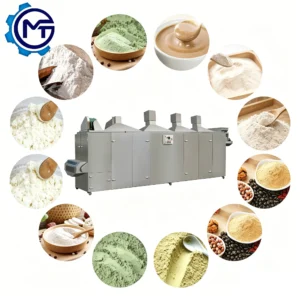
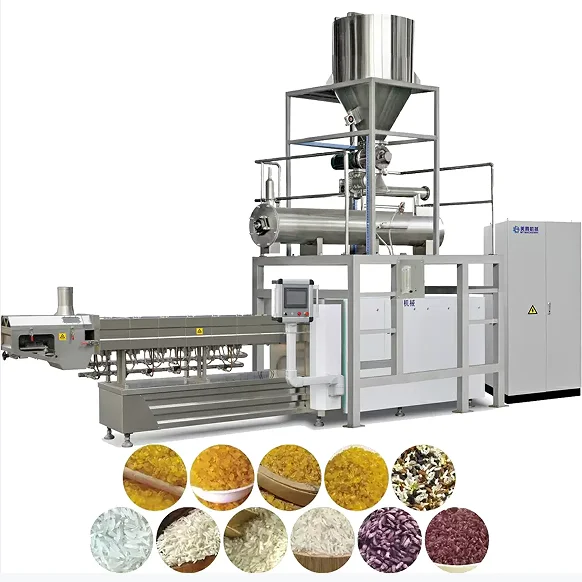
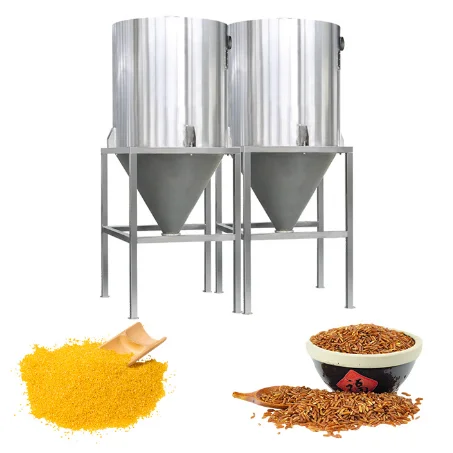
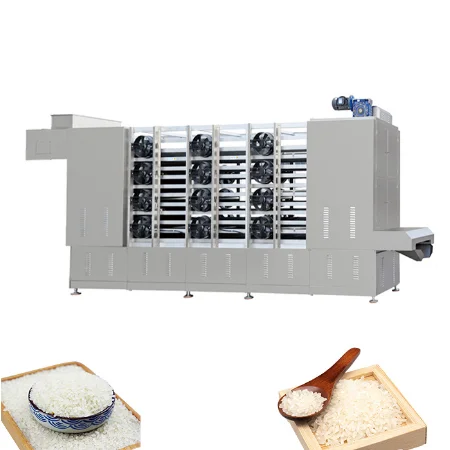
Fortified Nutritional Rice Extrusion Line, 70-300 kg/h, Food-Grade Stainless Steel, Automatic Control — engineered as a complete turnkey project from batching through extrusion to final forming, with throughput balanced across every station to eliminate hidden bottlenecks.
- Single-supplier line integration covering mixer, extrusion system, and fryer under one responsibility
- Screw configuration and die design matched to your grain formulation and target rice density
- In-house trial run on your actual raw material before shipment, with full test report provided
Description
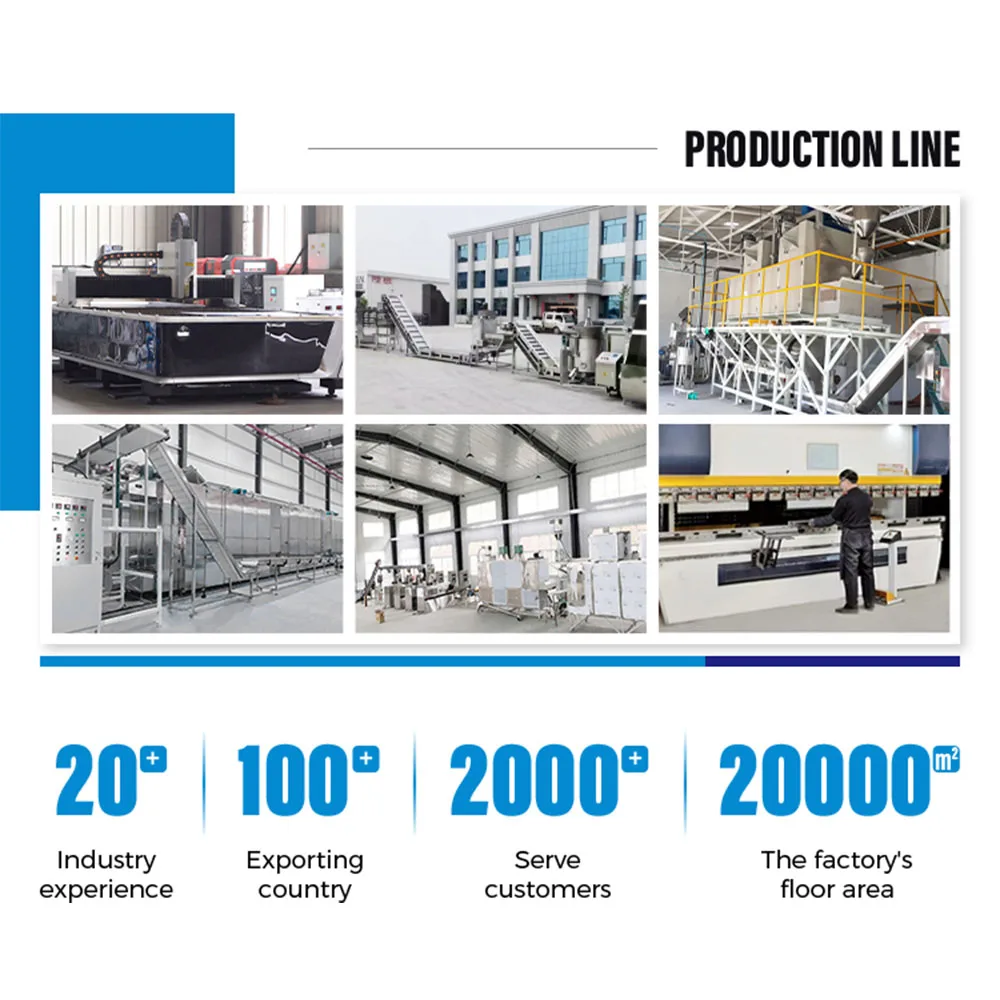
Complete Line Integration — throughput balanced from mixer to fryer under single-supplier accountability, eliminating the mismatched-station bottleneck that plagues multi-vendor builds.
Technical Specifications
| Parameter | Value |
|---|---|
| Product Type | Fortified Nutritional Rice Extrusion Line |
| Output Capacity | 70–300 kg/h (basis not stated in source — confirm raw material / moisture / grain formulation) |
| Voltage & Frequency | 380V / 50Hz (configurable to buyer’s facility) |
| Construction Material | Food-grade stainless steel contact surfaces |
| Line Stations | Mixer, extrusion system, fryer |
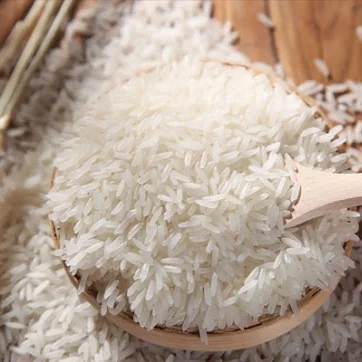
| Raw Material Compatibility | Rice flour and grain-based materials |
| Control System | Automatic control (PLC / MCC option to be confirmed) |
| Assembly State | Complete line integration |
| Color Options | Silver stainless steel body |
| Customization | Minor, drawing-based, and full customization supported |
| Certification | CE (company-level declaration) |
Application Suitability
| Application | Material or Output |
|---|---|
| Fortified rice production for nutrition programmes | Rice flour blended with vitamin and mineral premix |
| Artificial rice from broken grain or alternative cereals | Milled rice, corn, or multigrain flour formulations |
| Grain-based nutritional rice for consumer retail | Custom grain blends targeting specific dietary profiles |
| Institutional and school feeding supply | High-volume standardized fortified rice output |
Why a Nominal Capacity Rating Can Derail Your Commissioning Schedule
A line rated at a single throughput figure often masks a mismatch between the extruder barrel and the downstream dryer or fryer.
I learned this the hard way on a nutritional rice project last year. The extruder was quoted at a headline capacity, but once we switched from our standard rice flour to the client’s actual cassava-legume blend, the gelatinisation temperature shifted entirely. Parameters that worked perfectly in our workshop fell apart on the factory floor, costing nearly half a month of rework. That experience reshaped how I approach every fortified nutritional rice production line turnkey project — raw material first, configuration second. [NEED_CITE: starch gelatinisation temperature variance across grain types]
A buyer comparing lines on a single capacity number is comparing apples to oranges unless the raw material, moisture content, and target rice density are identical. When the upstream extruder pushes more volume than the fryer can handle, product piles up, moisture stays too high, and shelf life collapses.
Layout Engineering That Treats Every Station as One System
A fortified nutritional rice production line turnkey solution only works when the mixer batch size, extruder throughput, and fryer residence time are calculated together. We configure each station so the output of one feeds the input of the next without accumulation or starvation. This means the mixer discharges at intervals that match the extruder’s continuous feed rate, and the fryer belt speed is set to the extrudate volume arriving from the die plate.
Trial Runs Before the Crate Is Nailed Shut
Our in-house testing workshop runs the buyer’s actual grain formulation through the configured line before shipment. For nutritional rice, this means verifying that the specific flour blend achieves the correct gelatinisation, expansion, and kernel density. We document the screw speed, barrel temperature profile, and moisture addition rate that produce rice kernels matching the target specification. If the trial reveals a mismatch, we adjust the screw configuration or die geometry before the equipment leaves Jinan — not after it arrives at your facility. [NEED_CITE: importance of pre-shipment material trials in extrusion projects]
Reading the Specs That Actually Matter for Nutritional Rice
The raw material compatibility entry lists rice flour and grain-based materials, but the practical implication runs deeper. Different grain flours have varying amylose-to-amylopectin ratios, which directly affect how the material behaves inside the extrusion barrel. A high-amylose rice flour requires more shear energy and a longer residence time to gelatinise properly, while a waxy rice blend gelatinises faster and can expand excessively if the die pressure is not controlled.
The food-grade stainless steel construction across all contact surfaces ensures that vitamin and mineral premixes — often added at low inclusion rates — do not react with carbon steel surfaces and lose potency. The automatic control system maintains consistent barrel temperature zones and screw speed, which is critical when producing fortified rice where nutrient distribution must be uniform across every kernel. Voltage at 380V/50Hz is the default, but we confirm the buyer’s actual supply before production begins, because a 60Hz motor running on 50Hz power will turn slower and alter the shear profile inside the barrel.
The Hidden Cost of Skipping the Dryer-Fryer Capacity Check
When the fryer is undersized relative to the extruder output, freshly extruded rice kernels queue on the conveyor, losing surface moisture unevenly. Some kernels enter the fryer too dry and fracture during frying, while others arrive too wet and absorb excess oil. The result is a finished product with inconsistent colour, texture, and fat content — exactly the kind of batch rejection that erodes buyer confidence in the end market. [NEED_CITE: downstream capacity mismatch consequences in extrusion lines]
We have seen contractors source an extruder from one supplier and a fryer from another, only to discover during commissioning that the fryer belt is too short for the required residence time. Retrofitting a longer fryer into an already-poured concrete floor is an expensive lesson.
Why Procurement Through a Single Line Contractor Reduces Risk
Throughput matching across every station is not an add-on service — it is built into the initial layout proposal, so the mixer, extruder, and fryer are specified together rather than assembled from separate quotations. The screw configuration and die design are selected specifically for the buyer’s grain formulation and target rice kernel shape, not copied from a generic build sheet.
Our testing workshop conducts trial runs on the customer’s actual raw material, generating a documented parameter set before the line ships. Electrical schematics include confirmed voltage, frequency, and control language, so the electrical contractor on-site does not encounter surprises during wiring. Wear parts lists cover screws, dies, and barrel liners specific to the configured machine, ensuring first replacements are available when needed.
Documentation & Verification
- Line layout and capacity calculation confirming throughput balance across mixer, extruder, and fryer
- Trial run report on your specific rice flour or grain blend from our testing workshop
- Screw and die configuration record matched to your target rice kernel density and shape
- Electrical schematic with voltage, frequency, and control language confirmed to your facility
- Operation and maintenance manual covering all line stations from batching to frying
Installation, Commissioning & Support
- Foundation requirements mapped to the complete line footprint including mixer, extruder, and fryer stations
- Dedicated electrical circuit planned around the confirmed voltage and rated power of each station
- Assembly sequence from shipping configuration to operational layout with alignment verification
- First-run parameter setting using the trial run report as the baseline for your raw material
- Operator training covering screw speed, barrel temperature, and fryer belt speed adjustments
- Wear parts inventory including spare screws and dies matched to the configured barrel assembly
What We Need to Configure Your Line
To prepare an accurate layout and quotation, share your grain formulation details including flour type, blend ratios, and any vitamin or mineral premix inclusion rates. Confirm your facility’s voltage, frequency, and preferred control language. Let us know your target daily output and available floor space so we can propose a line configuration that fits your production hall without compromising maintenance access around each station.
Frequently Asked Questions
Q: How is line throughput verified across every station to prevent bottlenecks?
A: We calculate the batch cycle of the mixer, the continuous output of the extruder, and the residence time of the fryer as one integrated system. Each station is sized so its capacity matches the others, and we document this in the line layout and capacity calculation before production begins.
Q: What voltage, frequency, and control language options are confirmed before production?
A: We request your facility’s electrical specification during the inquiry stage and confirm voltage, frequency, motor ratings, and control panel language on the electrical schematic. This document is approved before manufacturing starts, preventing commissioning delays caused by mismatched power supply or unreadable HMI screens.
Q: Can a trial run be performed on our specific rice flour or grain formulation before shipment?
A: Yes. Our in-house testing workshop runs your actual raw material through the configured extrusion system. We record the screw speed, temperature profile, moisture addition, and die configuration that produce rice kernels meeting your target density and appearance, and include this report with the shipment.
Q: How is the screw configuration and die design matched to our target rice shape and density?
A: We select screw element arrangement and die geometry based on your grain formulation’s starch composition and the kernel shape you require. The trial run validates these choices on your material, and the configuration record is documented so replacement screws and dies are identical to the originals.
Q: What does on-site installation, commissioning, and operator training cover?
A: Our engineers supervise station alignment, electrical connection verification, and first-run parameter tuning using the trial run report as a baseline. Operator training covers daily startup, production adjustment, shutdown procedures, and wear part replacement for the specific screw and die configuration installed on your line.
Related products
-

Automatic Iron Fortified Baby Rice Cereal Nutrition Powder Making Machine 500kg/h PLC Controlled
¥8,238.27 Add to cart -

High Precision Automatic 500kg/h Baby Food Nutrition Powder Rice Extrusion Processing Line
¥9,500.00 Add to cart -
High Precision Automatic 500kg/h Baby Food Nutrition Powder Rice Extrusion Processing Line
¥8,238.27 Add to cart -
150-500kg/h Twin Screw Extruder Baby Rice Flour Making Machine
¥9,500.00 Select options This product has multiple variants. The options may be chosen on the product page