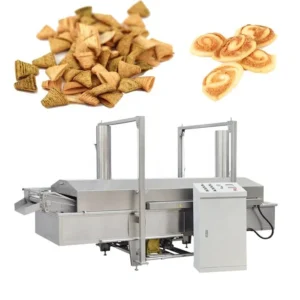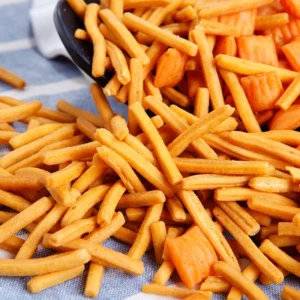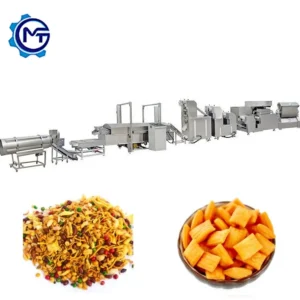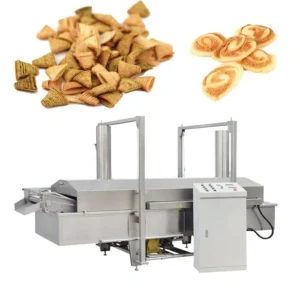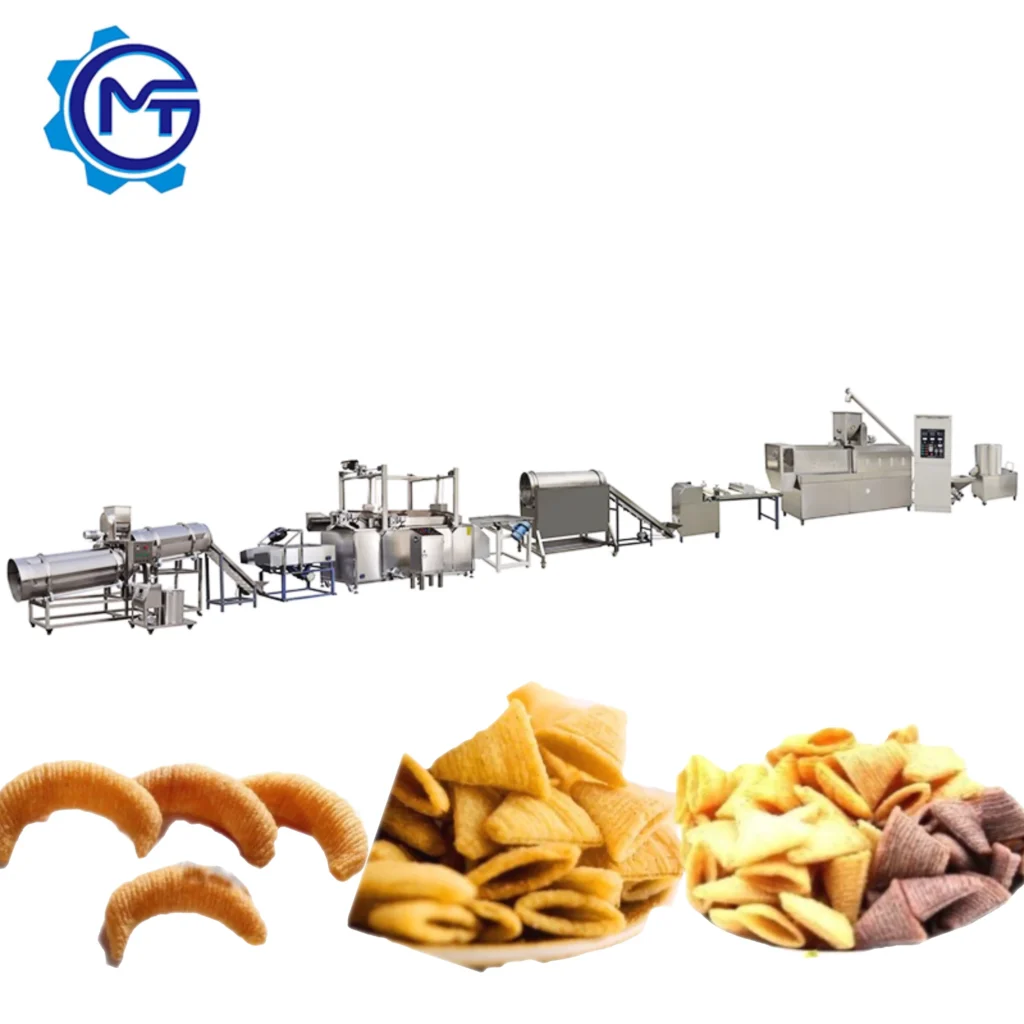

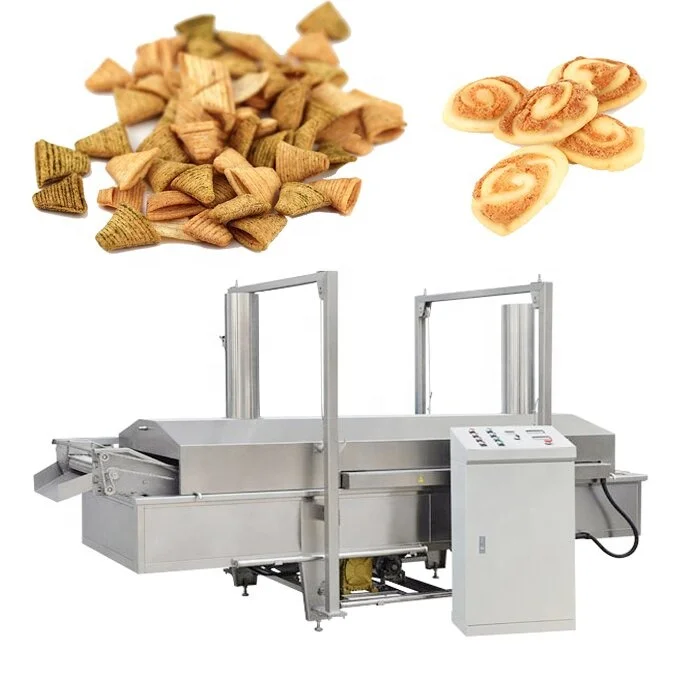
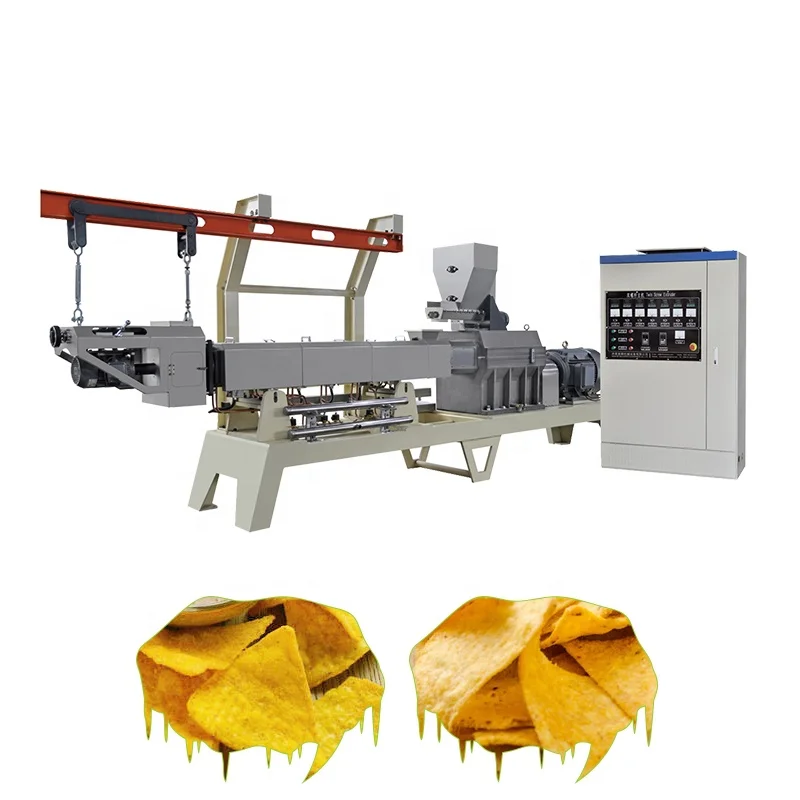
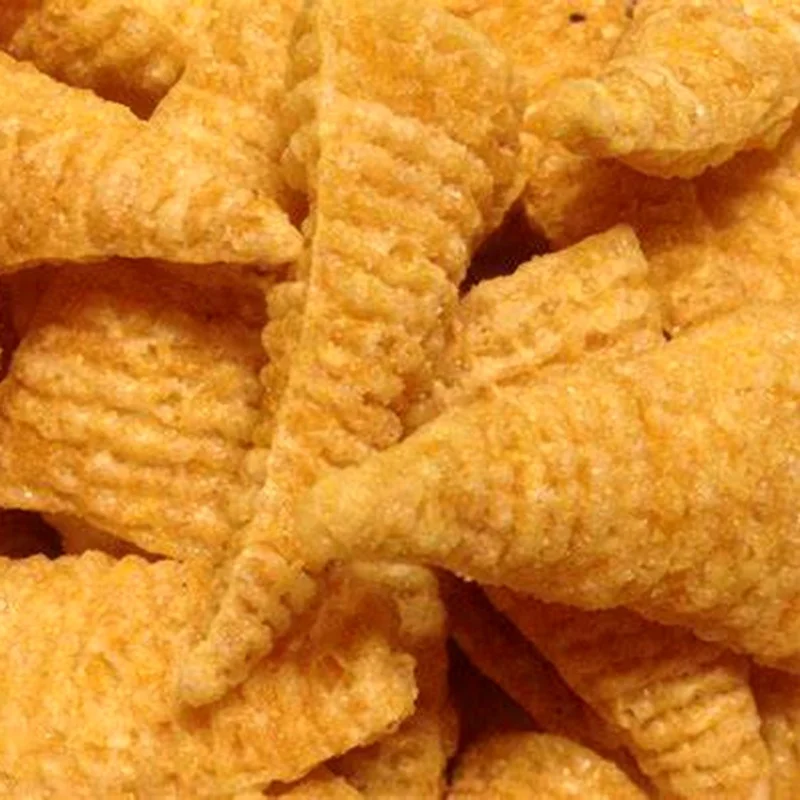
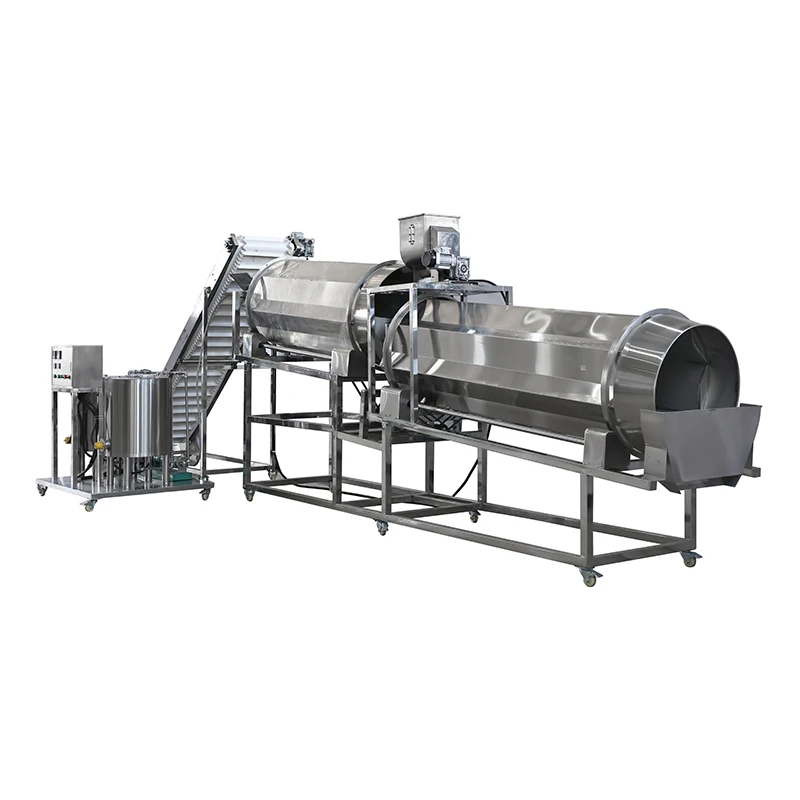
MT65 / MT70 / MT85 / MT75 / MT95 Fried Snack Production Line, Twin-Screw Extrusion, PLC & MCC Control — engineered as one integrated turnkey project from mixing through extrusion, shaping, frying up to 260 °C, flavoring and packing. Screw configuration and die design are matched to your flour formulation and target snack shape, ensuring every station is throughput-balanced to prevent bottlenecks. Line layout, capacity calculation and in-house trial runs on your raw material are provided before shipment.
Description
Integrated Line Engineering — A single-supplier turnkey layout for fried extruded snacks where mixing, extrusion, frying and flavoring capacities are balanced before the first bolt is tightened.
Technical Specifications
| Parameter | Value |
|---|---|
| Product Type | Fried Snack Production Line (Extrusion & Frying) |
| Models Available | MT65, MT70, MT85, MT75, MT95 |
| Screw Type | Twin-screw |
| Installed Power | 142 kW (MT65) / 185 kW (MT70) / 240 kW (MT85) / 245 kW (MT75) / 370 kW (MT95) |
| Actual Power Consumption | 100 kW (MT65) / 130 kW (MT70) / 180 kW (MT85) / 185 kW (MT75) / 280 kW (MT95) |
| Output Capacity | 120–150 kg/h (MT65) / 200–250 kg/h (MT70) / 300–500 kg/h (MT85) / 400–500 kg/h (MT75) / 800–1000 kg/h (MT95) (basis not stated in source — confirm raw material formulation, moisture content, and product shape) |
| Fryer Temperature Range | 0–260 °C |
| Fryer Capacity | 200–300 kg/h (basis not stated in source — confirm product shape and frying time) |
| Powder Mixer Tank Volume | 150 kg per batch |
| Mixer Rotary Speed | 385 rpm |
| Control System | PLC and MCC control |
| Contact Material | Food-grade stainless steel |
| Certification | CE, ISO |
| Warranty | 1 year complete warranty |
Application Suitability
| Application | Material or Output |
|---|---|
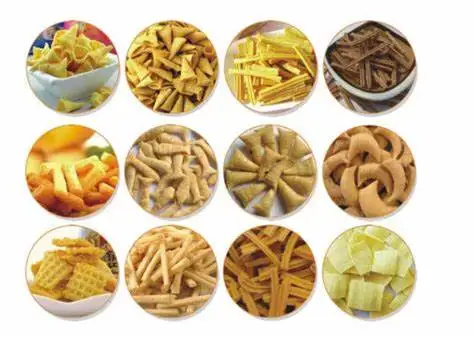
| Pizza rolls and crispy corners | Flour-based and starch-based formulations shaped by die cutting before frying |
| Rice crust chips and triangle chips | Rice flour or blended grain doughs requiring controlled expansion in hot oil |
| Small fish crisps and gourd-shaped snacks | Starch-heavy formulations where twin-screw shear determines surface texture |
| Duck-shaped and Christmas tree snacks | Seasonal or novelty shapes cut from extruded dough sheets |
| Golden corners and 3D pellet variants | Multi-layer or single-layer sheeted dough with post-fry flavoring |
What Buyers Miss When They Quote Extruder and Fryer Separately
Throughput matching across every station is what separates a working fried snack production line turnkey from a collection of stalled machines.
I have watched a fryer that was rated for 300 kg/h sit idle for twenty minutes every hour because the extruder upstream could not feed it fast enough on the buyer’s actual flour blend. The opposite problem is worse — an extruder pushing product faster than the fryer can handle, with half-cooked pieces piling up on the conveyor and wasting oil, labor, and raw material. [NEED_CITE: line throughput bottleneck causes in multi-station food processing] When stations are sourced from separate vendors, nobody owns the gap between them.
How Screw Configuration Shapes the Final Fried Snack
The twin-screw extruder at the heart of this fried snack production line turnkey is not a fixed machine — its screw elements and die plate are selected after the buyer’s flour formulation and target snack geometry are confirmed. A high-moisture rice flour blend needs a different compression ratio and residence time than a dry wheat-based pizza roll dough. Getting this wrong means the extruded piece either collapses before it reaches the fryer or expands unpredictably in hot oil, producing inconsistent size and texture batch after batch.
Why the Mixer-to-Fryer Sequence Must Be Engineered as One Project
A powder mixer running 385 rpm with a 150 kg tank volume sets the batching rhythm for everything downstream. If the mixer finishes a batch every ten minutes but the extruder consumes material faster, the line starves. If the fryer at 200–300 kg/h capacity cannot absorb what the extruder delivers, product backs up. [NEED_CITE: food extrusion line capacity balancing methodology] This is why the line layout, utility planning and commissioning schedule are mapped as a single project rather than a list of individual machines. Every station’s output is calculated against the buyer’s specific raw material and target product before production begins.
Reading the Power and Dimension Data Correctly
Installed power across the model range runs from 142 kW on the MT65 to 370 kW on the MT95, but actual consumption is notably lower — 100 kW to 280 kW respectively — because heaters and motors cycle based on load. For factory electrical planning, the actual consumption figure determines transformer sizing and dedicated circuit requirements. The fryer’s 0–260 °C range covers the typical 170–200 °C window most fried puffed snacks require, with headroom for products that need a higher initial flash temperature. Overall line lengths stretch from 22 meters to 30 meters, meaning facility planning must account for linear floor space plus operator access on both sides. The PLC and MCC control system manages motor sequencing and temperature zones from a single interface, reducing the operator count needed to run the full sequence from batching through flavoring.
The Hidden Cost of Skipping a Pre-Shipment Trial Run
When an extruder ships without a trial run on the buyer’s actual flour mix, the first week of production becomes an expensive experiment. Screw elements may need reconfiguration, die openings may need resizing, and fryer dwell time may need adjustment — all while raw material is being wasted and delivery deadlines are slipping. [NEED_CITE: food machinery commissioning delays due to untested raw materials] I have seen lines sit idle for weeks because the voltage and frequency were assumed rather than confirmed, and the control panel language did not match the operators on the floor.
What Engineering Depth Looks Like on This Line
The twin-screw expertise behind this equipment spans pet food, aquatic feed, snacks, cereals, starch and protein applications, which means screw configurations are drawn from a broad knowledge base rather than copied from a single template. The in-house testing workshop runs the buyer’s raw material through the extruder before shipment, producing a trial report that documents actual output, texture and expansion behavior. Line layout and capacity calculation documents show how every station’s throughput is matched. Electrical schematics and voltage confirmations are finalized before production starts, so the machine that arrives on the factory floor is wired for the correct supply and labeled in the correct language. Pre-sales consultation carries through to on-site installation, commissioning and operator training, with a documented wear parts list so the first replacement of screws and dies does not become an emergency.
Documentation & Verification
- Line layout and capacity calculation matched to your flour formulation and target snack shape
- Screw and die configuration record specific to your product geometry and expansion requirement
- Trial run report on your actual raw material produced in the testing workshop before dispatch
- Electrical schematic with voltage, frequency and control language confirmed for your facility
- Factory test record documenting full-line run-up before packing and shipment
- CE declaration of conformity and ISO certificate included with shipping documentation
Installation, Commissioning & Support
- Floor space planning based on line lengths from 22 m to 30 m with access clearance on both sides
- Dedicated electrical circuits sized to actual power consumption from 100 kW to 280 kW depending on model
- Phased installation schedule coordinating mixer, extruder, fryer and flavor line assembly sequence
- First-run parameter setting covering screw speed, barrel temperature zones and fryer dwell time
- Operator training on PLC and MCC interface in the confirmed control language
- Wear parts list with screw and die replacement intervals documented for your production schedule
What We Need to Size Your Line Correctly
To build an accurate layout and capacity proposal, share your target snack shape and the flour or starch formulation you plan to run, including moisture content if known. Confirm your factory’s voltage, frequency and preferred control language. Let us know your available floor space and ceiling height so the line footprint can be drafted to fit. If you have existing upstream or downstream equipment that this line must connect to, provide the model and throughput so interface points can be engineered.
Frequently Asked Questions
Q: How is the output capacity of each model verified against our raw material?
A: Output figures in the specification sheet are based on reference formulations. Your actual flour blend, moisture content and target snack shape all affect throughput. We run your raw material in our in-house testing workshop before shipment and provide a trial report documenting real output, texture and expansion, so the capacity you see at commissioning matches expectations.
Q: How do you prevent bottlenecks between the extruder, fryer and flavor line?
A: Every station is sized during the layout phase based on your confirmed formulation and product shape. The mixer batch cycle, extruder output, fryer dwell time and flavor drum throughput are calculated together so no single station limits the others. This calculation is documented in the line capacity report you receive before production begins.
Q: Can you run a trial on our exact flour mix and target shape before we commit to shipment?
A: Yes. Our testing workshop is equipped to run customer-supplied raw material through the extruder with the selected screw and die configuration. The resulting trial report covers product dimensions, surface texture, expansion ratio and frying behavior, giving you verified data before the line is packed.
Q: What electrical and control details are confirmed before the line is built?
A: We confirm your factory voltage, frequency, plug type and control panel language before production starts. The electrical schematic is reviewed and approved so the PLC and MCC system arrives configured for your local power supply and readable by your operators, avoiding delays during commissioning.
Q: What does turnkey installation include beyond machine delivery?
A: Installation covers phased assembly of every station from mixer to packing, utility connection planning, first-run parameter tuning and operator training on the PLC interface. A commissioning schedule is agreed before our engineers arrive, and a wear parts list with replacement intervals is handed over so maintenance planning starts from day one.
Related products
-
Fried Bugles Chips Production Line Fried Doritos Tortilla Snack Food Extruder
¥100.00 Select options This product has multiple variants. The options may be chosen on the product page -
Hot Selling Puffed Ball Snacks Food Processing Line Fried Snacks Processing Line Corn Puff Snacks Machine
¥100.00 Select options This product has multiple variants. The options may be chosen on the product page -
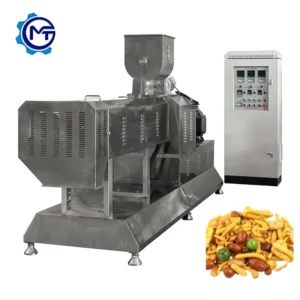
New Automatic Traditional Fried Nimko Making Machine High Productivity Large Capacity Stainless Steel Production Line
¥8,575.00 Select options This product has multiple variants. The options may be chosen on the product page -
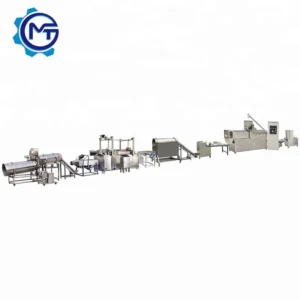
Fried Puffs Snack Food Making Machine Whole Line Solution Design by Factory Price Crispy Snack Machine
¥20.00 Select options This product has multiple variants. The options may be chosen on the product page