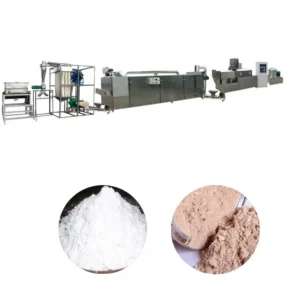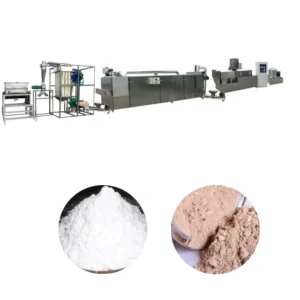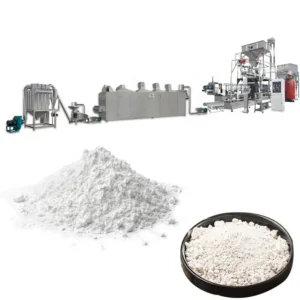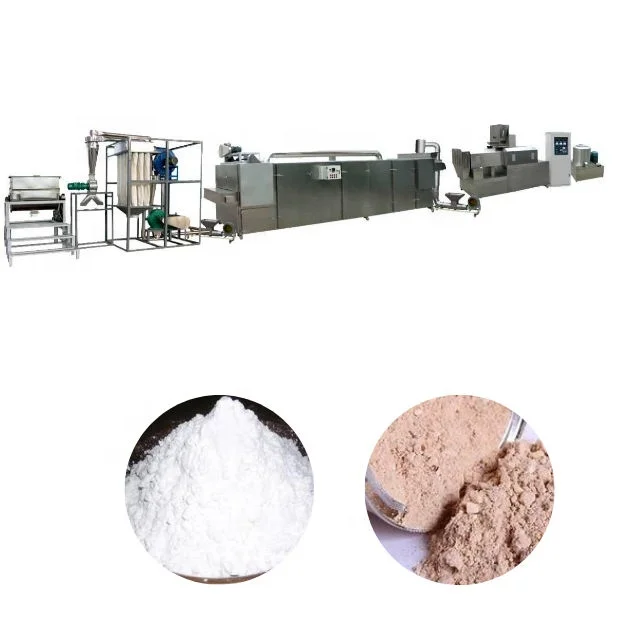


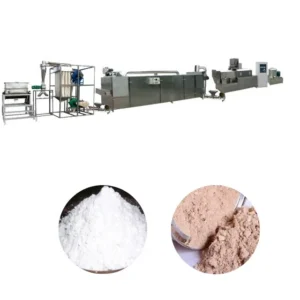
Modified Starch Processing Line, Twin-Screw Extrusion, Cassava/Corn/Potato Compatible — complete turnkey layout from mixing through extrusion, drying, grinding to packaging.
- Heavy-duty twin-screw extruder delivers strong shear for uniform pregelatinized, oxidized, and cross-linked starch modification
- Adjustable temperature, screw speed, and pressure control final viscosity and fineness
- Food-grade stainless steel on all material-contact parts
In-house trial runs on your raw material validate throughput across every station before shipment, backed by full screw and die configuration records matched to your starch source.
Description
Integrated Line Throughput — Every station from batching through packaging is engineered around your specific starch modification target, eliminating cross-vendor bottlenecks that silently cap output.
Technical Specifications
| Parameter | Value |
|---|---|
| Product Type | Modified & Pregelatinized Starch Extrusion Production Line |
| Extruder Type | Heavy-duty twin-screw extruder (model and screw diameter to be confirmed) |
| Raw Material Compatibility | Cassava, corn, potato, and other grain starches |
| Modification Functions | Pregelatinized, oxidized, and cross-linked modified starch |
| Line Stations | Mixing → Extrusion → Drying → Grinding → Packaging |
| Construction Material | Food-grade stainless steel (all material-contact parts) |
| Process Parameters Adjustable | Temperature, screw speed, pressure |
| Output Product Attributes | Adjustable viscosity, fineness, and stability |
| Control System | Full automatic (PLC / MCC details to be confirmed) |
| Output Capacity | Basis not stated in source (to be confirmed against raw material type, moisture content, and target modification) |
| Certification | CE, ISO |
Application Suitability
| Application | Material or Output |
|---|---|
| Food and beverage thickener production | Pregelatinized cassava and corn starch with controlled cold-water viscosity |
| Paper and textile sizing agents | Oxidized and cross-linked starch with specific film-forming properties |
| Construction material additives | Modified starch for dry-mix mortar and gypsum board adhesion |
| Adhesive and binder manufacturing | Pregelatinized potato and corn starch with tailored gelatinization temperature |
| Instant food and nutritional powder bases | Pregelatinized starch with rapid hydration and stable dispersion |
What "Rated Capacity" Means When Your Starch Source Changes
A line is only as capable as the screw and die configuration built for your actual raw material.
I have watched processors buy a modified starch processing line turnkey based on a capacity figure quoted against one starch source, then try to run a different one and find viscosity targets unreachable. Cassava starch gelatinizes at a different temperature than corn starch, and potato starch demands a completely different moisture profile through the barrel. When the screw combination and die geometry are not matched to the raw material, the extruder simply cannot deliver the intended modification degree [NEED_CITE: starch gelatinization temperature differences across botanical sources]. The result is batches that fail viscosity specifications, product that gets reworked, and a line that sits idle while engineers try to compensate after installation.
Screw Configuration and Barrel Temperature Profiling
The twin-screw extruder at the center of this line allows operators to adjust screw element sequencing, barrel zone temperatures, and feed moisture to match the gelatinization behavior of each starch source. Cassava starch requires a lower peak temperature and shorter residence time than corn starch to achieve full pregelatinization without thermal degradation. The adjustable screw speed and pressure settings let you shift between modification types — pregelatinized, oxidized, or cross-linked — without mechanical rebuilds.
Shear Control and Modification Uniformity
Achieving consistent viscosity across every batch depends on uniform shear distribution throughout the barrel. The heavy-duty twin-screw design generates the mechanical and thermal energy needed to break down starch granule structure evenly [NEED_CITE: twin-screw shear uniformity in starch modification]. When shear is uneven, some granules remain native while others over-degrade, producing a modified starch with unpredictable thickening behavior downstream. This is where laboratory trial data often diverges from production reality.
Reading the Specifications That Matter
The L:D ratio determines residence time inside the barrel — a longer ratio gives more time for chemical modification reactions to complete, which matters for cross-linked starch that requires reagent interaction throughout the granule. The die configuration controls the pressure drop at discharge, which directly influences the degree of expansion and the final particle density after grinding. Food-grade stainless steel on all contact parts prevents metallic contamination that would fail purity testing in food and pharmaceutical applications [NEED_CITE: food-grade contact material requirements for starch processing equipment]. The control system manages temperature ramps and screw speed profiles, and its programmability determines how quickly operators can switch between recipes.
The Hidden Cost of Mismatched Line Stations
A common failure pattern on starch processing lines is an extruder that can produce more than the dryer can handle. When throughput is not balanced, wet extrudate piles up ahead of the dryer, moisture content enters the grinding stage too high, and the final product fails fineness specifications. Another frequent issue is sourcing the extruder from one vendor and the drying system from another, with neither party responsible for the interface [NEED_CITE: throughput balancing across extrusion line stations]. The result is a line that runs below its quoted capacity from day one, and two suppliers pointing at each other when the problem is raised.
Why Source the Full Line from One Supplier
This modified starch processing line turnkey is engineered as a single project, not assembled from independent purchases. Throughput calculations are performed across every station — mixing, extrusion, drying, grinding, and packaging — so that no single unit becomes the constraint that limits your actual output. Screw configuration and die geometry are specified against your raw material sample and your target modification type, not copied from a generic build. An in-house testing workshop runs your actual starch source through the extruder before shipment, validating viscosity, fineness, and stability parameters. Documentation includes the complete screw and die configuration record, electrical schematics matched to your local voltage, and a trial run report on your material. On-site installation, commissioning, and operator training ensure the line reaches its intended operating condition.
Documentation & Verification
- Line layout drawing with throughput matched to your target starch modification type
- Screw and die configuration record specific to your cassava, corn, or potato starch source
- Trial run report on your raw material with viscosity and fineness test results before dispatch
- Electrical schematic and voltage confirmation matched to your local power supply standard
- CE declaration of conformity and ISO certificate for equipment import compliance
Installation, Commissioning & Support
- Foundation layout and utility connection plan matched to the full line footprint and weight distribution
- Dedicated power circuit specification based on confirmed extruder motor rating and dryer heating load
- Modular shipment with reassembly sequence documentation for the extruder barrel and screw elements
- First-run parameter setting covering barrel temperature zones, screw speed, and feed moisture for your starch source
- Operator training on recipe switching between pregelatinized, oxidized, and cross-linked production modes
- Wear parts list covering screw elements, barrel liners, and die inserts with recommended replacement intervals
Preparing Your Inquiry
When specifying this line, the most useful information you can provide is your exact starch source (cassava, corn, potato, or blend), the modification type you intend to produce, and the target viscosity and fineness range for the final product. Confirm your local voltage and frequency, the control language your operators require, and whether you can send a representative sample of your raw material for a pre-shipment trial run. If you are expanding an existing facility, share the available floor space and ceiling height so the layout can be configured to your building.
Frequently Asked Questions
Q: How is the actual output capacity determined for a specific starch source?
A: Capacity is calculated against your raw material type, its moisture content, and the target modification function. Cassava starch processes differently from corn starch in terms of required barrel temperature and residence time. We confirm the output figure by running your actual material in our testing workshop before the quotation is finalized, so the number you receive is tied to your specific conditions rather than a generic benchmark.
Q: Can the same line produce both pregelatinized and cross-linked modified starch?
A: Yes, the twin-screw extruder allows adjustments to screw configuration, barrel temperature profile, and process parameters to switch between modification types. However, the screw element arrangement and die setup may need to be changed between campaigns. We document the configuration for each product type you intend to run and train your operators on the changeover procedure.
Q: What happens if my raw material blend changes after the line is commissioned?
A: A different starch blend alters the gelatinization behavior and may require adjustments to screw speed, barrel temperature, and moisture addition. Our testing workshop can run the new blend to identify the updated parameter set. We recommend sending a sample of any new raw material source before committing to a full production run on the new blend.
Q: How do you ensure throughput is balanced across all stations?
A: Each station — mixing, extrusion, drying, grinding, and packaging — is sized based on the same capacity calculation for your specific product. The dryer is rated to handle the full extruder output at the required moisture reduction, and the grinding system is matched to the dried product throughput. No station is left undersized relative to the others.
Q: What electrical and control details are confirmed before production begins?
A: We confirm your local voltage, frequency, and required control language before the electrical schematic is finalized. The control system specifications are documented and approved so that the line arrives with the correct motor ratings, heating element voltages, and operator interface language for your facility [NEED_CITE: voltage and frequency standards by export market].
Related products
-
Automatic Deep Processing Machine – Food Grade Modified & Pregelatinized Starch Manufacturing Line
¥65.00 Select options This product has multiple variants. The options may be chosen on the product page -
Automatic Modified Corn Starch Making Machine 304 Stainless Steel Gearbox High Efficiency Starch Processing Production Line
¥30.00 Select options This product has multiple variants. The options may be chosen on the product page -
Cassava Corn Potato Flour Starch Production Line – Industrial Pregelatinized & Modified Extrusion Machinery
¥65.00 Select options This product has multiple variants. The options may be chosen on the product page -
Big Capacity Modified Starch Industrial Use and Food Additives
¥50.00 Select options This product has multiple variants. The options may be chosen on the product page